

Active acne and a procedure booked? Here's what to reschedule and what's still safe.
Published -
Updated -

Author
Wi Young-jin · Chief director
Seoul National University College of Medicine · Seoul National University Hospital Specialist
→
One of the most common questions we hear at the clinic is some version of: "I have a few pimples right now — should I reschedule?" It's a fair question, and the answer isn't a blanket yes or no. In this guide, we'll cover which procedures are generally fine to proceed with during a mild breakout, which ones you're better off postponing, and what risks to watch for if you go ahead anyway.
What "Active Acne" Actually Means
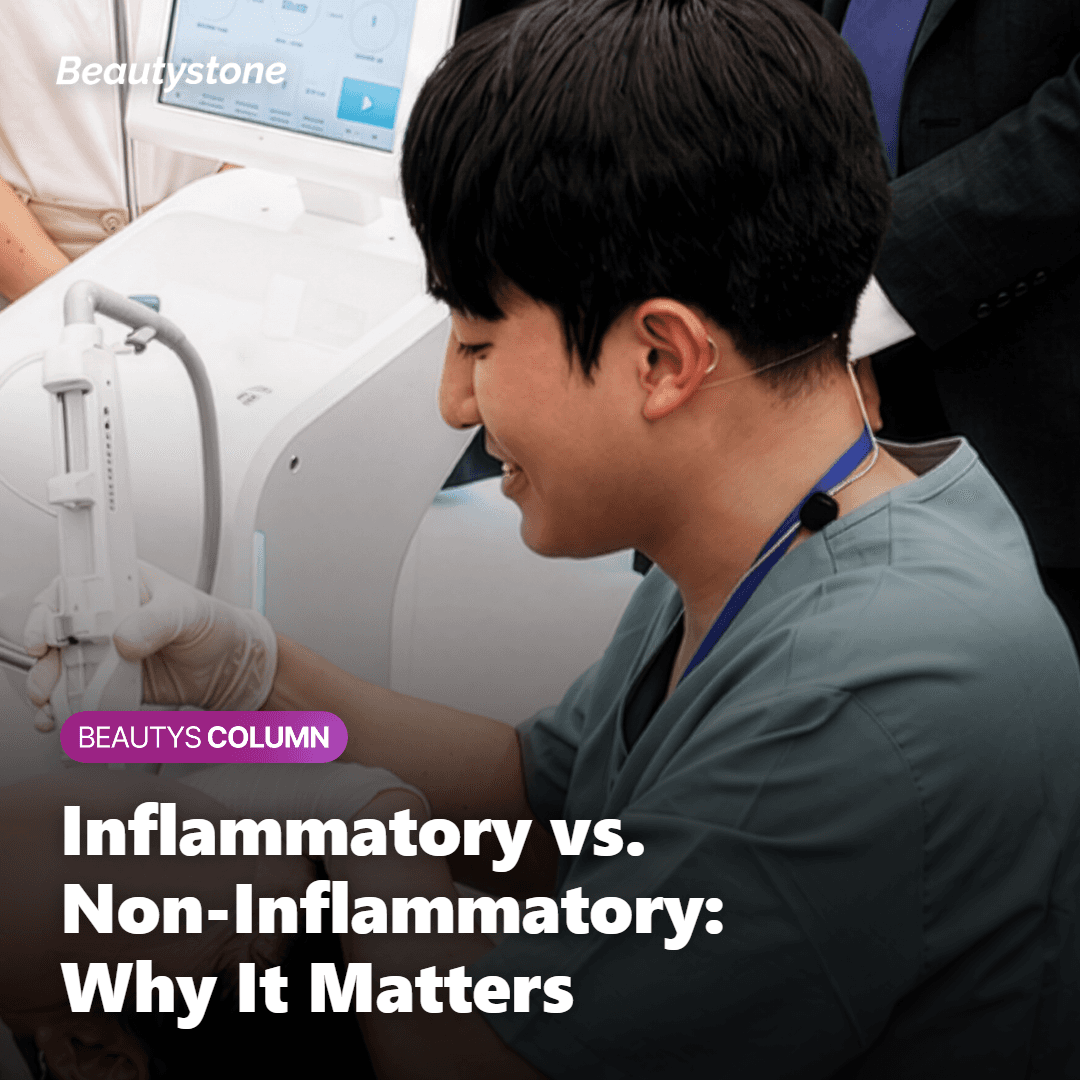
Not all pimples are created equal, and the distinction matters when you're weighing procedure timing. Dermatologists typically divide acne into inflammatory and non-inflammatory types.
"Active" or inflammatory acne includes the red, swollen papules and pustules most people picture when they hear the word "breakout" — the kind that's tender to the touch, sometimes filled with pus, and clearly irritated. Comedones (whiteheads and blackheads), on the other hand, are non-inflammatory and are generally a much lower-risk scenario for most procedures.
Why does this matter? Inflamed skin has a compromised barrier. It's more reactive to heat, light, and mechanical pressure, and it's already primed to produce post-inflammatory hyperpigmentation (PIH) — those brown or reddish marks that linger after a pimple heals. Any procedure that adds heat or trauma to already-inflamed tissue can amplify both the inflammation and the PIH risk.
Procedures That Are Usually Fine to Proceed With
The short answer? A mild breakout doesn't automatically mean you have to cancel everything. Several popular clinic treatments can proceed safely — with some adjustments.
Laser toning and low-fluence IPL: When active lesions are limited to a few spots, a skilled provider can simply avoid those areas during treatment. Laser toning at low power settings tends to be well-tolerated even on skin with minor breakouts, as long as the inflamed spots themselves aren't directly targeted.
Skin boosters (Rejuran, Juvelook, and similar injectables): These are often manageable with active acne because the provider can navigate around inflamed spots. Rejuran, for example, may even have some mild anti-inflammatory benefit in surrounding tissue, though results vary. A few pustules don't automatically rule it out — your provider will assess the distribution and density on the day.
RF lifting (Thermage FLX, Oligio X, and comparable devices): Broadly distributed radiofrequency energy at moderate settings is often something providers will proceed with when acne is mild and localized. That said, the treatment parameters may be adjusted, and specific inflamed zones may be avoided. Individual results vary depending on acne severity.
In each of these cases, the operative phrase is "mild and localized." If you've got five or six individual papules in a sea of otherwise calm skin, there's a reasonable chance your consultation will go ahead. If your skin is broadly inflamed across multiple zones, that's a different calculus.
Procedures Worth Postponing Until Acne Clears
Some procedures carry a meaningfully higher risk when inflammatory acne is present. For these, rescheduling isn't just conservative advice — it's the right call.
HIFU lifting (Ultherapy, Shurink Universe, and similar devices): High-intensity focused ultrasound concentrates energy at precise tissue depths to drive collagen remodeling. When that energy passes through — or near — actively inflamed tissue, it can worsen the inflammation. Providers will typically recommend waiting until your breakout has settled before booking HIFU.
Microneedle RF (Potenza, Secret RF, and comparable devices): These devices create controlled micro-injuries through needle penetration while delivering RF energy. The needle component is what creates the concern: puncturing an active pustule risks spreading bacteria into surrounding tissue, which can trigger new breakouts or, in rare cases, a more significant skin infection. Acne scars are actually a great indication for these devices — but after the active phase has passed.
Chemical peels: Peeling agents applied over inflamed acne can cause more redness, stinging, and irritation than usual. More importantly, they can push PIH risk significantly higher. Most providers recommend waiting for active lesions to resolve before proceeding.
Side Effects and Safety: What Can Go Wrong
It's important to understand the specific risks so you can make an informed decision with your provider — not just take our word for it.
Post-inflammatory hyperpigmentation (PIH): This is the most common concern. Melanocytes in inflamed skin are already activated; add heat or trauma and they can overproduce pigment, leaving dark spots that persist for weeks to months. People with medium-to-deep skin tones are at higher baseline risk for PIH from any laser or energy procedure, which makes the timing question especially important.
Worsened inflammation: Heat or mechanical stimulation can push a borderline papule into a full pustule, or cause a cluster of new breakouts in the treated area. This is particularly relevant for RF and laser treatments applied directly over or adjacent to active lesions.
Bacterial spread with needling: As noted above, microneedle devices introduce an infection-spread risk when used over active pustular acne. This is a real, if uncommon, concern — not a theoretical one.
Redness and swelling after almost any skin procedure are normal and typically settle within a few days. However, if you notice spreading redness, increasing warmth, fever, or pus that wasn't there before, seek medical care right away. These could be signs of a skin infection that needs prompt treatment.
A Quick Reference: Acne + Procedure Timing
Here's a practical summary of how different procedures typically map to acne severity. Keep in mind that your provider's in-person assessment on the day always takes precedence — this table is a general guide, not a substitute for a consultation.
Procedure | Mild breakout (a few papules) | Moderate-severe (many pustules / wide area) |
|---|---|---|
Laser toning / low-fluence IPL | Often possible — avoid active spots | Postpone |
Skin boosters (Rejuran, Juvelook) | Often possible — navigate around lesions | Postpone |
RF lifting (Thermage FLX, Oligio X) | Possible with parameter adjustment | Postpone |
HIFU lifting (Ultherapy, Shurink) | Recommend postponing | Postpone |
Microneedle RF (Potenza, Secret RF) | Recommend postponing | Postpone |
Chemical peel | Proceed with caution; discuss with provider | Postpone |
The general rule of thumb: if inflammation is broad or your skin feels angry, waiting two to four weeks for things to settle will give you a safer starting point and likely better results. Individual results vary.

The Bottom Line
Active acne and skin procedures don't automatically conflict — but the type of procedure and the severity of your breakout are both key variables. Here's the recap:
Mild, localized acne doesn't rule out laser toning, skin boosters, or RF lifting — your provider may proceed with adjustments.
HIFU and microneedle RF carry more meaningful risks during active breakouts and are generally worth postponing.
PIH and worsened inflammation are the two most common concerns; people with darker skin tones should be especially cautious.
Seek medical care right away if you develop spreading redness, fever, or signs of infection after any procedure.
Like any skin treatment, timing it well is part of getting good results. Ultimately, the choice depends on your skin, the specific breakout pattern, and your provider's judgment on the day.
If you're not sure whether to keep your appointment, a quick consultation can save you the guesswork. Beautystone is a dermatology clinic in Seoul's Hapjeong area — see current offers and booking options at /en/promotion.
Frequently asked questions
Q. Can I get laser treatment if I have a few pimples?
A. It depends on the type of laser and the severity of your breakout. Low-power laser toning and similar treatments can often proceed when acne is mild and localized — the provider typically avoids the inflamed spots directly. However, if your skin is broadly inflamed or you have multiple pustules across a wide area, most providers will recommend postponing until things calm down.
Q. Is HIFU safe to do when I have active acne?
A. HIFU devices like Ultherapy and Shurink Universe concentrate focused ultrasound energy deep in the tissue. When that energy is applied over or near actively inflamed skin, it can worsen inflammation. For this reason, most providers recommend waiting until your breakout has settled — typically two to four weeks — before proceeding with HIFU. Individual situations vary, so a consultation call is the best way to get a definitive answer.
Q. Why is microneedle RF risky with active acne?
A. Devices like Potenza and Secret RF create micro-channels through needle penetration. If those needles pass through an active pustule, there's a risk of spreading bacteria into surrounding skin, which can trigger new breakouts or, in rare cases, a more significant infection. Microneedle RF is actually an excellent treatment for acne scars — just after the active acne phase has resolved.
Q. What should I do if my skin breaks out after a procedure?
A. A mild increase in breakouts right after a procedure can happen and often settles within a week. Don't squeeze or pick at them — that raises PIH risk. If breakouts are spreading, worsening, or accompanied by fever or unusual warmth, contact your provider right away or seek medical care, as these can be signs of a skin infection. Keep your skin gently moisturized and avoid additional active ingredients like retinol until things stabilize.


skin
Ellanse Cost: Duration Beats Price Per Visit

Lifting
Alltite RF: Two Effects, Two Timelines

Contouring & Volume
Why Juvelook Volume Quotes Vary by Clinic

men's
Nose Pore Treatment: Aftercare Timing Guide

skin
How Many Sessions Does Eyeliner Removal Take?

Hair Removal
Laser Hair Removal While Pregnant or Nursing