

How much does InMode FX hurt? Zone-by-zone breakdown and what numbing cream actually does.
Published -
Updated -

Author
Wi Young-jin · Chief director
Seoul National University College of Medicine · Seoul National University Hospital Specialist
→
One of the most common questions we hear before InMode FX is some version of: "How bad does it actually hurt?" And honestly, it's a fair question — any treatment that uses heat energy to remodel tissue is going to involve some sensation. In this article, we'll cover what InMode FX feels like zone by zone, how numbing cream fits into the picture, and what you can do to make the session as comfortable as possible.
What Is InMode FX?
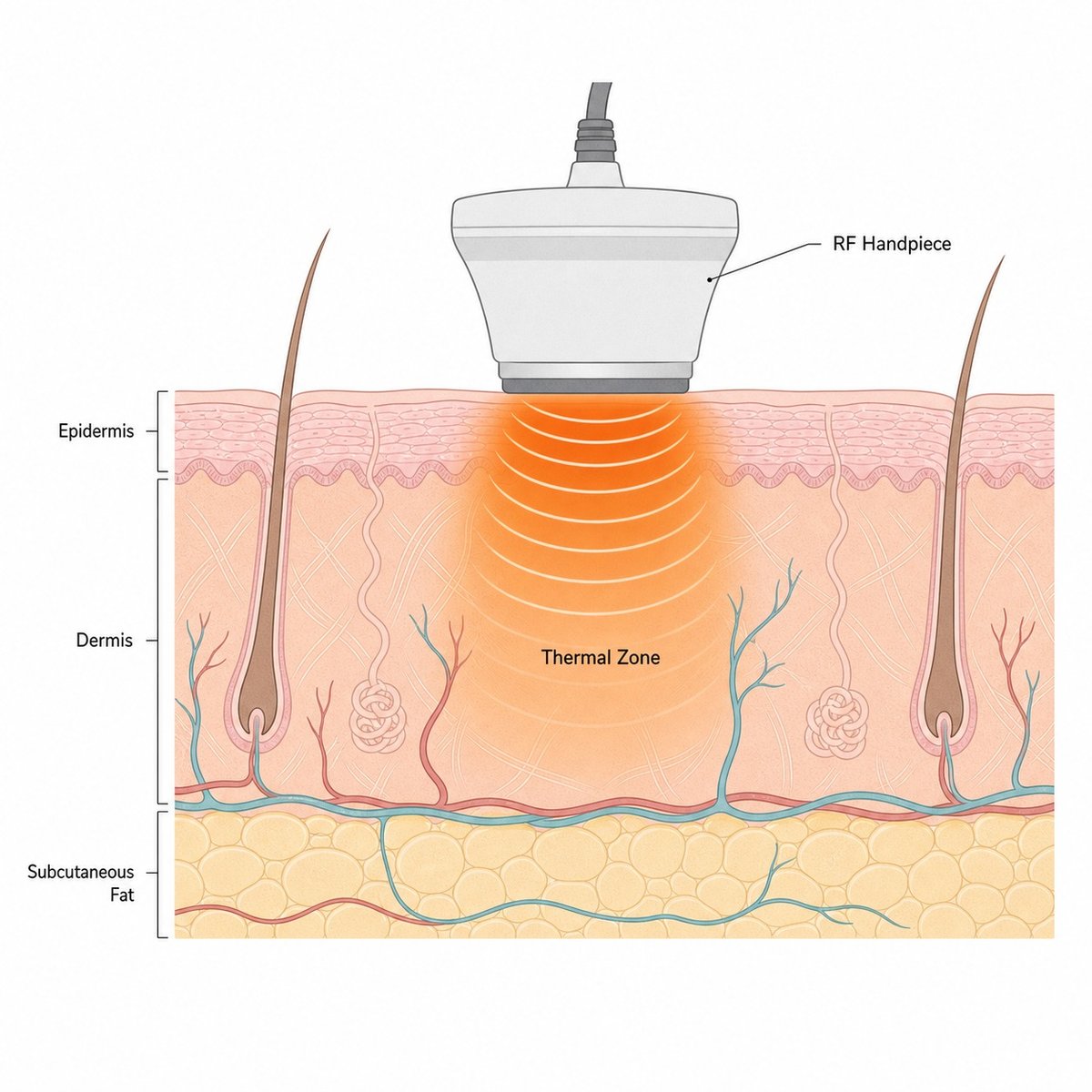
InMode FX is a non-invasive radiofrequency (RF) body and facial contouring device that delivers controlled thermal energy into the deeper layers of skin and subcutaneous tissue. The goal is to stimulate collagen remodeling and tighten laxity without surgery or significant downtime.
Unlike ultrasound-based devices such as Ultherapy (which targets the SMAS layer), InMode FX works primarily in the dermis and subdermal fat layer using bipolar and fractional RF technology. The handpiece heats tissue to a therapeutic temperature range, and it's that deliberate heat delivery that makes the procedure effective — and also the main source of discomfort.
What Does InMode FX Actually Feel Like?
Most people describe the sensation as heat — not quite pain in the sharp, stabbing sense, but an intense warmth that can build quickly. Some compare it to a rubber band snap or a deep, pulsing heat. Individual results vary, and pain tolerance plays a significant role.
Here's a more honest zone-by-zone picture:
Cheeks and midface: This area tends to have enough fat padding to buffer some of the heat, so the sensation is usually manageable — a steady warmth rather than a sharp sting.
Jawline and lower face: The tissue here is thinner, closer to bone, and has less cushioning. Patients often report more noticeable heat and a buzzing or prickling sensation in this area.
Under the chin and submental area: Possibly the most commonly flagged zone. The skin is thin, the fat layer is compact, and the proximity to the mandible means heat concentrates quickly. This one often surprises first-timers.
Temples and bony prominences: With less fat as a buffer and nerves running close to the surface, these areas can produce sharper sensations. Providers typically adjust output settings here.
If you're dreading it: the heat bursts are short. Each pass takes seconds, and a good provider will check in with you throughout. If the intensity feels too high, they can dial the energy level down.
Does Numbing Cream Actually Help?
Yes — with an important caveat. Topical anesthetics (most commonly lidocaine-based creams) work on the epidermis and superficial dermis, typically penetrating a few millimeters into the skin. They're genuinely effective at blunting surface sensations.
The catch: InMode FX's RF energy reaches the mid-to-deep dermis and subdermal fat — layers that topical numbing cream doesn't fully reach. So you can expect numbing cream to reduce the surface sting and some of the initial skin-level discomfort, but it won't eliminate the deeper thermal sensation that comes from RF heating those lower layers.
Think of it this way: numbing cream turns the volume down, but it doesn't mute it entirely.
Practical application notes:
Numbing cream is typically applied 30–60 minutes before the session and covered with wrap to aid absorption.
Not all clinics offer it routinely — some reserve it for sensitive patients or higher-energy settings.
If you have a known allergy to lidocaine or other local anesthetics, tell your provider before anything is applied.
Don't apply OTC numbing products at home without your provider's guidance — concentration and timing matter.
Tips for a More Comfortable Session
Beyond numbing cream, there are a few strategies that can meaningfully affect how you experience the treatment.
Speak up during the session: This is the most important one. If a zone feels too intense, tell your provider immediately. Energy output can be reduced without compromising the overall result significantly.
Show up well-rested: Pain tolerance tends to dip when you're sleep-deprived or stressed. If you had a rough night, it's worth mentioning — your provider may want to factor that in.
Avoid scheduling around your period: Hormonal shifts during menstruation can heighten sensitivity. Many patients find they're more reactive to heat during this time, so mid-cycle appointments tend to go smoother. Individual results vary.
Skip alcohol and certain supplements beforehand: Blood thinners like fish oil, vitamin E, and alcohol can affect how your skin responds to heat. Check with your provider for specific pre-session guidance.
Stay hydrated: There's no direct causal link proven, but well-hydrated tissue may respond more evenly to RF energy. It's a low-effort prep step worth doing anyway.
After the session, clinics often cool the treated area with cold packs to ease post-treatment heat and redness. Skip saunas, intense exercise, and prolonged hot showers on the day of treatment.
Side Effects, Risks, and When to Seek Help
InMode FX has a reasonably favorable safety profile when performed by a trained provider, but it's not without trade-offs. Knowing what's normal — and what isn't — helps you respond appropriately.
What's typically expected:
Redness and warmth: Common immediately after treatment. Usually resolves within a few hours to two days.
Mild swelling: Some puffiness, particularly in the lower face and chin area, is normal and typically fades within one to three days.
Tingling or numbness: A temporary post-treatment sensation that tends to settle within hours. Some patients describe a buzzing or tightness that lingers for a day or two — this is generally normal.
Less common but worth knowing:
Small blisters or burns can occur if the handpiece dwells too long in one area or energy is set too high for the skin type. This is rare when the procedure is done correctly.
Post-inflammatory hyperpigmentation (darkening of the skin) is possible, particularly in those with deeper skin tones. Discuss this risk with your provider before booking.
RF devices are generally contraindicated if you have a pacemaker, implantable cardiac defibrillator, or metal implants in the treatment area. Pregnancy is also a contraindication.
If you notice spreading redness, fever, or worsening pain in the days after your session, seek medical care right away. These signs can indicate infection or an unusual reaction that needs prompt attention. Like any procedure, InMode FX comes with trade-offs, and outcomes depend heavily on provider skill and appropriate patient selection.
Research published in PMC (PMC11297419) supports the general tolerability of RF-based treatments, noting that most adverse effects are mild and transient when treatment parameters are calibrated appropriately. Individual results vary.
How Much Does InMode FX Cost in Seoul?
Pricing for InMode FX in Seoul typically depends on the number of shots (pulses) delivered per session. At Beautystone clinic in Hapjeong, sessions are priced by shot count — pricing details and current promotions are available at /en/price and /en/promotion.
Seoul clinic pricing — subject to change. A consultation is the best way to get a personalized quote based on the zones you want to treat and the energy settings appropriate for your skin.
The Bottom Line
Here's the short version:
InMode FX involves real heat sensation, especially over bony areas and thin-skinned zones like the chin and jawline.
Numbing cream genuinely helps with surface discomfort, but it can't fully block the deeper thermal sensation that makes RF effective.
Open communication with your provider — including adjusting energy output mid-session — is your most reliable comfort tool.
Most side effects are mild and temporary; rare but serious complications warrant prompt medical attention.
Ultimately, the choice depends on your skin, your goals, and your tolerance for heat-based discomfort. For many people, a well-managed InMode FX session is entirely tolerable — especially once you know what to expect going in.
If you're considering InMode FX, a consultation is the best way to find out what's right for you. Beautystone is a dermatology clinic in Seoul's Hapjeong area — see current offers at /en/promotion.
Frequently asked questions
Q. How much does InMode FX hurt?
A. It varies by zone and individual tolerance. Most people describe it as an intense, pulsing heat rather than sharp pain — similar to a rubber band snap or a deep warmth. Bony areas like the chin, jawline, and temples tend to be more uncomfortable than the cheeks. Providers can lower the energy settings if the sensation becomes too much.
Q. Does numbing cream work for InMode FX?
A. Topical numbing cream (typically lidocaine-based) is effective at reducing surface-level discomfort, but InMode FX's RF energy reaches deeper layers of the dermis and subcutaneous tissue that topical anesthetics don't fully penetrate. It turns the intensity down — not off. Most clinics apply it 30–60 minutes before the session with wrap to improve absorption.
Q. How long do side effects last after InMode FX?
A. Redness and warmth typically resolve within a few hours to two days. Mild swelling, especially around the jawline and chin, usually fades within one to three days. A lingering tingling or tightness sensation is also common and generally settles within 24–48 hours. If redness spreads or worsens after a few days, contact your provider.
Q. Can I go back to normal activities right after InMode FX?
A. Most people can return to desk work and light daily activities the same day. Avoid saunas, intense exercise, and prolonged hot showers on the day of treatment. Skincare routines involving actives like retinol or AHAs/BHAs should be paused for a few days — your provider will give you specific aftercare instructions.


skin
Ellanse Cost: Duration Beats Price Per Visit

Lifting
Alltite RF: Two Effects, Two Timelines

Contouring & Volume
Why Juvelook Volume Quotes Vary by Clinic

men's
Nose Pore Treatment: Aftercare Timing Guide

skin
How Many Sessions Does Eyeliner Removal Take?

Hair Removal
Laser Hair Removal While Pregnant or Nursing