

Oily T-zone, tight cheeks? Dehydrated oily skin comes from two different layers. Here's a mirror test and a gentler fall routine to try first.
Published -
Updated -

Author
Wi Young-jin · Chief director
Seoul National University College of Medicine · Seoul National University Hospital Specialist
→
If your forehead and nose look shiny by lunchtime but your cheeks feel tight the minute you step out of the shower, you're not alone. It's one of the most confusing combinations people bring to a dermatologist, especially when the weather turns cool and dry in the fall. Is your skin oily? Is it dry? The honest answer is that it can be a bit of both at once.
Many people call this "oily but tight" skin. Dermatologists usually describe it as dehydrated oily skin, and the most useful thing to know is that the oil and the tightness aren't coming from the same place. That's also why the fix usually isn't another layer of moisturizer. It's often a gentler way of washing your face.
In this article, we'll walk through why oil and water loss can show up on the same face, why fall tends to make it worse, a simple mirror test to figure out what you're dealing with, and a routine you can try for two weeks. We'll also cover the warning signs that point to something other than dehydration. This guide comes from Beautystone, a dermatology clinic in Seoul's Hapjeong area, so we'll be clear about what the research shows and where it stops.
What Does Oily but Tight Actually Mean?
It means your skin is producing oil on the surface while losing too much water from its outer layer. Those two things sound like opposites, but they happen in different places.
Oil, or sebum, is made by sebaceous glands that sit deeper in the skin and push it up to the surface through your pores. They're most active on the forehead, nose, and chin, which is why the T-zone gets shiny first. Water, on the other hand, is held in place by the stratum corneum*, the thin outermost layer of your skin. When that layer isn't holding water well, moisture escapes into the air and the skin feels tight, rough, or flaky.
*stratum corneum: the outermost layer of the skin, made of flattened cells and fats that work like a barrier to keep water in and irritants out.
So a face can have busy oil glands and a leaky barrier at the same time. Researchers measure that water loss as TEWL*, and it's a handy number for seeing the barrier side of the story.
*TEWL: transepidermal water loss, the amount of water that evaporates through the skin over a set time. Higher TEWL generally means the barrier is holding water less well.
One cross-sectional study from Thailand makes the point nicely. It compared 164 people with acne to 152 people without acne and found that the acne group had more sebum and also higher water loss, with TEWL of 13.16 versus 10.63 g/m²/day. In other words, more oil didn't mean better-hydrated skin. It's worth noting that the acne group was younger on average (34 versus 48.6 years), although the difference in water loss held up after the researchers adjusted for that.
Why Does Fall Make Dehydrated Oily Skin Worse?
Cooler, drier air tends to pull more water out of your skin, and harsh cleansing tends to hit harder in that kind of weather.
A study of 178 adult women in Guangzhou, China, measured the forehead across the seasons and found that fall and winter came with higher water loss, lower skin hydration, and lower sebum than spring and summer. It was a cross-sectional study, so it shows a direction rather than a precise amount you should expect on your own face. Still, the pattern matches what many people notice: when the season changes, the tight feeling creeps in even though the T-zone keeps its shine.
Cleansers are the other half of the picture. In an older study, 17 healthy adults were patch-tested with the same surfactant (sodium lauryl sulfate, a common foaming ingredient) in summer and in winter, and the irritation reactions and water loss were stronger in winter. Keep in mind that this was a patch test on the arm, not a study of people washing their faces at home. But it suggests that the same foaming wash you used happily in July may feel a lot rougher in November.
Put those together and you get a common fall trap. Your skin feels tight, so you add more moisturizer. Your T-zone feels greasy, so you wash more often or switch to a stronger cleanser. Each fix makes sense on its own, but together they can keep the barrier irritated while the oil keeps coming.

Is Your Skin Dehydrated or Just Oily? A Mirror Test
The easiest way to tell is to check your skin at two points in the same day, without changing anything else.
Check 1, after cleansing: Wash your face as usual, pat it dry, and don't apply anything. Wait a few minutes, then notice which areas feel tight or look flaky.
Check 2, around 3 p.m.: Look in the mirror in good light and notice where you're shiny and where you're not.
Then compare what you saw with the table below. It's a rough guide, not a diagnosis, but it can help you decide what to change first.
After cleansing | Around 3 p.m. | What it likely points to |
|---|---|---|
Cheeks feel tight or look flaky | T-zone is shiny | Typical dehydrated oily skin. Start with a gentler cleanse. |
No tightness anywhere | Shiny all over | Oily skin that isn't dehydrated. A heavy moisturizer may just feel stuffy. |
Tight all over | Little or no shine | Dry skin. A richer moisturizer is usually the better fit. |
Yellowish flakes and redness beside the nose or brows | Itchy, and it keeps coming back | Probably not a skin-type issue. It's worth having a doctor take a look. |
If you land in the first row, the rest of this article is written for you. If you land in the last row, skip ahead to the warning signs section before you change your routine.
Your Fall Routine: Start With a Gentler Cleanse
For most people with dehydrated oily skin, the first change is to wash less aggressively, not to layer on more product. Here's a simple two-week plan:
Morning: Rinse with lukewarm water, or use a mild cleanser. You probably don't need a foaming wash first thing in the morning.
Evening: Use your foaming cleanser once, to take off sunscreen, makeup, and the day's oil.
Pause the harsh stuff: Set aside toners with a strong alcohol feel and grainy scrubs until the tightness settles down.
Moisturize while damp: Apply a gel or lotion moisturizer in a thin layer while your skin is still slightly damp. If your cheeks still feel tight, add a second thin layer there only.
Blot, don't rewash: When your T-zone gets shiny in the afternoon, press on an oil-blotting paper instead of washing your face again.
This lines up with the American Academy of Dermatology's general dry-skin advice, which suggests using a gentle, fragrance-free cleanser, keeping showers and baths to about 5 to 10 minutes with warm rather than hot water, applying moisturizer while your skin is still damp, and running a humidifier in the bedroom. That guidance is written for dry skin in general, not for dehydrated oily skin specifically, but the barrier logic is the same.
Give it about two weeks, then repeat the mirror test. The question to ask isn't whether the shine is gone, because your oil glands will keep doing their job. It's whether your cheeks feel less tight after washing. If they do, you're on the right track. Everyone's skin is different, so the pace of change varies from person to person.

What About Facial Mists, Oils, and Acne Medication?
They can all fit into a dehydrated oily routine, but each one comes with a catch.
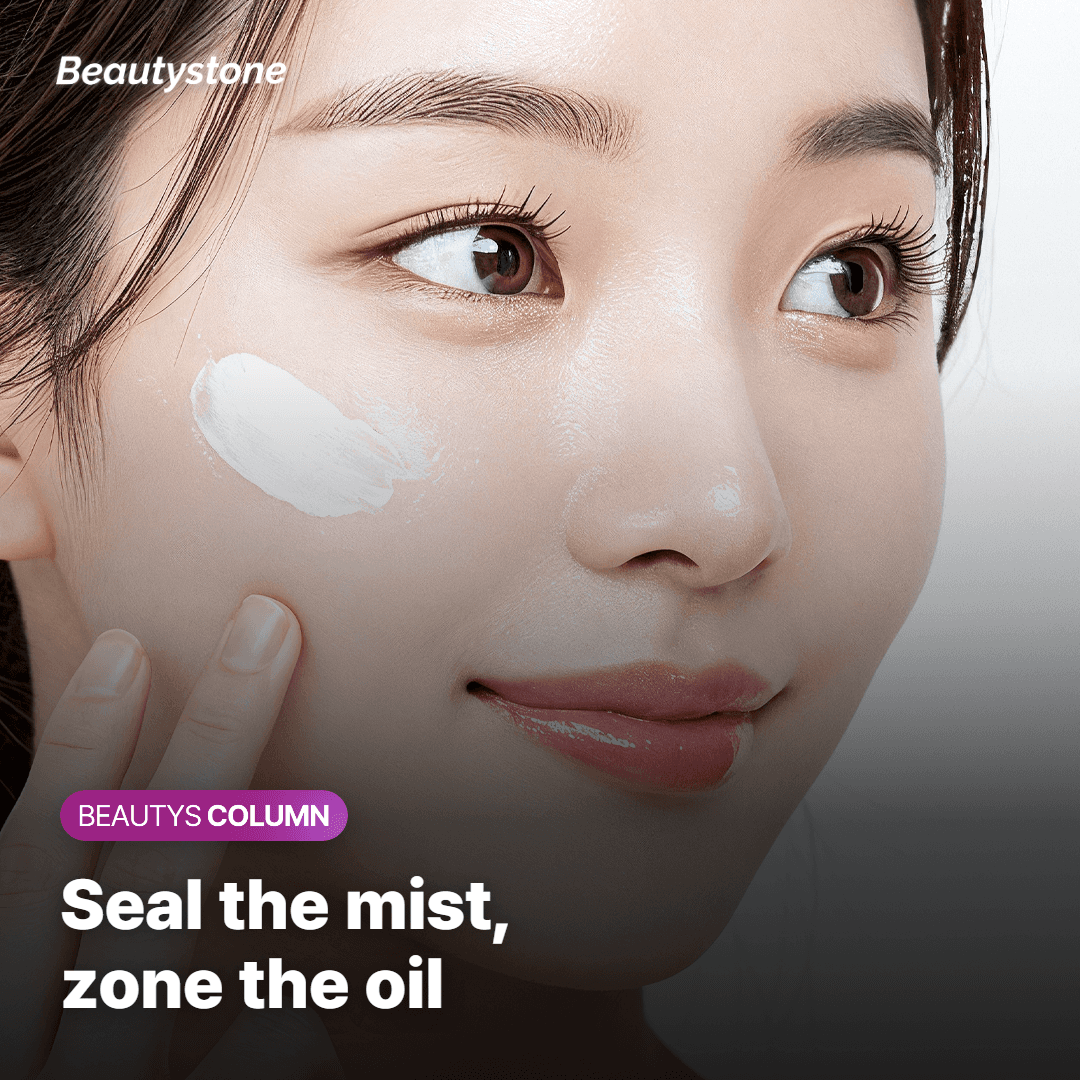
Facial mists: A spritz feels refreshing, but as the water evaporates it can leave your skin feeling even tighter than before. If you like using a mist, follow it right away with a thin layer of moisturizer to seal it in.
Moisturizers with oil: You don't have to avoid oil entirely. A small amount of a richer, oil-containing moisturizer on the tight cheeks is fine, while your T-zone gets a lighter gel or nothing extra at all. Using different amounts on different zones is one of the simplest ways to handle a face that behaves like two skin types.
Acne medication: Some acne treatments can make tightness worse. In the Thai study mentioned earlier, people currently using acne medication had the highest water loss, and the authors suggested using a barrier-supporting moisturizer during treatment. Please don't stop a prescribed medication on your own. Tell the person who prescribed it how your skin feels, and ask about adjusting your moisturizer alongside it.
Warning Signs and Risks: When It's Not Just Dehydration
Not every patch of flaking and redness is dehydration, and a gentler routine won't fix everything. One condition that's easy to mix up with oily but tight skin is seborrheic dermatitis.
According to the American Academy of Dermatology, seborrheic dermatitis can cause white-to-yellowish scale that may look dry or greasy, often around the sides of the nose and the eyebrows, and the rash can be itchy. It tends to come and go, which is why it's easy to blame on the weather or a new product.
It's a good idea to see a doctor if:
Flaking and redness beside your nose or around your brows keep coming back after about two weeks of a gentler routine
The flakes look yellowish or greasy and the area itches
Redness is spreading, stinging, or getting worse rather than better
You're on acne medication and the dryness or peeling is becoming hard to manage
If you notice spreading redness with swelling, pain, or fever, seek medical care right away rather than waiting it out.
At Beautystone, the first visit starts with a close look before any product talk. The doctor notes where oil comes up, where there's redness, and where the skin feels tight, then sorts out the type of skin concern from that combination. If you're taking acne medication, bring its name with you. And if you contact the clinic ahead of your visit, two front-facing photos help a lot: one taken right after your morning wash and one in the afternoon. They make it easier to tell at the first appointment whether you're looking at dehydrated oily skin or something else.
The Bottom Line
Oily but tight skin isn't a contradiction. It's a sign that oil and water are being handled by different layers of your skin, and in the fall the water side tends to slip first.
Sebum comes from oil glands, while tightness comes from a stratum corneum that isn't holding water well, so both can show up on one face.
Research suggests fall and winter bring more water loss and less hydration, and harsh cleansers may irritate more in cold weather.
A mirror test right after washing and again around 3 p.m. can help you sort out which pattern you have.
For most people, the first move is a gentler cleanse, not a heavier moisturizer. Check your cheeks again after about two weeks.
If redness and flaking keep coming back around your nose or brows, that's a reason to see a doctor rather than change products again. Ultimately, the right routine depends on your skin, your habits, and any treatments you're already using. If you'd like a second set of eyes, a consultation is the best way to find out what fits you. Beautystone is a dermatology clinic in Seoul's Hapjeong area, and we're happy to take a look.
Content


Contouring & Volume
How Many cc Does Forehead Filler Need?

skin
Why Is My Skin Oily but Tight in the Fall?

Hair Removal
Underarm Laser Hair Removal Cost: Do the Math

Tattoo removal
Laser Before a Cover-Up: How Many Sessions?

skin
큐어젯 다운타임, 다음 날 출근과 화장은 언제부터 될까요?

Lifting
Titanium Lifting Side Effects: When to Worry