

Acne flares, cold sores, pregnancy, blood thinners: when a skin booster is safer postponed.
Published -
Updated -

Author
Wi Young-jin · Chief director
Seoul National University College of Medicine · Seoul National University Hospital Specialist
→
Plenty of people decide they want a skin booster, then hesitate at the last minute because their skin has felt reactive lately or they are simply run down. The worry is rarely the injection itself. It is the nagging question of whether this is a week your skin should be left alone.
Here is the short answer first: most healthy adults tolerate skin boosters without trouble, but if there is active inflammation on the skin or your body is dealing with something else, postponing is the safer call. This is a treatment that places product into the dermis, so it goes better when your skin has spare capacity to heal rather than competing repairs to finish.
The trouble is that absolute-sounding rules get passed around online without the timing or context attached. So it helps to separate two very different things: situations where waiting is genuinely the right move, and situations that only need a conversation with your provider first.
This article is general information from Beautystone, a skin clinic in Hapjeong, Seoul.
What you will learn
Which layer of skin a booster actually works in
Which skin and body conditions are worth waiting out
How to tell a genuine wait from a talk-to-your-provider first
What tells you your skin is ready to try again
Where a skin booster actually works in your skin
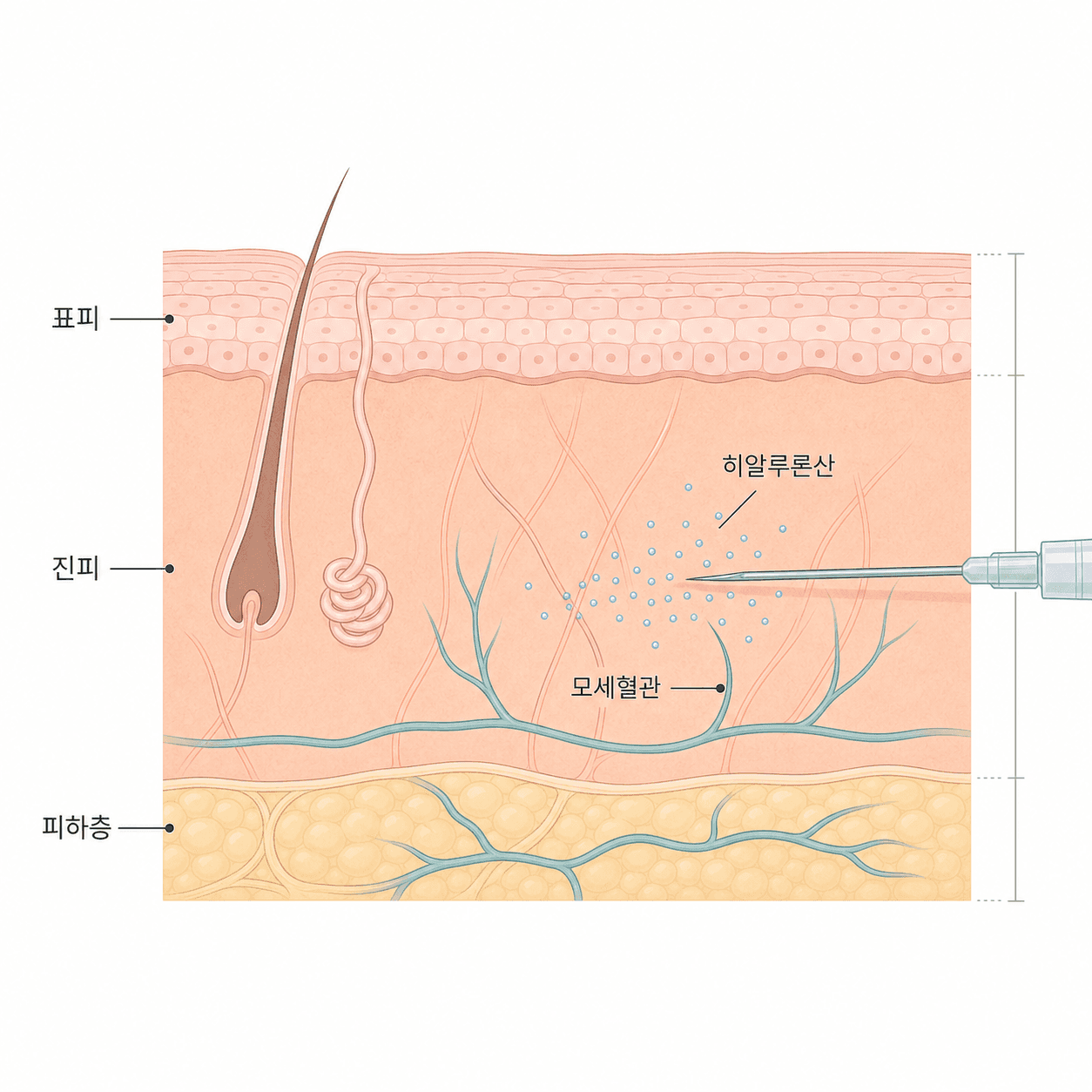
A skin booster places ingredients such as hyaluronic acid, or Rejuran in some Korean clinics, directly into the dermis to add hydration and support from within. Nothing is spread on the surface. Fine needles carry the product under the skin, which is exactly why the condition of the skin at the injection site has such a strong say in how the result turns out. Worth knowing if you are reading this from the US: Rejuran is a PDRN product available in Korea under MFDS authorization and is not FDA-approved in the United States, while hyaluronic acid injectables are a familiar category to American readers.
Dermis*: the layer of skin sitting under the epidermis. It holds collagen and blood vessels, which is why it governs firmness and hydration.
Hyaluronic acid*: an ingredient that pulls in and holds water. Placed in the dermis, it adds a plumper, better-hydrated feel from underneath.
Because the needle passes through the dermis, any infection or inflammation sitting in that spot turns the treatment into one more irritant, and healing takes longer than it needs to. Treating skin that is already calm is the single biggest thing in your control.
Dermatology guidance is blunt about this. Reviews of injectable procedures list active infection at the treatment site, including herpes simplex around the mouth, and allergy to the product as core contraindications, and advise screening for infection and hypersensitivity before treating. That is the whole logic in one sentence: with anything injected into skin, timing and condition come before technique. Which is why a good consultation starts with is today a sensible day for this, not which product would you like.

When it is better to postpone
The reasons to wait split fairly cleanly into skin reasons and body reasons. The first thing to check is the skin at the treatment site. If acne is actively flaring, the area is hot and red, or a wound has not finished closing, adding needle trauma on top tends to stretch out recovery rather than shorten it.
If you get recurring cold sores* around the mouth or nose, treatment in that area is safer once the outbreak has fully settled. Irritation in an area prone to recurrence can be enough to set one off.
Cold sores (herpes simplex)*: a viral infection that brings back blisters and stinging around the mouth. During an active outbreak, treatment to that area is best delayed until it clears.
On the body side, pregnancy and breastfeeding are usually a reason to postpone, simply because safety data in those groups is limited rather than because harm has been shown. Separately, if you take blood thinners* or bruise and bleed easily, expect more bruising than average. Do not stop any prescribed medication on your own initiative. Tell your provider what you take and let them decide whether anything needs adjusting.
Blood thinners*: medication that slows clotting to prevent clots from forming. If you take one, bruising and bleeding after injections can be more noticeable, so it is worth flagging in advance.
Wait, or just talk it through first
Rather than a list of people who can never have this treatment, it is more useful to sort situations into wait for now and proceed after a conversation. Here is a rough map.
Situation | Usual approach | Why |
|---|---|---|
Active inflammation or breakout at the site | Wait until it settles | Added irritation slows healing |
Active cold sore outbreak | Wait until symptoms clear | Only that area needs to wait |
Pregnant or breastfeeding | Usually postpone | Safety data is limited |
Taking blood thinners | Proceed after medical review | Never stop medication on your own |
Calm skin, back to your baseline | Reasonable to proceed | No particular reason to wait |
Treat the table as direction, not diagnosis. Where you personally land is something to work out in a consultation, ideally with your medication list and any ongoing conditions mentioned up front rather than remembered halfway through. Individual results and recovery vary, and so does the right timing.
Why the provider you choose still matters
The habit worth looking for is a clinic that checks whether today is a sensible day before it recommends anything at all. The same treatment can be a yes one month and a not yet the next, depending on how your skin is behaving and what you are taking. At Beautystone, a small clinic a short walk from Hapjeong Station in Seoul, that check comes first, which mostly means you hear the reasoning before you hear a recommendation. If you are travelling for treatment, one more thing to plan for: if a reaction shows up after you fly home, follow-up will have to happen with a provider where you live, so it is worth knowing in advance who that would be.
How to tell your skin is ready to try again
Once whatever you were waiting on has settled, getting back on the schedule is usually straightforward. The test is simple: has the skin at the treatment site returned to how it normally looks and feels. If the breakout has calmed and any cold sore has fully cleared, you are generally back in range.
The pattern of how readiness builds back as skin settles tends to look something like this.
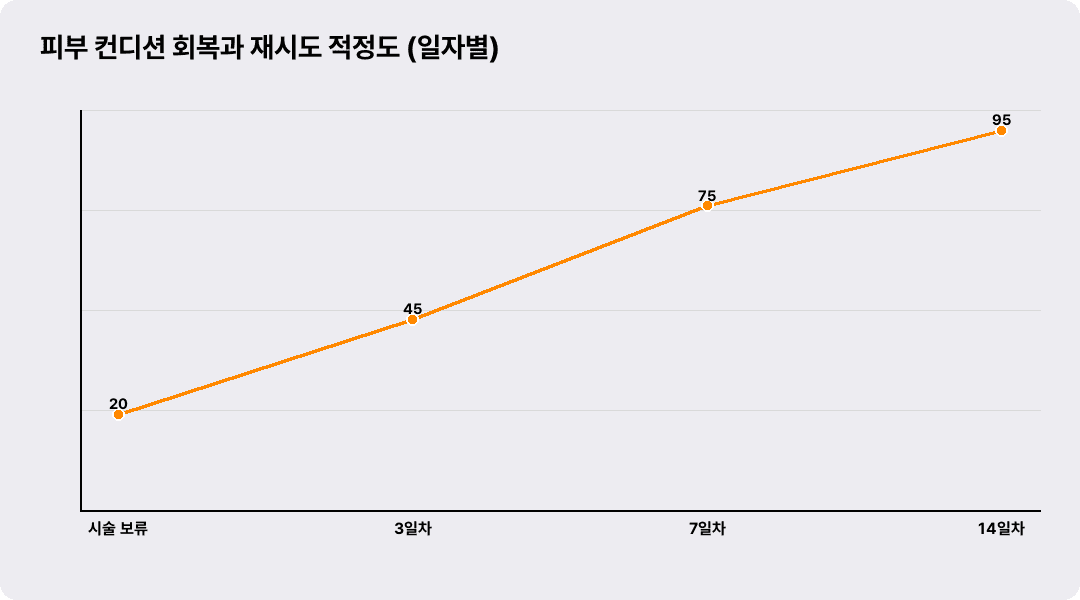
The pace differs from person to person and from situation to situation. If a breakout ran deep, or a cold sore has only just cleared, allow a little more margin. If you were pregnant or breastfeeding, pick the timing with a clinician once that period has passed. These are the signals worth waiting for.
The breakout has settled and the skin is back to its usual colour — the inflammation has quieted down
Cold sore blisters and stinging have fully cleared — the active phase is over
Any medication questions have been resolved with your prescriber
Skin boosters suit most people without much drama, but the right week for you depends on what your skin and body are doing right now. This is general educational information rather than medical advice, so whether today is your day is a decision to make with the clinician who has actually examined you.

Frequently asked questions
Q. Can I get a skin booster while I am breaking out?
A. If acne is actively flaring at the treatment site, or the area is red and inflamed, it is better to wait. The needle passes through the dermis, so adding irritation where inflammation already exists tends to stretch out recovery. Once the breakout has calmed and your skin is back to its usual state, the session is far more comfortable. If breakouts are a recurring pattern for you, plan the timing with your provider rather than guessing.
Q. Can I have a skin booster while pregnant or breastfeeding?
A. During pregnancy and breastfeeding the usual advice is to postpone, because safety data for these treatments in those groups is limited. Nothing here is urgent, so waiting until that period has passed is the low-stress option. Set the timing with a clinician, and bring any questions to the consultation rather than sitting on them.
Q. I take blood thinners. Can I still have this done?
A. Blood thinners make bruising and bleeding more likely after injections. That said, stopping prescribed medication on your own can be dangerous, so do not do it. Tell your provider exactly what you take before the appointment. In many cases the timing or technique can be adjusted and the treatment goes ahead without issue.
Q. I postponed. When can I book again?
A. Once the reason for waiting has resolved, you can generally go ahead. The checkpoints are whether the breakout has settled, whether any cold sore has fully cleared, and whether the skin has returned to its normal condition. If medication needed reviewing, wait until that is sorted. For the exact timing, have someone look at your skin rather than working from a calendar.
Content


skin
Why Does Fractional CO2 Take Longer to Heal?

Contouring & Volume
How Many cc Does Forehead Filler Need?

skin
Why Is My Skin Oily but Tight in the Fall?

Hair Removal
Underarm Laser Hair Removal Cost: Do the Math

Tattoo removal
Laser Before a Cover-Up: How Many Sessions?

skin
큐어젯 다운타임, 다음 날 출근과 화장은 언제부터 될까요?