

Redness and warmth after Titanium lifting usually ease within two days. Here are the warning signs to call your clinic about, and why pigment matters.
Published -
Updated -

Author
Wi Young-jin · Chief director
Seoul National University College of Medicine · Seoul National University Hospital Specialist
→
If you've just had Titanium lifting and your face is flushed, warm, and a little puffy, you're not alone. It's one of the most common questions we hear the evening after treatment: is this normal, or is my skin burned? Heat-based treatments almost always leave some short-lived redness, but the line between "skin that's cooling down" and "skin that's been injured" isn't always easy to spot in the mirror. In this article, we'll cover why the redness happens, how to tell a normal reaction from a warning sign, and why people with more melanin in their skin should keep an eye out for pigment changes that show up later.
Why Does Your Face Get Red and Hot After Titanium Lifting?
Here's the short answer: the laser has to pass through the top layer of your skin to heat the layer underneath. Titanium lifting uses a diode laser that blends several wavelengths to warm the dermis, the deeper layer where collagen lives, with the goal of a firmer, tighter look. To get there, the light first travels through the epidermis, and the melanin* in the epidermis absorbs some of that light along the way.
*Melanin: the pigment that gives skin its color. It absorbs laser light readily, so the darker your skin, the more heat tends to build up near the surface.
That's why cooling the surface is such a big part of diode laser safety. In a study of a diode laser that combined 810, 940, and 1060 nm wavelengths, researchers kept a chilled sapphire tip in constant contact with the skin to protect the epidermis, and they didn't observe adverse reactions in the nine participants with skin type IV. The same paper noted that single-wavelength lasers tend to lose a lot of energy to melanin, so the energy often has to be turned down to avoid damaging the skin.
So the redness and warmth you see right after treatment is mostly skin that was heated and is now cooling off. When the heat goes beyond what the epidermis can handle, though, the result looks different: blisters, oozing, or crusting are signs that the surface layer has been injured.

Common Side Effects: What the First 48 Hours Usually Look Like
The reactions that typically follow a diode laser treatment are redness, mild swelling, light itching, and skin that feels more sensitive than usual. A study that compared side effects of an 805 nm diode laser across skin types only counted redness and itching as side effects if they lasted longer than 48 hours after treatment. Among the 194 people who completed six sessions, 6.7% reported redness that met that definition. Redness that faded within 48 hours wasn't counted at all.
Here's how the first couple of days tend to unfold for most people:
Day of treatment: Redness and warmth usually peak in the evening. Mild puffiness is common.
Next morning: The color should look a shade lighter, and the skin should feel less hot.
By about 48 hours: Most of the flush has typically settled, though individual results vary.
The key isn't how intense day one feels. It's which direction day two is heading. If your skin was reddest the first night and looks lighter the next morning, it's cooling down. If it's redder and stings more on day two, it isn't cooling, and there's no reason to wait it out. Contact the clinic that treated you.
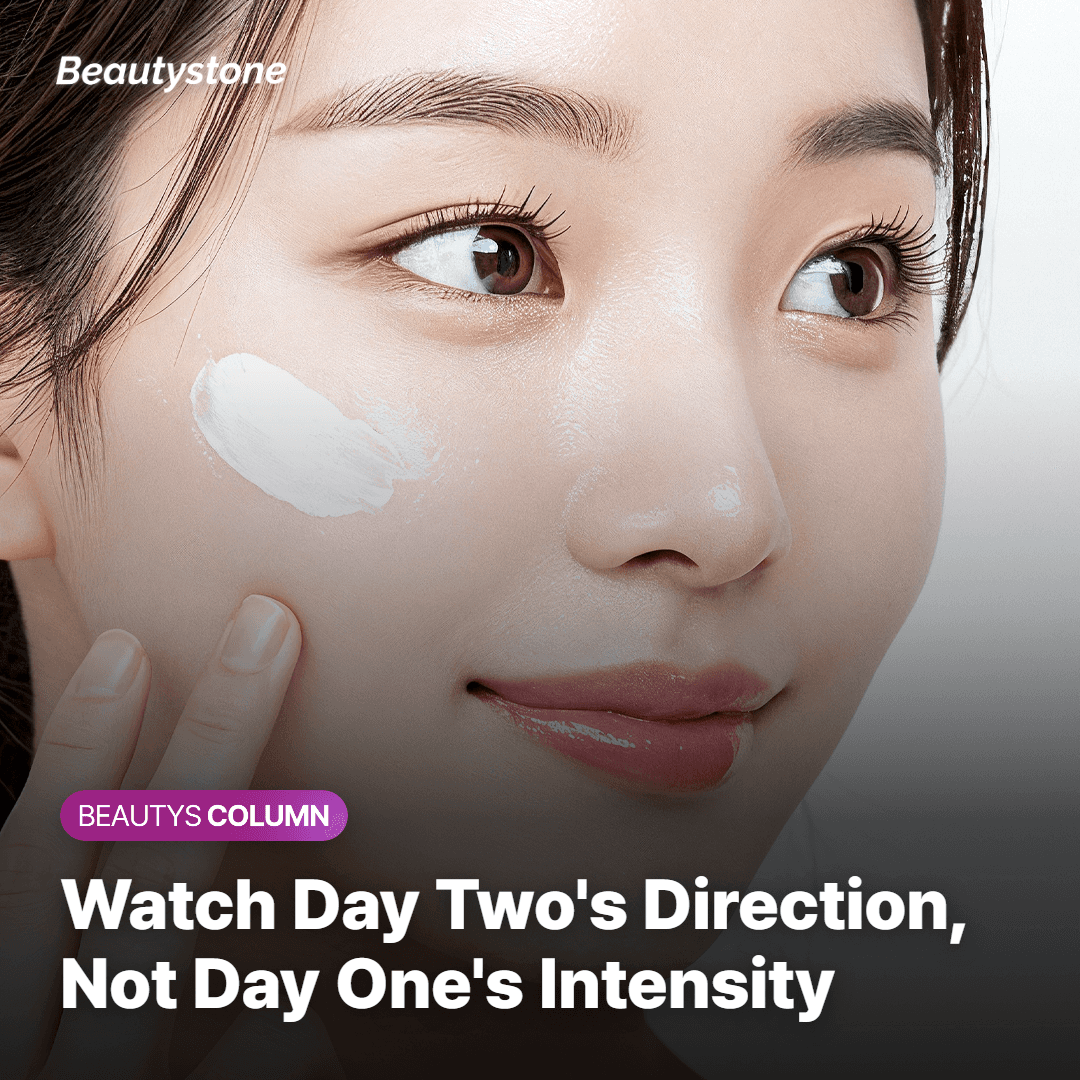
Warning Signs That Mean It's Time to Call Your Clinic
Injury to the epidermis tends to look different from ordinary redness right from the start. A review of laser hair removal complications in the journal Canadian Family Physician describes a case where painful lesions appeared on a patient's neck 8 to 10 hours after treatment, lined up in parallel rows where the laser passes had overlapped. It was diagnosed as a first-degree burn, and six months later some pigment and faint scarring still hadn't fully cleared.
What you notice | Likely just cooling down | Call your clinic |
|---|---|---|
Redness | Even across the face, lighter the next day | Darker on day two, or sharp, defined edges |
Heat or pain | Eases when you apply something cool | Still stings after cooling, or keeps getting worse |
Skin surface | Smooth | Blisters, oozing, crusting, or spots that turn white |
Shape of the mark | Diffuse, no clear shape | Squares or stripes that match the shape of the tip |
If anything in the right-hand column applies to you, take a photo and reach out to the clinic that performed your treatment so they can see it first. Don't pop blisters; leave them intact. Because symptoms can surface hours after treatment rather than right away, it's worth taking one more look in the mirror before bed. And if you notice fever or redness that's spreading beyond the treated area, seek medical care right away.
Why Darker and Asian Skin Tones Should Watch for Delayed Pigmentation
Sometimes a brown mark shows up after the redness has completely faded. This is post-inflammatory hyperpigmentation*, or PIH.
*Post-inflammatory hyperpigmentation: darkening that happens when irritated or inflamed skin produces extra melanin in that spot, leaving a brown patch.
In the 805 nm study, how often PIH appeared varied a lot by skin-color group. None of the 127 people in the white group developed it, but 3 of the 29 people in the Asian group did, which works out to 10.34%. That lines up with the mechanism above: skin with more melanin absorbs more light near the surface.
A study that looked only at Korean women showed the same signal. Researchers used an 805 nm diode laser on 10 Korean women with skin types II to IV, and the Annals of Dermatology paper reported that one participant developed pigmentation on both sides after the third session, with no other serious adverse events. In other words, a smooth first session doesn't mean the same energy setting will always suit you the next time.
That's why a good clinic checks for leftover marks before your next session. If a mark is still there, the usual approach is to wait for it to fade, stretch out the interval, and restart at a lower energy. Your provider will make that call based on your skin.

What to Tell Your Provider Before Your Session
The 805 nm study excluded people with any of the following conditions. They're also exactly the things your provider needs to know before setting the laser:
Skincare: Products with retinol, vitamins A, E, or C, or fruit acids (AHAs)
Sun: A recent tan
Medications: Drugs or herbal supplements that make you more sensitive to light
Acne treatment: Isotretinoin taken within the past year
The Canadian review also points out that tanned skin carries a higher risk of epidermal injury. None of this automatically rules you out. It's a signal that the settings should be adjusted so the surface of your skin absorbs less heat.
A helpful question to ask during your consultation: "Given my skin tone and recent sun exposure, what energy level would you start me at for the first session?" The answer tells you a lot about how that clinic manages risk to the surface of the skin.

How to Care for Your Skin at Home After Treatment
Cooling comes first. The Canadian review recommends ice after treatment to ease pain and swelling, along with ongoing sun avoidance. Wrap an ice pack in a towel instead of pressing it straight onto your skin, and cool in short intervals rather than holding it in place for a long time.
Sunscreen is non-negotiable in the days and weeks after treatment, especially if you're prone to pigmentation. It's also smart to hold off on retinol and exfoliating acids until the redness has fully settled. As for makeup, the same review notes that it's generally fine the day after treatment as long as there's no epidermal injury. If you have blisters, oozing, or crusting anywhere, keep makeup off those spots and have your provider look first.
Finally, if you do spot a brown mark, take photos under the same lighting about once a week. It makes it much easier to judge together at your follow-up whether the mark is fading.
The Bottom Line
Redness, warmth, and swelling that are heading in the right direction within about two days are usually a temporary reaction.
Blisters, oozing, crusting, tip-shaped marks, or pain that gets worse on day two mean you should call your clinic.
If you have more melanin in your skin, watch for brown marks that appear after the redness fades.
Tell your provider about sun exposure, retinol or acid products, and medications before treatment.
Like any heat-based procedure, Titanium lifting comes with trade-offs, and burns or pigmentation can't be ruled out entirely. Ultimately, the right settings depend on your skin, and that's a decision to make with your provider.
If you're considering Titanium lifting, a consultation is the best way to find out what fits you. Beautystone is a dermatology clinic in Seoul's Hapjeong area. When you reach out, mentioning your recent sun exposure, the products you use, your medications, and any past pigmentation after lasers helps the conversation start with the settings that matter for your skin. You can see current offers at /en/promotion.
Content


Contouring & Volume
How Many cc Does Forehead Filler Need?

skin
Why Is My Skin Oily but Tight in the Fall?

Hair Removal
Underarm Laser Hair Removal Cost: Do the Math

Tattoo removal
Laser Before a Cover-Up: How Many Sessions?

skin
큐어젯 다운타임, 다음 날 출근과 화장은 언제부터 될까요?

Lifting
Titanium Lifting Side Effects: When to Worry