

Choosing an acne clinic in Hongdae, Seoul? Pick one that sorts comedones, inflammation, or nodules first, sets medication, and checks progress at 6 to 8 weeks.
Published
Updated
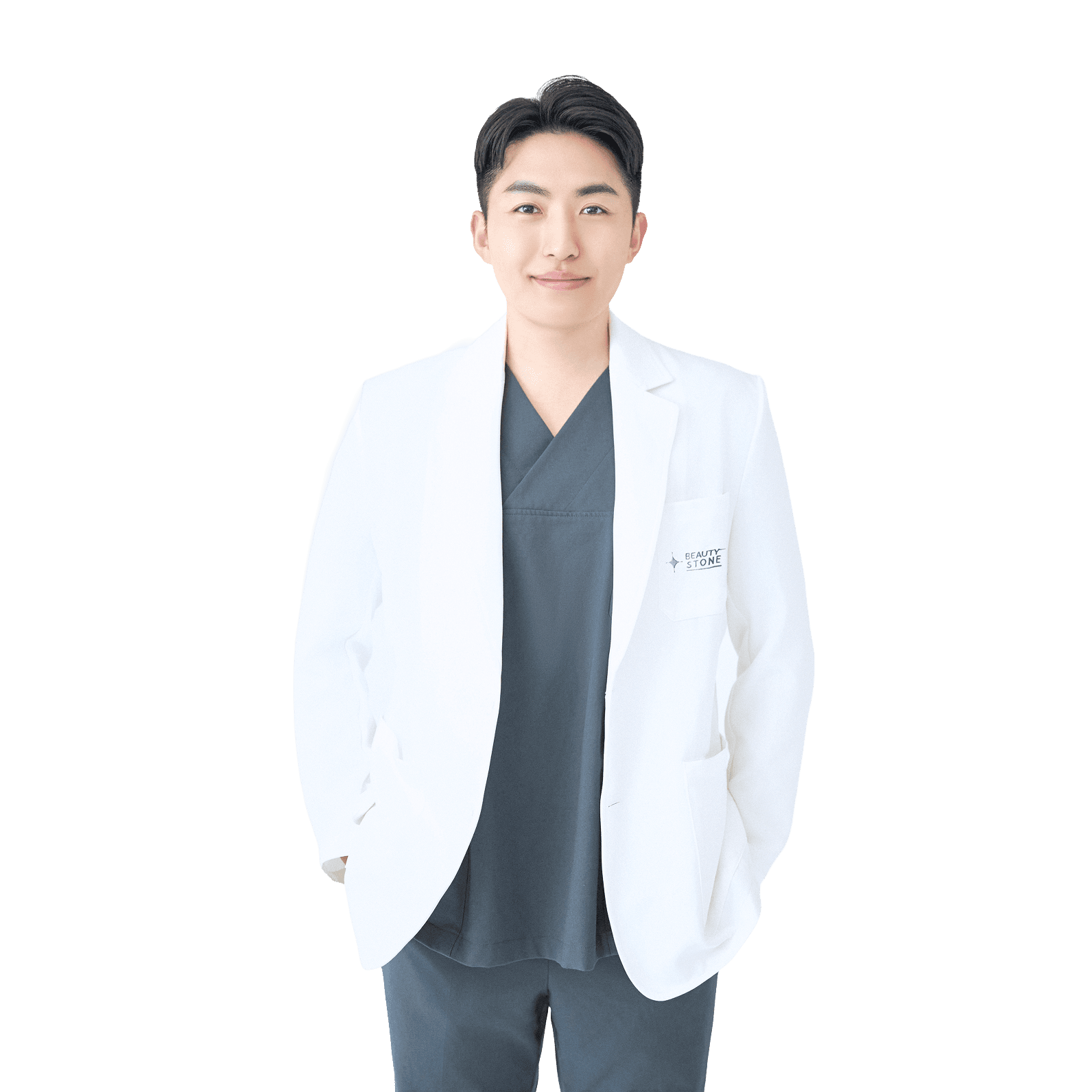
Author
Wi Young-jin · Chief director
Seoul National University College of Medicine · Seoul National University Hospital Specialist
→
Looking for an acne clinic in Hongdae? Book the one that sorts your acne at the first visit into clogged comedones, red inflamed spots, or deep nodules, and then sets your medication first. Even when you follow the plan, acne usually takes at least 6 to 8 weeks to start breaking out less. A clinic that books that check-in date with you is following the right order.

You take off your mask, and your hand goes straight to the red bumps along your jawline. Then you search for a dermatology clinic in Hongdae or a skin clinic in Seoul, and laser names flood the results. You also want to know if the doctor actually sees you, and if there is a dermatologist on staff.
Hot weather followed by rain pushes sebum up, and acne visits rise with it. A question we hear all the time in the exam room is simple: "Is there a clinic near Hongdae that treats acne properly?" If you know your acne stage before you pick a clinic, the consultation will make sense much faster.
Quick summary for busy readers
Acne falls into comedones, inflamed acne, and nodules. The first prescription is different at each stage.
The American Academy of Dermatology 2024 guidelines strongly recommend benzoyl peroxide, topical retinoids, topical antibiotics, and oral doxycycline, plus oral isotretinoin for severe acne.
The same guidelines say oral antibiotics should not be used long term and should be paired with a topical medication.
To check if the doctor sees you directly, ask at booking whether the same doctor handles your first visit and your follow-ups.
Is your acne comedones, inflammation, or nodules?
If you see small white or black dots where only the pore opening is blocked, and they do not hurt when pressed, you are at the comedone stage. If spots turn red and swollen or fill with yellow pus, that is inflammatory acne. If you can feel a firm, deep lump that hurts when you press it, you are closer to a nodule.
Comedone*: the first stage of acne, when sebum and dead skin plug a pore. An open one looks dark and is called a blackhead. A closed one is called a whitehead.
Many people think of acne as one condition you can pop and forget. It is not. Size you can see on the surface does not decide on its own whether a scar will form. DermNet, a dermatology resource from New Zealand, explains that more severe inflammatory acne is more likely to scar, and that picking or squeezing spots raises the chance of scarring. So when we sort the stage, we look at depth and pain, not just size.
Stage | What you see in the mirror and feel with your fingers | Can you squeeze it at home? |
|---|---|---|
Comedones | White or black dots, no pain when pressed | Clear them with topical medication instead |
Inflammatory | Red, swollen spots or pus-filled pustules | Squeezing raises scar risk, so let a doctor decide |
Nodules | Firm, deep lumps that hurt when pressed | Do not squeeze |
If a spot stays small, dot-like, and painless, you can usually start with topical medication. If it hurts when pressed, sits firm in the same place for weeks, or the healed spot is starting to look sunken, get seen sooner.

Once the stage is clear, the first prescription changes
The 2024 acne guidelines from the American Academy of Dermatology strongly recommend benzoyl peroxide, topical retinoids, topical antibiotics, and oral doxycycline. For acne that is severe, scarring, or not responding to earlier treatment, they strongly recommend oral isotretinoin. Every strong recommendation on that list is a medication.
Retinoid*: a vitamin A-based ingredient that reduces the pore-clogging process itself, which is why it is used from the comedone stage.
If most of your acne is comedones, topical medication is the starting point. A retinoid opens the clogs while benzoyl peroxide cuts down bacteria. Layering medications that work in different ways is a basic principle of the guidelines. If red inflammation is spread widely, an oral antibiotic is added, and the topical medication stays. For a single large, painful spot, a small steroid injection into the lesion is also listed in the guidelines.
In practice, the order usually runs like this:
When inflammation is active: medication and injections come before extraction.
When comedones are the main issue: medication is combined with peeling.
After inflammation settles: laser and scar treatments are considered.
If the order is off, scars can deepen or pigmentation can linger. We see quite a few patients who repeated laser sessions elsewhere, saw little change, and came to us after that. If the first consultation opens with a laser session count, it is worth asking which medications you will use and in what order. Scar lasers are a separate decision once new breakouts calm down.

Before you switch medications, check this first
The American Academy of Dermatology patient guide says that even when you stick to your treatment plan, it takes at least 6 to 8 weeks before acne starts breaking out less. Topical retinoids can cause dryness or stinging early on. If you stop during this window, you lose the chance to judge whether the treatment works.
At the follow-up, the first thing to check is whether fewer new spots are appearing. If they are, visits can be spaced out. If breakouts return, visits move closer together or the medication changes. Acne treatment rarely ends in one session, and the number of visits is not fixed in advance. Your progress decides the next step.
During this time, keep your hands off spots you want to squeeze. The American Academy of Dermatology also notes that to avoid scarring and infection, acne extraction and drainage should be done by a trained doctor. Extraction itself is not the problem. The wrong timing and the wrong technique are. Squeezing a spot at peak inflammation can damage the deeper skin and leave a lasting scar.
Risks to know before starting oral acne medication

Oral antibiotics can work well for acne, but the longer you take them, the more resistance becomes a problem. That is why the same guide describes prescribing them only as long as needed, usually within a few months.
Isotretinoin is used for nodular acne that has not responded to other treatments. Dry lips and dry skin are common, so start using moisturizer and lip balm from day one. The serious risk is something else: pregnancy. DermNet explains that taking isotretinoin during pregnancy carries a very high risk of severe birth defects, so it must not be taken while pregnant. If you could become pregnant, set a contraception plan with your doctor before you start. While on the medication, do not donate blood.
If your period is late while you are taking it, stop the medication and contact the clinic right away. If you only have dryness and it does not get in the way of daily life, you can add more moisturizer and wait for your next follow-up. Either way, oral treatment needs steady follow-up care, so plan for regular visits.
What to ask before booking an acne clinic in Hongdae or Hapjeong
One phone call before booking tells you whether the doctor sees you directly. Ask whether the same doctor handles your first visit and your follow-ups, and who performs extraction or lesion injections. To check whether a doctor is a dermatology specialist, look at the specialty and background on the clinic website's medical team page.
These are the criteria we usually share with patients:
Does the first visit take enough time to assess and discuss your skin?
Do they explain which combination of medication and procedures you need, and in what order?
Does the clinic doctor see you directly, or is your care handed off to others?
If you contact Hapjeong Beautystone at Mecenatpolis near Hapjeong Station, send three things with your message: front and side photos taken under the same lighting, the names of any medications you use now, and whether you are planning a pregnancy. When you take the photos, count how many painful lumps you have. That number is the first clue to whether topical medication is enough or oral medication should be considered. The stage itself is confirmed at an in-person visit, where the doctor examines your skin directly.
Frequently Asked Questions (FAQ)
Q1. How do I find a dermatology clinic in Seoul that treats acne properly?
Look for one that explains the treatment order. If a clinic recommends procedures before identifying your acne type, think twice.
Q2. Is acne treatment covered by insurance?
Oral medications and some topical medications are covered by Korea's national health insurance. Lasers and chemical peels are mostly not covered.
Q3. Should I pop my acne or get a procedure?
It depends on the stage and the timing. Comedones are better cleared with topical medication, and nodules should not be squeezed. Improper extraction causes scarring more often than people expect.
Q4. I already have acne scars. Can they be treated?
Often, yes. The approach is completely different for leftover pigmentation versus atrophic (pitted) scars, so get a thorough consultation first. Scar treatment is usually considered after new breakouts settle.




Lifting
Oligio X Cost: 300 or 600 Shots for Your Face?

Body
Body InMode Cost: 1 Session or 3 per Area?

Lifting
Eye Thermage Results: Is 1 Session Enough?

skin
Rejuran vs. Juvelook Cost: What 1 Session Buys

Lifting
XERF for a Thin Face: Depth vs. Hollowing?

Lifting
Thread Lift Swelling: What's Normal in 5 Days?