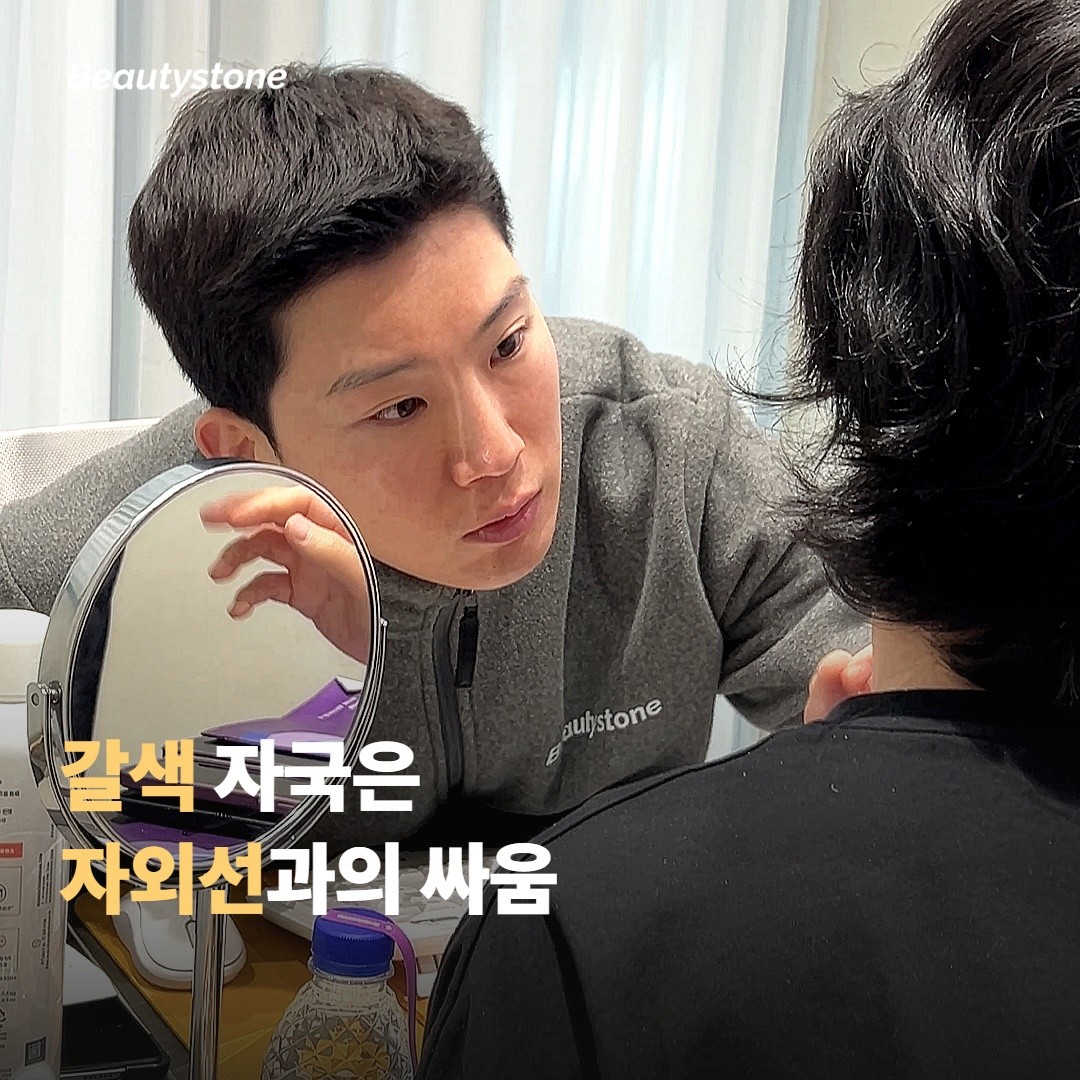
Acne scars—whether brown, red, or indented—cannot be treated with the same medication.
Brown represents melanin, red marks indicate blood vessels, depressions are caused by collagen loss, and raised scars are due to collagen hyperplasia. We have summarized the true nature of these four types of skin issues and their primary treatments in a single table.
Acne Marks: Brown, Red, and Depressed Scars Cannot Be Treated with the Same Medicine
🔗 Read other articles
Understanding Acne u2014 1.1 Folliculitis vs. Acne
At the Crossroads of Scarring u2014 2.1 Risk of Scarring by Size and Type
How to Stop It Now u2014 3.1 The Importance of Pus Drainage u00b7 3.2 Understanding Acne Injections Properly
Even after acne subsides, marks often remain. However, the term "acne mark" actually refers to four different conditions: brown marks, red marks, depressed scars, and raised scars. While it might seem like they can all be treated with the same medication, their underlying mechanisms are different, and therefore, their treatments must also differ. Using the wrong medication for too long on one type of mark means losing precious time to treat it correctly.
First, you need to identify what type of mark you have
The four types are as follows. PIH* refers to "brown" marks left by melanin. PIE* refers to "red" marks left by blood vessels. Atrophic scars are "depressed" areas caused by a lack of dermal collagen. Hypertrophic scars are "raised" areas caused by an overgrowth of collagen.
Take a close look at the color and surface texture of your scars in the mirror. If it is flat and brown, it's PIH; if it is flat and reddish, it's PIE; if it slightly indents when you run your finger across, it's atrophic; and if it is raised, it's hypertrophic.
* PIH (Post-inflammatory Hyperpigmentation): A state where excess melanin remains at the site of inflammation, appearing as brown or black marks. The recovery speed depends on whether the melanin is located in the epidermis or the dermis.
* PIE (Post-inflammatory Erythema): A state where micro-vessels in the dermis, dilated due to inflammation, remain without subsiding. It appears reddish and is characterized by temporarily fading under light pressure before filling back up with blood.

Brown marks (PIH) are a battle against UV rays
The melanin in PIH darkens further when exposed to UV rays. That's why the number one priority in treatment is "sun protection." Apply sunscreen with SPF 30 or higher every day, even if only on the affected areas. Without this step, no whitening treatment will bring about recovery.
The next line of treatment includes whitening toning (low-intensity laser), topical tretinoin, and antioxidant ingredients like Vitamin C. These marks often fade within 3 to 12 months. Dermal melanin that has penetrated deep into the dermis takes longer and helper lasers like IPL or Picosecond lasers may be necessary.

Red marks (PIE) are leftover blood vessels
PIE involves "blood vessels," not melanin. Therefore, pigmentation medications like whitening creams or tretinoin have almost no effect. The answer lies in lasers that target blood vessels. Equipment like IPL, V-beam, and PDL (vascular lasers) coagulate the dilated blood vessels to reduce redness.
Natural recovery is possible, but it is slower than PIH, taking about 6 to 18 months. If the marks do not fade for over 6 months, just one or two sessions of vascular laser can make them visibly lighter. Confusing PIH with PIE can lead to the frustration of seeing no results even after applying whitening agents for 6 months.

Depressed scars (Atrophic) require collagen rebuilding
Atrophic scars occur when the dermal collagen is damaged and fails to recover. They are divided into three shapes, and even within a single session, we combine different equipment to match each shape. In my clinical experience, combining a CO2 laser, which controls depth on a point-by-point basis, with CureJet, which refines the inner dermis, provides the most natural results.
Ice pick scars* are narrow, deep punctures, making them well-suited for point-by-point deep treatment using a CO2 laser. Boxcar scars have sharp edges, so the same CO2 laser is used to smooth out the edge boundaries. Rolling scars are wide, gentle depressions, which are well-supported by CureJet to break up the fibrous bands inside the dermis. Since these are permanent changes, they won't disappear all at once, but with consistent, active treatments over a year, a 50u201380% improvement is often achieved.
* Ice pick scar: A type of atrophic scar shaped like a narrow, deep puncture. Because of its depth, it is hard to fill with surface lasers; spot treatments like TCA CROSS (Chemical Reconstruction of Skin Scars) or punch excision are highly effective.

Raised scars (Hypertrophic/Keloid) need to be flattened
Hypertrophic scars and keloids occur where "too much" collagen has grown. This is the exact opposite problem of atrophic scars, so the answer lies in "flattening" treatments rather than filling ones. The first-line treatment is the triamcinolone injection, which we discussed in Chapter 4. Getting 1 to 3 injections at 4 to 6-week intervals will reduce the elevation with each session.
Silicone gel sheets are also helpful at home. If the area is prone to keloids, an active approach combining excision with radiation or additional injections is necessary. Since the back and chest are areas where keloids easily form, using the acne injection mentioned in Chapter 4 early on is the key to preventing the scars from growing larger in the first place.
Here is a summary of the four types in a table:
Type | Nature | Primary Treatment | Recovery Time |
|---|---|---|---|
Brown Marks (PIH) | Residual Melanin | Sun Protection + Whitening Toning u00b7 Tretinoin u00b7 Vitamin C | 3 to 12 months |
Red Marks (PIE) | Residual Blood Vessels | Vascular Lasers such as IPL, V-beam, PDL | 6 to 18 months |
Depressed Scars (Atrophic) | Collagen Loss | CO2 Laser u00b7 CureJet (Combined by shape) | Permanent u2014 50u201380% improvement in 1 year |
Raised Scars u00b7 Keloids | Collagen Overgrowth | Triamcinolone u00b7 Silicone Sheets u00b7 (Excision + Radiation for Keloids) | Permanent u2014 Ongoing management |
Acne scars are not "a single enemy." First, determine whether it is a matter of color or texture, and whether it is a depression or an elevation. After that, choosing the clinical path that fits your scars will prevent you from wasting precious time. It is also highly recommended to return to the first article of the series and read "How to Prevent Scars from Getting to This Point."
Frequently Asked Questions
Q. I applied a whitening agent to my brown marks for 6 months, but they won't fade. Why?
It is highly likely to be one of two reasons. First, the marks might actually be PIE (red marks), which you tried to treat with a whitening product. Second, the melanin may have settled deep into the dermis, reaching the limits of topical medications. Re-evaluating the color up close in the mirror or getting a clinical diagnosis will save you from losing more time.
Q. Do depressed scars fill up naturally over time?
They rarely fill up on their own. Atrophic scars occur where dermal collagen has been lost, so they remain the same over time. However, if you consistently undergo active treatments for about a year, their shape and depth often improve noticeably. Starting early is always best.
Q. Are there specific areas where keloids are more likely to form?
The shoulders, center of the chest, upper back, and earlobes are areas highly prone to keloids. If nodules or cysts have formed in these areas, treating them quickly with triamcinolone injections from the start is the first step in preventing keloids. Trying to handle them after the scars have already enlarged requires many more treatment sessions.
Recommended Readings
Acne Marks: Brown, Red, and Depressed Scars Cannot Be Treated with the Same Medicine
🔗 Read other articles
Understanding Acne u2014 1.1 Folliculitis vs. Acne
At the Crossroads of Scarring u2014 2.1 Risk of Scarring by Size and Type
How to Stop It Now u2014 3.1 The Importance of Pus Drainage u00b7 3.2 Understanding Acne Injections Properly
Even after acne subsides, marks often remain. However, the term "acne mark" actually refers to four different conditions: brown marks, red marks, depressed scars, and raised scars. While it might seem like they can all be treated with the same medication, their underlying mechanisms are different, and therefore, their treatments must also differ. Using the wrong medication for too long on one type of mark means losing precious time to treat it correctly.
First, you need to identify what type of mark you have
The four types are as follows. PIH* refers to "brown" marks left by melanin. PIE* refers to "red" marks left by blood vessels. Atrophic scars are "depressed" areas caused by a lack of dermal collagen. Hypertrophic scars are "raised" areas caused by an overgrowth of collagen.
Take a close look at the color and surface texture of your scars in the mirror. If it is flat and brown, it's PIH; if it is flat and reddish, it's PIE; if it slightly indents when you run your finger across, it's atrophic; and if it is raised, it's hypertrophic.
* PIH (Post-inflammatory Hyperpigmentation): A state where excess melanin remains at the site of inflammation, appearing as brown or black marks. The recovery speed depends on whether the melanin is located in the epidermis or the dermis.
* PIE (Post-inflammatory Erythema): A state where micro-vessels in the dermis, dilated due to inflammation, remain without subsiding. It appears reddish and is characterized by temporarily fading under light pressure before filling back up with blood.

Brown marks (PIH) are a battle against UV rays
The melanin in PIH darkens further when exposed to UV rays. That's why the number one priority in treatment is "sun protection." Apply sunscreen with SPF 30 or higher every day, even if only on the affected areas. Without this step, no whitening treatment will bring about recovery.
The next line of treatment includes whitening toning (low-intensity laser), topical tretinoin, and antioxidant ingredients like Vitamin C. These marks often fade within 3 to 12 months. Dermal melanin that has penetrated deep into the dermis takes longer and helper lasers like IPL or Picosecond lasers may be necessary.

Red marks (PIE) are leftover blood vessels
PIE involves "blood vessels," not melanin. Therefore, pigmentation medications like whitening creams or tretinoin have almost no effect. The answer lies in lasers that target blood vessels. Equipment like IPL, V-beam, and PDL (vascular lasers) coagulate the dilated blood vessels to reduce redness.
Natural recovery is possible, but it is slower than PIH, taking about 6 to 18 months. If the marks do not fade for over 6 months, just one or two sessions of vascular laser can make them visibly lighter. Confusing PIH with PIE can lead to the frustration of seeing no results even after applying whitening agents for 6 months.

Depressed scars (Atrophic) require collagen rebuilding
Atrophic scars occur when the dermal collagen is damaged and fails to recover. They are divided into three shapes, and even within a single session, we combine different equipment to match each shape. In my clinical experience, combining a CO2 laser, which controls depth on a point-by-point basis, with CureJet, which refines the inner dermis, provides the most natural results.
Ice pick scars* are narrow, deep punctures, making them well-suited for point-by-point deep treatment using a CO2 laser. Boxcar scars have sharp edges, so the same CO2 laser is used to smooth out the edge boundaries. Rolling scars are wide, gentle depressions, which are well-supported by CureJet to break up the fibrous bands inside the dermis. Since these are permanent changes, they won't disappear all at once, but with consistent, active treatments over a year, a 50u201380% improvement is often achieved.
* Ice pick scar: A type of atrophic scar shaped like a narrow, deep puncture. Because of its depth, it is hard to fill with surface lasers; spot treatments like TCA CROSS (Chemical Reconstruction of Skin Scars) or punch excision are highly effective.

Raised scars (Hypertrophic/Keloid) need to be flattened
Hypertrophic scars and keloids occur where "too much" collagen has grown. This is the exact opposite problem of atrophic scars, so the answer lies in "flattening" treatments rather than filling ones. The first-line treatment is the triamcinolone injection, which we discussed in Chapter 4. Getting 1 to 3 injections at 4 to 6-week intervals will reduce the elevation with each session.
Silicone gel sheets are also helpful at home. If the area is prone to keloids, an active approach combining excision with radiation or additional injections is necessary. Since the back and chest are areas where keloids easily form, using the acne injection mentioned in Chapter 4 early on is the key to preventing the scars from growing larger in the first place.
Here is a summary of the four types in a table:
Type | Nature | Primary Treatment | Recovery Time |
|---|---|---|---|
Brown Marks (PIH) | Residual Melanin | Sun Protection + Whitening Toning u00b7 Tretinoin u00b7 Vitamin C | 3 to 12 months |
Red Marks (PIE) | Residual Blood Vessels | Vascular Lasers such as IPL, V-beam, PDL | 6 to 18 months |
Depressed Scars (Atrophic) | Collagen Loss | CO2 Laser u00b7 CureJet (Combined by shape) | Permanent u2014 50u201380% improvement in 1 year |
Raised Scars u00b7 Keloids | Collagen Overgrowth | Triamcinolone u00b7 Silicone Sheets u00b7 (Excision + Radiation for Keloids) | Permanent u2014 Ongoing management |
Acne scars are not "a single enemy." First, determine whether it is a matter of color or texture, and whether it is a depression or an elevation. After that, choosing the clinical path that fits your scars will prevent you from wasting precious time. It is also highly recommended to return to the first article of the series and read "How to Prevent Scars from Getting to This Point."
Frequently Asked Questions
Q. I applied a whitening agent to my brown marks for 6 months, but they won't fade. Why?
It is highly likely to be one of two reasons. First, the marks might actually be PIE (red marks), which you tried to treat with a whitening product. Second, the melanin may have settled deep into the dermis, reaching the limits of topical medications. Re-evaluating the color up close in the mirror or getting a clinical diagnosis will save you from losing more time.
Q. Do depressed scars fill up naturally over time?
They rarely fill up on their own. Atrophic scars occur where dermal collagen has been lost, so they remain the same over time. However, if you consistently undergo active treatments for about a year, their shape and depth often improve noticeably. Starting early is always best.
Q. Are there specific areas where keloids are more likely to form?
The shoulders, center of the chest, upper back, and earlobes are areas highly prone to keloids. If nodules or cysts have formed in these areas, treating them quickly with triamcinolone injections from the start is the first step in preventing keloids. Trying to handle them after the scars have already enlarged requires many more treatment sessions.
Recommended Readings
Recommended post
Recommended post
Latest post
Latest post

skin
Think it's just a pimple? If it's folliculitis, the treatment is different
Acne and folliculitis are as closely related as cousins, but they start from different origins. Here is how to tell them apart by the presence of comedones, itching, and their location on the body, and why a proper diagnosis determines whether you are left with scars.

skin
Please don't squeeze your acne once it becomes nodular; that's when scarring starts to form.
Scarring isn't caused by squeezing; rather, it's determined by how deep the inflammation has spread. Here is a quick reference table showing scar risk levels by stage and our clinical approaches.

skin
Leaving pustules alone can make the scars larger; there is a specific time they should be popped.
The saying 'it is best not to pop acne' is only half true. We have compiled a clear summary table showing the right time to extract pustules, the proper squeeze technique, and the stages when you must never try to pop them.

skin
Acne Cortisone Shots: The underlying principle is actually the same as reducing burn scars
If you thought waiting a few more days would make nodules or cysts subside, keep in mind that this waiting time is when your dermal collagen is being damaged. We have put together a summary of how anti-inflammatory injections work, as well as their side effects and limitations.

skin
Acne scars—whether brown, red, or indented—cannot be treated with the same medication.
Brown represents melanin, red marks indicate blood vessels, depressions are caused by collagen loss, and raised scars are due to collagen hyperplasia. We have summarized the true nature of these four types of skin issues and their primary treatments in a single table.

Contouring & Volume
The frontalis muscle doesn't just create wrinkles — it also helps open your eyes (the key point!)
Ever wonder why the exact same dosage injected in the exact same spot yields different results for everyone? Here is a quick summary of how the forehead muscle plays dual roles in 'wrinkles + eye movement assistance' and its relationship with other muscles.
1:1 Custom Approach
💬 Eng Available 1:1 consultations available via Whatsapp
🌸 Beautystone Clinic attends the Meditox Bangkok Cadaver Workshop 🌸
1:1 Custom Approach


![[Beauty Stone] How to Avoid Failing at Dark Circle Filler? "The Precision of 0.3cc Changes the Results"](https://framerusercontent.com/images/F4Q84TUWgjbZJV6MNheLnWHnaw.jpg?width=1080&height=1080)