

Alltite RF produces two effects through separate pathways. Here's what to expect at each stage — and when results actually peak.
Published -
Updated -

Author
Wi Young-jin · Chief director
Seoul National University College of Medicine · Seoul National University Hospital Specialist
→
One of the most common questions we hear about Alltite RF is: "How soon does it work?" And the honest answer is: it depends on which effect you're asking about.
Most patients feel something the day of their treatment — a tightness in the jawline, a subtle lift. But a few weeks later that sensation fades, and it's easy to wonder if the treatment even worked. Here's what's actually happening: RF lifting produces two separate effects through two separate pathways, and they run on completely different timetables. In this guide, we'll walk through both, explain the research behind them, and lay out what to realistically expect at each stage.
What Is Alltite RF Lifting?
Alltite is a radiofrequency (RF) lifting device that delivers controlled thermal energy into the dermis. RF energy doesn't penetrate to the SMAS layer the way HIFU does — it works primarily in the dermis and the dermal-subdermal boundary. The goal is to heat the tissue precisely enough to trigger two overlapping responses: an immediate structural change and a longer-term remodeling process.
RF devices are FDA-cleared for non-invasive skin tightening. The mechanism isn't new, but delivery systems have improved — Alltite uses a monopolar configuration, which concentrates energy differently than bipolar or multipolar setups. That configuration is one reason why reported session counts for monopolar RF tend to be lower than other types, as we'll cover below.
Why You Feel Results Right Away — and Why They Fade
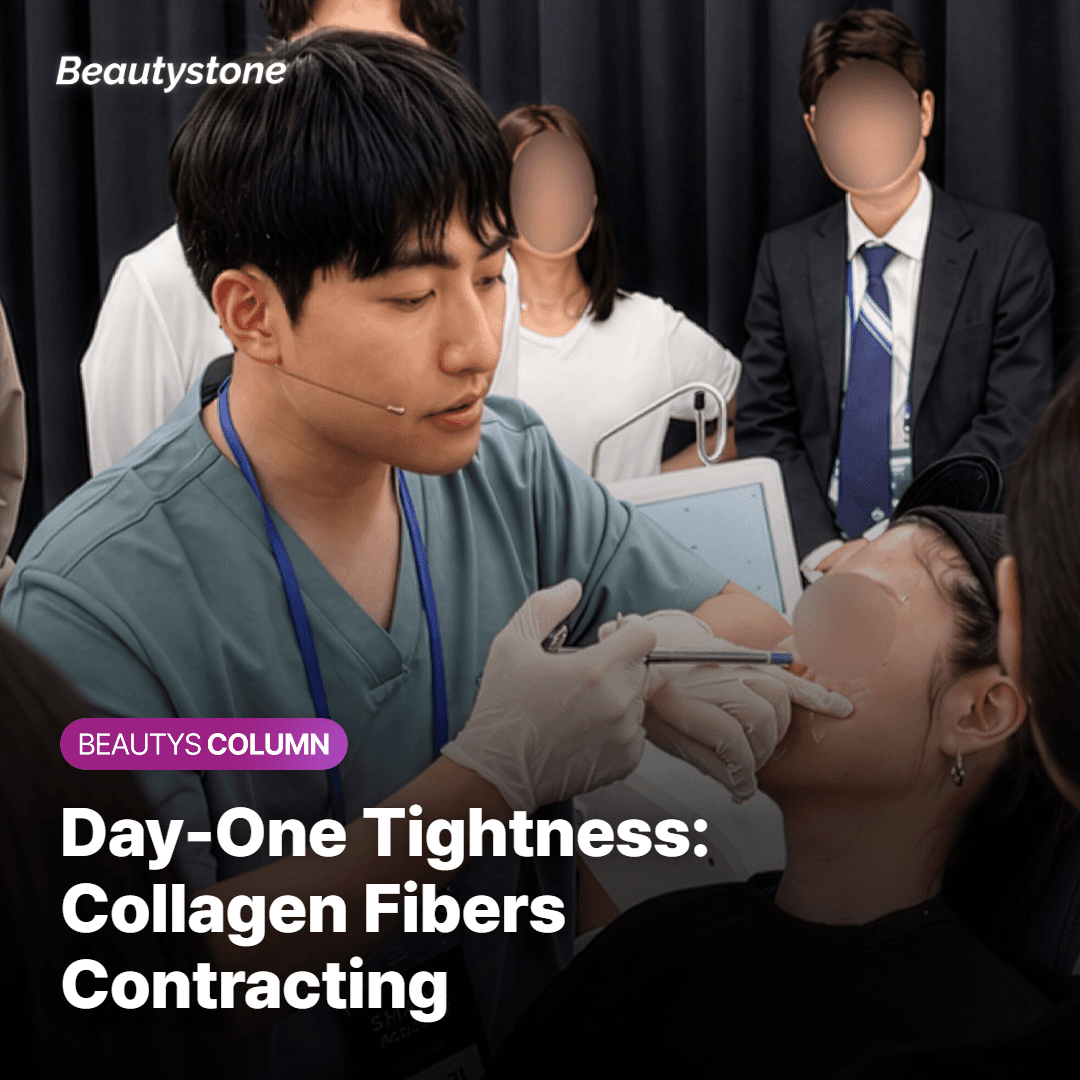
The immediate tightening you feel after Alltite comes from collagen fiber contraction. When RF heat reaches the dermis, it disrupts the hydrogen bonds holding collagen's triple-helix structure together. The fibers shorten and thicken — and that's what creates the "lifted" sensation on the day of treatment (Plastic and Reconstructive Surgery Global Open, 2020).
For optimal contraction, the same review notes that subdermal temperature needs to reach 65–68°C while skin surface temperature stays between 38–42°C. The repeated warmth you feel during treatment is the device cycling to maintain that window.
But here's the thing: that initial contraction isn't the long-lasting result. A more recent review describes the immediate collagen contraction as a precursor stage that leads into the longer remodeling process — not the destination itself (Health Science Reports, 2026). As the contracted fibers settle over days to weeks, the initial tight feeling naturally diminishes. That's not regression — it's transition.
Timepoint | What's happening | What to ask your provider |
|---|---|---|
Day of treatment | Existing fibers contract from RF heat | Is today's sensation a reliable baseline? |
Days to weeks | Initial tightness naturally settles | Is this fade normal for my skin type? |
3–4 months | New collagen accumulates from wound-healing response | When should I come in for a check? |
~6 months | Best point to assess full results | How do we compare this to my starting point? |
The Second Effect: Collagen Remodeling Takes Months
The lasting results from Alltite come from the secondary pathway: the wound-healing cascade triggered by the thermal injury. The same 2020 review describes how RF heat initiates neovascularization, new collagen synthesis, and elastin reorganization — changes that unfold over 3–4 months, with some patients seeing continued improvement up to the 6-month mark (Plastic and Reconstructive Surgery Global Open, 2020).
The American Academy of Dermatology notes that for non-invasive RF tightening, most people notice some immediate tightening but that the best results tend to appear around 6 months after treatment, as the body continues to produce collagen. Results may last 2–3 years depending on skincare and lifestyle (American Academy of Dermatology — firmness and sagging skin, plain text reference).
This is why asking "did it work?" three weeks after treatment isn't the right question. The answer at three weeks is incomplete. The answer at six months is much more informative.
How Many Sessions Do You Need?
The honest answer? It depends on the device's electrode configuration, your skin's baseline, and your goals — and those factors interact.
A 2026 review summarized reported session counts by RF electrode type: monopolar devices like Alltite typically fall in the 1–2 session range, bipolar devices at 3–6 sessions, and multipolar at 3–4 sessions (Health Science Reports, 2026). That same review characterizes non-ablative RF results as generally gradual rather than dramatic — individual results vary, and some patients respond more than others to the same treatment parameters.
The practical implication: don't schedule your next session based on how you feel at three weeks. Wait for the collagen remodeling phase to complete before deciding whether a repeat session makes sense. Rushing into additional sessions during the transition window won't accelerate the underlying biology.

Side Effects and What's Actually a Warning Sign
Alltite RF is non-invasive, and side effects are typically mild and temporary. Common post-treatment responses include:
Redness and warmth: Usually resolves within a few hours to a day.
Mild swelling: Often peaks the morning after treatment; typically resolves in 2–3 days.
Temporary skin sensitivity: Avoid harsh scrubs and active skincare for a few days.
Less common but worth watching for:
Prolonged swelling or hardness: Contact your provider if swelling doesn't settle within a week.
Burns or blistering: Rare with properly calibrated equipment and trained providers, but a sign that something went wrong — seek care immediately.
If you notice spreading redness, fever, or worsening pain in the days after treatment, seek medical care right away. Like any procedure, it comes with trade-offs — results are generally gradual and modest rather than dramatic, which is what makes realistic expectations important before you start.
How Much Does Alltite RF Cost?
Pricing at Beautystone — a dermatology clinic in Seoul's Hapjeong neighborhood — varies by treatment area and the number of sessions planned. Because Alltite tends toward fewer sessions than some other RF configurations, comparing total investment across a multi-year window is often more useful than a per-session figure alone.
For current pricing, visit /en/price or check active offers at /en/promotion. Seoul clinic pricing is subject to change — confirm at consultation.
The Bottom Line
Here's what to remember:
Alltite RF produces two separate effects: immediate collagen contraction (same-day tightening) and longer-term collagen remodeling (weeks to months).
The fade you feel a few weeks post-treatment is the transition between these phases — not a sign of failure.
Studies suggest the most complete results tend to appear around 6 months; the AAD notes results may last 2–3 years with proper skincare. Individual results vary.
Monopolar RF devices like Alltite are typically reported at 1–2 sessions — but the right timing for a follow-up should be based on a 6-month assessment, not early impressions.
Like any procedure, it comes with trade-offs. Ultimately, the choice depends on your skin, your goals, and your budget. If you're considering Alltite RF, a consultation is the best way to understand what timeline fits your situation. Beautystone is a dermatology clinic in Seoul's Hapjeong area — see current offers at /en/promotion.
Frequently Asked Questions
Q. Does Alltite RF produce immediate results?
A. Yes, but the immediate result is different from the lasting one. On the day of treatment, RF heat contracts existing collagen fibers, creating a noticeable tightening sensation. That sensation typically settles over the following weeks. The longer-term result comes from new collagen produced through the wound-healing response, which takes 3–4 months to fully develop.
Q. How long do Alltite RF results last?
A. Studies suggest results can last 2–3 years depending on skincare and lifestyle, with the best results typically visible around 6 months post-treatment. Individual results vary — non-ablative RF outcomes tend to be gradual and modest rather than dramatic. The remodeling pathway is what provides the lasting improvement.
Q. How many sessions of Alltite RF do I need?
A. Monopolar RF devices like Alltite are typically reported in the 1–2 session range, compared to 3–6 for bipolar configurations. That said, the right number for you depends on your baseline skin condition and goals. Timing matters too — scheduling a repeat session before the collagen remodeling phase completes doesn't accelerate results.
Q. Is the tightness fading a few weeks after treatment normal?
A. Yes. The initial tightness comes from existing collagen fibers contracting under RF heat. That contraction gradually settles as tissue normalizes — it's not a regression. The second phase of results, driven by new collagen formation, develops over the following months and is what produces the lasting structural change.


skin
Ellanse Cost: Duration Beats Price Per Visit

Lifting
Alltite RF: Two Effects, Two Timelines

Contouring & Volume
Why Juvelook Volume Quotes Vary by Clinic

men's
Nose Pore Treatment: Aftercare Timing Guide

skin
How Many Sessions Does Eyeliner Removal Take?

Hair Removal
Laser Hair Removal While Pregnant or Nursing