

Laser, waxing, or home device? See how each works and which is safe for your skin tone.
Published -
Updated -

Author
Wi Young-jin · Chief director
Seoul National University College of Medicine · Seoul National University Hospital Specialist
→
Once you start looking into hair removal, the options pile up fast: waxing studios, at-home devices, and laser at a dermatology clinic. It's easy to think, “It all just gets rid of hair — why bother going to a clinic?” But after enough rounds of irritation, you start to wonder whether a clinic really does something different.
Here's the short answer: waxing and home devices mostly pull out or lightly thin the hair you can see right now, while a dermatology laser works on the follicle itself, shrinking it over time. That's why the depth they reach and the way you manage it are so different.
Pulling hair out vs. shrinking the follicle
Waxing pulls hair out by the root, so you feel smooth for a moment — but the follicle stays put, and the hair grows back. Home devices are set to a safely low power level, so changes come slowly and only with consistent use. A dermatology laser, on the other hand, concentrates light onto the melanin* inside the hair and uses heat to shrink the follicle, so hair gets thinner and sparser as the sessions add up.
* melanin: the pigment that gives hair its color. The laser targets this pigment to generate heat, which is why it responds best to dark, coarse hair.
Method | How it works | What to expect |
|---|---|---|
Waxing | Pulls hair out by the root | Smooth briefly; follicle remains, hair regrows |
Home device | Mild stimulation at low power | Slow change, needs consistent use |
Dermatology laser | Shrinks the follicle with heat | Thinner, sparser hair over multiple sessions |
They all go by the same word — “hair removal” — but they reach completely different depths. And that's exactly why the results you can expect, and the upkeep involved, vary so much.
What a clinic can do that others can't
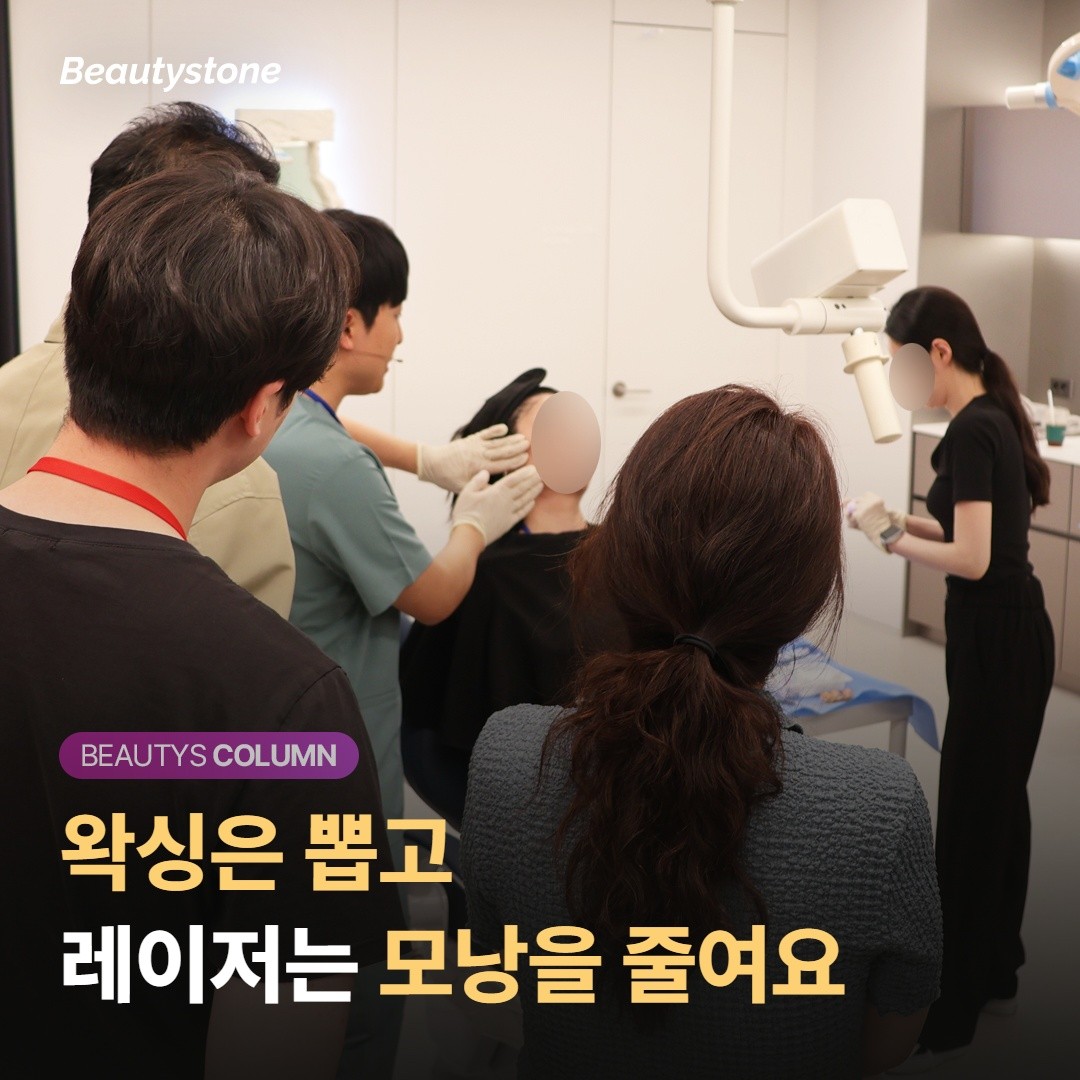
The biggest difference is that the power and wavelength are tuned to you. Even with the same laser, the right intensity depends on your hair color and thickness and your skin tone. If your skin is tanned or naturally darker, the laser can also react to the pigment in your skin — so the clinic chooses a wavelength that reaches safely into the skin and keeps the power conservative. This kind of person-by-person adjustment is only possible in a setting built around medical devices.
It's also why it can't all be done in one visit. A follicle only responds properly during its growth phase*, so the new hairs that surface every 4–6 weeks have to be caught in turn. Most people do an initial 4–6 sessions and then add maintenance — and dialing in that spacing and number of sessions to match your hair is part of the difference too.
* growth phase: the stage when a follicle is actively producing hair. Only during this phase does the laser act effectively on the follicle itself.

Managing irritation and side effects
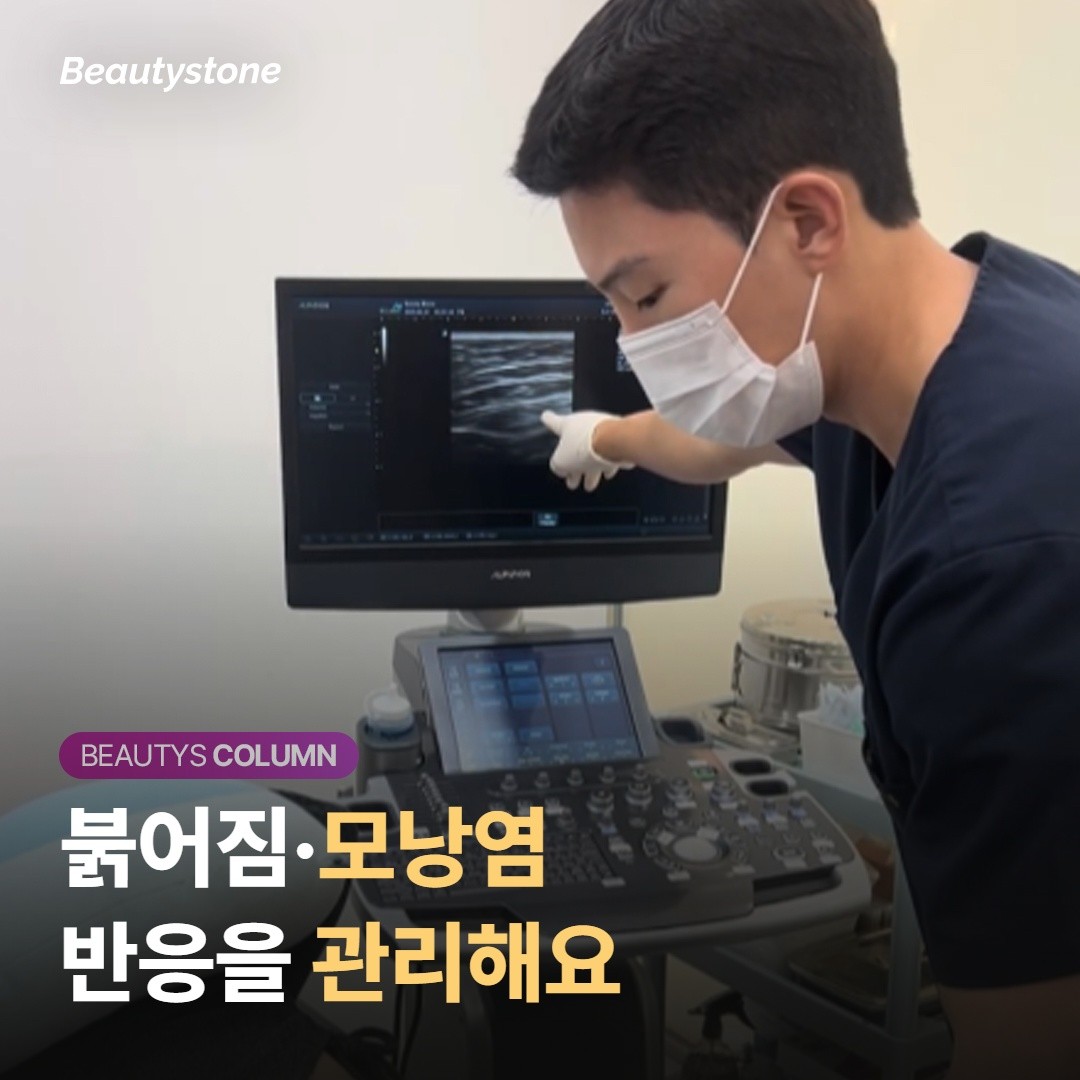
No matter where you do it, hair removal comes with some skin irritation. You may get red or stingy, and the follicles can flare up into tiny bumps of folliculitis*. The real difference is how those reactions are handled when they happen. The wrong power setting can lead to burns or pigment changes, so it matters whether you're in a setting where the intensity can be adjusted to your skin and the reactions can be managed.
* folliculitis: inflammation of the follicle that surfaces as small red bumps. It's common with irritation or ingrown hairs.
If your skin tone is darker or tanned, if you've just been sunburned, or if you have certain skin conditions, the power may be set even more conservatively or the timing pushed back. Checking for these factors up front and adjusting the intensity accordingly is the key to keeping side effects low.
In particular, if ingrown hairs have given you frequent folliculitis, that cycle tends to ease as the hair itself thins out. If you're prone to bumps from shaving irritation, the improvement can feel even more noticeable.
Before-and-after care matters too. Strong sun exposure or tanning around your sessions makes skin more sensitive and raises the risk of irritation, so it's best to keep your skin calm with sunscreen and moisturizer.
What to check, wherever you go
Rather than expecting “completely smooth,” it's more realistic to aim for thinner, sparser hair that's easier to manage. White hairs and pale, fine fuzz don't respond well and may stay behind.
One more thing: during your treatment period, plucking with tweezers or waxing out the root removes the very target the laser needs, so it works less well. While you're getting laser, stick to shaving only.
The right power and number of sessions for your skin tone and hair vary from person to person, so it's safest to check in before you start and adjust as you watch how your skin responds. Wherever you go, judging it by “can the intensity be tuned to my skin?” makes the choice a lot easier.
Consult with us on KakaoTalk
If you're wondering whether this treatment is right for you, the doctor will take a look personally.
▶ Start a 1:1 chat on KakaoTalk
Frequently asked questions
Q. How is clinic hair removal different from waxing?
Waxing pulls hair out by the root, so you're smooth for a moment, but the follicle remains and the hair grows back. A dermatology laser works on the follicle itself, so the hair gets thinner and sparser as the sessions add up.
Q. What about home hair-removal devices?
Home devices are set to a low power level for safety, so change comes slowly and only with consistent use. In a medical setting, the power and wavelength can be tuned to your hair color and skin tone — that's the key difference.
Q. My skin is on the darker side — can I still get it done?
Yes, but because the laser can also react to your skin pigment, the clinic chooses a wavelength that reaches safely into the skin and keeps the power conservative. That's why the intensity and number of sessions differ from person to person, even for the same area.
Q. Could it cause burns or pigment changes?
It can if the power is set wrong. That's why it matters to adjust the intensity based on your skin and to manage reactions like redness or folliculitis when they show up. Confirm the right settings for your own skin during your consultation.
Further reading


Tattoo removal
손가락 문신은 작으니까 금방 지워질 거라 생각하셨나요?

Tattoo removal
문신제거 견적이 병원마다 다른 이유, 크기 기준부터 달라서예요

Tattoo removal
10회 결제했는데 그 전에 다 지워지면 돈이 아깝지 않을까요?

Lifting
Forehead Thread Lifting: How Far Can It Go?

skin
Skin Booster Prices: What to Check in a Quote

Contouring & Volume
InMode Cost: Why One Area, Three Line Items