

New to lifting in your 40s? Here's how HIFU and RF differ — and which to try first.
Published -
Updated -

Author
Wi Young-jin · Chief director
Seoul National University College of Medicine · Seoul National University Hospital Specialist
→
If you've been noticing more laxity in your jawline or a softening along your cheekbones, you're not alone — it's one of the most common changes that show up in your 40s. And once you start researching options, two treatments come up almost immediately: HIFU and RF lifting. Both promise tighter, firmer skin, but they work through very different mechanisms, and choosing the wrong one as your starting point can mean slower results or unexpected downtime.
In this article, we'll cover how HIFU and RF lifting each work, what each one does best, who tends to be a good candidate for each, what side effects to expect, and how to think about cost — so you can walk into your first consultation ready to ask the right questions.
What Is HIFU?
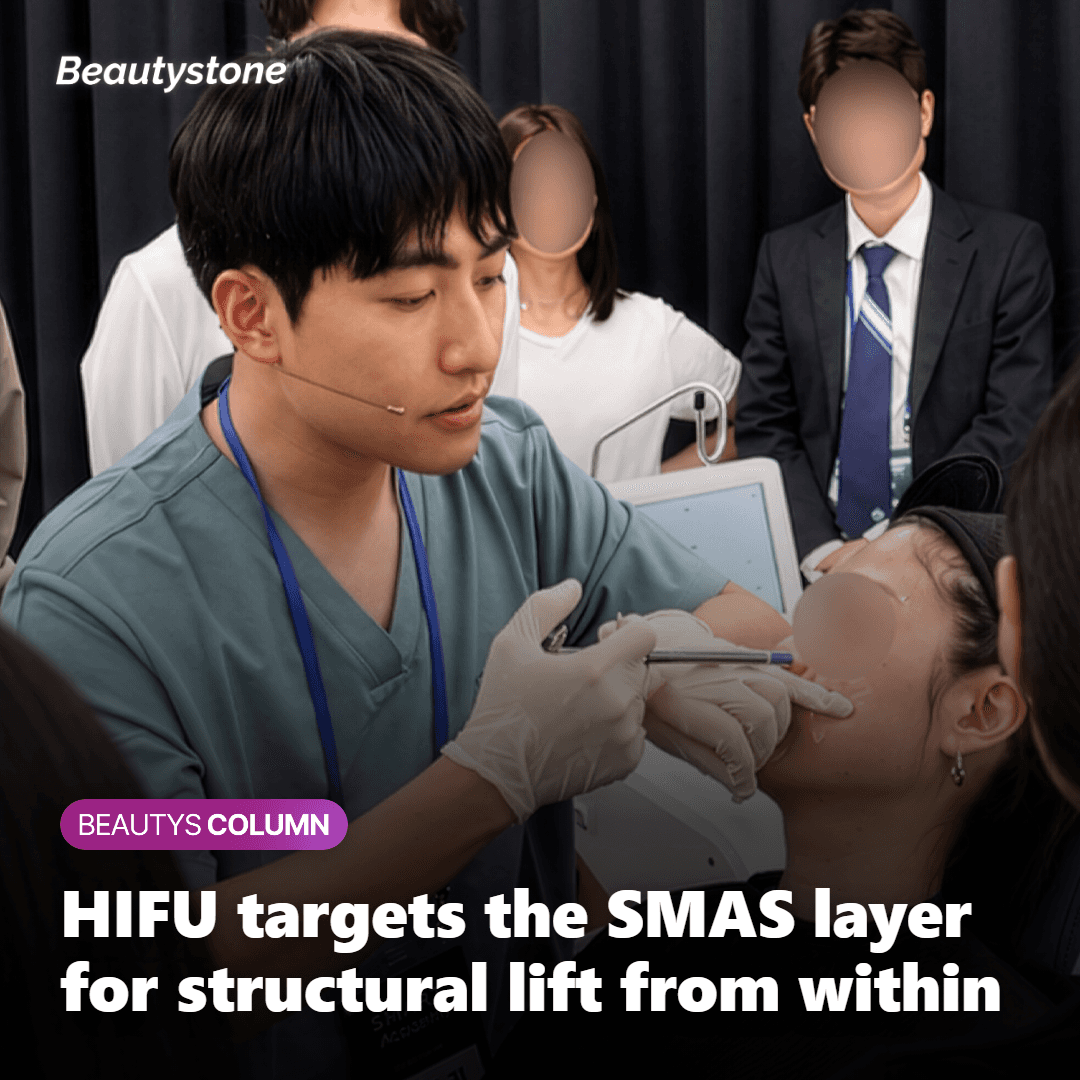
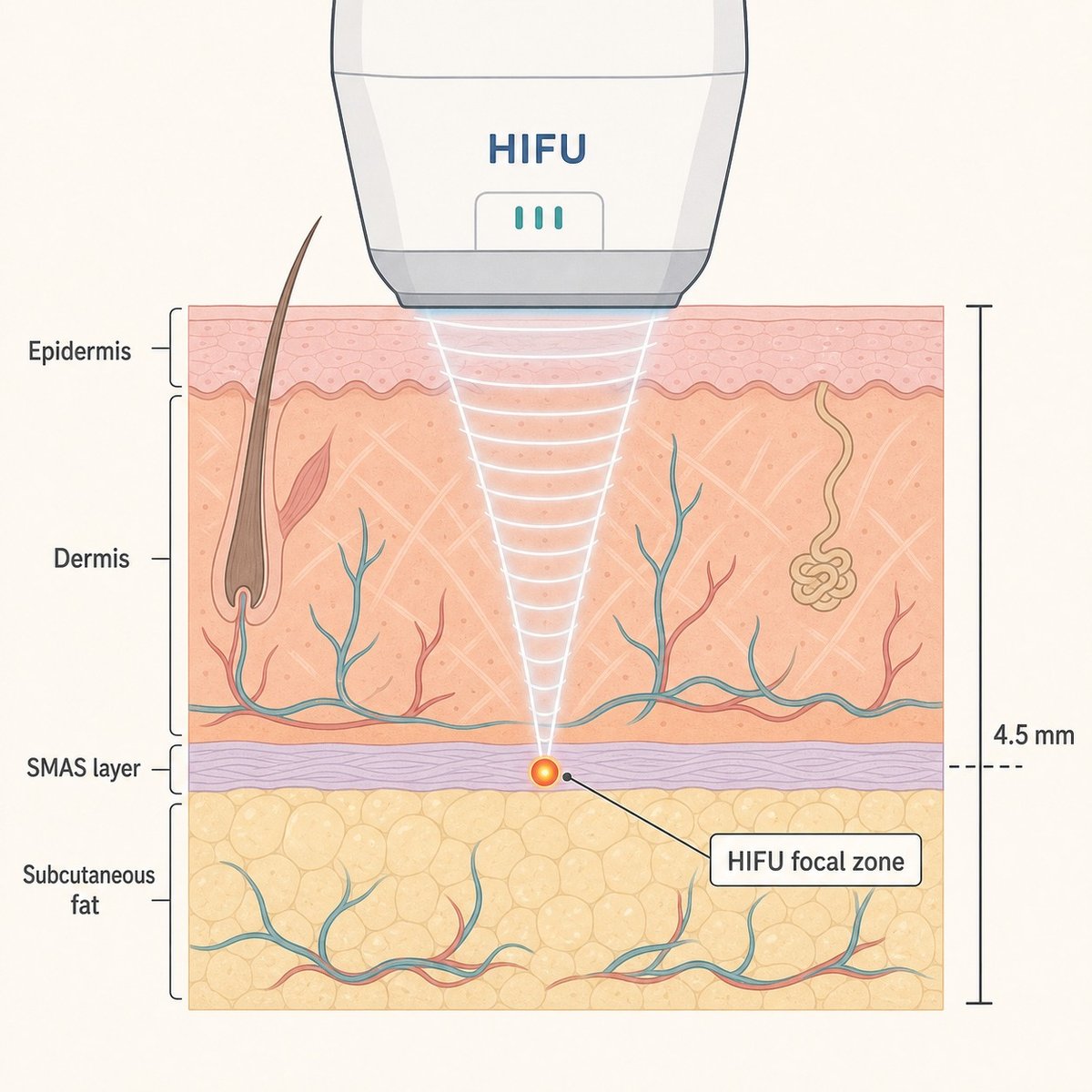
HIFU stands for High-Intensity Focused Ultrasound. It delivers ultrasound energy through the skin — without needles or incisions — to a precise focal point deep beneath the surface. The heat generated at that point stimulates your body's collagen-repair process, gradually firming and lifting the treated area over the following weeks and months.
The defining feature is depth. Devices like Ultherapy and Shurink (Ultraformer MPT) can target the SMAS layer — the same structural layer that surgeons address during a facelift. Research suggests focused ultrasound can trigger a meaningful collagen response in deeper tissue that surface-level treatments can't reach. Individual results vary, and most people need more than one session to see the full benefit.
The short version: HIFU goes deep, targeting the structural layer to lift the face from within.
What Is RF Lifting?
RF stands for radiofrequency. Instead of ultrasound, RF lifting uses electrical energy to generate heat inside the dermis — the layer that houses your collagen and elastin fibers. That controlled warmth triggers collagen contraction (an immediate, mild tightening) and stimulates new collagen production over time.
Common RF lifting devices include Thermage FLX, which uses monopolar radiofrequency to heat the dermis across a broad surface area, and Oligio / Oligio X, which use a similar monopolar approach with a different energy delivery system. RF typically works at the mid-dermis level — shallower than HIFU's SMAS focus — making it particularly well-suited for improving skin texture, surface firmness, and fine lines.
The short version: RF warms the dermis broadly, improving skin quality and surface-level tightening.
HIFU vs. RF at a Glance
HIFU | RF Lifting | |
|---|---|---|
Energy type | Focused ultrasound | Radiofrequency |
Primary target | SMAS layer (~4.5 mm) and dermis | Dermis (~1.5–3 mm) |
Main effect | Deep structural remodeling, lift | Dermal tightening, texture improvement |
Downtime | Minimal (redness 1–2 days) | Minimal (redness 1–3 days) |
Results timeline | 1–3 months; peaks at 3–6 months | 1–3 months, gradual improvement |
Typical frequency | 1–2 sessions per year | 1–2 sessions per year |
Individual results vary based on skin condition, device, and provider technique. A consultation is the most reliable way to gauge realistic expectations for your skin specifically.
Who Should Consider HIFU First?
HIFU tends to be the stronger starting point if you're noticing structural laxity — a jawline that's beginning to soften, early jowling, or visible sagging that feels more like gravity pulling things down than a surface-texture issue.
Moderate laxity is present: If your skin has real structural looseness, not just texture changes, HIFU's SMAS-depth targeting typically delivers a more noticeable lift. Individual results vary.
Facial contour is the priority: People who want to restore definition along the jawline or reduce the appearance of early jowls often find HIFU a stronger first choice.
You're patient with results: HIFU builds gradually. If you're comfortable waiting 3 to 6 months for the peak effect, the cumulative result can be meaningful.
Skin has more volume or thickness: Deeper subcutaneous tissue can respond well to HIFU's deeper energy focus in ways that RF may not match as effectively.
Devices you may encounter at clinics include Ultherapy and Shurink (Ultraformer MPT).
Who's a Better Fit for RF First?
RF lifting tends to be the right first step if your primary concern is skin quality — dullness, fine lines, early crepiness, or an overall softening of tone and texture that doesn't yet feel structural.
Early laxity or a prevention mindset: In your early 40s, when structural sagging hasn't yet fully set in, RF is often described as a more fitting starting point for maintenance and prevention.
Skin texture is the main concern: RF's dermal-level warming has a noticeable effect on smoothness and subtle firmness — skin can feel more resilient and supple overall.
Comfort sensitivity: Treatments like Thermage FLX are generally considered comfortable with numbing cream applied beforehand, and many people find RF more tolerable than HIFU. In most cases, both are manageable.
Finer or more delicate skin: For people with naturally thinner skin structure, the shallower RF energy may be more precisely matched to where improvement is needed.
Devices in this category include Thermage FLX, Oligio, and Oligio X.
Side Effects & Risks to Know
Both HIFU and RF lifting are non-invasive treatments with a relatively low risk profile. That said, neither is without side effects, and honest expectations are part of making a smart first decision.
Common and expected:
Redness and warmth: Both treatments leave the skin flushed for a few hours to a couple of days. This is expected and typically resolves on its own.
Swelling: Mild swelling around the treated area is normal, especially with HIFU targeting deeper layers. It tends to settle within a few days.
Tenderness: Some people notice brief soreness in the treated area after HIFU — usually resolves within a day or two.
Less common, but worth knowing:
Temporary numbness or tingling: Occasionally reported after HIFU near bony areas or nerve-adjacent tissue, and tends to resolve within a few weeks.
Bruising: More likely with HIFU than RF, particularly around the jawline and cheekbones.
Variable outcomes: Results depend significantly on technique, device calibration, and provider experience. Not everyone sees the same degree of improvement. Individual results vary.
Redness and swelling are common and usually settle within a few days. If they worsen, spread, or are accompanied by fever or blistering, seek medical care right away.
Like any procedure, both HIFU and RF lifting come with trade-offs. Always discuss your health history and skin concerns with a licensed provider before moving forward.
How Much Does Lifting Cost?
Pricing for HIFU and RF lifting varies depending on several factors, and there's no single number that applies across clinics or treatment plans. The main variables include:
Device brand and model: Treatments on premium devices like Ultherapy or Thermage FLX typically sit at a higher price point than alternatives, reflecting device licensing and upkeep costs.
Shot count and treatment area: HIFU is often priced by shot count and cartridge depth — full-face sessions with higher shot counts cost more. RF is commonly priced by area or full-face session.
Provider expertise and clinic type: A clinic with experienced staff and individualized protocols may price differently from a volume-based center.
Number of sessions in your plan: Most providers recommend 1 to 2 sessions per year per modality; some treatment plans combine both HIFU and RF.
The most reliable way to understand what a plan will cost for your situation is through a consultation. Beautystone's current promotions are at /en/promotion.
The Bottom Line
Here's what to keep in mind before booking your first lifting appointment:
HIFU and RF are different tools for different concerns. HIFU targets deeper structural tissue for lift; RF works at the dermal level for texture and surface firmness. Neither fully replaces the other.
Start with your skin's primary concern. Structural laxity or early jowling points toward HIFU as a stronger first choice. Skin quality, texture, and early softening without real sagging often makes RF a better starting point.
Results take time and vary by person. Expect the main improvement to appear over 1 to 3 months, with peak results around 3 to 6 months. Individual results vary — realistic expectations matter as much as treatment choice.
Both have minimal downtime. Redness and mild swelling are normal and typically resolve within a few days. Neither requires significant recovery.
Like any procedure, both come with trade-offs. Ultimately, the choice depends on your skin, your goals, and your budget.
If you're considering your first lifting treatment, a consultation is the best way to find out which approach fits you. Beautystone is a dermatology clinic in Seoul's Hapjeong area — see current offers at /en/promotion.
Frequently asked questions
Q. Does HIFU or RF lifting hurt?
A. Both treatments are typically tolerated with numbing cream applied beforehand. HIFU tends to involve more noticeable sensations — some people describe a brief, deep aching as the focused energy passes through tissue — while RF is generally considered more comfortable. In most cases, both are manageable. Your provider will adjust settings based on your comfort level.
Q. How long do HIFU and RF lifting results last?
A. Results from both HIFU and RF lifting typically last 6 to 12 months, with some people seeing benefits extend longer. The aging process continues naturally, so most providers recommend 1 to 2 maintenance sessions per year. Individual results vary significantly depending on skin condition, lifestyle, and the specific device used.
Q. Can I combine HIFU and RF lifting in the same plan?
A. Yes — many clinics offer combination protocols that use HIFU for deeper structural lift and RF for surface-level skin quality. Whether they're done in the same session or staggered across appointments depends on the provider's protocol and your skin's response. A consultation is the best way to map out a plan tailored to your specific concerns.
Q. When will I see results after my first lifting treatment?
A. Results from both HIFU and RF typically begin to appear within 1 to 3 months as the collagen-building process progresses. Most people see the peak improvement around 3 to 6 months after the session. Visible changes are gradual rather than immediate — individual results vary, and a realistic timeline is something to discuss with your provider before starting.


Contouring & Volume
InMode Cost: Why One Area, Three Line Items

Hair Removal
수염 레이저 제모 가격, 회당 금액이 같은데 총액이 갈리는 이유는?

skin
Fraxel Results: Why 3 Months Is the Real Test

Lifting
이중턱·턱선리프팅, 다섯 층 중 어디가 문제인지 아세요?

Contouring & Volume
Juvederm Lip Filler: Volbella vs. Ultra

skin
How Long Does Potenza Take to Show Results?