

Why bumps peak about a week after a session, what helps at home, and when to be seen.
Published -
Updated -

Author
Wi Young-jin · Chief director
Seoul National University College of Medicine · Seoul National University Hospital Specialist
→
A few sessions into laser hair removal, something confusing happens. The hair is visibly thinner, growth is slower, and then small bumps start showing up anyway — sometimes with a dark hair curled just under the surface, sometimes as a rough patch that feels like gooseflesh that never settles. The first instinct is almost always self-blame: not exfoliating enough, not cleansing carefully enough, doing something wrong.
Here’s the more useful framing. Ingrown hairs are largely a structural problem. They come down to how coarse your hair is and which direction the follicle sits in the skin, not a report card on your home routine. That distinction matters, because it changes what actually helps. In this article, we’ll cover why ingrowns form in the first place, why they tend to peak about a week after a session rather than the next morning, what’s genuinely safe to do at home, and when a bump needs a clinician instead of a pair of tweezers.
Why Do Ingrown Hairs Happen at All?
Short answer: because a cut hair has a sharp tip, and a follicle that lies at a shallow angle gives that tip an easy way back into the skin.
This is best documented in shaved areas, where the pattern is known as pseudofolliculitis. The dermatology reference DermNet describes it as far more common in people with coarse, tightly curled hair, and explains that once a hair is cut, the tapered tip can re-enter the skin by one of two routes. In the first, the hair grows out, curves over, and pierces the surface from the outside. In the second, the hair retracts down into the follicle and punches sideways through the follicle wall without ever clearing the surface. Either way, the body reacts to the hair as an irritant, and you get the familiar red bump.
The important part is what’s not on that list. Hygiene isn’t the driver. Neither is skipping a scrub. Someone whose hair grows straight up and out can shave the same area, with the same products, and rarely see an ingrown. Someone with thick hair emerging from follicles angled almost flat against the skin will see them no matter how careful the routine is. That’s why underarms, the bikini line, and the jaw-and-neck region on men come up over and over — coarse hair, mixed growth directions, and constant contact with clothing all stack in the same places.
Reframing it this way also changes the question you ask when one appears. Instead of "what did I do wrong," the more productive version is "which area is this, and what does the hair do there." That’s a question a treatment plan can actually answer.
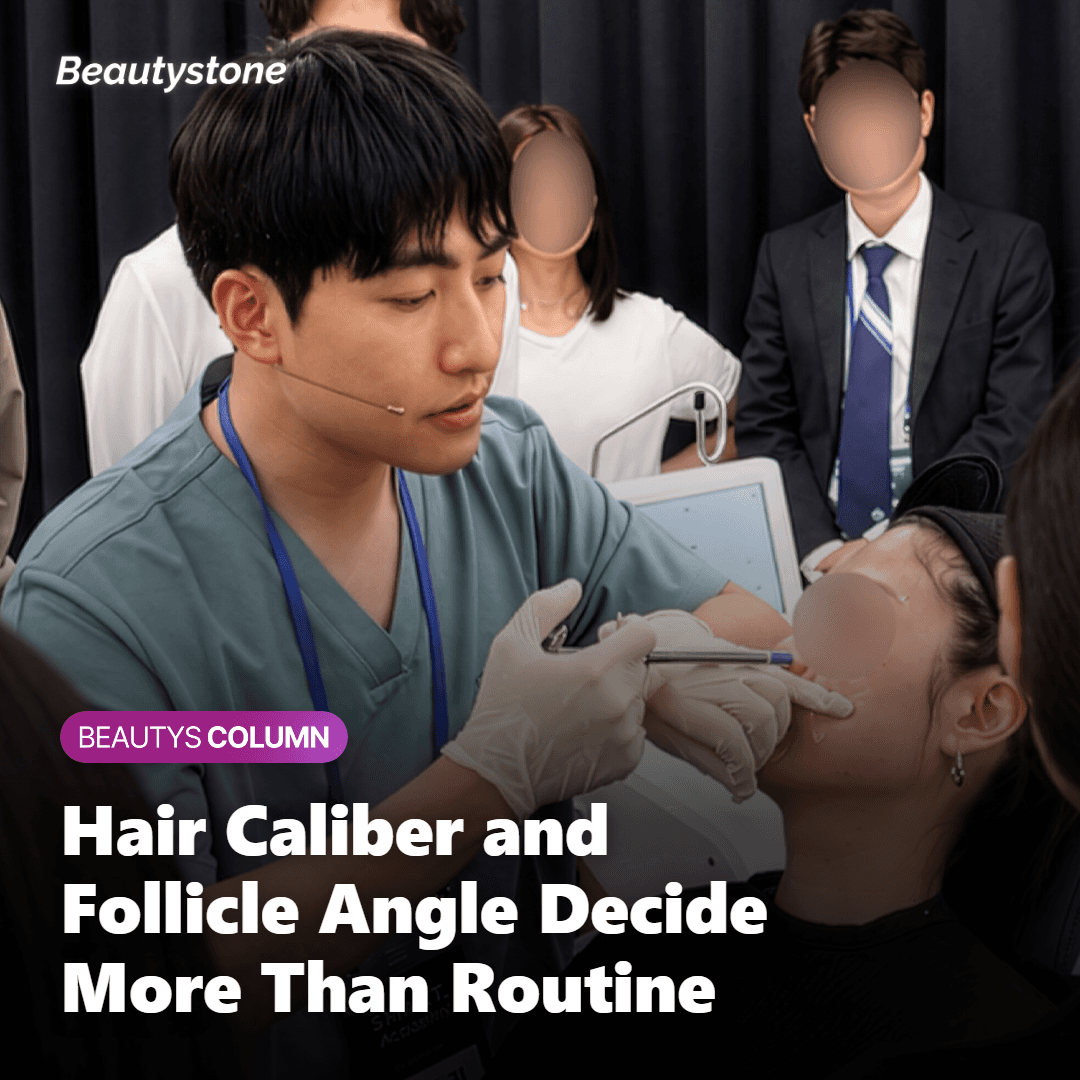
Why the Bumps Peak About a Week After a Session
If your bumps show up roughly five to nine days after treatment rather than the next day, that timing isn’t a coincidence — it lines up with when treated hairs are being pushed out of the skin.
A report examining folliculitis that developed after laser hair removal recorded symptoms appearing five to seven days after a first session, and six to nine days after later ones. The authors described the reaction as working by a mechanism close to pseudofolliculitis: treated hair shafts stay in place for a while and are gradually extruded, and the skin reacts around them on the way out. Most of the lesions they saw were centered on a retained hair shaft, and things settled on their own once that hair worked its way free.
Once you know that, the timeline stops feeling random. A laser-treated hair doesn’t vanish at the moment of the pulse. It sits in the follicle and migrates out over the following days. If the surface above it is covered by a layer of dead skin, or if a waistband or sports bra is rubbing that exact spot all week, the hair loses its exit and gets held under the surface instead. The bump you feel on day seven is that traffic jam.
Two practical consequences follow. First, judging a session by how your skin looks the next morning tells you very little. Second, the window worth protecting isn’t the day of treatment — it’s the week after it. Individual results vary, and this wave usually shrinks as sessions accumulate, simply because there are fewer hairs left to push out.
What’s Safe to Do at Home, and What Isn’t
One test sorts almost everything: does this clear the path a hair is trying to take, or does it damage skin and push the hair back down? Keep the first group, drop the second.
What you’re doing | What it does to the skin | Verdict |
|---|---|---|
Wiping gently with a soft washcloth | Loosens the layer of dead skin sitting over the follicle | Keep |
Moisturizing daily | Stops the surface from stiffening into a lid | Keep |
Choosing loose clothing for the week after | Cuts the friction that flattens emerging hairs | Keep |
Digging a hair out with tweezers | Leaves a wound in the follicle and invites scarring | Skip |
Scrubbing with a grainy exfoliant | Irritates skin that’s already inflamed | Skip |
Lancing a bump with a needle | Adds infection risk and post-inflammatory pigment | Skip |
If a bump is already red and raised, the fastest route through is usually to leave it completely alone. The report above stuck to the same principle — gentle washing as physical help, nothing aggressive. Anything medicated for a bump that’s genuinely inflamed belongs in a consultation rather than a shopping cart.
On restarting exfoliation: wait until the redness from the session has faded, then start with a soft cloth, not a scrub. For most people that’s around three to four days out. Grainy exfoliants and chemical peels are worth pushing further down the calendar, since the skin over a hair that’s still working its way out doesn’t need extra provocation.
Side Effects, Risks, and When to Get It Checked
Most of what happens after a session is expected and short-lived. Redness, warmth, and small bumps around the follicles are common, and they typically settle within a few days to a week. Ingrown-related bumps follow the hair: once it clears the surface, the bump tends to go with it.
Some things aren’t part of that normal arc. Contact your provider if you notice any of the following:
Pustules that keep multiplying and spreading beyond the treated patch rather than fading.
Pain that increases day over day instead of easing off after the first 48 hours.
Warmth and expanding redness around a bump, which can point to infection rather than irritation.
Dark marks that deepen and haven’t started fading after a couple of months.
Blistering or crusting at any point, which needs to be looked at rather than waited out.
If you develop fever, spreading redness, or discharge from a treated area, seek medical care right away. Short of that, the single most protective habit is restraint: squeezing or digging at an ingrown is what converts a bump that would have resolved into a mark that sticks around. Everyone’s skin heals differently, and darker skin tones in particular are more prone to pigment changes after trauma, which is a strong argument for keeping fingers off.
How Session Planning Changes the Picture
A fair amount of this is adjustable on the clinic side, not just at home. A few levers matter more than the rest:
Shaving depth before a session: going extremely close leaves a sharper, lower tip, which is exactly the geometry that re-enters skin. A normal, unhurried shave is enough.
Interval spacing by area: hair cycles aren’t uniform across the body, so the gap that suits your legs may be wrong for your underarms.
Friction in week one: the shedding window and your gym schedule overlap. Planning around it costs nothing.
Mapping trouble spots: noting which patches flare gives your provider something concrete to adjust next time, rather than a general impression.
Accumulated sessions: as the number of remaining hairs drops and regrowth gets finer, there’s simply less material to get trapped.
Device settings play a role too. A platform like the GentleMax Pro Plus pairs an Alexandrite wavelength with an Nd:YAG wavelength, so the wavelength and settings can be matched to hair caliber and skin tone rather than applied uniformly. That flexibility is most useful precisely in the areas where ingrowns cluster, where hair is coarse and the surrounding skin is often more reactive. Your provider will decide what suits your skin after assessing it in person.
The Bottom Line
Ingrown hairs during a laser course are a structural story, not a hygiene story. Quick recap:
Coarse hair and shallow follicle angles are what let a cut tip re-enter the skin — routine isn’t the main variable.
The reported window for post-session bumps is roughly five to seven days after a first treatment and six to nine days after later ones, as hairs are extruded.
Keep whatever clears the exit path: soft cloth, moisturizer, loose clothing. Drop tweezers, grainy scrubs, and needles.
Spreading pustules, escalating pain, warmth, or persistent dark marks are reasons to be seen rather than to wait.
Like any procedure, laser hair removal comes with trade-offs, and the first few sessions are usually the noisiest. Ultimately what to do about a specific bump on a specific area depends on your skin, your hair, and how far into the course you are, so it’s worth raising with the clinician treating you rather than sorting it out with tweezers at the bathroom mirror. Beautystone is a dermatology clinic in Seoul’s Hapjeong area, and current offers are listed at our promotion page.
Frequently asked questions
Q. Should I pull out an ingrown hair if I can see it?
A. Only if the tip is clearly above the surface and lifts without any digging. If the hair is just visible under the skin, leave it. Excavating it wounds the follicle, and that’s what turns a temporary bump into a scar or a dark mark that lingers for months. It also tends to make the next hair from that follicle more likely to get trapped, so you end up trading a few days of patience for a recurring problem.
Q. Do ingrown hairs get worse the longer I keep doing laser?
A. They usually improve over a course rather than worsen. Each session reduces the number of hairs still growing, and regrowth tends to come in finer, so there’s less material to get caught under the skin. The first few sessions are the exception — that’s when the most treated hairs are being shed at once, so bumps can look more noticeable for a stretch. Individual results vary, but the trend across a full course is downward.
Q. When can I start exfoliating again after a session?
A. Wait until the redness has faded, then begin with a soft washcloth rather than a scrub. For most people that’s around three to four days after treatment. Grainy exfoliants, brushes, and acid peels are worth postponing further, because skin that’s still pushing hairs out reacts more sharply than usual. If the area still stings, stick to moisturizer alone and give it another day or two.
Q. Why do I only get them in one or two areas?
A. Those areas almost certainly have follicles sitting at a shallower angle, coarser hair, or both. Underarms, the bikini line, and the neck are the usual suspects, and they’re also the places where clothing rubs most, which flattens hairs trying to emerge. Mention the specific spots at your next visit — intervals and settings can often be adjusted for one region without changing the rest of your plan.


skin
Fraxel CO2: Why Prices Vary & What to Check

skin
How to Choose an Acne Dermatologist: 5 Signs

Contouring & Volume
Nasolabial Folds: When Lifting Isn't Enough

skin
Sculptra Cost: Why Sessions and Vials Matter

Lifting
After Shurink Universe: Wash, Work Out & Drink

skin
Sofwave Before a Wedding: Timing Guide