

How long does swelling last after hip filler? A day-by-day timeline and key aftercare tips.
Published -
Updated -

Author
Wi Young-jin · Chief director
Seoul National University College of Medicine · Seoul National University Hospital Specialist
→
If you've just had hip filler — or you're getting ready to book your first appointment — swelling and bruising are probably the two things on your mind. You're not alone. They're the most common questions we hear from patients before and after their session.
The good news? Both are temporary, predictable, and manageable with the right aftercare. In this article, we'll cover what actually happens to your body in the days after hip filler, a realistic day-by-day timeline, what you can do to speed recovery, and when something warrants a call to your provider. Read on.

Why Swelling and Bruising Happen After Hip Filler
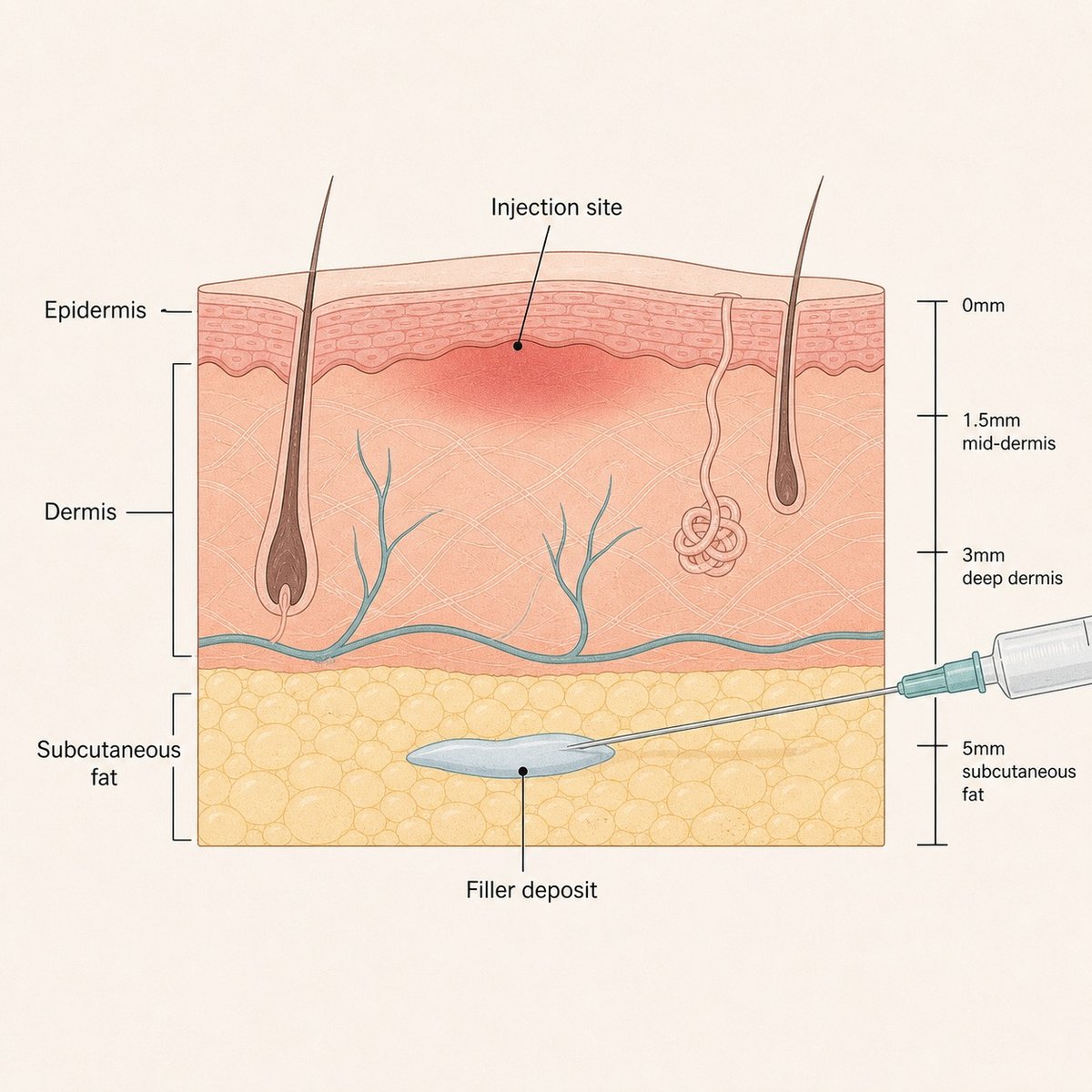
Swelling and bruising aren't signs that something went wrong — they're your body doing exactly what it's supposed to do. When a filler is injected into the subcutaneous tissue of the hip and buttock area, the surrounding tissue responds with localized inflammation. Fluid accumulates around the injection sites (that's the swelling), and small blood vessels near the needle path may leak a little (that's the bruise).
The hip and buttock region tends to produce more noticeable swelling than, say, the cheek or lip, for a few reasons:
Tissue depth: Hip filler is placed in deeper subcutaneous layers where larger volumes are needed, so there's simply more filler — and more tissue disruption — per session.
Gravity: Fluid naturally pools downward, so any swelling in the hip area can drift slightly toward the upper thigh by the second or third day.
Movement: You sit and walk constantly, which means the hip area is always engaged — more movement means slower initial settling compared to a facial area that can stay still.
Research on dermal filler injection confirms that inflammatory swelling typically peaks within 24–72 hours and resolves significantly by two weeks in most patients, with deep-tissue placements following a slightly longer curve.1 Individual results vary.
Day-by-Day Hip Filler Recovery Timeline
Everyone's recovery is a little different, but here's what tends to happen for most people. Think of this as your week-by-week roadmap, not a guarantee.
Day 1 (Day of procedure): Expect to look puffier than your final result. Swelling kicks in quickly — sometimes within minutes of the injections. You'll likely see redness at the injection points, and the area may feel tender to the touch. Bruising may or may not appear yet; it often takes 12–24 hours to surface.
Days 2–3 (Peak swelling): This is usually when swelling is at its most noticeable. The area can feel firm and look overfilled compared to what you expected. Bruising, if it appeared, is typically at its darkest and most visible around day two. This is completely normal and doesn't predict your final outcome.
Days 4–7 (Transition week): Swelling begins to soften. You'll start to see the shape you were aiming for emerge underneath, though it's still not the finished result. Bruising fades from dark purple-blue toward greenish-yellow as your body reabsorbs the hemoglobin. Most people feel comfortable going out in public by day five or six, especially with light clothing coverage.
Week 2 (Significant improvement): By the end of week two, most of the swelling has resolved and bruising is gone for the majority of patients. The filler has settled but hasn't fully integrated yet — the shape still looks slightly uneven or asymmetrical in some cases. This is still within the normal window. Individual results vary.
Weeks 3–4 (Near-final shape): The filler continues to absorb water and soften into the surrounding tissue. Most patients see what looks like their final result by the end of month one. Hyaluronic acid fillers in particular reach their settled state around this point.
Month 2–3 (Full integration): Any residual firmness fully softens. If you received a biostimulating filler such as Sculptra, you may notice gradual volume continuing to build during this window as collagen stimulation progresses. Final assessment appointments are typically scheduled around the 4–8 week mark.
How to Support Recovery at Home
There's no shortcut to healing, but there are several things you can do to keep swelling and bruising from lasting longer than they need to.
Cold compress — first 24 hours only: A cold pack wrapped in a clean cloth (never ice directly on skin) applied for 10–15 minutes at a time can help constrict blood vessels and reduce initial swelling. After the first day, switch to cool — not cold — compresses if needed. Research indicates cold therapy in the first 24 hours post-injection can meaningfully reduce inflammatory swelling.2
Avoid pressure on the area: For at least 48–72 hours, try to avoid sitting directly on the injection sites for prolonged periods. Use a cushion or shift your weight frequently if you must sit. This is one of the most common aftercare questions — your provider will give you specific guidance based on how your session went.
Skip the gym for one week: High-intensity exercise increases blood flow and body temperature, which can amplify swelling and extend bruising. Light walking is fine after 48 hours, but save the heavy lifting, cycling, and intense cardio for week two.
Stay hydrated and limit sodium: High sodium intake encourages fluid retention, which can make swelling look worse. Drinking enough water helps your lymphatic system clear the inflammatory fluid more efficiently.
Don't massage unless instructed: Unlike some facial fillers, hip filler typically does not require massage — and unsupervised massage can shift the filler before it's fully settled. Always follow your provider's specific guidance on this.
Arnica supplements: Some providers recommend arnica montana tablets or topical arnica gel starting a few days before the procedure and continuing after. The evidence is modest, but it's widely used and generally considered safe. Ask your provider whether it fits your situation.

Side Effects and Risks: What's Normal vs. What's Not
Like any injectable procedure, hip filler comes with trade-offs. Most of what you'll experience is mild and resolves on its own — but knowing the difference between expected and concerning helps you act quickly when it matters.
Expected and normal:
Swelling, puffiness, and firmness at and around injection sites (peaks at 48–72 hours)
Bruising ranging from small spots to larger patches, fading within 1–2 weeks
Tenderness when pressing on the area
Temporary asymmetry as swelling settles unevenly
Mild itching at injection points during the first 24 hours
Less common but still manageable with provider guidance:
Lumps or firmness lasting beyond 2 weeks (may need massage or hyaluronidase if HA filler)
Prolonged bruising beyond 2 weeks in patients who bruise easily
Mild headache or fatigue on the day of the procedure
Red flags — contact your provider right away:
Spreading redness, warmth, or swelling beyond the injection area, especially after day 3
Fever, chills, or flu-like symptoms
Increasing pain (rather than improving) after the first 48 hours
White or blue discoloration at the skin surface (can indicate vascular compromise)
Firm nodules that continue to grow rather than soften
If you notice spreading redness, fever, or worsening pain after the first couple of days, seek medical care right away. Vascular complications from filler, while rare, require prompt treatment.
How Much Does Hip Filler Cost?
At Beautystone clinic in Seoul's Hapjeong area, hip filler pricing depends on the type of filler used, the volume placed, and the design goal for your session. Because hip filler typically requires larger volumes than facial filler, sessions are generally priced accordingly.
As a general frame of reference, hyaluronic acid filler for body contouring areas typically starts in the range of several hundred thousand won per session, with multi-vial sessions running higher. Biostimulating fillers such as Sculptra — which build collagen over time rather than providing immediate volume — are priced per vial and often require 2–3 sessions spaced weeks apart.
For current session pricing and any available promotions, see /en/price or /en/promotion. Seoul clinic pricing is subject to change.
Who Heals Faster — and Who Should Prepare for Longer Recovery
Recovery timelines aren't one-size-fits-all. A few factors tend to predict how quickly swelling and bruising resolve for you specifically.
You'll likely heal faster if:
You don't take blood thinners (including aspirin, ibuprofen, or fish oil supplements) — ideally paused 5–7 days before with your doctor's approval
You don't smoke — nicotine slows tissue healing and can extend bruising
You stay well-hydrated and eat a low-sodium diet in the days around your procedure
You've had filler before and your provider has an accurate map of your tissue response
Plan for a bit more recovery time if:
You bruise easily in general (a sign of more fragile capillaries)
You're on medications or supplements that affect clotting
You received a higher volume of filler in a single session
You have a physically demanding job or lifestyle that makes rest difficult
Individual results vary, and your provider can give you a more personalized estimate based on your health history and the specifics of your session.
The Bottom Line
Here's what to keep in mind after hip filler:
Peak swelling and bruising happen in the first 48–72 hours — what you see on day two isn't your final result.
Most bruising clears within 1–2 weeks; swelling continues to soften through weeks three and four.
Cold compresses (first 24 hours), limiting pressure and intense exercise, and staying hydrated are your most effective at-home tools.
Spreading redness, fever, or worsening pain are red flags — contact your provider immediately if these occur.
Like any procedure, hip filler comes with trade-offs. The downtime is real, even if it's relatively short. Ultimately, the choice depends on your body goals, your schedule, and how comfortable you are with the recovery window.
If you're considering hip filler, a consultation is the best way to get a realistic picture of what your recovery might look like. Beautystone is a dermatology clinic in Seoul's Hapjeong area — see current offers at /en/promotion.
Frequently asked questions
Q. How long does swelling last after hip filler?
A. Swelling peaks around 48–72 hours after the procedure and typically resolves significantly within 1–2 weeks. Full settling of the filler shape usually takes 3–4 weeks. Individual results vary.
Q. Is bruising after hip filler normal?
A. Yes — bruising is a common and expected side effect of any injectable procedure. It appears because small blood vessels near the injection sites can leak during treatment. Most bruising fades within 7–14 days. If it worsens or spreads beyond the treatment area, contact your provider.
Q. When can I sit normally after hip filler?
A. Most providers recommend avoiding prolonged direct pressure on the injection sites for the first 48–72 hours. After that, you can gradually return to normal sitting. Using a cushion or shifting your weight frequently in the first few days helps protect the filler while it settles.
Q. What should I avoid after hip filler?
A. For the first week, avoid high-intensity exercise, saunas, hot baths, alcohol, and direct sun exposure on the treated area. Aspirin and ibuprofen should ideally be avoided in the first few days as they can increase bruising. Always follow your provider's specific aftercare instructions.


skin
Ellanse Cost: Duration Beats Price Per Visit

Lifting
Alltite RF: Two Effects, Two Timelines

Contouring & Volume
Why Juvelook Volume Quotes Vary by Clinic

men's
Nose Pore Treatment: Aftercare Timing Guide

skin
How Many Sessions Does Eyeliner Removal Take?

Hair Removal
Laser Hair Removal While Pregnant or Nursing