

A timeline for sitting and exercising after hip filler, plus recovery tips and warning signs.
Published -
Updated -

Author
Wi Young-jin · Chief director
Seoul National University College of Medicine · Seoul National University Hospital Specialist
→
After getting hip fillers, the very first question that probably comes to mind is, "Can I sit down today?" Since our daily routines often involve sitting all day, it is completely natural to feel anxious about putting your body weight directly on the treated area.
The short answer is that the first few days right after the treatment are when you need to be most mindful. When it comes to sitting and exercising, it is safer to ease back into your routine by gradually increasing intensity over time rather than returning to normal all at once. Because the hips are an area that bears your direct body weight, reducing pressure during the early settling phase helps ensure both shape and recovery progress more evenly.
This content is a summary of treatment information from Beautystone Hapjeong.
By reading this article, you will learn:
Why you need to be mindful about sitting immediately after the treatment
How to gradually ease back into sitting and exercising step-by-step
Lifestyle tips for a smooth and stable recovery
How to distinguish between normal reactions and signs that require medical attention
Why sitting after hip fillers makes you feel anxious
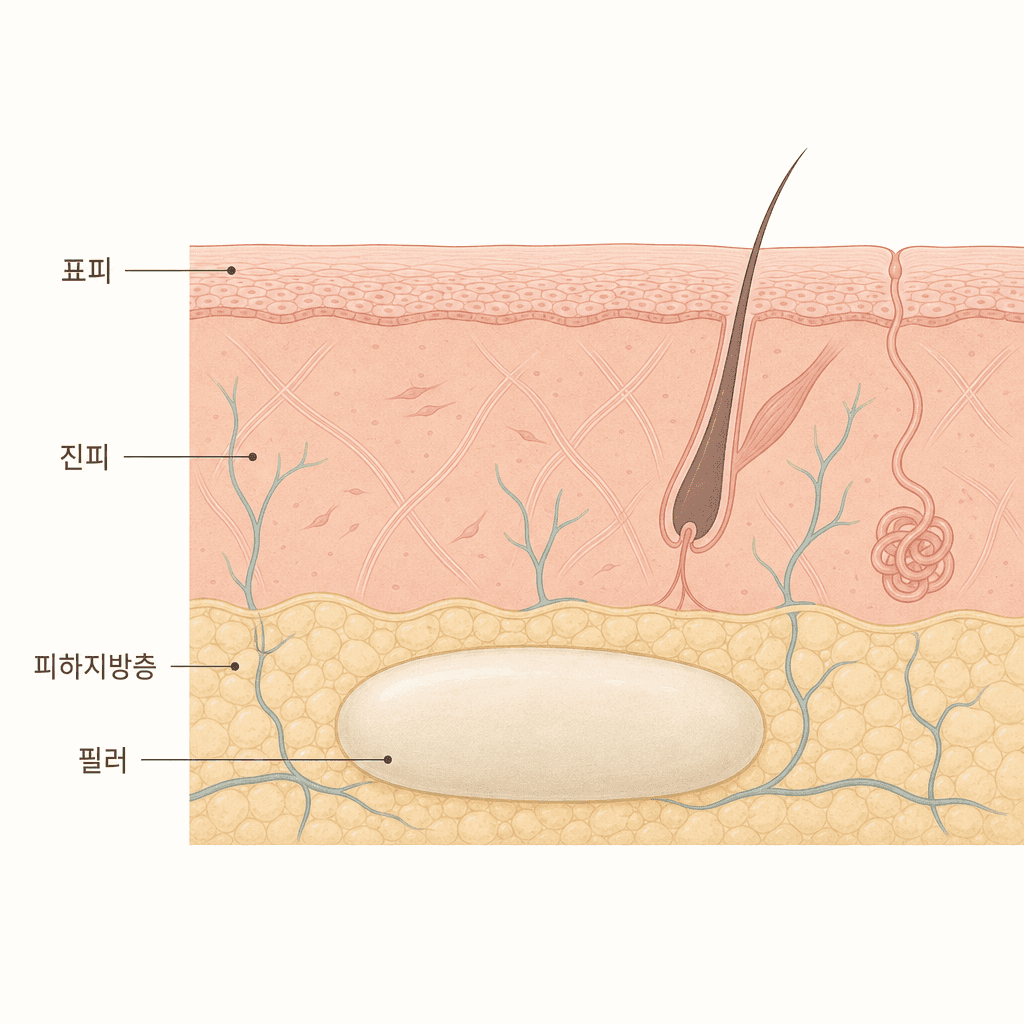
Hip fillers fill in sunken areas to create volume and refine the overall contour. The first few days, when the filler is settling evenly, are crucial. If prolonged pressure is applied to one side during this period, the filled area can get compressed or feel asymmetrical, which is why paying close attention to your sitting posture is so important.
Hyaluronic acid*, which is commonly used in fillers, is an ingredient that creates volume by attracting surrounding moisture. Looking at explanations that hyaluronic acid draws in water to build volume and support—and can be dissolved with an enzyme if necessary, it becomes easy to understand why minimizing excessive pressure or irritation while it settles right after the procedure is so helpful. The newly added volume needs time to stabilize.
Hyaluronic acid*: A natural substance found in the skin and body that attracts surrounding moisture to create volume. When used as a filler, it can be adjusted or dissolved using a dissolving enzyme.
Sitting and exercising: Recovery timeline by stage
It is easiest to gauge when and how intensely you can resume sitting and exercising by breaking it down day by day. Here is a summary of the timeline:
Category | First 24–48 Hours | Days 3–7 | 1–2 Weeks After |
|---|---|---|---|
Sitting | Sit briefly & stand up frequently | Use a cushion | Sit normally |
Light Walking | Generally fine | Generally fine | Generally fine |
Intense Workout / Weights | Please avoid | Start with light intensity | Return to normal workout |
Biking / Sitting long hours | Please avoid | Keep it brief | Return to normal routine |
Saunas / Jjimjilbangs (Bathhouses) | Please avoid | Please avoid | Recommended after 1–2 weeks |
For the first two days after the procedure, instead of sitting for long periods, it is best to sitting briefly and stand up frequently to distribute the pressure. Using a donut cushion or a soft cushion can help ease the burden. For physical activities, you can start with light walking and gradually increase the intensity over several days. It is safer to wait a little longer before doing weight training (which directly strains the glute muscles) or riding a bicycle for extended periods.

Lifestyle tips for a smooth, stable recovery
While recovery does not require extremely complex care, it is best to keep your routine simple for a few days to minimize irritation and swelling. Here are the key tips:
Sleeping Posture — For the first few days, sleep on your stomach or side to reduce direct pressure on the buttocks.
Cold Compress — If there is swelling, gently cool the area by placing a cloth over the treated area for brief intervals.
Hydration & Diet — Eat and hydrate well as you normally would, but it is best to postpone drinking alcohol for a few days.
Tight Clothing — Avoid wearing tight shapewear that applies strong pressure for a few days.
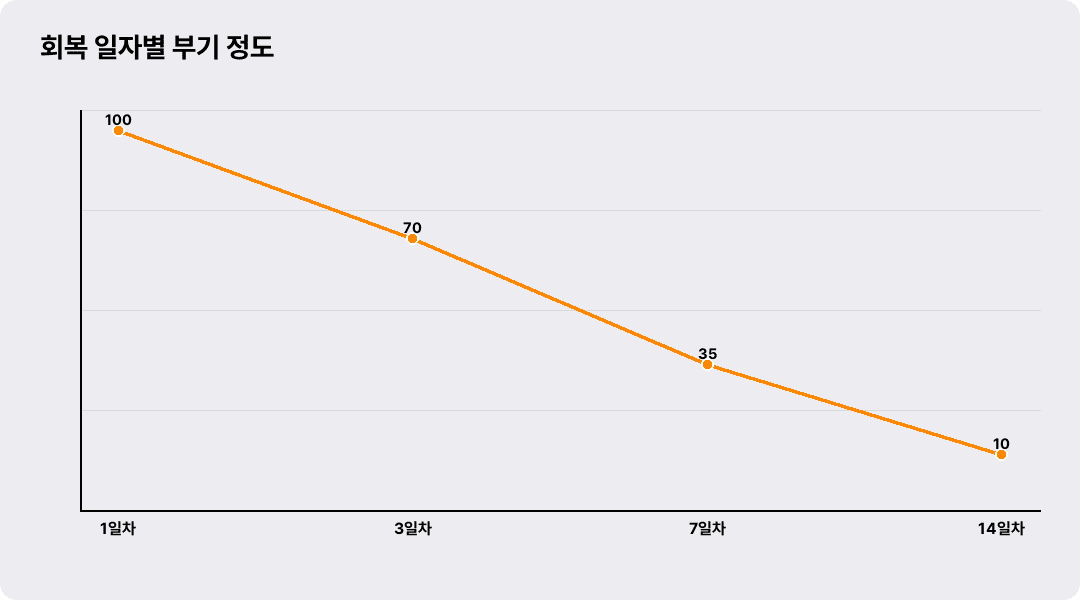
While swelling and bruising are common reactions, just as bruising and swelling can occur around the needle marks after a filler procedure, and blood thinners or alcohol can worsen them, you can minimize the risk of bruising by avoiding alcohol and blood-thinning supplements for a few days before and after your procedure. Most swelling and bruising will subside naturally within a few days to a week.

Why choose Beautystone Hapjeong?
At Beautystone Hapjeong, we focus on how the filler will settle after the procedure, rather than simply how much we put in. For areas like the hips where direct body weight is placed, even the same procedure can have a different recovery process depending on your lifestyle. Therefore, we tailor our recovery guidelines differently for those who spend long hours sitting compared to those who are highly active. Since we are a small boutique clinic located just a short walk from Hapjeong Station, we can closely monitor your daily routines and recovery speed to plan your follow-up care together.

What to expect during the treatment and warning signs to watch for
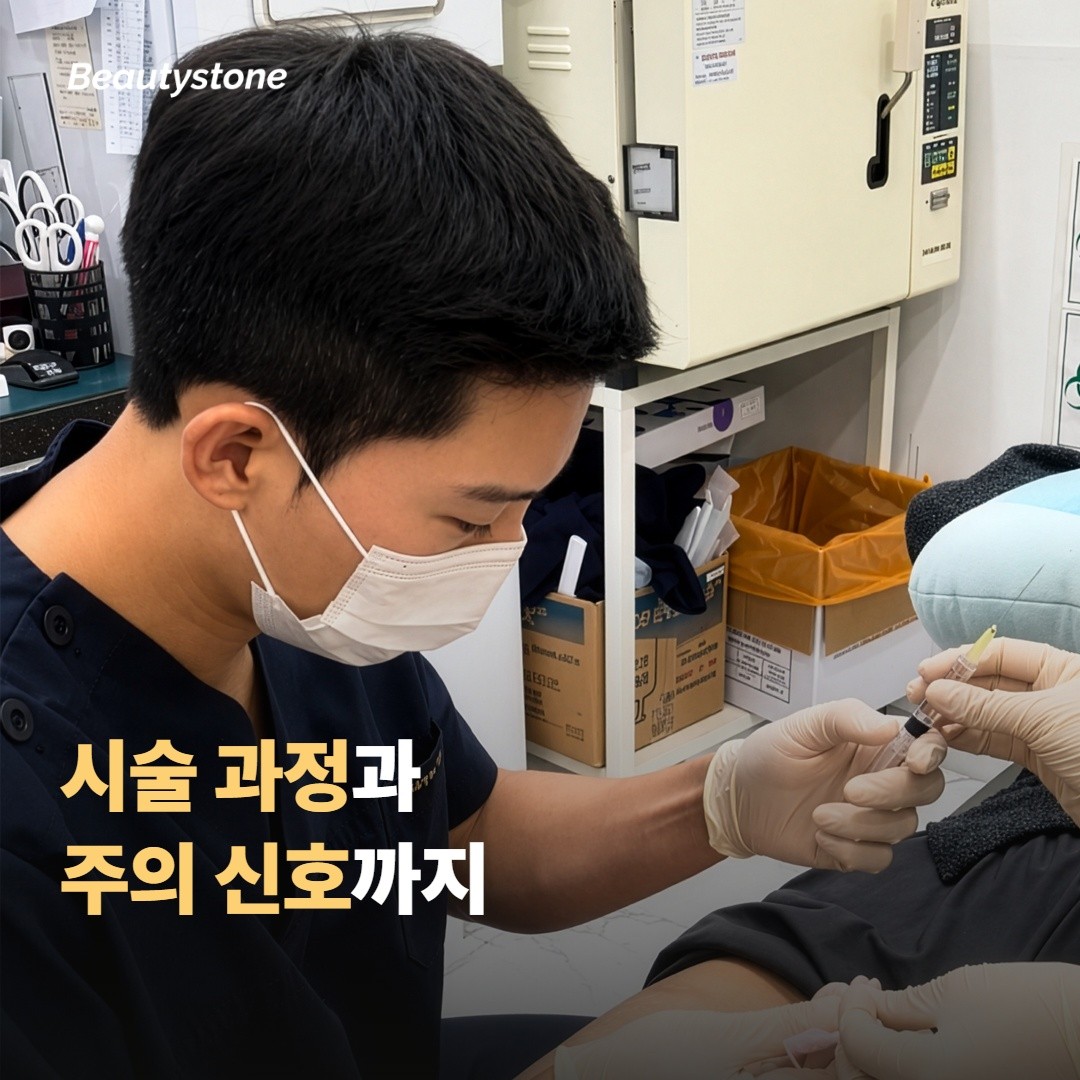
The procedure begins with a detailed consultation to determine the target areas and the volume needed. The filler is then evenly injected and gently molded to shape the area. After the procedure, some mild swelling and a feeling of pressure are common; these usually subside within a few days as the filler settles into place.
However, if you notice any of the following signs, it is safest to consult your doctor immediately:
One side is noticeably asymmetrical or you feel a hard lump
Pain in the treated area gradually worsens, or the skin turns pale or dark/grey
High fever, severe redness, or heat — These are signs that suggest a potential infection
Swelling that does not subside even after 2 weeks
This article is for general informational purposes. Please consult directly with the medical professional who performed your procedure to determine suitability and specific recovery steps.
Frequently Asked Questions
Q. I have to sit and work on the day of the procedure. Will I be okay?
A. It is generally fine if you break up the pressure by sitting briefly and standing up frequently. Using a donut cushion or a soft cushion will also help reduce the pressure. If you can avoid sitting for a long time at once for just the first two days, the filler will settle in much more safely and stably.
Q. When can I start exercising again?
A. Light walking is perfectly fine starting the day after the procedure. However, for weight training that puts direct strain on the hips or extended stationary bicycling, it is best to wait about 3 to 7 days and start back slowly with light intensity. Saunas and bathhouses are recommended after 1 to 2 weeks.
Q. I have some bruising. Is there a way to make it go away faster?
A. Applying a light cold compress gently over the area after the procedure can help. Please avoid pressuring or massaging the area hard. Bruises usually fade within a few days to a week, and avoiding alcohol and blood-thinning ingredients for a few days before and after the treatment can lower the risk of bruising.
Q. One side looks more swollen than the other. Is this normal?
A. For the first few days after the procedure, the left and right sides may look and feel different due to swelling. In most cases, it will become even as the swelling goes down. However, if the asymmetry remains prominent even after 2 weeks or if you feel a hard lump, please consult your medical provider.
Recommended Reads


Hair Removal
레이저 제모 1회에도 남는 몫이 있어요 — 밀도를 모자이크로 보는 법

Tattoo removal
Why Extremity Tattoos Are Slower to Remove

Tattoo removal
Tattoo Removal Cost: Why Quotes Vary by Area

Tattoo removal
Unused Tattoo Removal Sessions: What Happens?

Lifting
Forehead Thread Lifting: How Far Can It Go?

skin
Skin Booster Prices: What to Check in a Quote