

Early unevenness is usually swelling and settling, not a bad result. What to check at weeks 2 to 4, and the symptoms that should not wait six weeks.
Published -
Updated -

Author
Wi Young-jin · Chief director
Seoul National University College of Medicine · Seoul National University Hospital Specialist
→
If you catch your reflection from behind after hip filler and one side looks higher or fuller than the other, it's normal to wonder if something went wrong. When you've put money and time into a procedure like this, any unevenness tends to stand out even more.
Here's the short answer first: a little asymmetry right after the procedure, or in the first couple of weeks, is more common than you'd think. Filler needs time to settle, and swelling rarely goes down at exactly the same rate on both sides. So in most cases, that early unevenness doesn't lock in the way it looks at first.
Timing is what separates "asymmetry that will sort itself out" from "asymmetry that needs adjusting." Knowing what to look at first means you won't rush into a fix you don't need, while still catching the signs that genuinely call for attention. This article walks you through how to tell the difference, plainly and without overpromising. Individual results and recovery vary, so your own timeline may differ from the ranges below.
This is general educational information from Beautystone, a skin clinic in Seoul. It is not medical advice. Treatment decisions should be made with the board-certified provider who treated you.
In this article
Why early asymmetry after hip filler is so common
The usual reasons one side ends up looking different
How the right response changes depending on timing
What to check before you consider a correction
Is uneven hip filler actually normal?
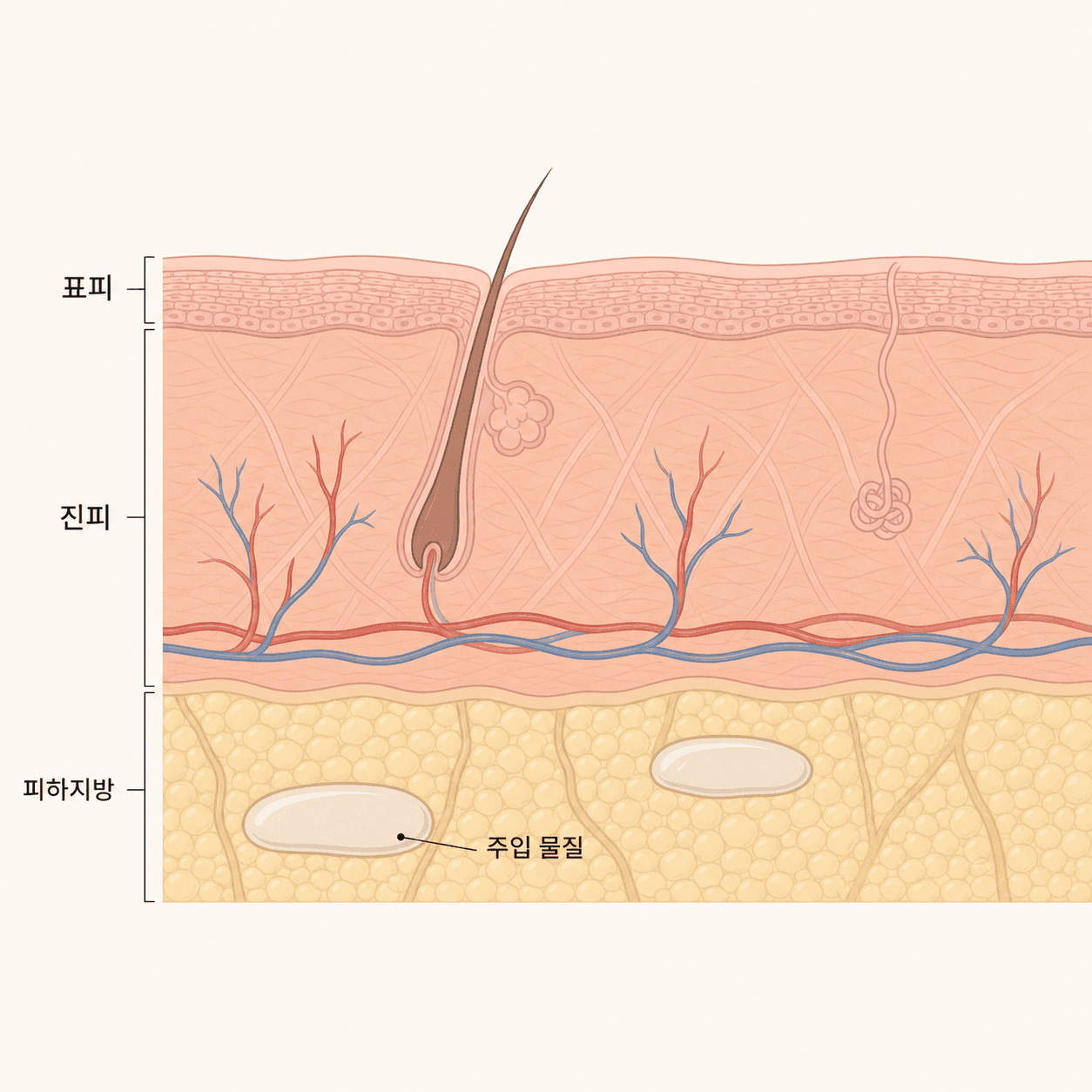
Hip and buttock filler adds volume by injecting a filling material into the subcutaneous fat* layer to build shape and contour. Because that injected volume needs time to settle and swelling needs time to subside, the two sides can look slightly different early on. On top of that, no one's body is perfectly symmetrical to begin with, so a difference that was already there before the procedure can become more noticeable afterward.
One thing to be clear about up front: dermal fillers are FDA-approved as products, but using them for hip, buttock, or other large-area body contouring may be an off-label use in the US. Off-label does not mean unsafe, but it does mean you should talk it through with a board-certified provider who does this regularly and understands the risks for larger-volume body work.
* subcutaneous fat: the fat layer just beneath the skin. Hip filler adds volume to this layer to build contour, and it takes time to settle.
Research noting that asymmetry or uneven results can follow filler procedures, and that careful pre-treatment assessment and proper technique help reduce the risk helps explain why early asymmetry isn't unusual. The key takeaway: what you see right now isn't the final result. Only after swelling and settling have fully run their course can you tell whether it's true asymmetry or just a temporary difference.
In other words, deciding that "the two sides are different" just a few days out is too early. Give it enough time for swelling and settling to resolve, and then you'll be able to see whether it's a difference worth correcting or one that will smooth out on its own. Individual results may vary.

Common reasons one side looks different
Early asymmetry usually comes down to a handful of common causes. Most resolve with time, but knowing which one is at play can put your mind at ease.
Uneven swelling — if swelling doesn't go down equally on both sides, things can look off for a while
Still settling — the injected material takes time to find its place
Pre-existing difference — your body isn't perfectly symmetrical, so it can show more after the procedure
Posture and pressure habits — sitting or lying on one side for long stretches can have an effect
Injection volume — rarely, a small difference in the amount injected on each side leaves a gap
The first three account for most early asymmetry. These tend to even out naturally over time, so watching your recovery comes before rushing to fix anything. When the difference stems from the procedure itself — like uneven injection volume — it may need adjusting, which is exactly why it's worth giving it time before you decide.
The right move depends on timing
What makes sense for hip filler asymmetry depends on how much time has passed. Here's how it breaks down by stage.
Timing | Common cause | What to do |
|---|---|---|
Right after to week 1 | Swelling | Watch your recovery |
Weeks 2 to 4 | Swelling and settling | Check posture habits |
Weeks 4 to 6 | Settling wrapping up | Follow up if it persists |
After 6 weeks | Settled difference | Discuss a correction |
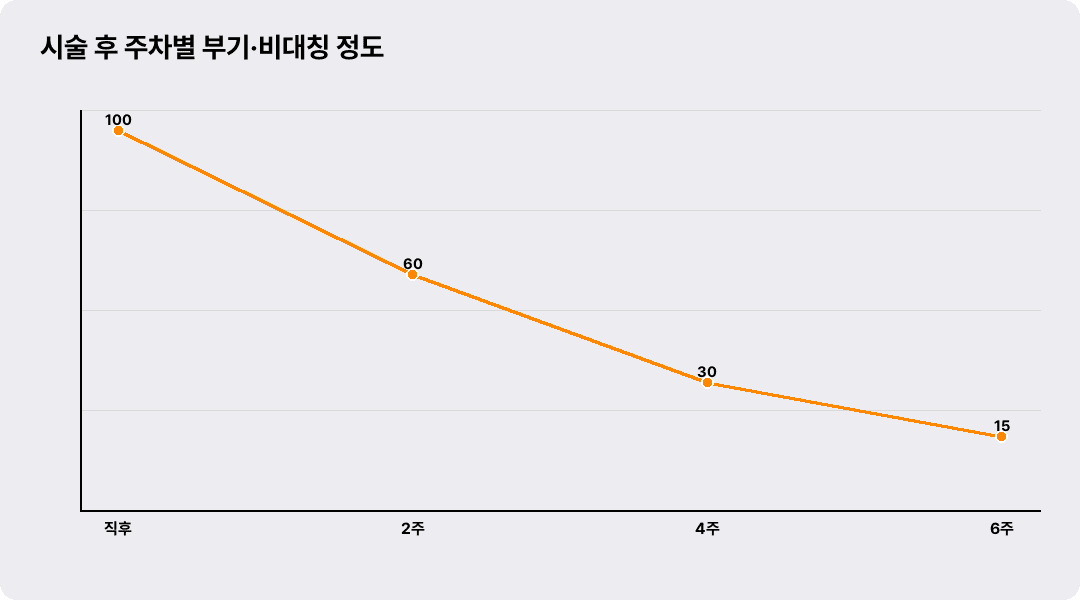
It generally takes about six weeks for swelling and settling to wrap up, so a difference still showing at that point is closer to true asymmetry. Before then, it's better to ease up on pressure, check your posture habits, and prioritize recovery. If a clear difference remains after six weeks, that's the stable point to start talking about a correction. These are general timelines — your own recovery may run faster or slower.

Is it worth it, and what does a correction cost? A correction can meaningfully improve a visible difference, but it rarely makes two sides perfectly identical — no provider can guarantee that, and "permanent" isn't the right word either, since hyaluronic acid filler is gradually broken down by the body over time. If your asymmetry is subtle and still settling, the most cost-effective move is often to wait rather than pay for an early fix you may not need.
On cost, body and large-area filler is expensive and varies a lot. Pricing usually tracks how much volume you need (often measured in syringes), the provider's experience, and your region, so totals for body contouring vary significantly — sometimes into the thousands of dollars — and a touch-up to even out one side may be billed separately. Avoid anyone who quotes a flat price sight unseen; a fair estimate comes after an in-person assessment. Some US practices offer financing through services like Cherry or CareCredit, but read the terms before signing up.
On the risk side, be aware that body filler carries real complications — including infection, lumps or nodules, the material shifting, and rarely vascular events. If you have a hyaluronic acid filler, an uneven or over-filled result can often be adjusted or partly reversed with hyaluronidase, an enzyme that dissolves HA filler. That reversibility is a genuine advantage of HA filler, but it should be done by a qualified provider, not on your own. Weigh the likely improvement against the cost, downtime, and these risks before committing.
Choosing where to have it checked
When asymmetry shows up after hip filler, the more measured approach is to look first at whether swelling and settling are wrapping up, rather than reaching for a fix right away. Early differences often even out as you recover, so the goal is to watch closely and then talk through whether a correction makes sense based on what actually remains.
If you're in the US, look for a board-certified dermatologist or plastic surgeon who does body filler regularly, assesses you in person, and is upfront about the off-label nature of large-area filler. Ideally, follow up with the provider who did your original injections, since they know exactly what was placed and where. Beautystone is a skin clinic in Seoul, so this is general information rather than a local referral — but the principle holds wherever you are: in-person follow-up beats deciding from a photo.

What to check before considering a correction
Rather than deciding on a correction the moment asymmetry bothers you, it helps to run through a few things first. They'll show you whether it's something time will fix or something that actually needs adjusting.
Has it been six weeks yet? — if not, give your recovery a little more time to play out
Posture and pressure habits — check whether you sit or lie on one side for long stretches
How big the difference is — compare photos to see if it's subtle or clearly visible
Pain, warmth, or firmness — if anything feels off compared to usual, contact your provider quickly or seek urgent care
Talk it through with your provider — whether to adjust with hyaluronidase* or add a little to even things out is a decision to make together
* hyaluronidase: an enzyme that dissolves hyaluronic acid filler. It's used under a provider's judgment when the amount or placement of HA filler needs adjusting.
This article is general information, so the safest approach is to settle how you handle your own asymmetry and the timing of any correction with the board-certified provider who treated you. In particular, if you have warning signs — severe or worsening pain, one side feeling hard to the touch, spreading redness, skin that turns dusky or white, or fever — don't wait it out; contact your provider right away or seek urgent care, as these can signal a complication.

Frequently asked questions
Q. Does hip filler asymmetry get better on its own?
A. Often, yes. Early asymmetry is usually a temporary difference from swelling or the settling process, so in many cases it smooths out naturally. It typically takes about six weeks for swelling and settling to wrap up, so judging by what remains at that point is the most accurate read. Before then, watching your recovery comes first. Individual results may vary.
Q. Do I need a correction right away if I notice unevenness?
A. Usually not. Differences right after the procedure often shrink once swelling and settling wrap up. As a rule of thumb, if a clear difference is still there after six weeks, that's when most providers discuss a correction. That said, if you have severe pain or one side feels hard to the touch, reach out right away no matter the timing.
Q. Can hip filler asymmetry be corrected or dissolved?
A. Yes, in most cases. With hyaluronic acid filler, a provider can inject hyaluronidase to dissolve some of the material and rebalance the two sides, or add a small amount to the smaller side to even things out. This is a key advantage of HA filler — it's adjustable. The right approach depends on the cause and is best decided with your provider once you've fully recovered. It should not be attempted at home.
Q. Is hip filler worth it given the risk of asymmetry?
A. That depends on your goals, budget, and tolerance for touch-ups. A skilled provider can usually improve a visible difference, but perfect symmetry can't be guaranteed, and body filler is a significant cost that often involves more than one session. Going in with realistic expectations — and choosing an experienced, board-certified provider — is the single biggest factor in being happy with the result.
Q. Can I massage the area to reduce the asymmetry?
A. Check with the provider who treated you before massaging on your own. Depending on the area and the material used, massage can either help or actually shift things out of place. As a first step, focus on your posture habits and avoid putting pressure on one side for too long.
Last updated June 2026. This is general educational information, not medical advice, and has not been individually reviewed for your situation.
Further reading


Contouring & Volume
Why Juvelook Volume Quotes Vary by Clinic

men's
Nose Pore Treatment: Aftercare Timing Guide

skin
How Many Sessions Does Eyeliner Removal Take?

Hair Removal
Laser Hair Removal While Pregnant or Nursing

Hair Removal
레이저 제모 1회에도 남는 몫이 있어요 — 밀도를 모자이크로 보는 법

Tattoo removal
Why Extremity Tattoos Are Slower to Remove