

Got hip filler? When you can sit comfortably, restart exercise, and warning signs to watch.
Published -
Updated -

Author
Wi Young-jin · Chief director
Seoul National University College of Medicine · Seoul National University Hospital Specialist
→
Right after hip filler (a type of body filler), the first thing on your mind usually isn't the procedure itself — it's the everyday stuff. Can I sit in a chair today? Is it okay to work out tomorrow? Since the treated area is one you press on and move constantly, it's only natural to wonder more about sitting and exercise than you would with filler anywhere else.
The short answer: for the first few days, it's best to ease off strong pressure and big movements on the area, and to build activity back up gradually, starting light. That said, everyone's injection volume and recovery speed are different, so the most accurate timing always comes from the medical team who treated you.
This article rounds up treatment information from Beautystone in Hapjeong.
What you'll learn
Why sitting and exercise need a little care right after the procedure
How to gauge when sitting will feel comfortable again
How to ease back into exercise, intensity by intensity
Which warning signs mean it's time to get checked out
Why be careful with sitting and exercise right after the procedure?
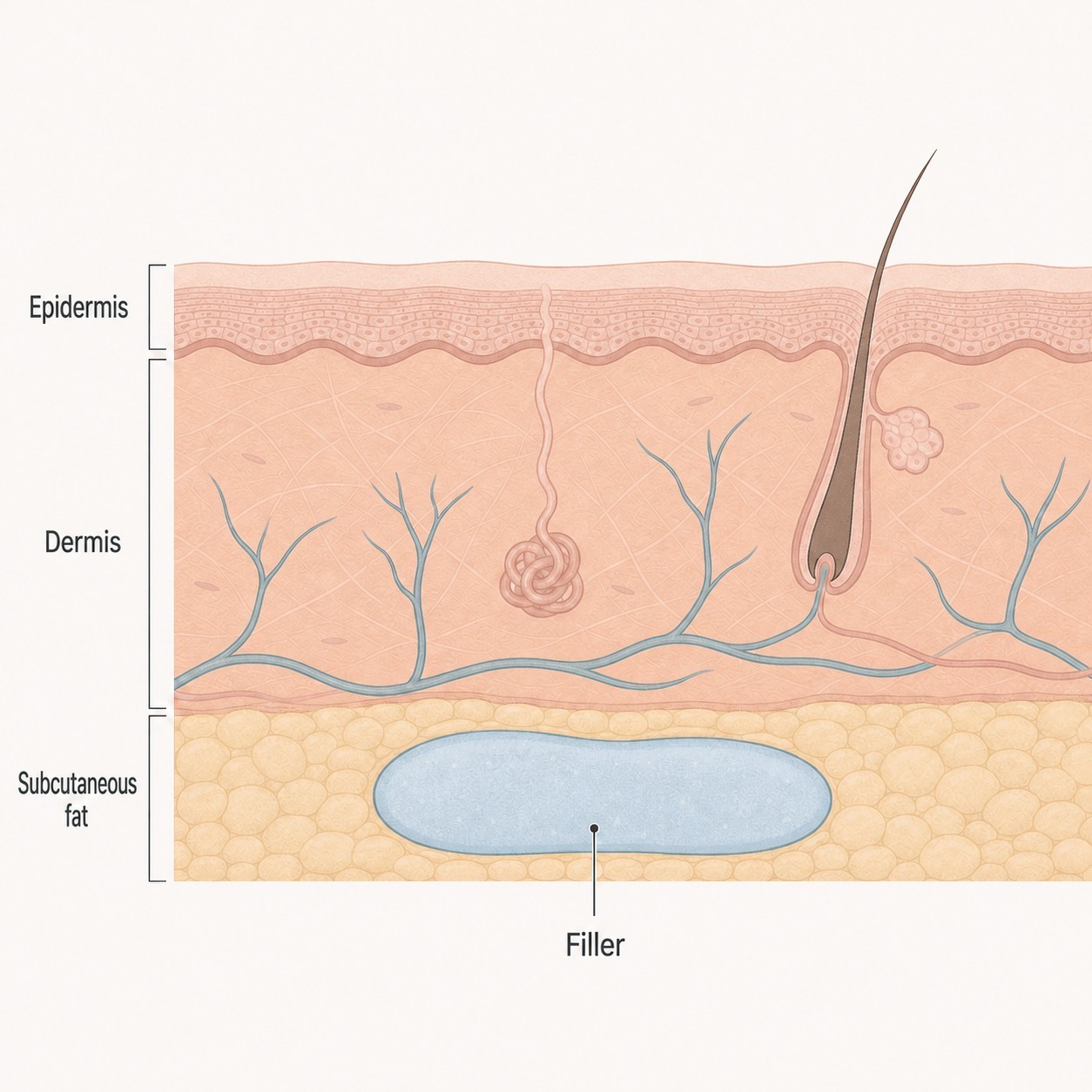
Hip filler (a type of body filler) is usually done by filling the fat layer beneath the skin with hyaluronic acid* to create volume. Right after the injection, that material is still settling into place, so adding strong pressure or big movements can pull the shape to one side, or make swelling and bruising more noticeable.
* hyaluronic acid: a moisture-binding substance that naturally exists in our bodies; in filler, it's the material that holds water to create volume.
The buttocks in particular bear your body weight every time you sit, so sitting for long stretches right after treatment puts steady, ongoing pressure on the area. In fact, there's an international consensus recommendation that to reduce bruising and swelling after filler, you should avoid strenuous exercise right afterward and manage pressure on the area appropriately. So for the first few days, shifting position often is gentler on the area than staying in one spot for a long time.
Sitting: when can you get comfortable again?
Sitting isn't so much off-limits as something you ease back into, gradually reducing the pressure on the area. Picturing a typical recovery flow, it tends to look something like this.
Timing | Sitting | Notes |
|---|---|---|
Day 0–2 | Briefly, change position often | A donut cushion helps |
Day 3–5 | Everyday sitting is fine | Avoid long stretches |
After 1 week | Mostly comfortable | Watch for personal differences |
On the day of and the day after, it's better to sit briefly and get up often to change position than to stay put for a long time. Using something like a donut-shaped cushion, which keeps your body weight off the treated area, makes the day much more comfortable. Once a few days pass and the swelling goes down, everyday sitting is generally no problem — though sitting for several hours at a stretch is worth easing into a bit more slowly.
Ease back into exercise, intensity by intensity
With exercise too, it's safer to build back up from light activity than to jump straight back to your full routine. Here's roughly how the commonly recommended timing looks, activity by activity.

A gentle walk is fine relatively early on, but anything that makes you sweat heavily or works the area hard is worth waiting on a little longer. In fact, there's an international consensus recommendation that to lower the risk of bruising and swelling after filler, it's best to avoid strenuous exercise for about 24 hours. Movements that work the buttocks directly, like squats or lunges, and activities that concentrate pressure on the area, like cycling or horseback riding, are especially worth easing into — settle the timing with your medical team.

Why Beautystone in Hapjeong?
At Beautystone Clinic in Hapjeong, we see the aftercare guidance as just as important as the procedure itself. Even with the same filler, recovery unfolds differently depending on injection volume, the area, and how active you usually are — so when we treat you, we like to hear about your sitting habits and workout routine too, and map out a recovery plan that won't push you too hard. We're a small clinic within walking distance of Hapjeong Station, so we can take the time to really listen to each person's lifestyle and tailor the recovery timeline to fit.

See your doctor if you notice these signs
Most swelling and bruising settles down naturally over time, but if you notice any of the following, it's safer to contact the clinic where you were treated rather than waiting it out on your own.
One side feels unusually hard, or the shape pulls noticeably to one side
Pain or swelling doesn't ease with time and instead gets worse
The skin turns pale or takes on a purplish tint — a sign that needs prompt attention
The area keeps feeling hot and burning
As one guideline notes — it's best to avoid exercise for about 24 to 48 hours after filler to prevent symptoms from worsening — early care often shapes how recovery goes. If your swelling or bruising fades a little more each day, that's generally a natural part of healing. But if you feel a change that's different from usual, like the signs above, it's better to get checked out than to grit your teeth and wait. This article rounds up general information, so the recovery timing and care that's right for you is best decided in consultation with the medical team who treated you.

Frequently asked questions
Q. Can I drive myself home on the day of the procedure?
A. Short drives are generally fine, but a long drive that keeps you seated for a long stretch can be tough on the day of. If you can, pull over now and then to change position, and use a cushion so your body weight doesn't press directly on the treated area — it makes a real difference.
Q. Is it okay to sleep on my side?
A. Any position that keeps your body weight off the treated area is generally comfortable to sleep in. Just avoid lying flat with your buttocks pressed against the bed for long stretches during the first few days. If a position feels uncomfortable, don't force it — shift to whichever side feels easier.
Q. How many days until the swelling usually goes down?
A. It varies a lot from person to person, but early swelling often fades gradually over several days. Depending on your injection volume and constitution it can linger longer, so rather than pinning down an exact timeframe, watch the direction it's heading. Fading steadily is a natural sign; getting worse is a reason to see your doctor.
Q. When can I go back to the gym or Pilates?
A. Starting with light activity and slowly turning up the intensity is the safe way to go. Workouts that involve movements working the buttocks a lot are especially worth easing into, so for the exact timing, we'd recommend checking with the medical team who treated you and knows your injection volume and recovery progress.
Further reading


skin
Ellanse Cost: Duration Beats Price Per Visit

Lifting
Alltite RF: Two Effects, Two Timelines

Contouring & Volume
Why Juvelook Volume Quotes Vary by Clinic

men's
Nose Pore Treatment: Aftercare Timing Guide

skin
How Many Sessions Does Eyeliner Removal Take?

Hair Removal
Laser Hair Removal While Pregnant or Nursing