

Swelling and bruising are the usual. Sudden pallor, severe pain, or vision changes are not — and blood thinners need a plan about two weeks out.
Published
Updated

Author
Wi Young-jin · Chief director
Seoul National University College of Medicine · Seoul National University Hospital Specialist
→
When looking into fillers, the first worry that comes to mind is often, "What if I get matching severe bruising?" While it is true that no treatment is completely free of side effects, there is a lot you can do to minimize them by managing your physical condition, checking your medications before the procedure, and following proper post-treatment care.
In short, most common swelling and bruising subside within a few days. However, as rare but serious reactions can occur, it is essential to check everything before, during, and after your treatment. Let's walk through what you should look out for, step by step.
This content is a guide on filler treatments prepared by Beautystone, Hapjeong.
By reading this post, you will:
Learn to distinguish between common and rare side effects of fillers
Find out what medications and physical conditions to check before the treatment
Know which warning signs require immediate medical attention right after the procedure
Understand the recovery steps to minimize swelling and bruising afterward
Filler Side Effects: Distinguishing the Common from the Rare
The most common side effects are swelling, bruising, mild bleeding, and palpable nodules* at the injection site. Most of these tend to subside within a few days to a few weeks.
Nodule*: A small, palpable lump under the skin where the filler has clumped together. In most cases, these resolve on their own over time or can be addressed by your medical provider if needed.
The American Society for Dermatologic Surgery (ASDS) filler safety guidelines list swelling, bruising, bleeding, and nodules as common reactions, while infection, allergic reactions, and filler migration are classified as rare. Though very rare, vascular occlusion*—where the filler accidentally enters a blood vessel—requires immediate attention. It is highly recommended to distinguish this from common reactions.[^1]
Vascular Occlusion*: A state where filler enters or presses against a blood vessel, blocking blood flow. It is indicated by sudden severe pain or the skin turning pale/white, and requires immediate medical treatment.
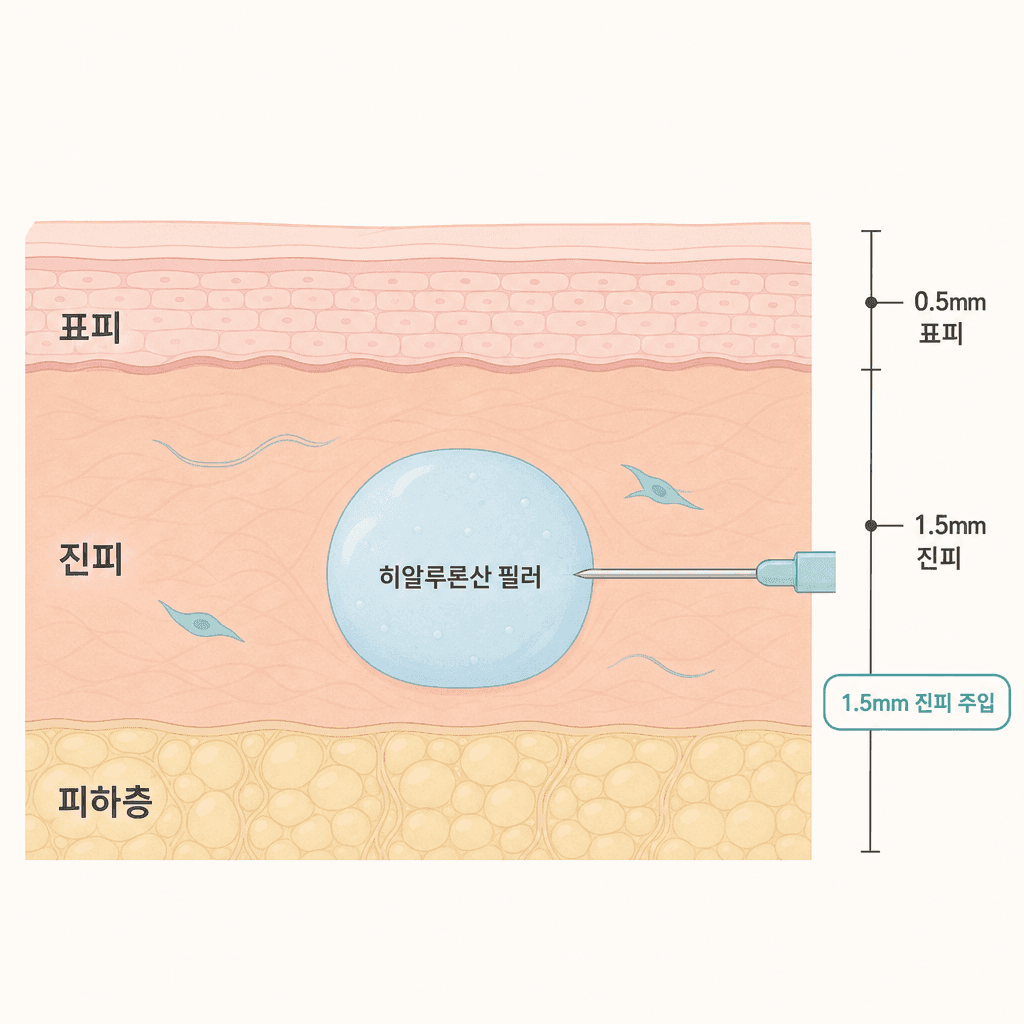
Pre-Treatment Check — Medications, Medical History, and Practitioner
There are a few key things to prepare before your treatment. ASDS guidelines suggest consulting with your prescribing doctor to adjust blood thinners (such as aspirin) about two weeks beforehand, as they can increase the risk of bruising. Additionally, treatments may not be suitable if you have active oral herpes, uncontrolled diabetes, or blood clotting disorders.
Here is a summary of scenarios where common versus rare side effects are more likely to occur.
Above all, who performs the procedure is what matters most. The ASDS guidelines also recommend that a medical professional thoroughly evaluate your medical history and the injection areas before proceeding. Checking the practitioner's credentials and the consultation process should be your very first checkmark.
Right After Treatment — Contact Your Doctor Immediately If You Notice These Signs
While most cases end with mild swelling and bruising, please contact your medical team immediately if you experience any of the following signs right after your procedure:
The injection site suddenly turns white or pale, accompanied by severe, continuous pain
You experience vision changes, such as blurred vision
Swelling or pain continuously worsens over time
The symptoms are accompanied by a fever or severe redness
These symptoms may indicate a more serious issue than standard reactions and require prompt evaluation. The Cleveland Clinic guidelines also advise patients to contact their healthcare provider immediately if they observe signs of infection or allergic reactions.[^2]

Why Choose Hapjeong Beautystone?
At Hapjeong Beautystone, rather than rushing through the process by saying "fillers are quick and simple," we believe in a thorough approach. We walk you through your current medications, medical history, and post-care routine. Even with the same filler, the ideal care plan varies from person to person. For areas with high vascular density or for guests with a history of side effects, we address these concerns in detail during the initial consultation. You can even decide on proceeding after thoroughly reviewing the checklist with us. Plus, being located within walking distance of Hapjeong Station, it is incredibly convenient to drop by for a quick consultation regarding your skin's condition.

Post-Treatment Care — Tips to Reduce Swelling and Bruising
Swelling and bruising follow a general recovery timeline. Understanding the flow below will help you know what to expect as your skin heals.
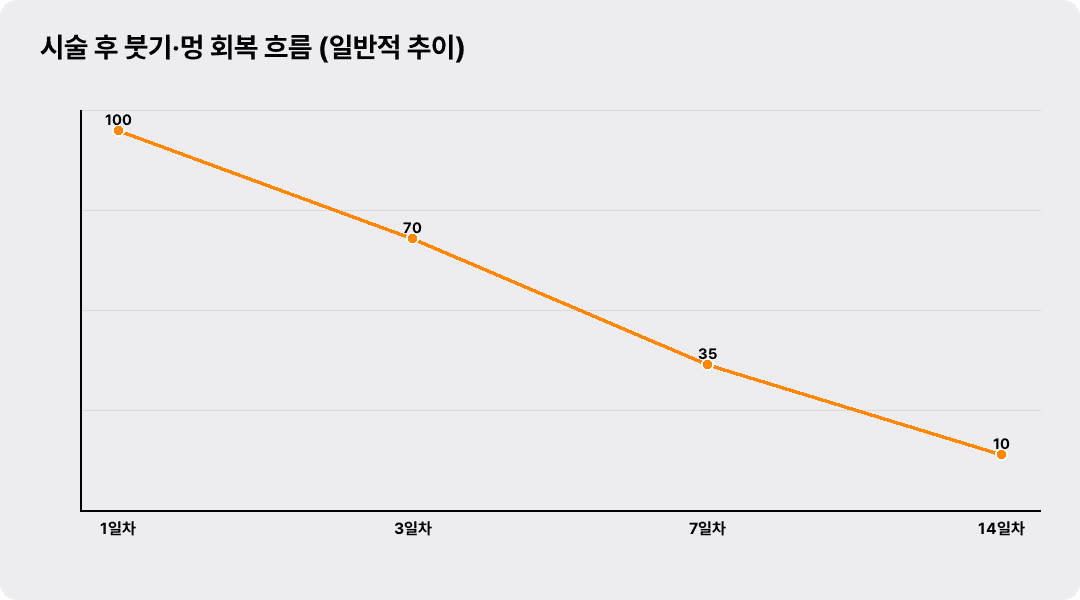
According to resources from the Cleveland Clinic, while most people can return to their daily routines immediately, it is recommended to avoid strenuous exercise for 1 to 2 days and use cold compresses to help reduce swelling. Additionally, you should avoid pressing hard on the treated area.[^3] Recovery times may vary individually depending on the number of areas treated, the type of filler used, and your personal health condition.
As this article provides general information, please consult with your medical provider prior to the procedure to determine if the treatment is right for you, and to discuss specific precautions.

Frequently Asked Questions
Q. Will I definitely get bruises after a filler treatment?
A. Not necessarily, though bruising and swelling are quite common. Consulting with your doctor beforehand to manage blood-thinning medications and avoiding heavy pressure on the treated area afterward can significantly help minimize them.
Q. How long do side effects typically last?
A. Common swelling and bruising usually resolve within a few days to a couple of weeks. However, since delayed reactions can rarely occur, it is best to have your physician check if you experience any unusual, prolonged symptoms.
Q. Can I exercise right after the procedure?
A. According to the Cleveland Clinic, avoiding strenuous exercise for 1 to 2 days is recommended. As recovery speed depends on the treated area and your body's condition, it is best to follow your provider's specific guidelines.
Q. What warning signs should prompt an immediate hospital visit?
A. If you notice the injection area turning white, experience severe pain, vision changes, progressively worsening swelling, or a fever, please contact your medical team immediately.
[^1]: American Society for Dermatologic Surgery (ASDS) Dermal Filler Patient Guide — Classification of common reactions (swelling, bruising, nodules) and rare reactions (vascular occlusion, infection, allergic reactions) along with recommendations for blood thinners. https://www.asds.net/skin-experts/skin-treatments/dermal-fillers [^2]: Cleveland Clinic. Dermal Fillers. — Recommendation to contact medical providers immediately if signs of infection, redness, or worsening swelling occur. https://my.clevelandclinic.org/health/treatments/22667-dermal-fillers [^3]: Cleveland Clinic. Dermal Fillers. — Instructions on returning to daily activities, avoiding strenuous exercise for 1-2 days, cold compresses, and avoiding pressure on the treated area. https://my.clevelandclinic.org/health/treatments/22667-dermal-fillers






Contouring & Volume
Hip Dip Filler Before and After: 4 Checks

Body
Potenza Treatment Interval: Why 4 Weeks?

Lifting
Ultherapy Before and After: Why Wait 90 Days?

Contouring & Volume
Belotero Revive Cost: 2cc Price vs. 3 Sessions

skin
Lip Hyperpigmentation Laser: Does It Work?

Contouring & Volume
Men's Forehead Filler: Hollow or Just Lines?