

Evenly dark lips can lighten with laser, but a single spot or pigment on your nails needs a different first step. See what the 1- and 5-session studies found.
Published
Updated

Author
Wi Young-jin · Chief director
Seoul National University College of Medicine · Seoul National University Hospital Specialist
→
Lips that are evenly dark across both the upper and lower lip can often be lightened with laser. A single spot, patches that also show up inside your mouth or on your nails, or a spot that's changing shape is a different story: those need a diagnosis before anyone reaches for a laser.
Lip balm and makeup struggle to cover either kind, but where the color sits and how it started decide which answer is yours. Below, we look at the main patterns of lip darkening, what the laser studies actually found, and which signs after treatment mean you should get in touch.
At a Glance
Evenly dark on both lips: this is the pattern laser has been studied on, and it can lighten.
Sessions: one study used a picosecond laser 5 times, 2 weeks apart; with a 532 nm laser, most people finished after 1 of 1 to 3 sessions.
A single flat spot that keeps the same size and color can usually just be watched.
A spot that bleeds, rises into a lump, or changes shape gets checked first, before any laser.
Dark Lips All Over: Can Laser Lighten Them?
This is the pattern to look at first when someone asks about laser. When both lips are dark in an even, symmetrical way, with no soreness or itching, it's usually called physiologic lip hyperpigmentation. It's a common cosmetic concern in Asia and the Middle East, and it's been studied as exactly that: a cosmetic concern, not a disease.
Your lips are covered by a thin mucous membrane rather than regular skin, and the extra pigment collects in its lowest layer. The laser results you'll read further down all come from lips with this even, two-sided pattern, so they don't automatically apply to a single spot or to patchy color.
One way to describe how far the color spreads uses three grades. Checking yours in a mirror ahead of time makes it much easier to explain the range at a consultation:
Grade 1: the whole upper lip and only the edge of the lower lip are dark
Grade 2: the whole upper lip and most of the lower lip are dark
Grade 3: most of both lips are dark
It's worth noting which grade fits before you decide anything else. The wider the spread, the more area a treatment plan has to cover, and the easier it is to compare photos later if you know where you started.
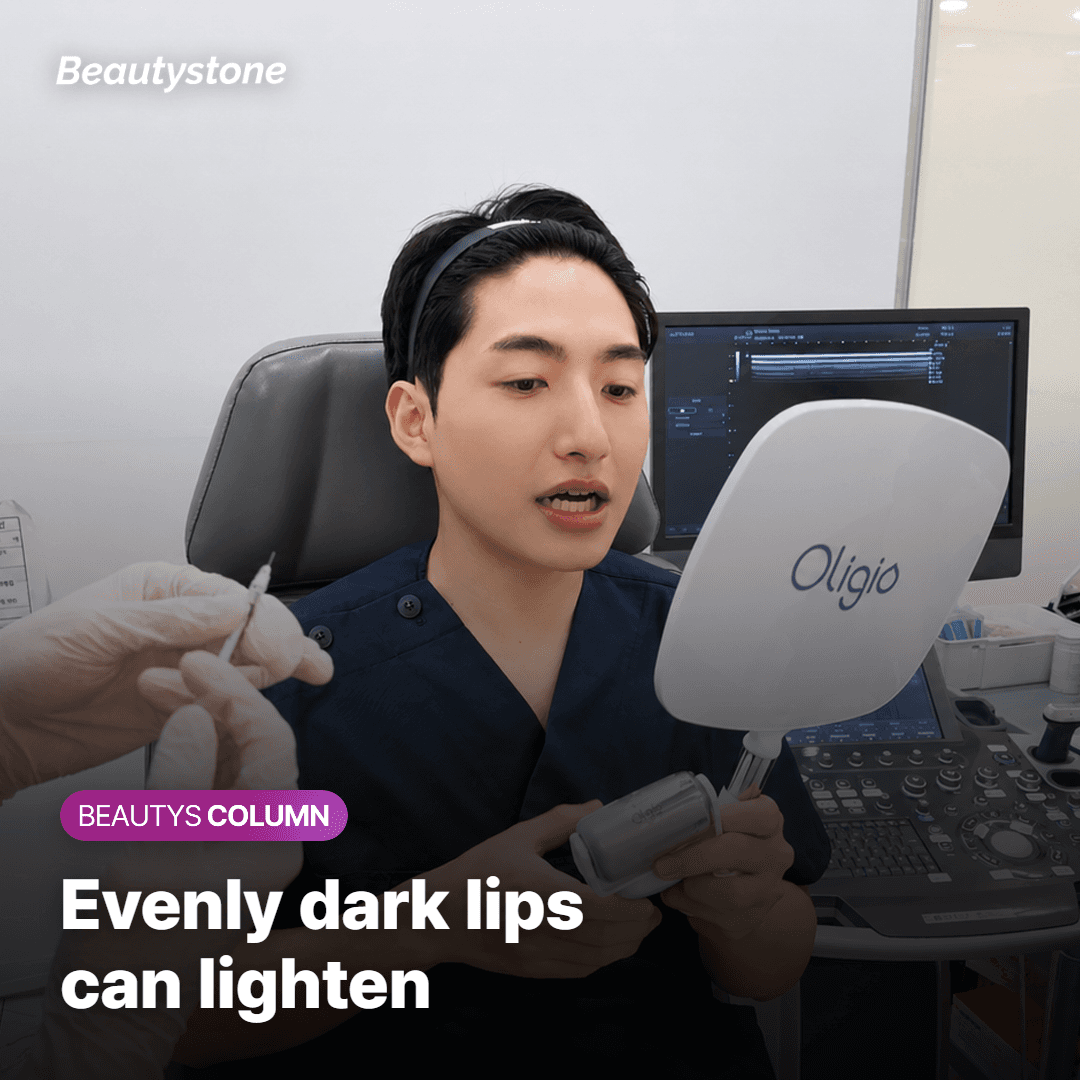
A Single Dark Spot on the Lower Lip: What's Different?
A flat brown or black spot, 1 to 8 mm across, sitting near the middle of the lower lip may be a labial melanotic macule, sometimes called a lip freckle. Once it appears, it tends to keep the same size and color. It's harmless, so if it looks typical, simply watching it is a reasonable choice. Sun exposure is thought to play a role, and while it's more common in fair skin, it shows up in darker skin too.
A spot that grows or changes color is a different matter, even if it looked the same at first. Melanoma of the lip is very rare, but it does happen, so a changing spot gets a biopsy to find out what it is before anyone tries to remove it with a laser.
*Biopsy: a test where a tiny piece of tissue is taken and its cells are checked under a microscope.
Several spots at once call for a closer look, especially if you also see brown patches on the inside of your cheeks or on your gums, or brown lines running lengthwise down your nails. This can be a harmless condition that begins in adulthood and rarely runs in families. Still, it looks similar to an inherited condition that causes polyps in the intestines, so an exam to tell them apart comes first.
Three details help separate the causes: how many spots there are, when they first appeared, and whether you have any other symptoms in your body. Jot those down before you book.
Could Your Lip Products Be Darkening Your Lips?
They can. An allergy to an ingredient in a lip product is one known cause of darker lips. A systematic review gathered 7 reported cases, and every one of them had several patches rather than a single spot. Around the time the color changed, people also had itching, flaking, swelling, or redness. Ricinoleic acid, which comes from castor oil, and gum ester were the ingredients identified most often.
Inside the mouth, smoking and pigment left behind after inflammation are also common reasons for darker patches. With causes like these, it makes sense to look at when the color started changing and which habits or products changed around the same time, before planning any laser.
If the darkening followed a new lipstick or balm, keep the packaging. A photo of the ingredient list is far more useful at a consultation than a brand name you have to remember.
How Many Lip Laser Sessions, and How Much Lighter?
Lip laser isn't a one-session return to your natural shade. In a study of 20 people with evenly dark lips, a 755 nm picosecond laser was used 5 times, 2 weeks apart. Six months later, doctors rated 52.6% as moderately improved, and 70% of patients said their own lips had improved moderately or more.
A second study looked back at 30 people treated with a 532 nm laser. The number of sessions depended on how each person responded, anywhere from 1 to 3, and most finished after 1. Lightening of more than 75% was seen in 30%, and doctors rated another 43% as 51 to 75% lighter.
Keep in mind that both studies followed a single group without a comparison group, and follow-up lasted 6 months. Individual results vary, and how much your lips lighten depends on your own pigment. When to stop is decided session by session, comparing photos taken under the same lighting each time.
The wavelength matters for planning, too. A 755 nm picosecond laser and a 532 nm laser were run on very different schedules in these studies, so the question isn't only how many sessions, but which laser and how far apart.
Lip Laser Side Effects: What Passes and When to Call
Side effects were uncommon in both studies. Among the 20 people treated with the picosecond laser, the only reaction was temporary lip swelling in 1 person. Among the 30 treated with the 532 nm laser, no one developed scars or lasting darkening. That said, 2 of those 30 had a cold sore flare-up, and 3 developed patchy areas lighter than the rest of the lip.
Usually passes on its own
Lip swelling right after treatment that settles down
Contact the clinic right away if you notice
Blisters coming up on your lips
Patches that look whiter than the lip around them
A spot that rises into a lump, breaks open, or bleeds without being touched
For blisters or white patches, send a photo through the consultation button on this page and come in to be examined; a message doesn't replace an exam. If you get cold sores often, mention it before your first session, not after.
Lip Laser on a Korea Trip: Flights, One Visit, and Home
Unless you were sedated that day, there's no reason to push back your flight because of a lip laser session. The treatment itself doesn't keep you from flying.
Pigment laser works over a series of sessions, so one visit is a starting point rather than the full course. In the picosecond study, the 5 sessions were spread 2 weeks apart, while in the 532 nm study the number of sessions was set by how each person's lips responded. Most changes come gradually, and a single visit won't stand in for the sessions your lips may need.
Once you're home, you can send photos through the clinic's consultation channel if something doesn't look right. If you notice blisters, or a spot that bleeds or breaks open, see a local doctor first instead of waiting for a reply.
The Bottom Line: Know Your Pattern Before You Book
Before you decide, check three things in the mirror: whether both lips are evenly dark or the color sits in a separate spot, whether there's pigment inside your mouth, on your gums, or on your nails, and whether itching or a new lip product came before the color changed. Then ask which wavelength would be used on your lips, how many sessions, and how many weeks apart. That one answer makes your options much easier to compare.
So, is your color spread evenly across both lips, or is it a spot that needs a diagnosis first? Beautystone is a clinic in Seoul's Hapjeong area, and you can ask through the consultation button on this page. In your first message, include a front photo of your lips taken in natural light, when the darkening started, and the lip products you use most.
Sources
Lip freckles (labial melanotic macules): appearance, causes, and treatment — DermNet
Five sessions of a 755 nm picosecond laser for evenly dark lips — Dermatol Surg, 2022
A 532 nm laser for evenly dark lips in 30 people, 1 to 3 sessions — J Dermatolog Treat, 2022
Pigment on the lips, inside the mouth, and on the nails (Laugier-Hunziker syndrome) — DermNet
Types of pigment inside the mouth and when a biopsy is needed — Am J Clin Dermatol, 2025


Lifting
Ultherapy Before and After: Why Wait 90 Days?

Contouring & Volume
Belotero Revive Cost: 2cc Price vs. 3 Sessions

skin
Lip Hyperpigmentation Laser: Does It Work?

Contouring & Volume
Men's Forehead Filler: Hollow or Just Lines?

Contouring & Volume
Calf Botox Timeline: When to Book Session 2?

Contouring & Volume
Thread Lift Cost: Smile Lines vs. Full Face?