

A thread lift quote hinges on entry points, thread type, and pull direction, not the area's name. See how to compare a smile-line quote with a full-face one.
Published
Updated

Author
Wi Young-jin · Chief director
Seoul National University College of Medicine · Seoul National University Hospital Specialist
→
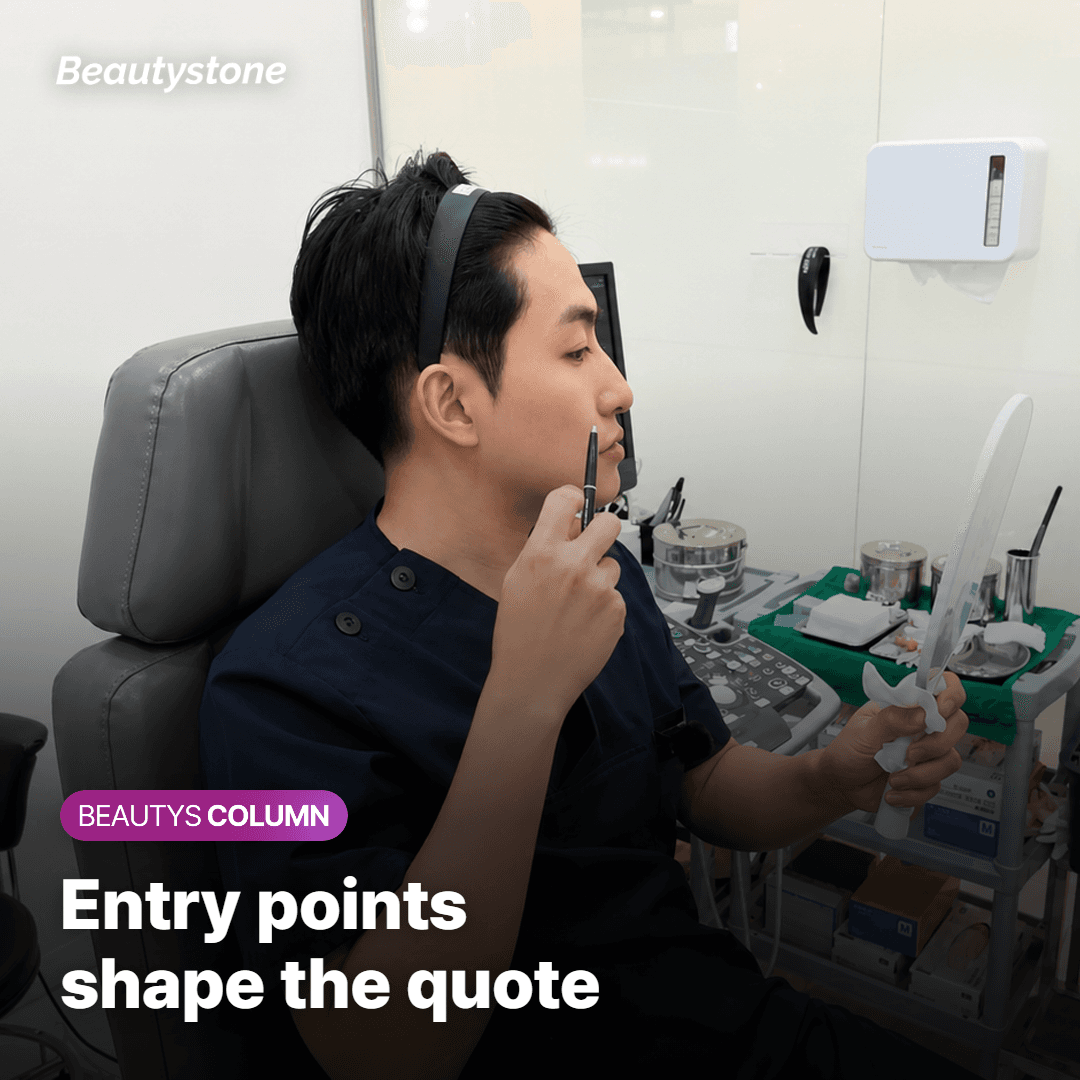
A thread lift quote depends less on the name of the area than on where the threads go in and which direction they pull. Two quotes that both say "smile lines" can mean very different work: threads inserted at the temple and pulled sideways, or short threads placed close to the fold itself. Each approach uses a different thread type and length.
So before you compare totals, it helps to agree on how far your sagging actually reaches, and then compare quotes that cover the same thing. Below, we walk through what changes when the area grows from the smile lines to the jawline, what a quote should spell out, and how side effects and longevity fit into the choice.
At a Glance
Thread lift quotes differ by entry points, thread type and length, and pulling direction, more than by the area's name.
How to compare: line up quotes that match on the area of sagging, the threads used, and the direction of pull.
Smile lines caused by lost volume, rather than sagging, usually call for a filler plan instead of threads.
How the lift changes: it's strongest right after the procedure, and in pooled studies satisfaction went from 98% right after to 88% at 6 months.
Smile Lines Only or Full Face: Why Do Quotes Differ?
When the area grows, the entry points and the combination of threads change with it, and so does the total. Going from the smile lines and mouth corners to the cheeks and jawline adds more tissue to lift, so the doctor starts over on where the threads enter and how long they need to be.
Even a quote that says "smile lines only" can hide different plans. In a case report of 3 women with nasolabial folds (the lines from the sides of the nose to the mouth corners) and marionette lines (the lines running down from the mouth corners), threads were placed in three different ways: entered above the temple hairline and pulled toward the side of the face, placed in a reverse direction aimed at the fold, or run from the side of the face toward the front. The thread material, thickness, and barb size were also chosen differently for each person.
That's one small report, not proof that one method works better. What it shows is how much room there is inside a single area name, and why the name alone doesn't tell you what you're paying for.
What Does "Smile Lines" Actually Cover on a Quote?
If a quote lists only an area name, you can't tell whether it matches another clinic's quote. These three lines need to be filled in before two quotes can sit side by side:
What to look for | Smile lines and mouth corners | Full face, including cheeks and jawline |
|---|---|---|
Sagging it treats | Around the smile lines and mouth corners | Also cheek sagging and a softened jawline |
Where threads go in | Near the fold, or at the temple | Which entry points are added |
Thread type and length | Mostly short threads, or some long ones | How many long threads are used |
The thread count only means something once these lines match. In a trial of 22 people who received either 3 or 6 threads per side of the face, the amount of lift and patient satisfaction at 60 days didn't differ between the two groups. In other words, a quote with more threads isn't automatically doing more.

Sagging or Hollowness: Which One Sets the Area?
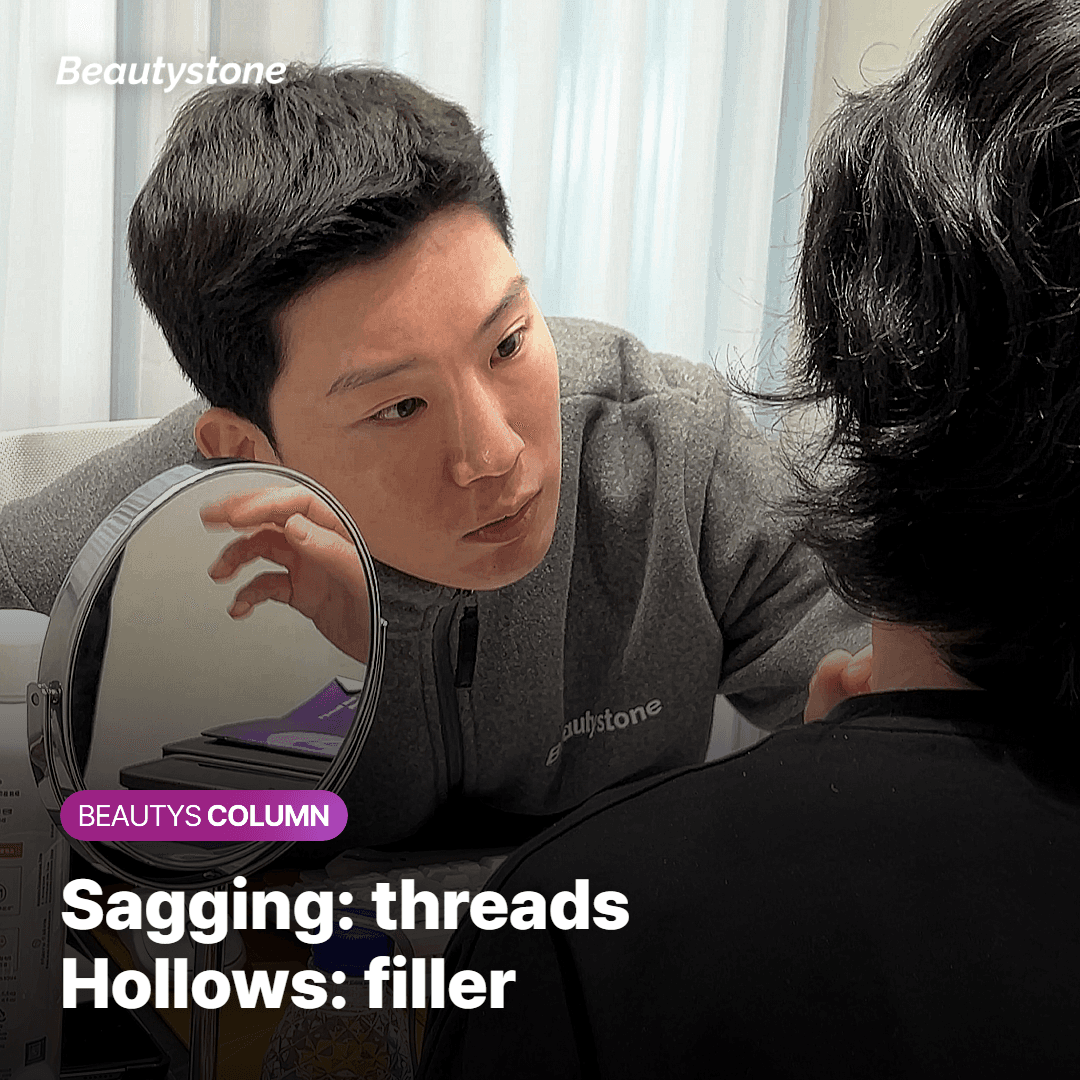
Smile lines that come from sagging are lifted with threads, while smile lines that come from hollow cheeks are filled with filler. That's the first call the doctor makes, because it decides whether a wider thread area will even help.
If volume loss is part of the picture, widening the thread area won't soften the fold as much as you'd expect. There's more on that difference in our article on lifting versus filler for smile lines.
Faces are rarely the same on both sides, either. The doctor looks at the balance of your whole face and the difference in sagging between your left and right sides first, then decides where the threads go in and which way they pull.
Thread Lift Side Effects: Does a Bigger Area Mean More?
More entry points mean more places that can swell and bruise. A pooled analysis of 26 studies found that swelling was the most common reaction, at 35%. Dimpling, a small dent in the skin, came next at 10%, followed by changes in sensation at 6%, threads you can see or feel at 4%, and infection and threads working their way out of the skin at 2% each. Individual results vary, and these are pooled rates from different studies.
To keep dimples from forming, the threads are placed using a reverse technique, where the direction of insertion is set against the pull.
What's usually fine to watch
Swelling and bruising around the entry points that settle a little more each day
A slight left-right difference that evens out as the swelling goes down
Contact your provider right away if you notice
An entry point that keeps getting redder and more swollen, feels warm, or shows pus
The end of a thread showing through or poking out of the skin
Numbness or tingling that doesn't improve and keeps going
A dent that's still there after the swelling has gone down
Warmth and pus can point to an infection, so don't wait it out. You can send photos through the consultation button on this page, but you'll still need to be examined in person.

Does a Wider Area Make the Lift Last Longer?
Not really. Whatever the area, the lift is at its strongest right after the procedure and comes down gradually after that. In the same group of studies, satisfaction was 98% right after treatment and 88% at 6 months. In the trial comparing thread counts, both groups also lost some of their early lift by day 60.
So widening the area isn't a way to make the result last longer. It's the right choice when the sagging really does reach your jawline. If it stops at the smile lines, a smaller area that matches it is the more fitting plan. How much lift you keep depends on your skin and how much sagging you started with.

How Do You Get a Thread Lift Quote at the Clinic?
Thread lifts don't have a separate line on the clinic's price list, because the area and the thread combination are set first and the quote follows from them. You'll get the quote at your consultation, once the doctor has seen where your sagging is and whether hollowness is part of it. Prices for other treatments are on our price page.
When you get a quote, here or anywhere else, check that it lists these items before you look at the total:
Where the threads go in
The thread type, material, and length
The direction each thread pulls
Whether the plan covers one area or several
If any of these is missing, that's the first question to ask. A quote with all four filled in is one you can compare fairly.
Thread Lift on a Korea Trip: Flying, One Visit, and Home
Unless you were sedated that day, there's no reason to push back your flight after a thread lift. The procedure itself doesn't keep you from flying.
This is one of the treatments where you see a change on the same day. The lift is most visible right after the procedure, then settles gradually over the following weeks rather than changing all at once. Keep that in mind if you're judging the result in the mirror on your last day in Seoul.
Once you're home, you can send photos through the clinic's consultation channel if something doesn't look right. If you notice growing redness, warmth, or pus at an entry point, see a local doctor first instead of waiting for a reply.
The Bottom Line: Match Three Lines Before You Compare
Before comparing any two thread lift quotes, make sure they match on three lines: where the threads go in, the thread type and length, and the direction of pull. Only then does the total tell you anything. The decision that matters most comes first, though: does your sagging stop at the smile lines, or does it reach the jawline?
Beautystone is a clinic in Seoul's Hapjeong area, and you can ask about your quote through the consultation button on this page. In your first message, include a front photo and a side photo of your face, and say whether the smile lines or the jawline bothers you more. That makes it much easier to gauge the area before you visit.
Sources


Contouring & Volume
Calf Botox Timeline: When to Book Session 2?

Contouring & Volume
Thread Lift Cost: Smile Lines vs. Full Face?

Lifting
Oligio X Jawline Results: Why 3 to 6 Months?

Contouring & Volume
Forehead Botox: 3 Things a Good Clinic Checks

skin
CO2 프락셀 색소침착, 흉터 치료 뒤 갈색 자국은 언제 옅어질까요?

skin
켈로이드 주사와 CO2 레이저, 하얗고 딱딱한 흉터도 같이 하면 풀릴까요?