

Heavy brows after forehead Botox can trace back to injection height. See 3 checks to look for at a clinic, including a 2-week review. Here's what to expect.
Published
Updated

Author
Wi Young-jin · Chief director
Seoul National University College of Medicine · Seoul National University Hospital Specialist
→
When you're choosing a clinic for forehead and glabella Botox, look less at the price per unit and more at 3 habits: the doctor watches how your forehead moves and where your brows sit before marking any points, writes down the units used in each area, and books a check about 2 weeks later.
Heavy-feeling brows are one of the most common worries after upper-face Botox, and those habits are how a clinic plans around that risk, records what was done, and adjusts next time. In this article, we'll cover why brows can feel heavy, what a careful pre-injection exam looks like, how units get recorded for the forehead, glabella, and crow's feet, and what the 2-week visit is for.
Quick Summary
Choose a clinic by its process: a movement and brow-position check before injecting, a unit record for each area, and a follow-up at around 2 weeks.
Why 2 weeks: muscle weakness from botulinum toxin typically shows in 2 to 4 days and peaks around day 10, so day 14 is a fair time to judge.
Injection height matters. In a 45-person trial, a band of injections across the middle of the forehead lowered the brows more than one placed higher up.
Heavy brows vs. a drooping eyelid: they have different causes, and a drooping eyelid is a reason to contact the clinic.
Why Do Brows Feel Heavy After Forehead Botox?
The frontalis, the muscle that creates horizontal forehead lines, is also the only muscle that lifts your eyebrows. Relax it, and your brows lose some of that lift. Meanwhile, the muscles between and around the brows keep pulling down.
Frontalis: the broad, flat muscle across your forehead that raises your brows when you look surprised.
Where the injections sit makes a real difference. In a trial of 45 people split into three groups, everyone had the brow-lowering muscles treated, but the forehead was injected in three different patterns. Two weeks later, the brows sat lower at most measured points in all three groups, while the outer tip of the brow actually rose. A horizontal band across the middle of the forehead lowered the brows more than a band placed higher up. The higher pattern smoothed lines a little less, but it helped keep the brows from dropping.
That trade-off sits at the center of forehead Botox. Smoother lines and lifted brows pull in opposite directions, and the balance a doctor aims for depends on your face. How much you notice either effect varies from person to person.
Keep in mind that heavy brows aren't the same as a heavy eyelid. A drooping upper eyelid (eyelid ptosis) is linked to toxin reaching the muscle that opens the eye, and in large studies it showed up after frown line treatment rather than forehead treatment.

What Should a Doctor Check Before Injecting Your Forehead?
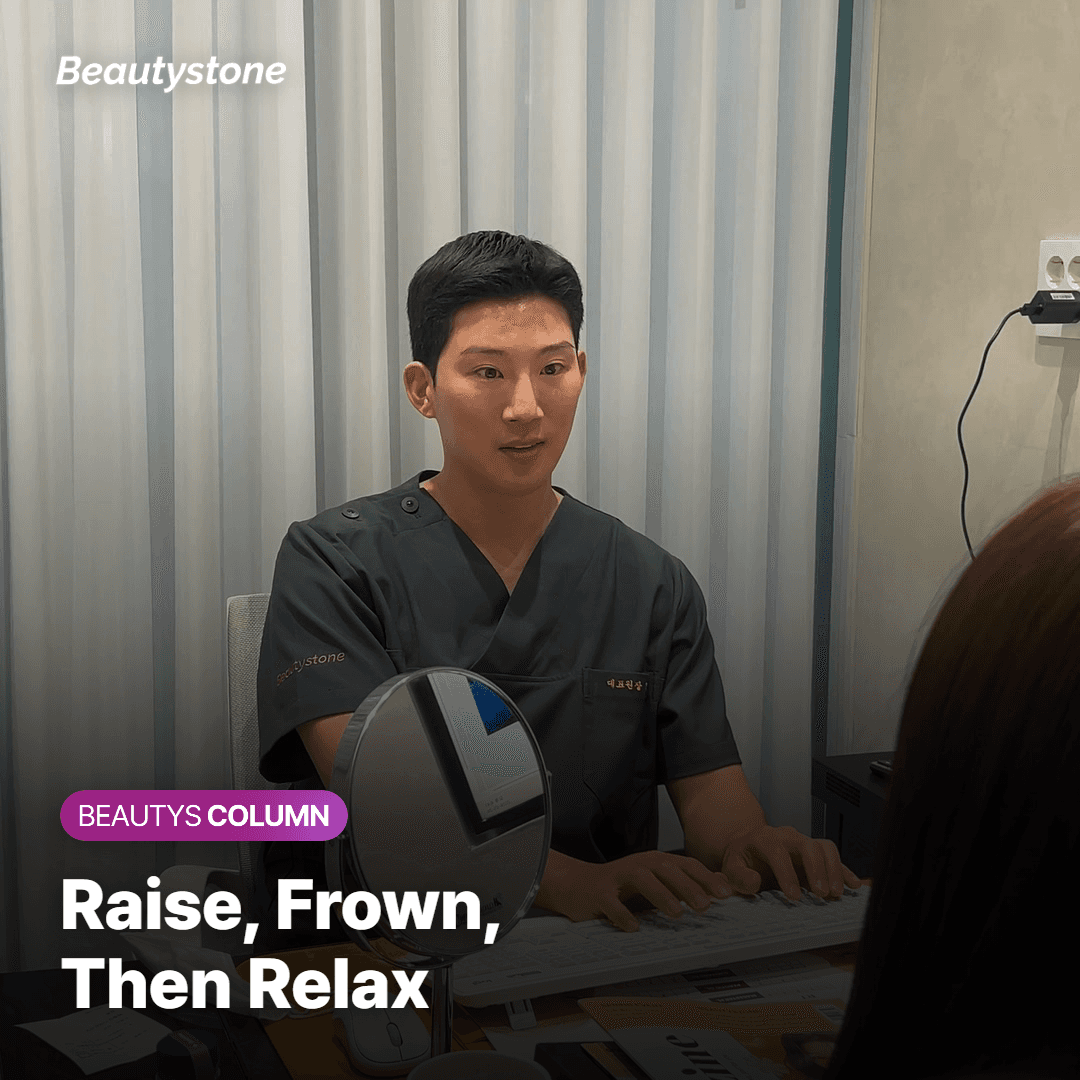
Before any marks go on your skin, you should be asked to make a few faces: raise your brows, frown, squint, then relax. That short routine shows which muscles are strong, where the lines fold, and whether your brows sit evenly.
Here's what that exam is looking for:
Brow height at rest: where each brow sits when your face is still, compared side to side.
Habitual lifting: some people keep their forehead slightly raised all day without noticing, and relaxing that muscle changes how open the eyes look.
Asymmetry: one brow higher than the other, or one side that creases more deeply.
Past procedures: earlier eyelid surgery, scars, or fillers in the area.
DermNet NZ notes that every face's muscles are different, so the approach should be individualized, with a check for existing asymmetries, scars, infection, and previous cosmetic surgery, especially to the eyelids, before treatment.
At Beautystone, a clinic in Seoul's Hapjeong area, the doctor looks at the balance of your whole upper face and any left-right difference first, and only then decides where the forehead points go and how high. If no one asks you to move your face before marking points, it's fair to ask how the injection height was chosen.
Should the Forehead and Glabella Be Treated Together?
They can be, because the two areas work against each other. The glabella (the area between your brows) holds the muscles that pull the brows down and inward when you frown, while the frontalis lifts them. Change one side of that tug-of-war and the other side shows more.
Area | Main muscle | What it does | Lines it creates |
|---|---|---|---|
Forehead | Frontalis | Raises the brows | Horizontal 'worry lines' |
Glabella | Corrugator and procerus | Pulls the brows down and together | Vertical 'frown lines' between the brows |
Crow's feet | Orbicularis oculi | Closes and squints the eye | Lines fanning out from the outer eye |
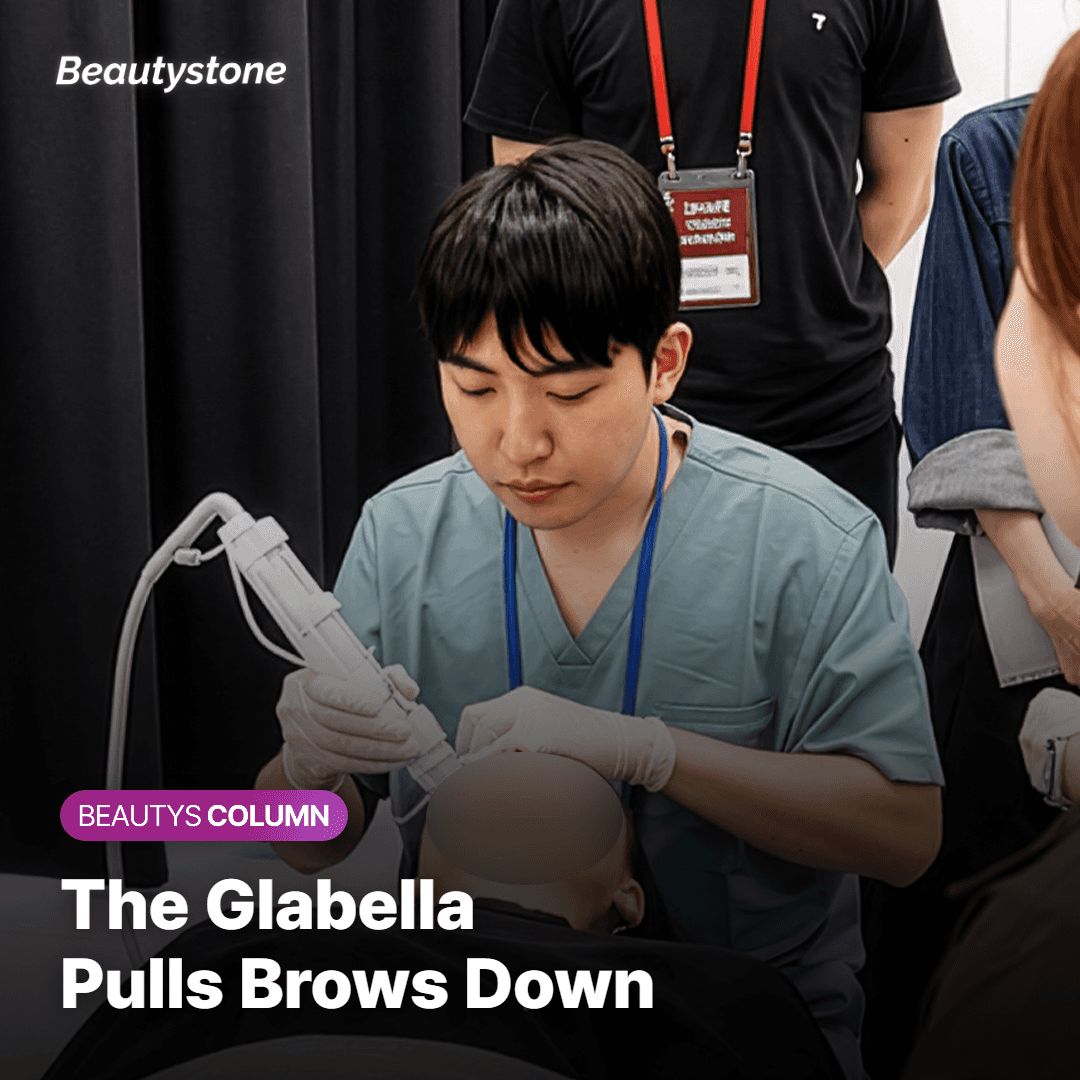
In the 45-person trial above, every group had the brow-lowering muscles treated along with the forehead. The FDA label for Xeomin (incobotulinumtoxinA), which is FDA-approved for the temporary improvement of moderate to severe frown lines, sets that dose at 20 units split into 5 injections of 4 units: two in each corrugator muscle and one in the procerus. Using it on the forehead or crow's feet is off-label under that label, meaning outside the use it lists.
At a clinic in Korea, you may also be offered Coretox, a Korean-made botulinum toxin type A. Either way, it's worth asking which product you're getting, and the reason has to do with how units are counted.
How Many Units Go Into Each Area, and Who Writes It Down?
Ask for the units in each area, not just a total. There's no standard international unit for botulinum toxin, so one unit of one brand doesn't equal one unit of another. Botox and Xeomin are roughly 1:1, while Dysport runs about 2.5 to 5 units for every unit of Botox.
That's why a number on its own is hard to use later. A useful record includes:
The product name
Units for the forehead, glabella, and crow's feet, listed separately
The treatment date
Photos at rest and with movement, taken before the injections
This record matters most if your brows felt heavy last time. The next plan depends on knowing what went into your forehead and where, and without that, the doctor is starting from scratch. Ask to keep a copy or a photo of it.
Cost scales with the number of areas and the amount used, so a per-unit price alone doesn't show what a full upper-face plan includes. Beautystone's current listings are on the price page.

What Happens at the 2-Week Botox Check?
The short answer? It's when the result has settled enough to judge. Muscle weakness typically shows within 2 to 4 days and peaks around day 10, so before then you're looking at a moving target.
At the check, the doctor compares your before photos with how your face moves now. Things worth reviewing together:
Brow height on each side, at rest and when you try to raise them
Lines that still fold deeply with movement
A spot that looks overly still, or an outer brow tip that has kicked up into a sharp arch
Any heaviness you've felt in your brows or eyelids since the injection
Whether anything gets adjusted is a medical decision made at that visit, and it goes on your record so the next session starts from real data. For the glabella, Xeomin shouldn't be repeated more often than every 3 months. Results differ from person to person, which is exactly why this check exists.
If you're visiting Seoul, day 14 may fall after your flight home. Ask before booking how the check works once you've left, and plan to take your own photos at day 14 in the same light and angles as your before photos.

Forehead Botox Side Effects: What Fades and What Needs a Call
Most reactions come from the needle itself rather than the toxin. Pain, bruising, swelling, and redness at the injection points are the most common. Some people also get a mild headache 2 to 4 hours after forehead injections.
Weakness that spreads into nearby muscles is less common, reported in fewer than 10% of treatments, and can affect the eyelids, brows, or lips. It can last up to 12 weeks, fading as the toxin wears off.
A pooled analysis of 1,678 people treated with onabotulinumtoxinA (sold as Botox), a different brand from Xeomin, found a heavy or tight eyelid feeling in 2.5% versus 0.3% on placebo, and a drooping eyelid in 1.8% versus 0%. Both appeared only in the frown line studies, both became less frequent with repeat treatments, and the heavy feeling was more common in Asian participants.
Contact the clinic that treated you if you notice:
An upper eyelid that droops or won't open fully
Brows that drop unevenly or feel heavy enough to bother you
Seek medical care right away if you have trouble swallowing, speaking, or breathing, double or blurred vision, or muscle weakness beyond your face. These effects of toxin spread have been reported hours to weeks after injection, and swallowing or breathing problems can be life-threatening.
The Bottom Line: Bring Your Last Unit Record
If you've had upper-face Botox before, the most useful thing to bring is the record from that visit: the product name and the units used in your forehead, glabella, and crow's feet. If your brows felt heavy last time, start the consultation with one question: "How high on my forehead will the points go this time, and how many units per area?" That answer makes it much easier to compare plans. When you reach out to Beautystone using the consultation button on this page, include which areas you'd like treated, the date of your last session, and whether your brows or eyelids felt heavy afterward.
Sources


Lifting
Oligio X Jawline Results: Why 3 to 6 Months?

Contouring & Volume
Forehead Botox: 3 Things a Good Clinic Checks

Hair Removal
3 Questions to Ask a Laser Hair Removal Clinic

Contouring & Volume
Under-Eye Filler Regret: Who Shouldn't Get It

Lifting
Thread Lift Results: 1 to 3 Years or Less?

Hair Removal
Laser for Upper Lip Hair: 5 Things to Check