

CO2 laser: low intensity, spots return fast
CO2 laser: low intensity, spots return fast
CO2 laser: low intensity, spots return fast
CO2 laser too light? Dark spots return in 1–2 months. Upper dermis ablation is the key.
Published -
Updated -

Author
Wi Young-jin · Chief director
Seoul National University College of Medicine · Seoul National University Hospital Specialist
→
Lentigo

CO2 Laser,
Why It Recurs When Ablated Too Lightly
in One Month
Please Check This Before Reading
Q. If CO2 ablates it, doesn’t it damage the dermis
and leave a scar?
A. The upper part of the dermis may be slightly removed,
but it is a regenerating layer.
Q. I had ten toning sessions,
so why won’t only the lentigo fade?
A. Because melanin is embedded at the base of the epidermis,
toning has its limits.
One-line conclusion.
Lentigo CO2 laser is a procedure that gently removes tissue up to
the upper dermis.
The deciding factor.
Whether it reaches the base of the melanin —
if it is too weak, it recurs within 1–2 months.
What we’ll cover today.
We’ll look at the criteria for choosing between
toning and CO2.
Can lentigo and freckles,
be removed together with a CO2 laser?
Lentigo (lentigo) is a pigmented lesion with melanin embedded at
the base of the epidermal-dermal junction.
Unlike freckles, lentigo sits much deeper
and more distinctly.
Most people who searched for lentigo CO2 laser and came here
have probably tried toning 5 or 10 times,
and experienced it 'lightening and then stopping' at least once.
The tricky part is that toning uses low-energy 1064 nm
to gently break up only epidermal melanin.
But lentigo is below that,
stuck at the base of the epidermis,
so toning can’t reach it.
CO2 is different.
As the 10,600 nm wavelength is absorbed by water,
it shallowly ablates the tissue itself.
So for pigment that is 'embedded' like lentigo,
CO2 is the answer.

Lentigo CO2 laser,
the depth threshold determines the result
Dr. Wi Young-jin’s
key insight
'When abrading lentigo with CO2,
it is okay if the upper dermis is slightly vaporized —
it is a layer that regenerates anyway.
However, if you ablate too lightly,
the melanin base remains in place
and it recurs within 1–2 months.'
— Dr. Wi Young-jin (Beautystone Clinic, Hapjeong)
Among those reading this,
there are probably quite a few who say,
'I had CO2 somewhere else, but it came back
within a month or two.'
About two or three out of ten patients come in with this case.
Here’s what really matters.
When abrading lentigo with CO2, it is okay if the upper dermis
is slightly removed.
It is a layer that regenerates anyway.
In fact, if you ablate too lightly,
the melanin layer at the base of the epidermis remains in place.
Then, within 1–2 months,
it reappears in almost the same spot.
Here’s a case from a 50-year-old client last month.
She had two coin-sized lentigines
above the cheekbone.
She had been receiving toning at another clinic for nearly a year,
but it still wouldn’t fade, so she came in sounding rather resigned.
After one CO2 treatment and two weeks of recovery,
there was almost no pigment mark left.
She was even more surprised than we were
and said, 'I should have done this sooner.'
The key point is that her lentigo was at
the exact depth that is ideal for ablation.
Dr. Wi Young-jin’s key summary
Lentigo results are determined by how much you ablate.
The upper dermis can be touched and still regenerate,
so there is no need to be afraid.
Under-ablation that leads to recurrence is
the greater loss.
Matching the threshold is ultimately
the path with the least scarring.

Lentigo CO2 laser: how do the first-treatment
and recurrence cases differ?
The approach to a first treatment and a recurrence case
must be different from the start.
Category | First treatment | Recurrence / under-treated case |
Ablation depth | Slightly into the upper dermis | A little more firmly |
Recovery period | About 2 weeks | 2–3 weeks, with additional hyperpigmentation care |
Combined care | Usually complete in one session | Touch up remaining pigment after 2–3 weeks |
Caution | Strict sun protection | PIH (post-inflammatory hyperpigmentation) management |
Recurrence cases involve skin that has already been injured once,
so pigmentation (PIH) develops more easily.
So it is not just ablation and done;
afterward, a short course of tranexamic acid or low-energy toning
is effective for preventing recurrence.
However, if melasma or vascular pigmentation is mixed in,
CO2 can actually be irritating, so
diagnosis comes first.
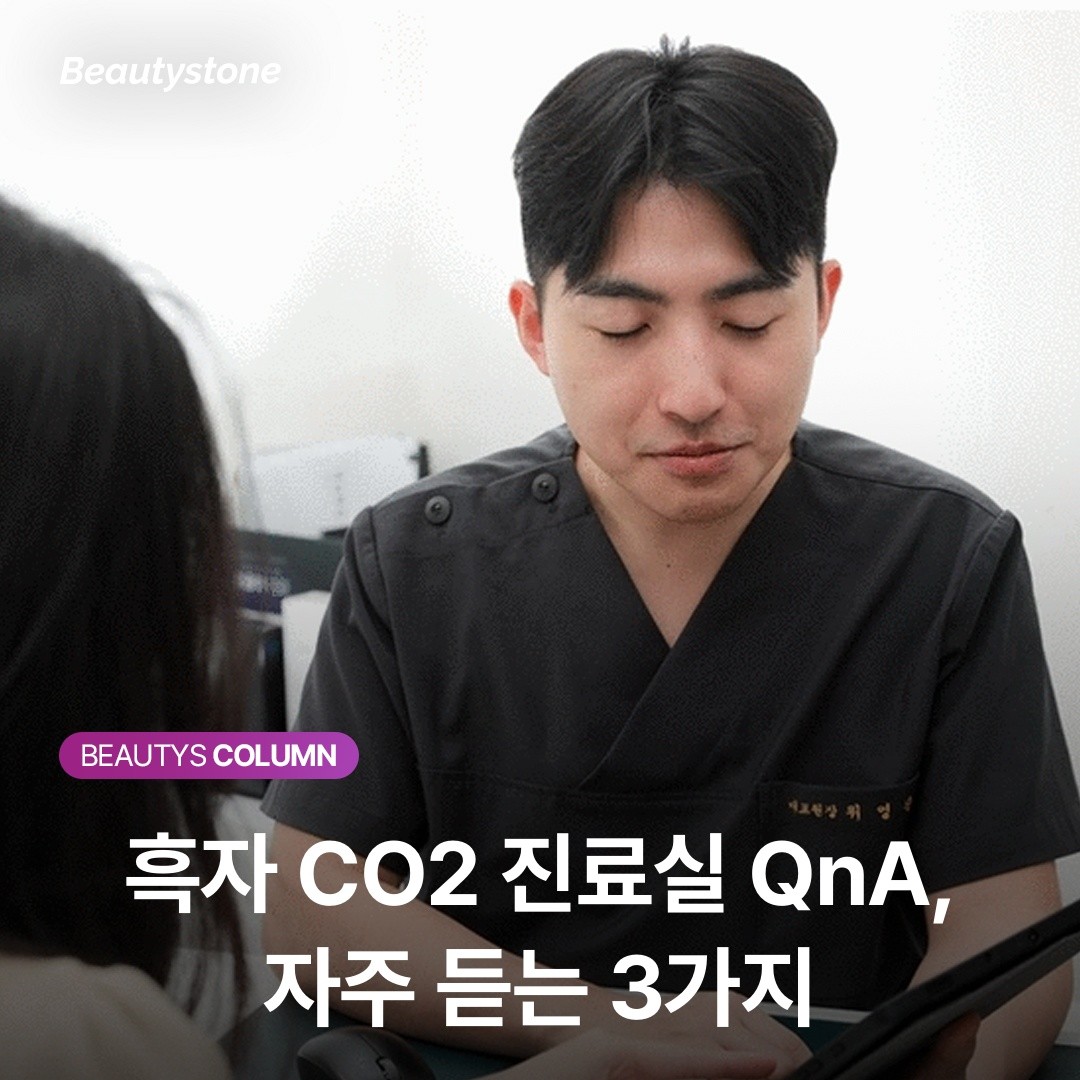
Lentigo CO2 laser clinic Q&A,
3 questions we hear often
Q1. Does lentigo disappear all at once with one CO2 laser session?
A. If the depth is right, 7 out of 10 cases are finished in one session,
and only two or three people need the
remaining pigment touched up 2–3 weeks later.
It is not that 'one session' is guaranteed,
but rather 'one session if the depth is right.'
Q2. If I get lentigo CO2 and toning together,
will it fade faster?
A. Not at the same time.
CO2 should be used first to ablate, and after recovery is complete,
toning should be added for residual pigment or PIH management.
If the two overlap in timing, irritation stacks up
and pigmentation becomes darker.
Q3. I heard CO2 ablation leaves a sunken mark
— is that true?
A. It can happen if you ablate too deeply into the deeper dermis,
but it is not truly common —
maybe one or two cases a year at most.
Most often, the much more common problem is
recurrence from ablation that is too light.
It is safest to be aware of the possibility of recurrence and
find the proper depth.
Ultimately, lentigo CO2 is a
fine balancing act of how much to ablate.
If it is too shallow, it comes back;
if it is too deep, it leaves a mark.
In the next article, I’ll explain the timing of UV and medication care
to prevent recurrence after lentigo treatment.
This has been Dr. Wi Young-jin.
Read also
Lentigo
CO2 Laser,
Why It Recurs When Ablated Too Lightly
in One Month
Please Check This Before Reading
Q. If CO2 ablates it, doesn’t it damage the dermis
and leave a scar?
A. The upper part of the dermis may be slightly removed,
but it is a regenerating layer.
Q. I had ten toning sessions,
so why won’t only the lentigo fade?
A. Because melanin is embedded at the base of the epidermis,
toning has its limits.
One-line conclusion.
Lentigo CO2 laser is a procedure that gently removes tissue up to
the upper dermis.
The deciding factor.
Whether it reaches the base of the melanin —
if it is too weak, it recurs within 1–2 months.
What we’ll cover today.
We’ll look at the criteria for choosing between
toning and CO2.
Can lentigo and freckles,
be removed together with a CO2 laser?
Lentigo (lentigo) is a pigmented lesion with melanin embedded at
the base of the epidermal-dermal junction.
Unlike freckles, lentigo sits much deeper
and more distinctly.
Most people who searched for lentigo CO2 laser and came here
have probably tried toning 5 or 10 times,
and experienced it 'lightening and then stopping' at least once.
The tricky part is that toning uses low-energy 1064 nm
to gently break up only epidermal melanin.
But lentigo is below that,
stuck at the base of the epidermis,
so toning can’t reach it.
CO2 is different.
As the 10,600 nm wavelength is absorbed by water,
it shallowly ablates the tissue itself.
So for pigment that is 'embedded' like lentigo,
CO2 is the answer.
Lentigo CO2 laser,
the depth threshold determines the result
Dr. Wi Young-jin’s
key insight
'When abrading lentigo with CO2,
it is okay if the upper dermis is slightly vaporized —
it is a layer that regenerates anyway.
However, if you ablate too lightly,
the melanin base remains in place
and it recurs within 1–2 months.'
— Dr. Wi Young-jin (Beautystone Clinic, Hapjeong)
Among those reading this,
there are probably quite a few who say,
'I had CO2 somewhere else, but it came back
within a month or two.'
About two or three out of ten patients come in with this case.
Here’s what really matters.
When abrading lentigo with CO2, it is okay if the upper dermis
is slightly removed.
It is a layer that regenerates anyway.
In fact, if you ablate too lightly,
the melanin layer at the base of the epidermis remains in place.
Then, within 1–2 months,
it reappears in almost the same spot.
Here’s a case from a 50-year-old client last month.
She had two coin-sized lentigines
above the cheekbone.
She had been receiving toning at another clinic for nearly a year,
but it still wouldn’t fade, so she came in sounding rather resigned.
After one CO2 treatment and two weeks of recovery,
there was almost no pigment mark left.
She was even more surprised than we were
and said, 'I should have done this sooner.'
The key point is that her lentigo was at
the exact depth that is ideal for ablation.
Dr. Wi Young-jin’s key summary
Lentigo results are determined by how much you ablate.
The upper dermis can be touched and still regenerate,
so there is no need to be afraid.
Under-ablation that leads to recurrence is
the greater loss.
Matching the threshold is ultimately
the path with the least scarring.
Lentigo CO2 laser: how do the first-treatment
and recurrence cases differ?
The approach to a first treatment and a recurrence case
must be different from the start.
Category | First treatment | Recurrence / under-treated case |
Ablation depth | Slightly into the upper dermis | A little more firmly |
Recovery period | About 2 weeks | 2–3 weeks, with additional hyperpigmentation care |
Combined care | Usually complete in one session | Touch up remaining pigment after 2–3 weeks |
Caution | Strict sun protection | PIH (post-inflammatory hyperpigmentation) management |
Recurrence cases involve skin that has already been injured once,
so pigmentation (PIH) develops more easily.
So it is not just ablation and done;
afterward, a short course of tranexamic acid or low-energy toning
is effective for preventing recurrence.
However, if melasma or vascular pigmentation is mixed in,
CO2 can actually be irritating, so
diagnosis comes first.
Lentigo CO2 laser clinic Q&A,
3 questions we hear often
Q1. Does lentigo disappear all at once with one CO2 laser session?
A. If the depth is right, 7 out of 10 cases are finished in one session,
and only two or three people need the
remaining pigment touched up 2–3 weeks later.
It is not that 'one session' is guaranteed,
but rather 'one session if the depth is right.'
Q2. If I get lentigo CO2 and toning together,
will it fade faster?
A. Not at the same time.
CO2 should be used first to ablate, and after recovery is complete,
toning should be added for residual pigment or PIH management.
If the two overlap in timing, irritation stacks up
and pigmentation becomes darker.
Q3. I heard CO2 ablation leaves a sunken mark
— is that true?
A. It can happen if you ablate too deeply into the deeper dermis,
but it is not truly common —
maybe one or two cases a year at most.
Most often, the much more common problem is
recurrence from ablation that is too light.
It is safest to be aware of the possibility of recurrence and
find the proper depth.
Ultimately, lentigo CO2 is a
fine balancing act of how much to ablate.
If it is too shallow, it comes back;
if it is too deep, it leaves a mark.
In the next article, I’ll explain the timing of UV and medication care
to prevent recurrence after lentigo treatment.
This has been Dr. Wi Young-jin.
Read also


Latest post
Latest post

Contouring & Volume
InMode Cost: Why One Area, Three Line Items

Hair Removal
수염 레이저 제모 가격, 회당 금액이 같은데 총액이 갈리는 이유는?

skin
Fraxel Results: Why 3 Months Is the Real Test

Lifting
이중턱·턱선리프팅, 다섯 층 중 어디가 문제인지 아세요?

Contouring & Volume
Juvederm Lip Filler: Volbella vs. Ultra

skin
How Long Does Potenza Take to Show Results?
1:1 Custom Approach
1:1 Consultation Whatsapp
🌸 Beautystone Clinic attends the Meditox Bangkok Cadaver Workshop 🌸
1:1 Custom Approach