

Lifting timing is set by what your skin is doing, not your birth year. A decade-by-decade map.
Published -
Updated -

Author
Wi Young-jin · Chief director
Seoul National University College of Medicine · Seoul National University Hospital Specialist
→
The moment you look in the mirror and wonder whether it is time to start lifting arrives with a different face in every decade. In your twenties it feels premature. In your thirties the eye area and the nasolabial line start catching your eye. In your forties and fifties, sagging and volume loss show up together and it is genuinely hard to know what to deal with first.
The short answer is that there is no age at which you are supposed to start. What decides the timing, and the method, is what your skin is doing right now. Mapping out what tends to come up in each decade, and what usually pairs with it, means you can walk into a consult with a framework instead of a sense of urgency.
This article is less about recommending a particular treatment than about laying out the terrain, so you can see where you are on it. Individual results and skin behavior vary, so read it as background rather than as a plan.
This is general information from Beautystone, a skin clinic in Hapjeong, Seoul.
What you will learn
How to judge when lifting is worth thinking about, without going by age alone
What tends to come up in the twenties, thirties, forties, and fifties
Why two people the same age end up with different approaches
Which signals are worth checking, and which common assumptions to drop
When does skin actually start asking for it?
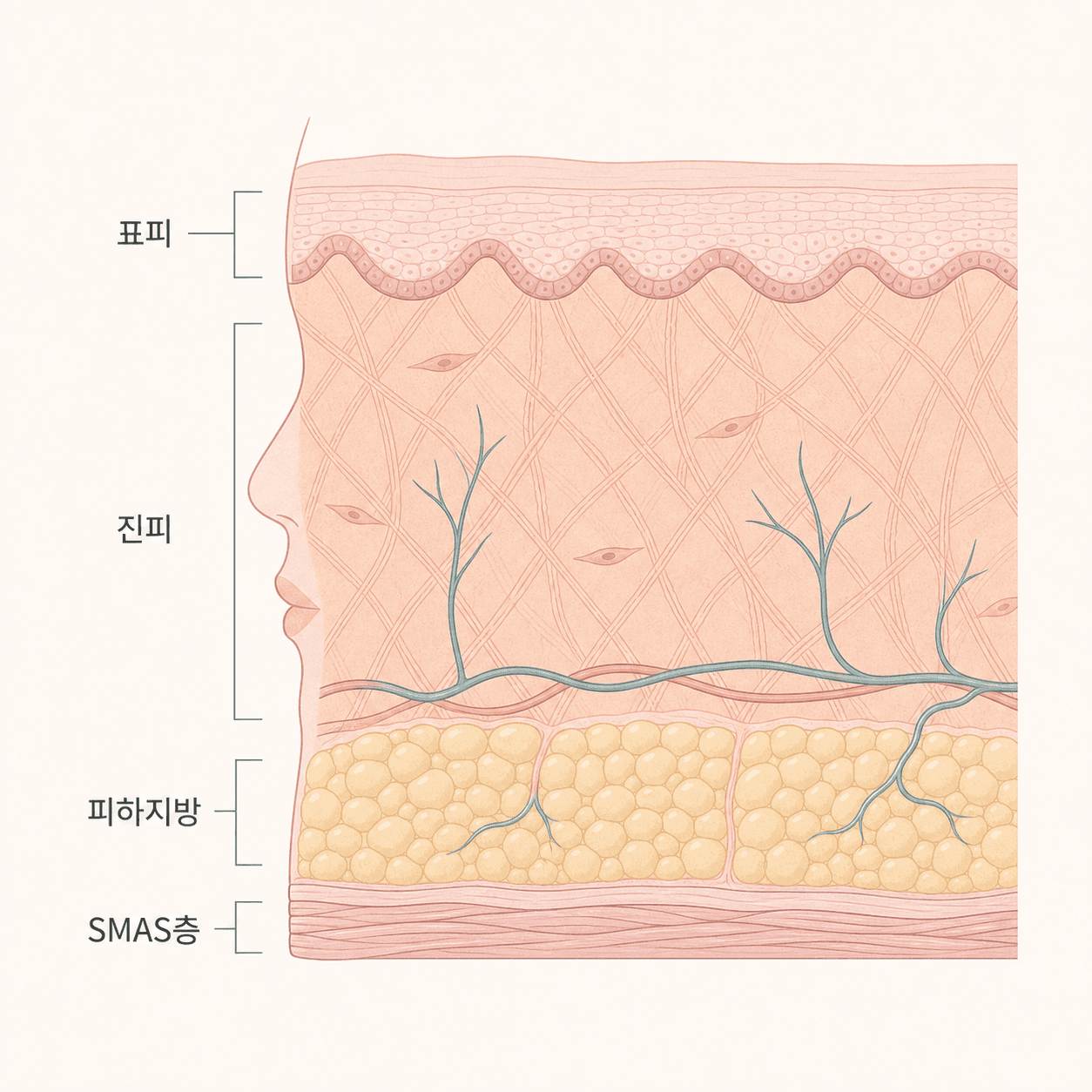
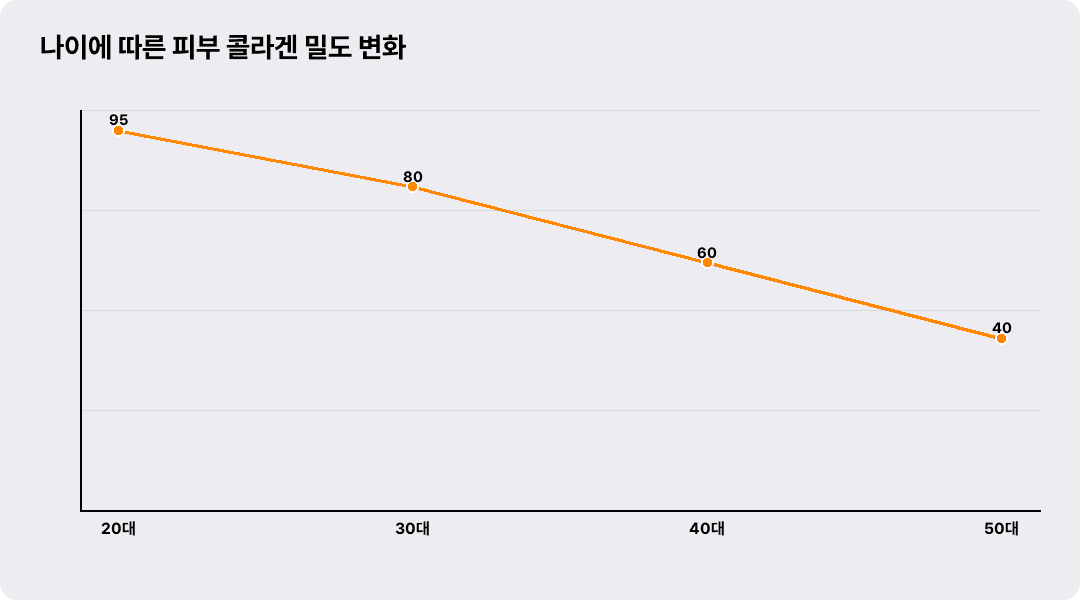
When to start is read more accurately from what your skin is doing than from the number on your ID. Facial sagging comes on gradually as collagen density in the dermis* falls and the supporting layers underneath slowly loosen.
Dermis*: the skin layer beneath the epidermis, filled with a mesh of collagen and elastin fibers that give skin its thickness and elasticity.
Research showing that collagen synthesis declines with age and the collagen support structure of the skin weakens confirms what shows up clinically: young, healthy skin carries a high proportion of collagen, and that density falls as the years pass. Which is why lifting tends to sit more comfortably in the window where sagging is beginning, holding elasticity, than in the role of reversing a crease that has already set.

A decade-by-decade map, twenties through fifties
Here is what tends to come up in each decade, alongside the approach usually paired with it. Treat it as a reference map rather than a schedule; the actual starting point is set by your own skin.
Decade | What usually comes up | Approach worth referencing |
|---|---|---|
Twenties | Little sagging yet, mostly elasticity upkeep | Everyday habits, with light elasticity care if wanted |
Thirties | The eye area and nasolabial line start to register | Early elasticity lifting to slow the pace |
Forties | Sagging and a softening contour arrive together | Elasticity lifting, with volume support considered alongside |
Fifties | Sagging, volume loss, and wrinkles overlap | Split into stages and set the priorities |
In your twenties the emphasis is on holding elasticity rather than correcting sagging, and sun protection plus everyday habits often covers it. From the thirties, treating early signals lightly tends to reduce what you are dealing with later. In the forties and fifties, ranking the priorities usually satisfies more than trying to solve everything with one method. Individual results vary throughout.

Why two people the same age get different plans
Two people in their forties can need opposite things, one focused on elasticity and one on restoring volume, because where the sagging originates differs from person to person. As an anatomy overview describing skin as epidermis, dermis, and subcutaneous fat, with the dermis filled by bundles of collagen fibers sets out, whether the problem sits with surface firmness or with the deeper support layer* changes what suits you.
Support layer*: the fascial and fibrous structure beneath skin and fat that holds up the contour of the face, commonly called the SMAS.
So the method is better chosen by putting the location and depth of the sagging, the state of volume, the recovery time you can spare, and your expectations about how long it lasts on the table together, rather than by age alone. One point of vocabulary if you are reading US sources: the energy-based devices used for non-surgical lifting are FDA-cleared, since cleared is the word for a device while approved applies to drugs. Neither term is a promise about your result. This judgment is safest made with a clinician who has looked at your face.

Why where you have it assessed still matters
At Beautystone, a small clinic a short walk from Hapjeong Station in Seoul, the starting point is which stage your skin is at rather than a formula tying an age to a treatment. Because the layer where sagging began and the state of volume differ even between people the same age, the useful conversation is the order that gives you the most now, rather than a list of everything available. Being small is what makes it practical to watch one person progress and time the next step together. Wherever you go, it is fair to ask why this treatment, why now, and what you would notice if you waited a year. If you are travelling for treatment, plan for follow-up where you live too, since a clinic in Seoul cannot assess a delayed reaction from abroad.

Common misconceptions, and the signals worth checking
Some of what circulates about lifting mostly serves to postpone the decision. Collagen density falls gradually with age, so treating a signal lightly when it appears tends to reduce what you carry later.
The signals worth checking come down to these.
A crease that folded when you smiled now stays with your face relaxed — an early sign of firmness dropping
The cheek contour reads less defined than it used to — the stretch where sagging is progressing
Makeup starting to settle into the nasolabial and mouth lines — a sign the fold is deepening
A big difference between the mirror seen from below and head on — useful for gauging sagging along the direction of gravity
Starting earlier is not automatically better, and starting later does not mean nothing can be done. Check how far the signals have gone, then settle on an approach that fits your life and your expectations with a clinician. This article is general information, so whether a treatment suits you is for the clinician who examined you to decide with you.

Frequently asked questions
Q. I am in my twenties. Is it too early to start lifting?
A. In your twenties the emphasis is on holding elasticity rather than correcting sagging, and for most people sun protection and everyday habits cover it. If expression lines are setting in unusually fast, or elasticity is genuinely on your mind, a light elasticity treatment is reasonable to discuss. Whether to start is a call to make from your own skin signals with a clinician, not from your age.
Q. Sagging is already advanced. Is there any point starting now?
A. Being later does not mean there is nothing to do. When sagging has progressed, trying to solve everything with one method tends to disappoint, while splitting it into priorities and working in stages tends to satisfy. The useful conversation is which order gives you the most for the least, from where your skin is now.
Q. Is there a set treatment for each decade?
A. Age is a reference point, not a prescription. What actually decides the approach is where the sagging sits, how deep it goes, and what has happened to volume. Two people in their forties can need opposite things, one focused on elasticity and one on restoring volume. That is why reading the skin beats reading the birth year.
Q. Is it better to combine several treatments at once?
A. When sagging, volume loss, and wrinkles overlap, more than one approach may be needed, but there is no requirement to do it all in a single sitting. Setting priorities around recovery time and staging them lets you see a result before adjusting the next step. Order and spacing are worth deciding with your clinician.
Content



![[Wi Young-jin Column] Ondari microwave: lifting + elasticity](https://framerusercontent.com/images/gHwAkNSkr6pDzII2TsPBBMu3HI.jpg?width=1080&height=1080)


skin
Why Does Fractional CO2 Take Longer to Heal?

Contouring & Volume
How Many cc Does Forehead Filler Need?

skin
Why Is My Skin Oily but Tight in the Fall?

Hair Removal
Underarm Laser Hair Removal Cost: Do the Math

Tattoo removal
Laser Before a Cover-Up: How Many Sessions?

skin
큐어젯 다운타임, 다음 날 출근과 화장은 언제부터 될까요?