

When makeup is back on after Botox, filler, boosters and lasers — by treatment, not one rule.
Published -
Updated -

Author
Wi Young-jin · Chief director
Seoul National University College of Medicine · Seoul National University Hospital Specialist
→
You walk out of the clinic, look in a mirror, and the first two questions are almost always the same: can I put makeup on today, and do I have to go to work bare-faced tomorrow? The treatment itself is rarely the confusing part. What is confusing is when you get your normal routine back.
Here is the short answer first. The point at which you can wear makeup again is different for every treatment, because skin returns to its baseline at different speeds depending on whether a needle passed through it or the surface itself was disrupted. Lasers that leave microscopic wounds on the surface need days; something like botulinum toxin, which barely touches the surface, often allows colour makeup within hours. The problem is that advice like "no makeup for three days" circulates without anyone saying which treatment it applies to, so it is worth sorting out treatment by treatment.
This article collects general treatment information from Beautystone, a skin clinic in Hapjeong, Seoul.
What you'll learn
When makeup is back on the table for each type of treatment
Why the timing differs, in terms of how skin actually heals
The order to reintroduce base, colour and cleansing
The signals that say go ahead, and the ones that say wait
This is really a question about how fast your skin rebuilds
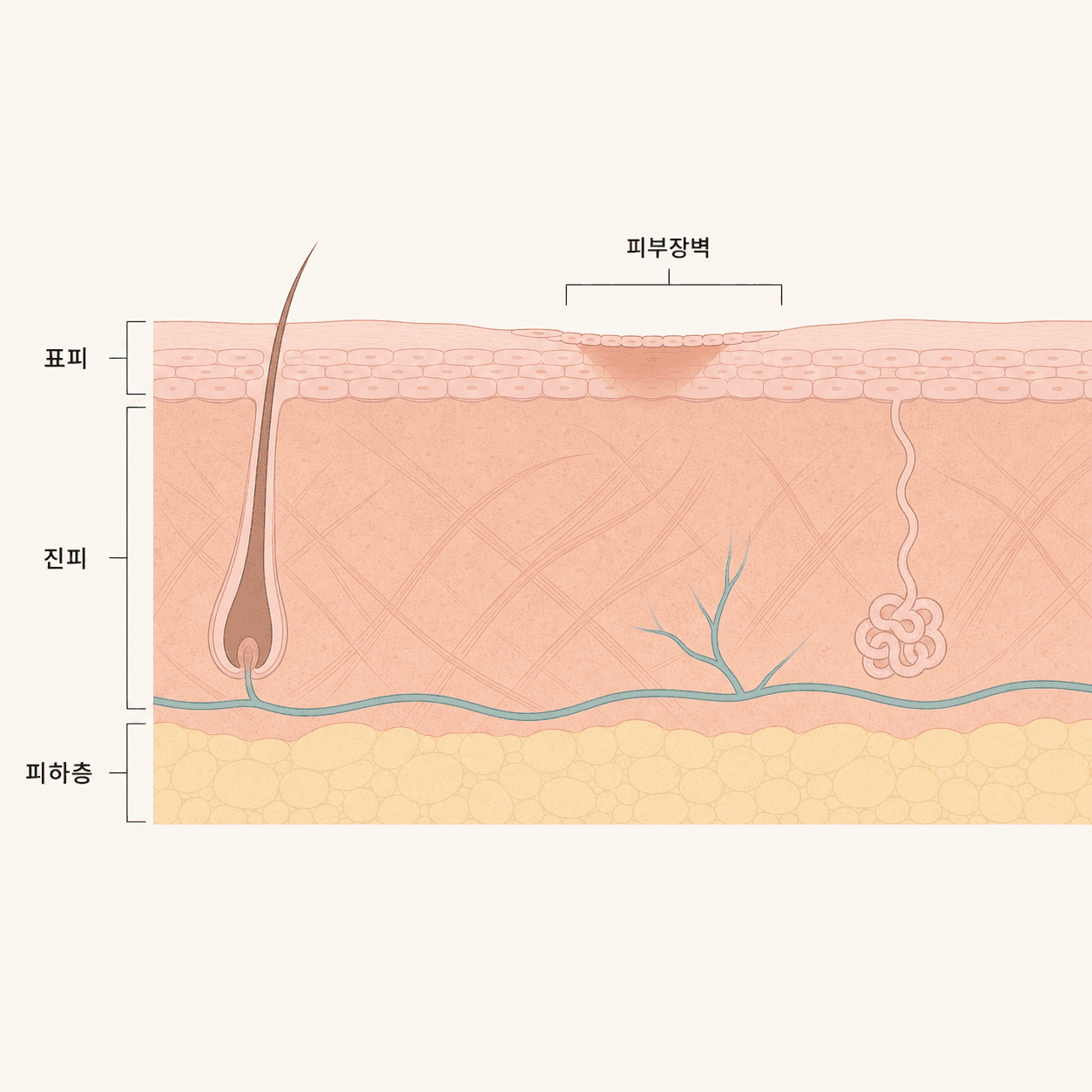
Whether makeup is a problem after a treatment comes down to how reactive your skin surface currently is. Cosmetics contain pigments, emulsifiers and preservatives, and putting that mix onto a spot where the skin barrier* has not yet rebuilt can tip over into irritation or breakouts.
Skin barrier*: the outermost layer of the epidermis, which holds water in and keeps external irritants out. When a treatment weakens it temporarily, skin stays more reactive until it recovers.
Treatments that leave microscopic wounds or needle channels on the surface — lasers and skin boosters, for instance — need time for those openings to close over. A reference on wound healing, describing how cells migrate in from the edges of the injury so the epidermis begins to resurface, generally within about five to seven days makes it clearer why the more surface disruption a treatment causes, the longer makeup should wait. At first only a thin layer of epidermis covers the area, and it thickens and toughens over the following days. By contrast, treatments that barely mark the surface, such as botulinum toxin, usually allow makeup much sooner, once the irritation at the injection site has settled. In the US botulinum toxin and hyaluronic acid fillers are FDA-approved drugs, while lasers and lifting devices are FDA-cleared — "approved" and "cleared" are different regulatory words for different categories.

When you can wear makeup, treatment by treatment
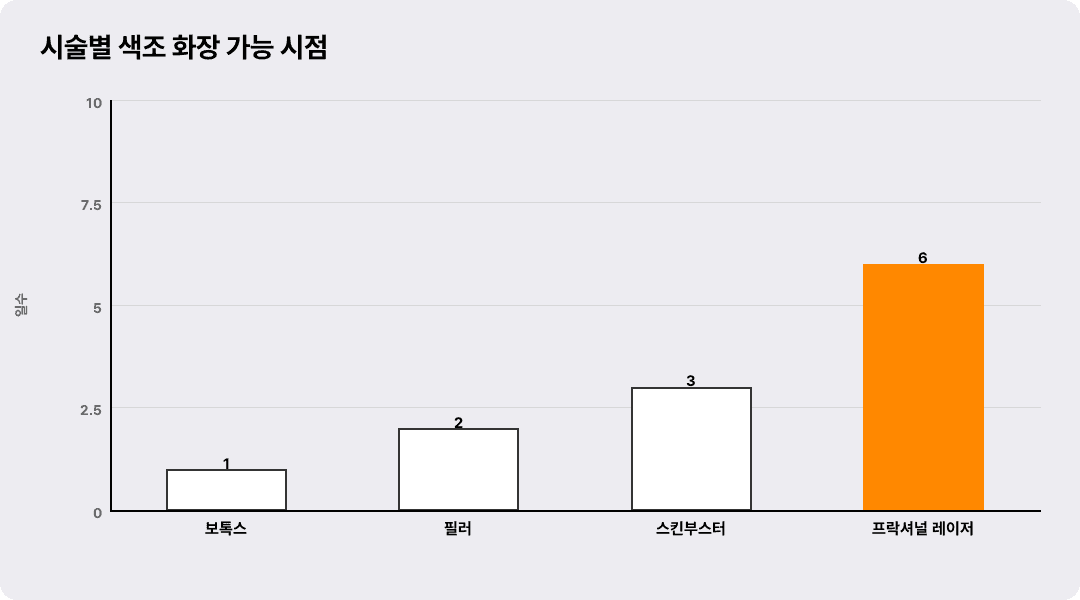
Since recovery speed differs by treatment, so does the moment you can put makeup back on. Broadly, it looks like this. These are averages. Individual results and recovery vary, so your actual timing may shift either way depending on your skin and how intensive the session was.
Treatment | Base makeup | Colour makeup | Notes |
|---|---|---|---|
Botulinum toxin | Same evening to next day | Next day | Do not rub injection sites |
Filler | Next day | Next day to day 2 | Avoid pressure on injected areas |
Skin booster | Next day | Day 2 to 3 | After micro-injection marks settle |
Non-invasive lifting | Same day to next day | Next day | Once the heat has gone |
Fractional laser | Day 3 to 5 | Day 5 to 7 | After crusting and flaking clear |
Ablative laser | After re-epithelialisation | On your clinician's advice | Surface recovery must be confirmed |
Read down the table and the pattern is simply how much surface each treatment disrupts. Botulinum toxin and lifting, which leave the surface largely intact, sit around a day; skin boosters and fillers, which leave fine puncture points, sit at two to three days; lasers, which actually take surface off, run from several days upward.
There is also an overview of botulinum toxin noting that injections can leave temporary bruising or redness at the injection site, which is exactly the sort of thing you will want to cover up. Rather than rushing a heavy base over it, though, leaving the area with as little on it as possible for a day is steadier for recovery.

Base before colour, and cleansing before either
Coming back to makeup, how you reintroduce it matters as much as when. Stagger it and step the intensity up, and you get back to normal with far less irritation.
Base first, colour later — sunscreen or a light tone-up can come back comparatively early; heavy foundation, concealer and eyeshadow are better held a day or two
Cleansing without friction — do not work up a hard lather over the treated area; pat it off instead. Long sessions with cleansing oil are also worth avoiding for a few days
Clean tools — use fresh puffs and brushes on treated skin to reduce the bacterial load
Pause the actives — exfoliating ingredients such as retinol* and AHA or BHA are safer left alone for a few days
Retinol*: a vitamin A derivative used for skin texture and lines. It is effective, but irritating enough that sensitised skin is better off pausing it for a while.
Even if retinol or acid exfoliants are a fixed part of your routine, a few days off after a treatment is the safer call. As an explanation of topical retinoids notes, they can cause redness, flaking and dryness, and increase photosensitivity, so daytime sun protection is required — piling irritation onto temporarily sensitised skin slows recovery down. Keeping skincare as simple as possible during the days you are reintroducing makeup helps.

Why where you have it done still matters
At Beautystone we tend to walk through recovery before we talk about the treatment itself. Even with the same laser or the same filler, the surface heals at a slightly different pace depending on your skin and how intensive the session was, so rather than handing out a fixed number of days, we tell you when makeup is reasonable based on how your skin looks that day. We are a small clinic within walking distance of Hapjeong Station in Seoul, so there is room to work at each person's recovery speed and set the next step together. If you had treatment while travelling, arrange a qualified provider near home before you fly back — anything that flares up later is easier to handle with someone local who can actually look at it.

The signals that say go, and the ones that say wait
Whether to put makeup back on is more accurately judged from what your skin is telling you than from the calendar. These signs mean you can reasonably start again, carefully.
No weeping or crusting left — the treated area is smoothly covered over
Redness and heat visibly down — it no longer feels hot to the touch
Injection bumps have flattened — booster and filler marks are level again
Almost no tightness or stinging — skincare goes on without any sting
If the following are still present, hold off a while longer, and if they are marked, talk to the clinician who treated you.
Ongoing weeping, or crusts that keep getting pulled off — the surface has not finished recovering
Redness, swelling or heat that worsens instead of settling — these can point to infection
Pain in the treated area that keeps increasing
Pus, yellow discharge or fever — contact your provider immediately or seek urgent care
Skin is more sensitive to UV than usual after a treatment, so even once makeup is back, sun protection deserves more attention than before. As guidance on sun protection notes, UV exposure is a leading cause of skin ageing and damage, and daily SPF 30 or higher reapplied every two hours is recommended — during recovery, the sunscreen habit comes before the colour makeup. Waiting an extra day or two until your skin says it is ready tends to get you back to normal with fewer problems than rushing it. This article is general information; the right point to restart makeup for your treatment and your recovery is something to decide with the clinician who examined you.

Frequently asked questions
Q. Something urgent came up the same day. Can I really not wear makeup?
A. It depends on the treatment. Anything that leaves the surface intact, such as botulinum toxin or non-invasive lifting, usually allows a light base once the heat has gone. Treatments that leave microscopic wounds on the surface, such as lasers or skin boosters, are safer with no colour makeup that day. If you have something you cannot move, talk to your clinician before the appointment and schedule around it.
Q. Can I make up the rest of my face and just avoid the treated area?
A. Yes, plenty of people do exactly that. If you had filler around the eyes, for example, you leave that area bare and put a little colour on cheeks or lips instead. As long as you are not irritating the treated area directly, the rest of your face is comparatively free. Just be careful that products do not migrate into the treated area when you cleanse.
Q. I started wearing makeup again and broke out. What now?
A. Stop the colour makeup first and pare your skincare back to simple, non-irritating moisture. Sensitised skin plus cosmetic irritation is the likely combination. If a few days off does not settle it, or it gets worse, talk to the clinician who treated you.
Q. I have crusting after a laser. Can I cover it with makeup?
A. Covering crusts with makeup is best avoided. Product works its way into the gaps and irritates, and removing it can pull a crust off before it is ready, which risks leaving a mark. Wait until the crust comes away on its own and the skin beneath is smoothly covered before adding colour.
Content
![[Wi Young-jin Column] Botox Day 3: Real Effect Timeline](https://framerusercontent.com/images/9ijuotGjRFvmv6smxGVFAaDRxg4.jpg?width=1080&height=1080)



skin
Why Does Fractional CO2 Take Longer to Heal?

Contouring & Volume
How Many cc Does Forehead Filler Need?

skin
Why Is My Skin Oily but Tight in the Fall?

Hair Removal
Underarm Laser Hair Removal Cost: Do the Math

Tattoo removal
Laser Before a Cover-Up: How Many Sessions?

skin
큐어젯 다운타임, 다음 날 출근과 화장은 언제부터 될까요?