

How long does PicoWay tattoo removal take to heal? Aftercare for scabs, redness & warning signs.
Published -
Updated -

Author
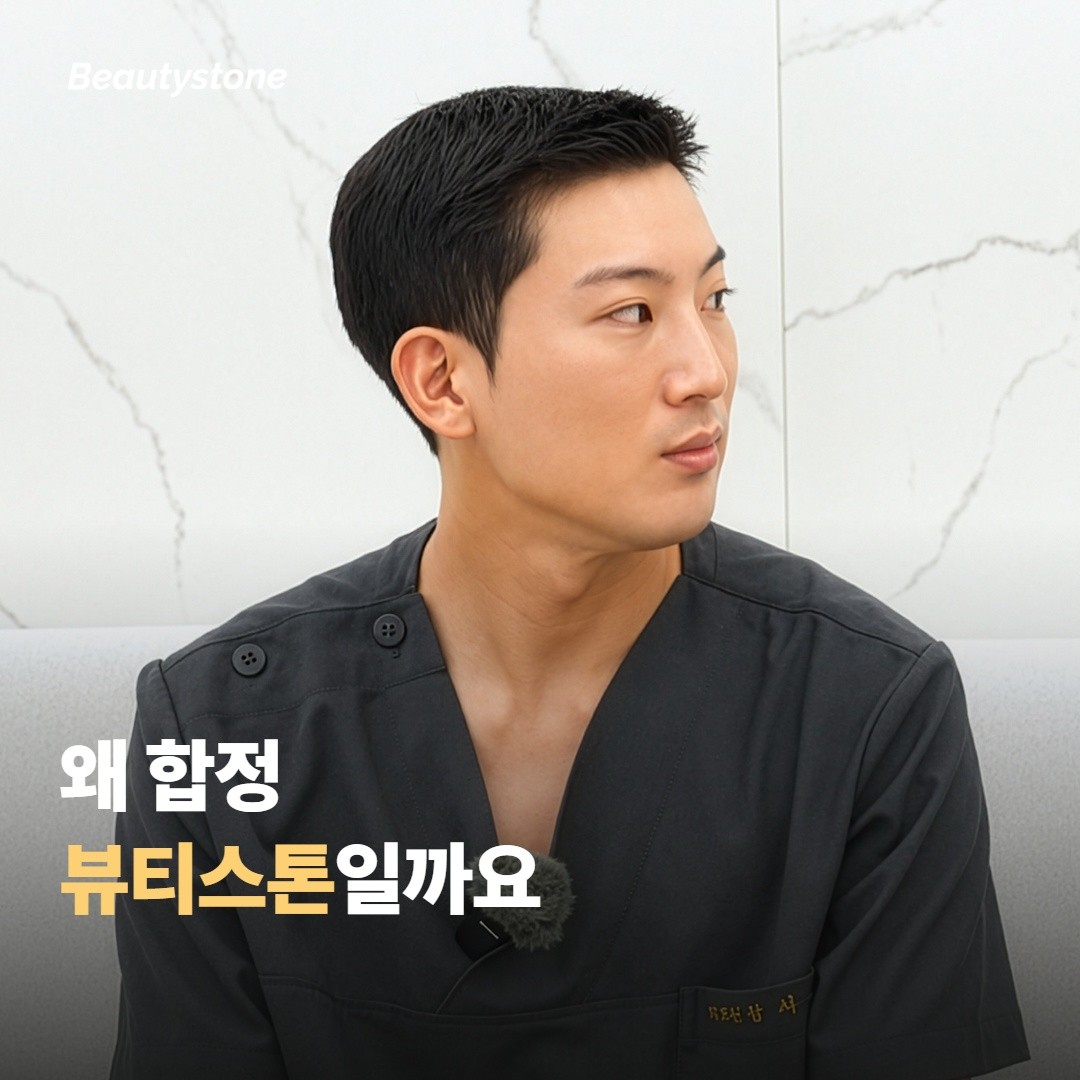
Wi Young-jin · Chief director
Seoul National University College of Medicine · Seoul National University Hospital Specialist
→
Once you've decided to remove a tattoo, the recovery often feels like a bigger question than the treatment itself: how do you care for the area, and will it heal cleanly without scarring? Because PicoWay works by shattering the ink into tiny particles, how you care for your skin in the days right after each session plays a real role in keeping your recovery smooth.
The short answer: some redness, swelling, and light scabbing right after treatment is a normal part of the process, and most of it settles over the course of one to two weeks. That said, your recovery pace depends on the size and color of the tattoo and your own skin, so the most reliable guide for your exact aftercare and next-session timing is the provider who treated you.
This article shares treatment information from Hapjeong Beautystone.
In this article, you'll learn
How PicoWay actually removes a tattoo
How to care for scabs and redness right after treatment
What recovery looks like, stage by stage
Which warning signs mean it's time to see your provider
How does PicoWay remove a tattoo?
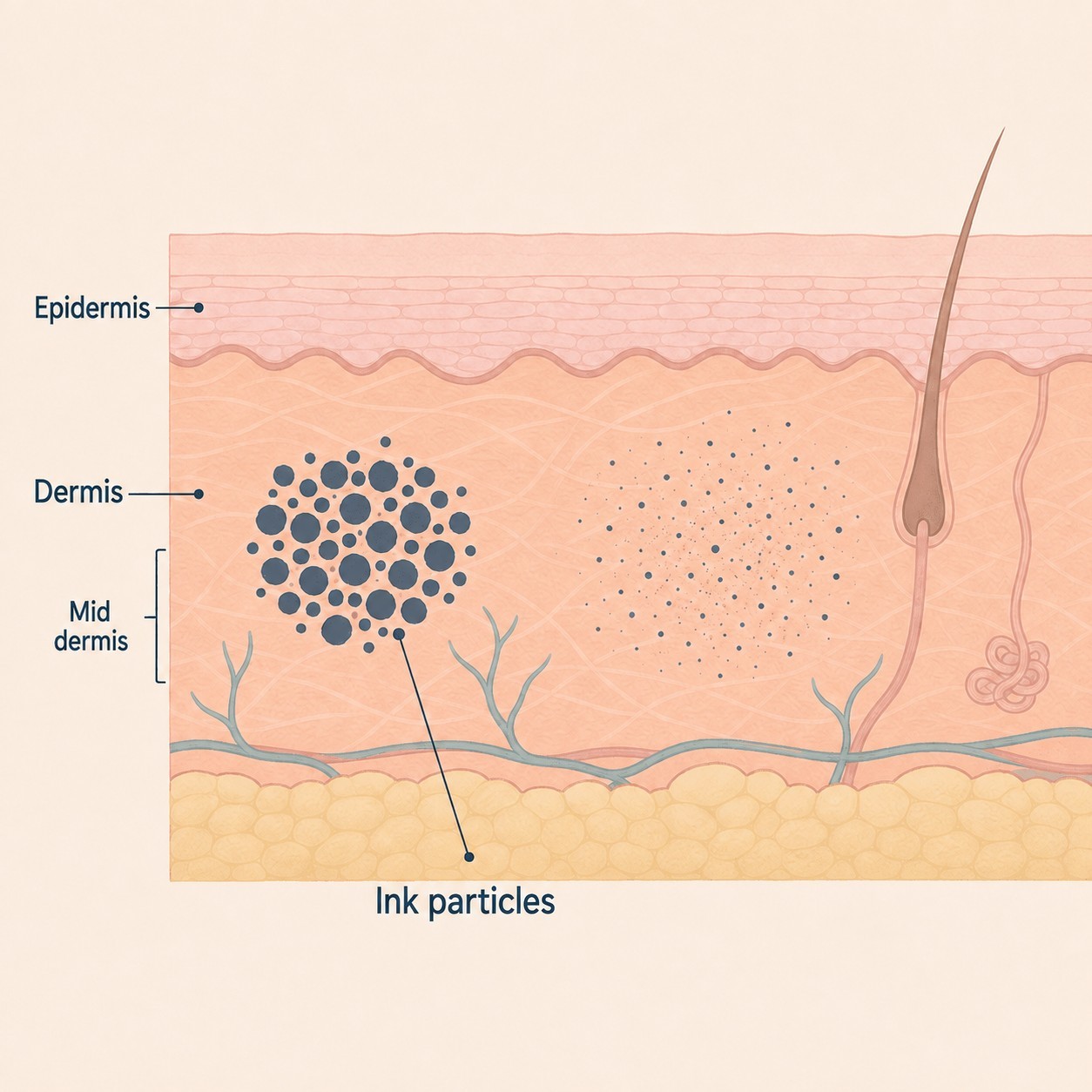
PicoWay uses ultra-short bursts of laser energy to shatter the tattoo ink sitting in the dermis* into tiny particles. The laser doesn't clear those particles away directly. Instead, your body gradually flushes them out over time. That's why a tattoo fades little by little across several sessions rather than disappearing all at once.
* dermis: the layer of skin beneath the surface (epidermis), where tattoo ink particles settle.
The American Academy of Dermatology also explains that a laser can't safely break up every layer in one pass; the light shatters the ink, your body clears those particles, and you may see redness, swelling, or light blistering afterward. In other words, recovery takes time for the skin to heal and for your body to carry the ink away.
How to care for the area right after treatment
Aftercare right after your session is simple. The goal is to let the disrupted skin surface heal cleanly without irritating it. Here's how the usual care points tend to break down, stage by stage.
Timing | Care point | Note |
|---|---|---|
Day 0–2 | Gentle cleansing & ointment | Don't rub |
Day 3–7 | Leave scabs alone | Don't pick |
Throughout recovery | Moisturize & protect from sun | Prevents pigmentation |
The single most important thing is not to force off or pop any scabs or blisters. Leaving them to fall away on their own helps reduce scarring and pigmentation. Gently cleanse the treated area, apply a thin layer of the ointment you were given to keep it moisturized, and shield it well from the sun while it heals. UV exposure makes pigmentation more likely, so covering the area with clothing or sunscreen gives you extra peace of mind.

How recovery unfolds, stage by stage
Recovery doesn't wrap up in one go; it moves through stages over several days. The timeline below isn't set in stone, but it sketches out the pattern people often refer to.
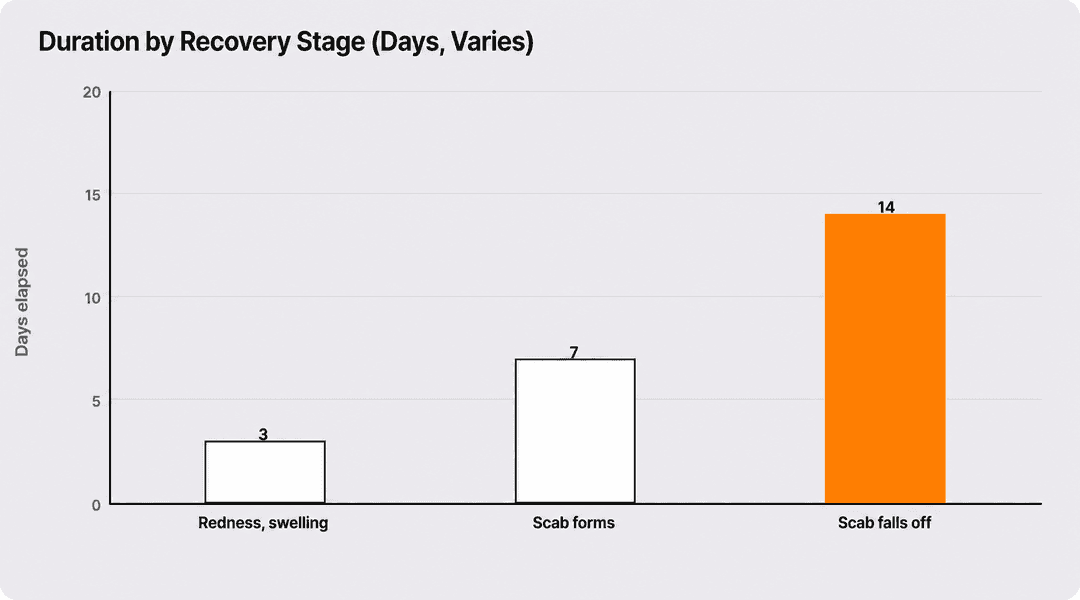
For the first few days after treatment, you may notice redness and mild swelling, followed by a thin scab that usually flakes away on its own within one to two weeks. Where the scab falls off, the skin can look pink for a while, but it tends to fade with time. Since recovery speed varies from person to person, it's better to watch the direction of the changes than to pin down an exact number of days. If the area keeps healing, that's a normal process; if redness or pain gets worse instead, it's safer to get it checked.
Why Hapjeong Beautystone?
At Hapjeong Beautystone, we treat recovery care as being every bit as important as the procedure when we recommend tattoo removal. Even with the same tattoo, the color, depth, and condition of your skin shape how recovery goes and how many sessions you'll need, so we take time at your first consultation to walk you through the recovery process and aftercare. We're a small clinic within walking distance of Hapjeong Station, which means we can listen to each person's skin and schedule and map out a comfortable removal plan and recovery care together.
Warning signs that mean you should get checked
Most redness and scabbing settles naturally with time, but if you notice any of the following, it's safer to reach out to the clinic that treated you rather than waiting to heal on your own.
Redness or pain that doesn't ease with time and instead gets worse
Pus or oozing that keeps coming, along with a feeling of heat
A noticeable scar left behind after the scab falls off
The area gradually turning white or darker in color
As one report on removing tattoos with a picosecond laser, where sessions were spaced about a month apart and, beyond temporary redness and scabbing, some people were left with lightened pigment shows, how you heal and how pigment changes varies from person to person. If the scab falls away naturally and the redness gradually fades, that's generally a normal recovery. But if you feel a change that's different from usual, like the signs above, don't wait it out, get it checked. This article pulls together general information, so the aftercare that's right for you and the timing of your next session are best decided in consultation with the provider who treated you.

Frequently asked questions
Q. The scab is itchy, is it okay to scratch it?
A. Itching can come up as part of healing, but scratching or picking can lead to scarring and pigmentation. When it itches, rather than scratching, keep the area moisturized with the ointment you were given and leave the scab to fall off on its own. If the itching is severe or lingers, bring it up at your next visit.
Q. Can the treated area get wet?
A. A quick, gentle cleanse is usually fine, but soaking the area for long stretches or scrubbing hard is best avoided during recovery. For activities like sauna or swimming, where the area stays wet and gets irritated for a long time, it's better to wait until the scab has come off and the skin has healed well.
Q. How long should I wait until the next session?
A. Your skin needs time to recover and your body needs time to clear the ink, so sessions are often spaced several weeks apart. Rushing can add irritation before recovery is complete, so the exact timing of your next session is best decided with your provider based on how your skin is healing.
Q. Will one session remove the tattoo completely?
A. Rather than clearing everything at once, PicoWay fades a tattoo little by little over several sessions. The number you'll need depends on the color, depth, and type of ink, so instead of judging by a single result, it's better to follow the fading across repeated sessions.
How you care for the area, and when it is appropriate to treat again, are clinical decisions the doctor makes from examining your skin. The number of sessions is a separate question, and Beautystone uses the Kirby–Desai assessment at consultation to estimate it from skin type, location, ink amount, layering, scarring and colour. That estimate is provisional and gets updated as your tattoo responds.
Ask how many sessions your tattoo may need
Related reading


skin
Ellanse Cost: Duration Beats Price Per Visit

Lifting
Alltite RF: Two Effects, Two Timelines

Contouring & Volume
Why Juvelook Volume Quotes Vary by Clinic

men's
Nose Pore Treatment: Aftercare Timing Guide

skin
How Many Sessions Does Eyeliner Removal Take?

Hair Removal
Laser Hair Removal While Pregnant or Nursing