

Continuing PicoWay tattoo removal in summer? Here's how UV affects results.
Published -
Updated -

Author
Wi Young-jin · Chief director
Seoul National University College of Medicine · Seoul National University Hospital Specialist
→
One of the most common questions we hear from patients mid-removal: "Do I have to stop treatments for the summer?" The honest answer is: not necessarily — but continuing without the right precautions can complicate your results. UV exposure in the weeks surrounding a tattoo removal session affects both how well the skin heals and how likely you are to develop post-inflammatory hyperpigmentation (PIH*)* on or around the treated area. In this article, we'll cover why summer UV is a real variable in your tattoo removal journey, what the research says, and how to keep your sessions on track with smart sun management.
How PicoWay Tattoo Removal Works
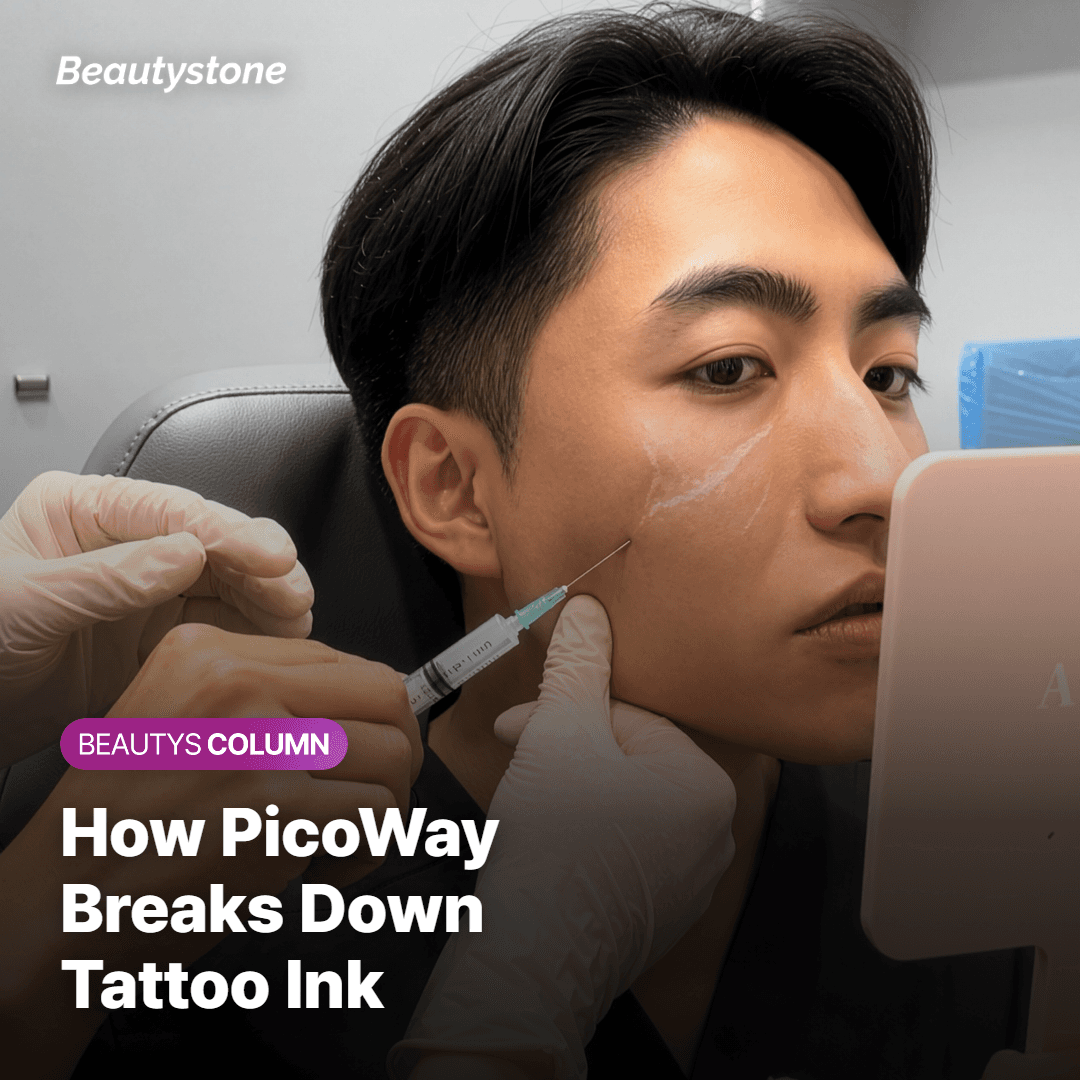
PicoWay is an FDA-cleared picosecond laser that delivers ultra-short pulses of energy to break down tattoo ink particles into smaller fragments, which the body's immune system then clears over the following weeks. It's effective across multiple ink colors, including stubborn blues and greens that older Q-switched lasers struggle with.
Because picosecond pulses are so brief, PicoWay generates less heat in surrounding tissue than nanosecond lasers — which is one reason recovery tends to be more manageable. That said, the treated skin is still experiencing controlled photomechanical injury, and the weeks following each session are a genuine healing window. What you do during that window matters.
Sessions are spaced six to twelve weeks apart to allow adequate ink clearance and skin recovery. This means a full course of treatment — often four to ten or more sessions depending on ink density, colors, and skin type — will inevitably cross seasonal boundaries for most patients.
Why Summer UV Exposure Matters Between Sessions
The risk isn't the sun itself — it's UV-triggered melanin activity in already-sensitized skin.
When skin undergoes laser treatment, the barrier is temporarily disrupted and melanocytes (the cells that produce pigment) become more reactive. Research suggests that UV exposure to recently treated skin can stimulate melanocytes to overproduce melanin, leading to PIH — darkening of the treated area that can last months or, in some cases, be slow to resolve. Studies indicate that PIH is more common in patients with medium-to-darker skin tones (Fitzpatrick III–VI), but lighter skin types are not immune, particularly after repeat sessions.
A study published in PMC highlights that UV-induced post-laser hyperpigmentation is one of the more common and underappreciated complications of picosecond tattoo removal, particularly in Asian skin tones — reinforcing that proactive sun protection isn't optional, it's part of the protocol (PMC7447827).
There's also a secondary issue: a tan acquired before a session changes your skin's baseline melanin content, which affects how the laser interacts with your skin and can increase the risk of pigmentation side effects. Most providers will postpone a session if you arrive with a fresh tan in the treatment zone.
Side Effects and Risks of Summer Removal
Being transparent about risk in summer conditions is important. The most relevant ones:
PIH (post-inflammatory hyperpigmentation): The main concern. A darkened patch over or around the treated tattoo that can last weeks to months. Studies suggest PIH rates are higher in summer and in darker Fitzpatrick types. Individual results vary significantly.
Prolonged redness and sensitivity: Treated skin that's also sun-exposed may experience more persistent erythema (redness) between sessions.
Delayed healing: UV exposure can slow the skin's repair process and potentially affect how efficiently your immune system clears fragmented ink particles.
Hypopigmentation: Less common, but laser plus UV can occasionally result in patches of lighter skin in the treated area, especially in higher Fitzpatrick types with repeat sessions.
Redness and mild tenderness after each session are expected and typically settle within a few days. If you notice spreading redness, significant swelling beyond 48–72 hours, blistering that isn't healing, or signs of infection (warmth, discharge, fever), seek medical care right away.
Sun Protection Protocol for Tattoo Removal Patients
The good news is that smart sun protection makes it entirely feasible to continue removal in summer without dramatically increasing your risk profile. Here's the practical protocol:
Before your session:
Avoid deliberate sun exposure or tanning beds on the treatment area for at least four weeks prior — ideally longer if the tattoo is in a high-UV-exposure zone (arms, shoulders, ankles)
If you've been outdoors frequently, let your provider assess baseline skin tone before proceeding
After your session (first 72 hours):
Keep the treated area covered with clothing or a clean bandage when outdoors — sunscreen alone isn't sufficient in the first 24–48 hours while the skin is actively healing
Avoid direct sun, saunas, hot showers, and swimming pools during this acute phase
Ongoing between sessions:
Apply broad-spectrum SPF 50+ to the tattoo area every morning, rain or shine — UV passes through clouds and windows
Reapply every 90–120 minutes when outdoors
Physical sunscreens (zinc oxide, titanium dioxide) tend to sit on top of the skin rather than being absorbed and are often recommended on healing skin
Cover with UPF-rated clothing when possible — this is the most reliable protection
Sunscreen is non-negotiable in a summer removal course. Individual results vary, but consistent protection is the single most impactful thing you can do to reduce PIH risk and support ink clearance between sessions.
Should You Pause Treatment for Summer?
The short answer: it depends on your situation, and it's a genuine conversation to have with your provider. Here's how to think about it.
Pausing may make sense if:
You work outdoors or can't reliably avoid sun exposure on the tattoo area
You're planning a beach trip or extended outdoor travel in the near term
You've already experienced PIH from a previous session and want to minimize recurrence risk
The tattoo is on a body part that's very difficult to keep covered (hands, neck, feet)
Continuing through summer is reasonable if:
You have strong sun discipline and can commit to the protection protocol above
The tattoo is in a location that's easy to cover (upper back, torso, upper arm with sleeves)
You want to stay on schedule for a removal completion target
Your provider has assessed your skin and doesn't flag elevated risk factors
Research indicates that outcomes don't have to be worse in summer if protection is consistent (PMC6986132). The risk is compounded behavior — skipping sunscreen, getting a tan, coming in for sessions with sun-damaged skin.
How Much Does PicoWay Removal Cost?
PicoWay tattoo removal pricing in Korea is typically quoted per session, with variations based on the tattoo's size, color complexity, ink density, and the number of sessions required. At Beautystone clinic in Seoul's Hapjeong area, treatment plans are designed after an assessment, since a small single-color piece and a large multi-color sleeve have very different session requirements. For current pricing, see /en/price or /en/promotion. Seoul clinic pricing is subject to change.
One practical note: pausing for summer doesn't necessarily save money — you'll likely need the same number of sessions regardless of when they're scheduled. But managing PIH, if it occurs, can sometimes add corrective treatments to your plan. Prevention is cost-effective.
The Bottom Line
Here's the summary:
Summer UV exposure raises PIH risk between tattoo removal sessions — this is well-documented and most pronounced in medium-to-darker skin tones
Consistent SPF 50+ and physical coverage of the treated area are the most effective mitigation strategies
Whether to pause or continue depends on your lifestyle, tattoo location, and skin type — discuss it honestly with your provider before deciding
If you experience spreading redness, blistering, or signs of infection at any point, seek medical care right away rather than waiting for your next scheduled appointment
Like any multi-session procedure, tattoo removal comes with trade-offs and a real time commitment. Summer management is one piece of that. Ultimately, the right call depends on your skin, your goals, and how consistently you can commit to the protection routine.
If you're considering PicoWay tattoo removal or have questions about summer scheduling, a consultation is the best starting point. Beautystone is a dermatology clinic in Seoul's Hapjeong area — see current offers at /en/promotion.
*PIH*(post-inflammatory hyperpigmentation): temporary darkening of the skin following an inflammatory trigger, such as a laser procedure; more common in medium-to-darker skin tones and can last weeks to months.
UV precautions and whether to pause treatment are clinical decisions the doctor makes after examining your skin. Session estimation is a separate step: Beautystone uses the Kirby–Desai assessment at consultation, reviewing skin type, location, ink amount, layering, scarring and colour, to discuss an expected range. Knowing that range helps if you are scheduling visits to Seoul around a season, though it remains an estimate.
Plan your session schedule with us
Frequently asked questions
Q. Can I get tattoo removal in summer?
A. Yes — you can continue PicoWay tattoo removal during summer, but it requires consistent sun protection on the treated area. Broad-spectrum SPF 50+ applied daily, physical coverage with clothing, and avoiding deliberate tanning are essential. If you can't reliably protect the area, pausing treatment until fall reduces PIH risk.
Q. What is PIH and why is it a risk with tattoo removal?
A. PIH stands for post-inflammatory hyperpigmentation — a temporary darkening of the skin after an inflammatory event, such as a laser treatment. Laser sessions temporarily sensitize melanocytes, the cells that produce pigment. UV exposure to that sensitized skin can trigger them to overproduce melanin, creating a darkened patch. It's more common in medium-to-darker skin tones but can affect anyone.
Q. How long should I avoid the sun after a tattoo removal session?
A. Ideally, protect the treated area from direct sun for the entire duration of your treatment course — not just the days immediately after a session. For the first 48–72 hours post-session, keep the area covered with clothing or a bandage rather than relying on sunscreen alone. After that, SPF 50+ daily plus UPF clothing when outdoors.
Q. Does a tan affect tattoo removal results?
A. Yes. A fresh tan means increased melanin in the skin, which changes how the laser interacts with your tissue and raises the risk of pigmentation side effects. Most providers will postpone a session if the treatment zone shows a recent tan. It's best to schedule sessions and protect the area consistently throughout your removal course.
Content




skin
Why Does Fractional CO2 Take Longer to Heal?

Contouring & Volume
How Many cc Does Forehead Filler Need?

skin
Why Is My Skin Oily but Tight in the Fall?

Hair Removal
Underarm Laser Hair Removal Cost: Do the Math

Tattoo removal
Laser Before a Cover-Up: How Many Sessions?

skin
큐어젯 다운타임, 다음 날 출근과 화장은 언제부터 될까요?