Potenza microneedling RF for persistent facial redness: where it helps, and where it does not.
Published
Updated

Author
Wi Young-jin · Chief director
Seoul National University College of Medicine · Seoul National University Hospital Specialist
→
Some people find that even after cleansing, the cheeks and the skin around the nose stay faintly red, and that stepping somewhere slightly warm sends the whole face flushing. Makeup covers it and it surfaces again within the hour. When spicy food or a single glass of wine leaves redness that will not settle, the thought arrives: this is not just sensitive skin, is it?
Here is the short answer first. Persistent facial redness usually involves not only a reactive surface but changes to the blood vessels in the dermis underneath, and microneedling RF devices such as Potenza reach only part of that picture. It is not a switch that turns redness off. It is one option among several, worth considering while you work out what is actually driving your redness.
This article collects general treatment information from Beautystone, a skin clinic in Hapjeong, Seoul.
What you'll learn
How to separate out the causes behind stubborn redness and flushing
The mechanism microneedling RF devices such as Potenza actually use
The limits — what this treatment does not fix
What to check yourself, and what to ask, before a consultation
Why redness and flushing are so hard to settle
Facial redness does not have one single cause. Broadly it mixes a surface that has become reactive with blood vessels in the dermis that have widened or increased. Flushing that rises and fades is vessels temporarily dilating; redness that lingers, with fine vessels visible through the skin, can signal that vascular change has settled in.
One of the common backgrounds to persistent facial redness is rosacea*. An overview of rosacea, describing how it presents as persistent erythema and dilated vessels across the central face and is aggravated by UV, temperature swings, spicy food, alcohol and stress goes some way to explaining why everyday triggers alone can send redness up and down so easily.
Rosacea*: a chronic skin condition with persistent redness, flushing and visible vessel dilation across the central face. It is usually approached as something to manage by reducing triggers rather than something to eliminate.
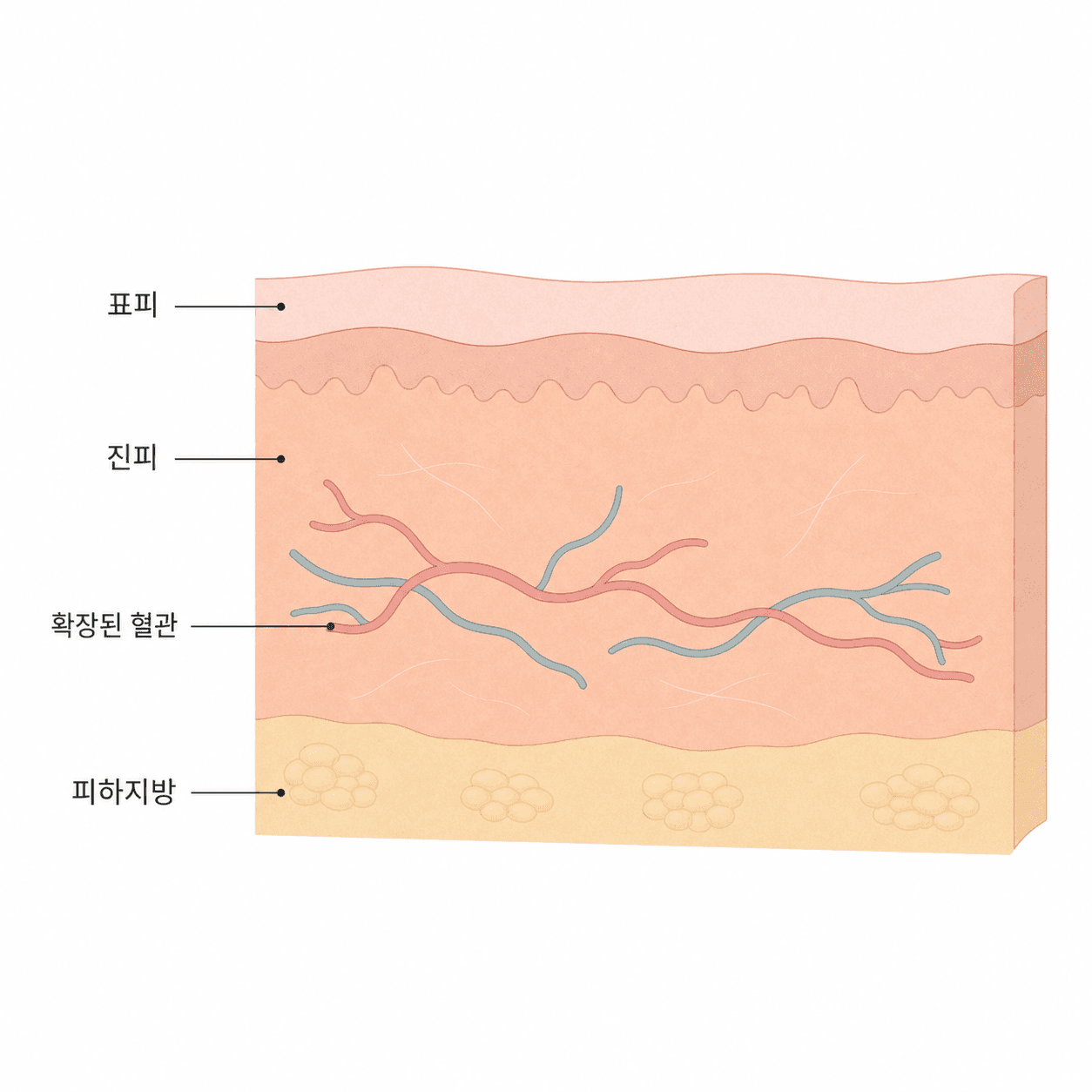
What makes redness difficult to manage is that surface-level calming care struggles to reach vascular change down in the dermis. So moisturising and avoiding triggers stay foundational, while treatment enters the conversation when the vascular side needs addressing.
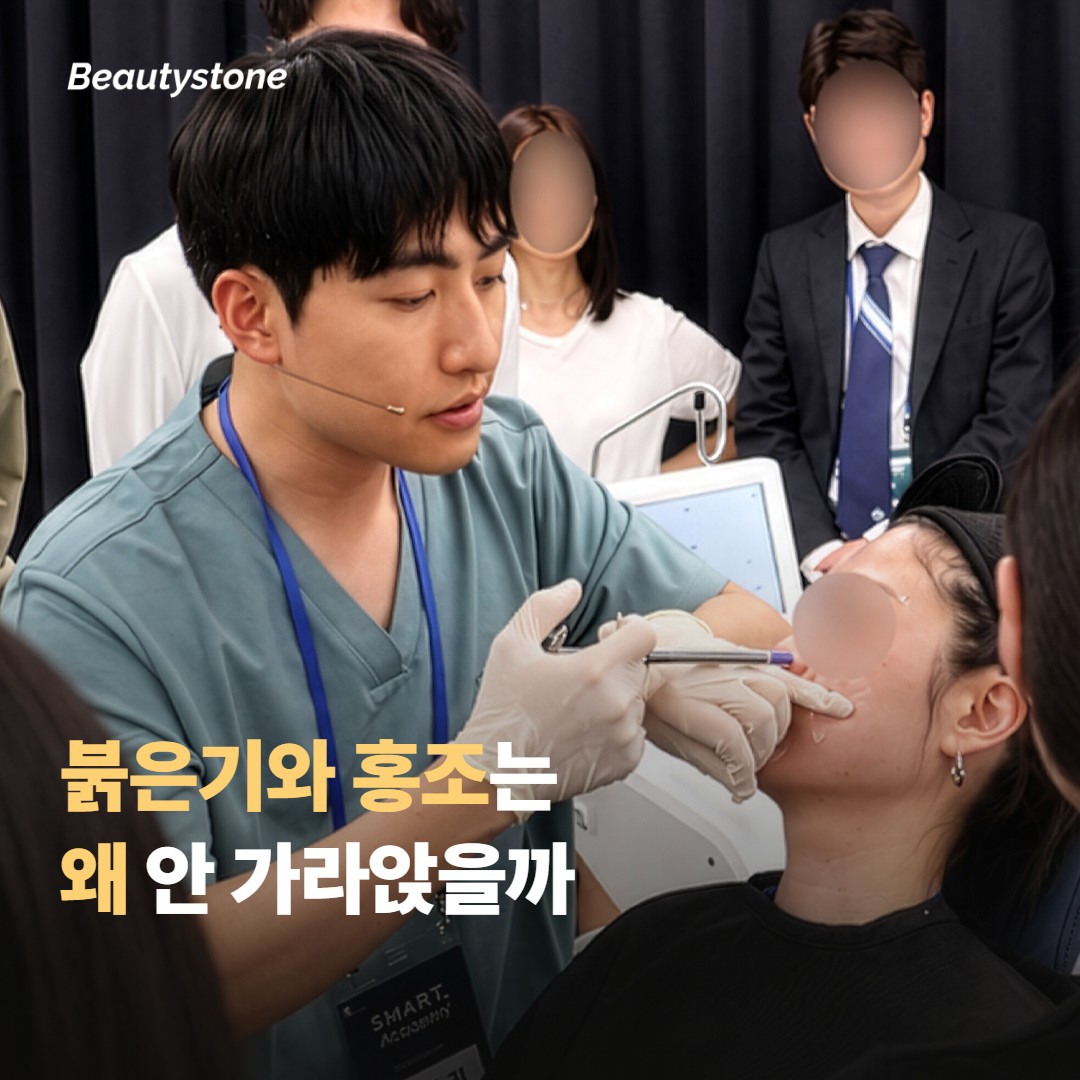
How microneedling RF like Potenza approaches it
Potenza is a microneedling RF* device: fine needles create small channels in the skin, and radiofrequency energy is delivered into the dermis from the needle tips. Rather than heating the surface broadly, it concentrates heat at the depth of the needle tips to apply a controlled stimulus to the dermis. In the US Potenza is an FDA-cleared device — "cleared" is the correct term for a device, whereas a drug is "FDA-approved" — and that clearance is not specific to rosacea, so using it for persistent redness is a clinical judgement rather than a labelled indication.
Microneedling RF*: a method in which fine needles open channels in the skin and radiofrequency heat is then delivered into the dermis from the needle tips. The intent is to stimulate the dermis while limiting damage to the epidermis.
Looking at a review noting that radiofrequency microneedling drives dermal remodelling and new collagen formation slowly and progressively, with change continuing for months after treatment tells you this is a treatment aiming at a dermis that responds gradually rather than an instant result. In the context of redness, the approach is to have heat delivered into the dermis act on the environment around the widened vessels and on skin texture.
Put simply, the mechanism splits two ways.
Controlled thermal stimulus in the dermis — radiofrequency from the needle tips acts locally within the dermal layer
Gradual skin remodelling — collagen formation and dermal remodelling continue over time
That mechanism does not translate directly into clearing redness, though. The next section covers why, alongside the treatment's limits.

Why microneedling RF does not solve all redness
The honest part first. A large share of facial redness is a problem with the vessels in the dermis themselves, and microneedling RF only partly addresses that vascular cause. Vascular laser platforms are the ones built to target visible thread veins and dilated vessels directly, so depending on the type of redness you have, a different tool may fit better.
That does not make microneedling RF irrelevant to redness. An observational study applying non-insulated fractional radiofrequency microneedling to rosacea patients who had not responded well to other treatment reported significant reductions in erythema assessment scores and haemoglobin levels, so there are reports of it helping where redness has been difficult to manage by other means. Even so, the accurate reading of a study like that is "improvement was observed in some patients," not "this reliably works for everyone."
Roughly compared by what is driving the redness, the approaches line up like this.
Driver of redness | Microneedling RF | When something else may fit better |
|---|---|---|
Dermal remodelling and texture | Comparatively good fit | Surface flaking and pigment are managed separately |
Dilated thread veins | Only partial reach | Vascular lasers target these directly |
Momentary flushing | Not a direct target | Trigger management comes first |
A sensitised skin barrier | Treatment may irritate it further | Calming and moisture first |
Sketching how erythema assessment scores shifted before and after treatment in that group of hard-to-treat rosacea patients gives you roughly this shape.
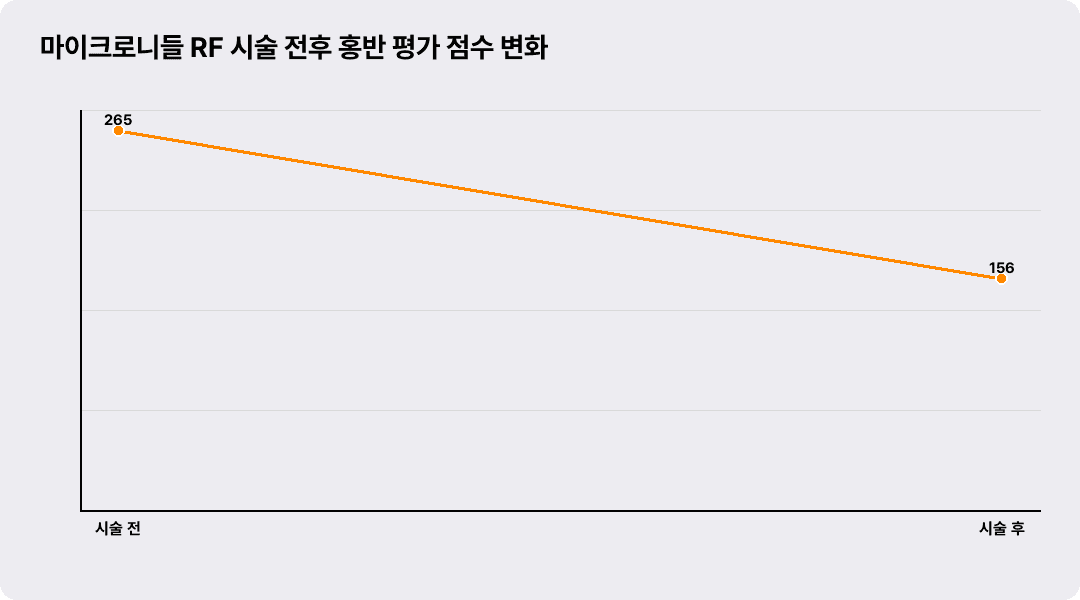
Figures like these are a reference point — "this much change was observed in some patients" — not a promise that everyone improves by the same margin. Individual results vary. The important caveat is that when redness is marked or the skin is highly reactive, microneedling RF itself can temporarily make redness worse. So whether to treat at all is safer decided after looking at both the type of redness and the current state of your skin. If the skin blisters, weeps, or becomes hot and painful in the days after a session rather than settling, contact your provider or seek urgent care.
Why where you have it done still matters
Before recommending anything for redness, we would rather work out together whether yours is coming from the vascular side in the dermis or from surface reactivity. Even with the same microneedling RF, the response shifts with the state of your skin, so the consultation is where we settle whether treatment makes sense now or whether calming care should come first. We are a small clinic within walking distance of Hapjeong Station in Seoul, so there is room to watch how one person's redness changes and pick the next step together. Cost varies by clinic and by whether sessions are sold singly or as a course, so ask for the figures in writing. Redness is also a condition that needs watching over months rather than days — if you are treating it while travelling, line up a qualified provider near home who can follow it up after you fly back.

What to sort out for yourself before the consultation
If you are weighing up treatment for redness, getting a few things straight beforehand makes the conversation far more productive. Even a few days of noting when and in what circumstances your redness worsens starts to point at the cause.
When you go red — whether there are triggers such as temperature change, spicy food, alcohol or stress
What kind of redness it is — whether it flushes and fades, sits faintly all the time, or shows visible thread veins
Your skin right now — any recent flaking, stinging or breakouts that signal reactivity
What you have already tried — calming routines or other treatments, and how they went
Going in with that ready lets you have a much more precise conversation about whether microneedling RF is the right choice for your redness right now, or whether a different approach or calming care should come first. Because redness usually has mixed causes, it helps to separate them and set priorities rather than expecting one treatment to close the case. This article is general information; the cause of your redness and whether a treatment suits you are things to decide with the clinician who examined you.

Frequently asked questions
Q. Will one Potenza session clear my redness?
A. It is hard to describe this as a treatment that clears redness in one go. Microneedling RF works through a dermis that responds over time, so change is gradual, and how much you respond varies with what is driving your redness. Where vessels are prominent, as with thread veins, a different approach may fit better, so it is worth separating out the cause first.
Q. My flushing is quite bad. Could treatment make me redder?
A. Temporary redness or stinging can rise right after a session. If your skin is highly reactive or the redness is marked, treatment can end up irritating it, so calming care first, or adjusting the timing, is the safer route. Do describe the current state of your skin at the consultation.
Q. How does it differ from a vascular laser?
A. The two aim at slightly different targets. Vascular laser platforms focus more on visibly dilated vessels and thread veins, while microneedling RF sits closer to stimulating the dermal layer and remodelling skin. Which suits you depends on the type of redness, so it is best decided once the cause has been established at consultation.
Q. What does aftercare look like?
A. For the first few days, reducing irritation is the whole job. Pause strong exfoliation and retinol or acid ingredients, and be thorough with moisture and sun protection. UV is one of the classic aggravators of redness, so keeping the sunscreen habit going beyond the recovery period helps hold on to the result.