

Radiesse or Juvelook? How these collagen boosters differ and why the injector matters.
Published
Updated

Author
Wi Young-jin · Chief director
Seoul National University College of Medicine · Seoul National University Hospital Specialist
→
When you start looking into collagen boosters, the names come at you all at once—Radiesse, Juvelook, Sculptra, Rejuran. Many people narrow it down to Radiesse and Juvelook, only to find that every explanation just repeats that both build collagen, leaving no clear basis for what to choose.
To lay it out first: both are boosters that stimulate the collagen inside your skin, but they wake that collagen with different materials and methods, so the concerns they suit differ as well. Radiesse in particular tends to turn out differently even with the same product depending on how much it's diluted and which layer it goes into, so it's a treatment where who does it matters as much as what you get.
What you'll learn
How Radiesse and Juvelook build collagen differently
How a water-filling filler differs from a collagen booster
Whether your concern is closer to volume and contour or to skin texture
Why the injector's hand especially matters with Radiesse
They're both collagen boosters, so what's different?
They're grouped under the single phrase collagen booster, but several different materials sit inside it. Radiesse uses CaHA* as its main ingredient and Juvelook uses PDLLA*, while Rejuran and Sculptra use still other ingredients. They all share the goal of prompting the skin to make its own collagen, but the way they stimulate it, how strongly, and what improves as a result each differ a little.
CaHA (calcium hydroxylapatite)*: microparticles from the calcium family that makes up bone and teeth. They're used in collagen-stimulating treatments, Radiesse being the best-known.
PDLLA (poly-D,L-lactide)*: a lactic-acid-family material that helps the skin build collagen. Juvelook is the best-known example.
So which collagen booster is best is not an easy question to answer. The material that fits changes depending on whether your concern is deflated volume and contour, or texture like pores and fine lines. If you're weighing Radiesse against Juvelook, the order that makes sense is to start with how each material handles collagen.

Radiesse and Juvelook fill in different ways
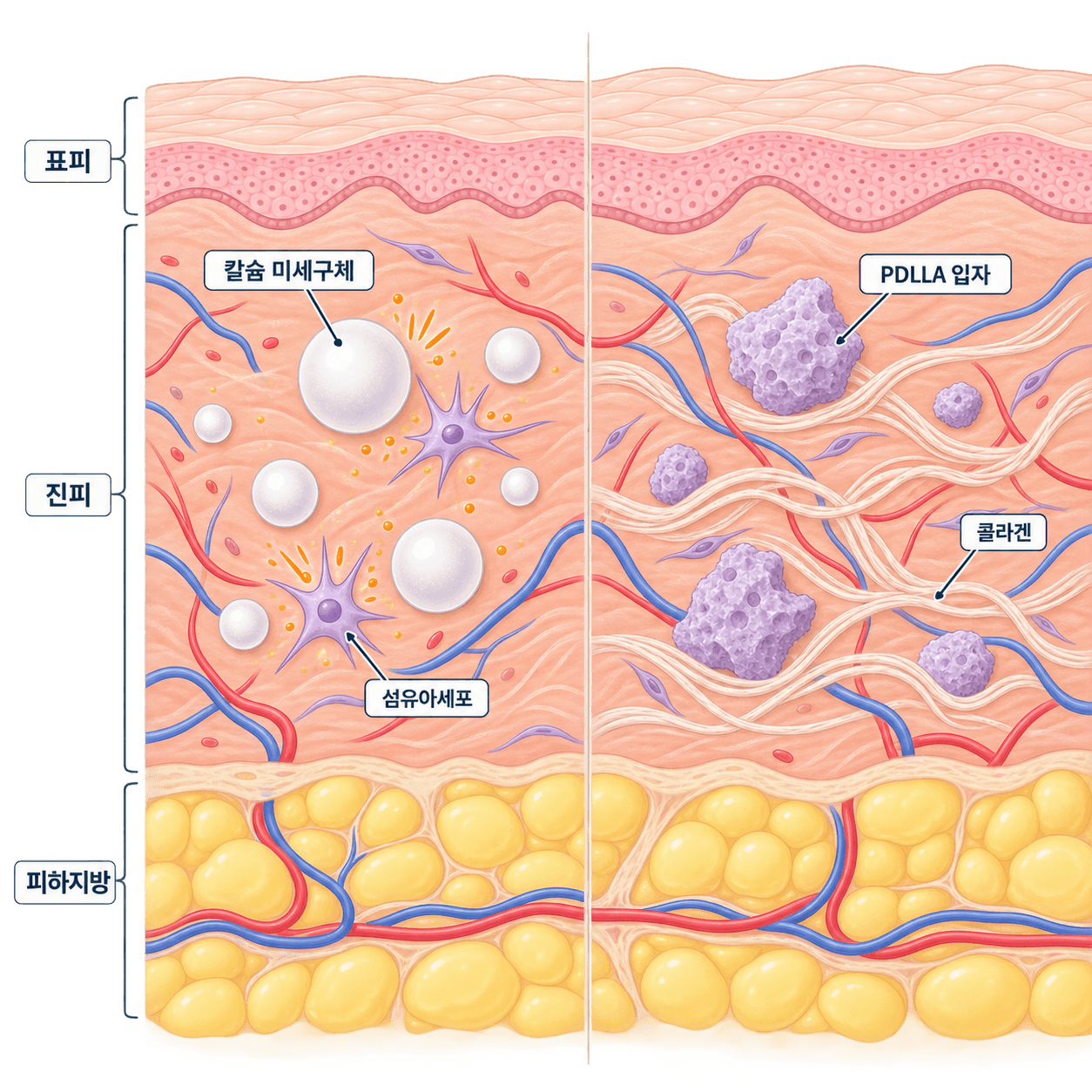
Radiesse's CaHA microparticles settle into the dermis and then physically stimulate the fibroblasts around them. There's analysis reporting that these particles stimulate fibroblasts to newly produce collagen and elastin, and thanks to the gel component, some immediate volume comes along with it. Filling volume while waking up collagen at the same time—that dual action is what characterizes Radiesse.
With Juvelook, the PDLLA particles stimulate collagen as they slowly dissolve over time, while the hyaluronic acid mixed in adds a natural look early on. There's also an animal study in which PDLLA raised collagen density in aged skin. Rather than an immediate change in volume, it's closer to the skin's surface texture gradually filling in.
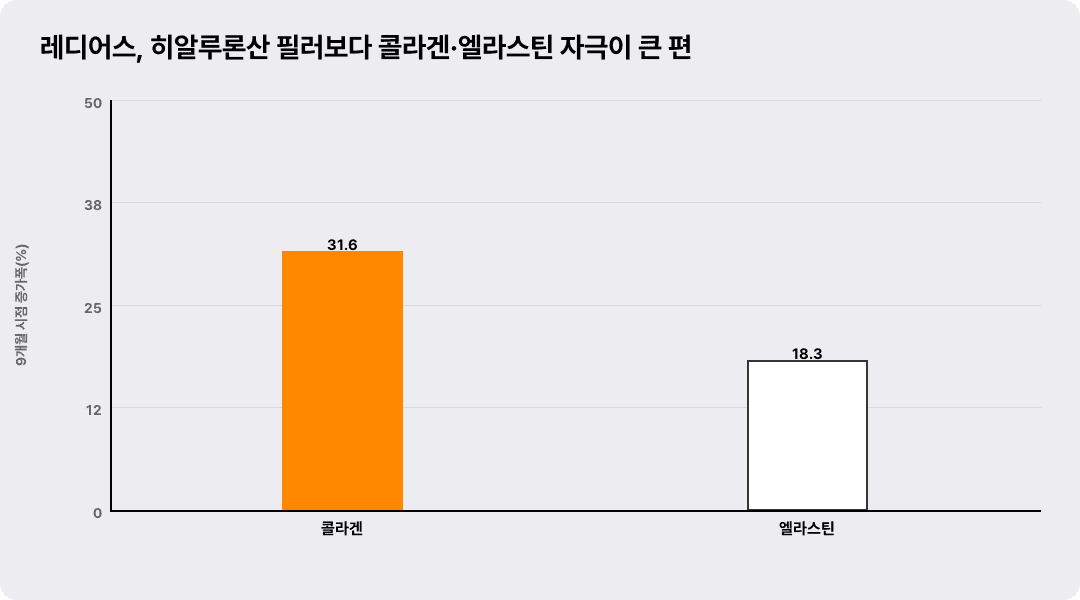
One thing worth noting here. The commonly used hyaluronic acid filler works by drawing in water to plump the spot right away, so filling it out is the fitting description. Radiesse and Juvelook, by contrast, get your own skin to make collagen, so they feel different from being artificially filled. In fact, even for the same collagen stimulation, there's a comparison in which Radiesse induced more collagen and elastin than hyaluronic acid filler.
It splits by volume and contour versus skin texture
Once you know the difference between the two materials, the basis for choosing gets a little clearer. If your main concern is cheeks that have deflated into shadow, or contours like nasolabial folds and the jawline that have collapsed, Radiesse—which delivers immediate volume together with strong collagen stimulation—tends to be a good fit. It suits people who want a firm, supported feel.
Conversely, if your concern is less about volume and more about pores, fine lines, and skin texture that is thin and tired overall, Juvelook is closer. Because it lifts the surface texture gradually, it suits people who expect the skin to grow denser as time passes rather than a dramatic fill.
Of course, the two concerns are often mixed, so it may not fall neatly on one side. In that case it's easier to decide after setting a priority for what you want to address first. Because responses can differ with each person's skin condition, the safest way to make the final call is to discuss it with a provider who has examined your skin in person.

Why Beautystone in Hapjeong?
Beautystone in Hapjeong, Seoul sets the treatment direction differently even for the same collagen-booster question, according to your skin thickness, how much it has deflated, and your texture. Rather than reaching a conclusion first about whether Radiesse or Juvelook is the fit, it keeps to the order of looking together, in the consultation, at where your skin currently falls short, and only then deciding. Being a small clinic within walking distance of Hapjeong Station, it can take a comparison consultation like this at an unhurried pace.
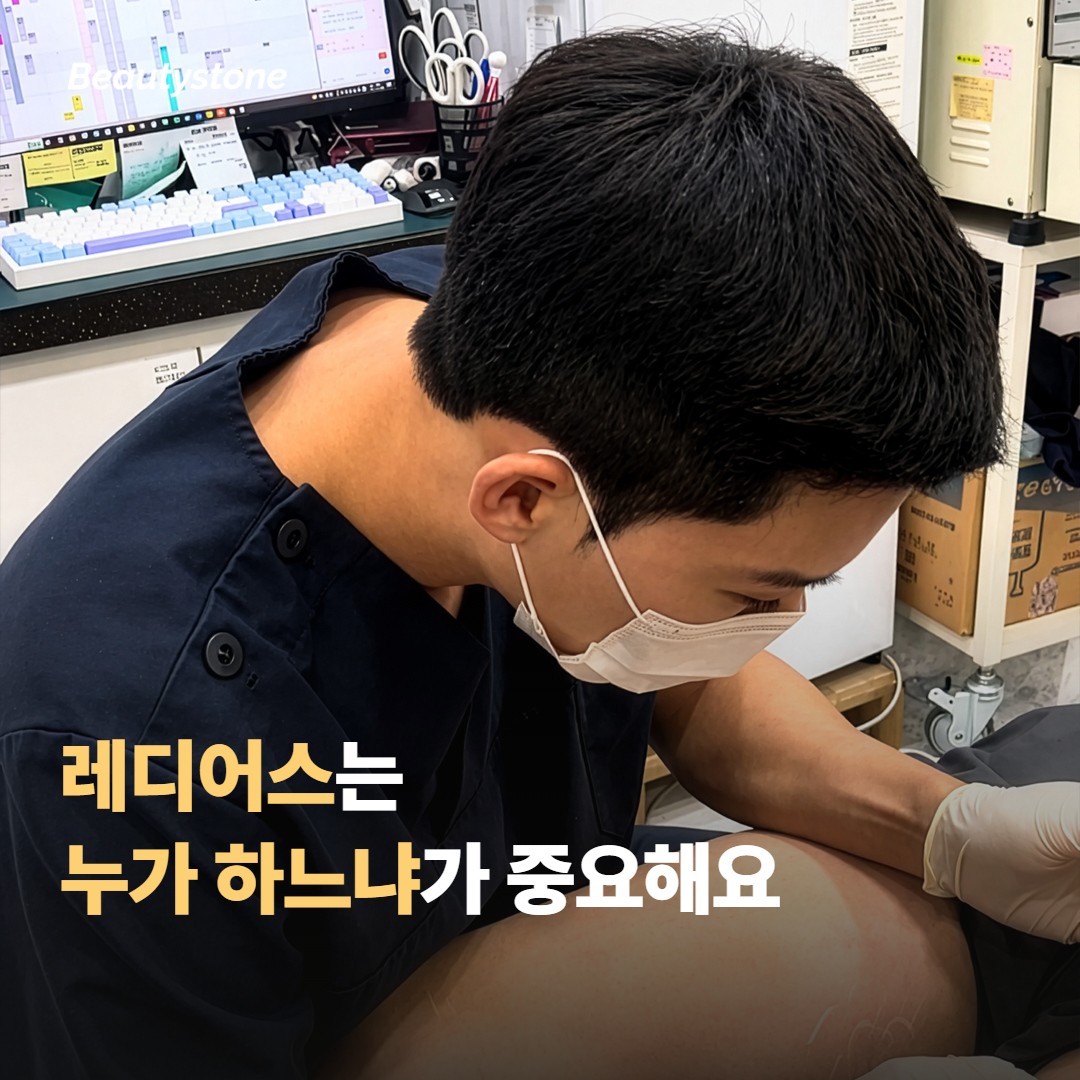
With Radiesse, who does it and how decides the result
There's a reason Radiesse depends so heavily on the injector's hands. CaHA is high in viscosity, so placing it undiluted in a shallow layer can cause clumping or an uneven surface. That's why it takes skill to dilute it to the purpose and place it across several layers. There's even a clinical report that how you set the dilution and the injection layer decides the collagen-stimulating effect—so with the same product, the result changes with the hands doing the work.
So if you're going to choose only one of Radiesse or Juvelook, it's good to look at where and with whom you get it as much as what you get. Somewhere with accumulated experience in dilution and injection is well suited to bringing out Radiesse's strengths; conversely, if those conditions aren't clear, considering the option with relatively fewer variables is also a way to go. This article is a summary of general information, and for an actual treatment choice, it is safest to decide in consultation with a provider who has examined your skin in person.
Frequently asked questions
Q. Can I get Radiesse and Juvelook together?
A. When the goals differ, they're sometimes considered together—Radiesse for volume and contour, Juvelook for texture. How much to do at once and in what order depends on your skin, though, so it's best to decide in consultation with a provider.
Q. When do the effects start to show?
A. Radiesse shows some immediate volume thanks to its gel component, and the change as collagen fills in continues over time. Juvelook is more about the texture improving gradually than about an immediate change. Individual results vary with both.
Q. How is a collagen booster different from filler?
A. Hyaluronic acid filler works by drawing in water to plump the spot right away. A collagen booster works by prompting the skin to make its own collagen, so it's closer to filling in gradually over time than to being packed in.
Q. Why do people say Radiesse results differ by injector?
A. Because CaHA is high in viscosity, the dilution and the layer it's placed in have to be adjusted carefully to bring out the collagen-stimulating effect without clumping. That's why dilution and injection experience affects the result. It's safest to discuss with a provider whether the approach suits your skin.
![[Wi Young-jin Column] Hard lumps after Radiesse nodules](https://framerusercontent.com/images/pHmbmCumB15G7SqX0GFlbXipTY.jpg?width=1080&height=1080)
![[Wi Young-jin] 3 things to ask before Radiesse in Seoul](https://framerusercontent.com/images/V2IvaqyTQrQhrwtfq3N937GKw7o.jpg?width=1080&height=1080)


