

Sculptra: Why More Isn't Always Better
Sculptra: Why More Isn't Always Better
Sculptra: Why More Isn't Always Better
Sculptra in Hongdae: check concentration and session standards. Dilution ratio shapes results.
Published -
Updated -

Author
Wi Young-jin · Chief director
Seoul National University College of Medicine · Seoul National University Hospital Specialist
→

Sculptra:
Don’t believe the claim that more injections are better
This is Director Wi Young-jin of Beauty's Doctor.
Check this first before reading
Q. Isn’t Sculptra more effective
when you use more vials?
A. The result is determined more by the 'dilution concentration' and 'injection interval'
than by the number of vials.
Even with the same 1 vial, depending on how it is set up,
the resulting volume can be completely different.
Q. Then when getting a consultation in Hongdae·Hapjeong,
what should I compare it by?
A. Ask about the dilution ratio (cc), interval between sessions,
and the injection layer.
A place that clearly answers these three things
is one with a defined protocol.
Key points of this article
When getting a Sculptra consultation at a Hongdae·Hapjeong dermatology clinic
Concentration and session guidelines to check
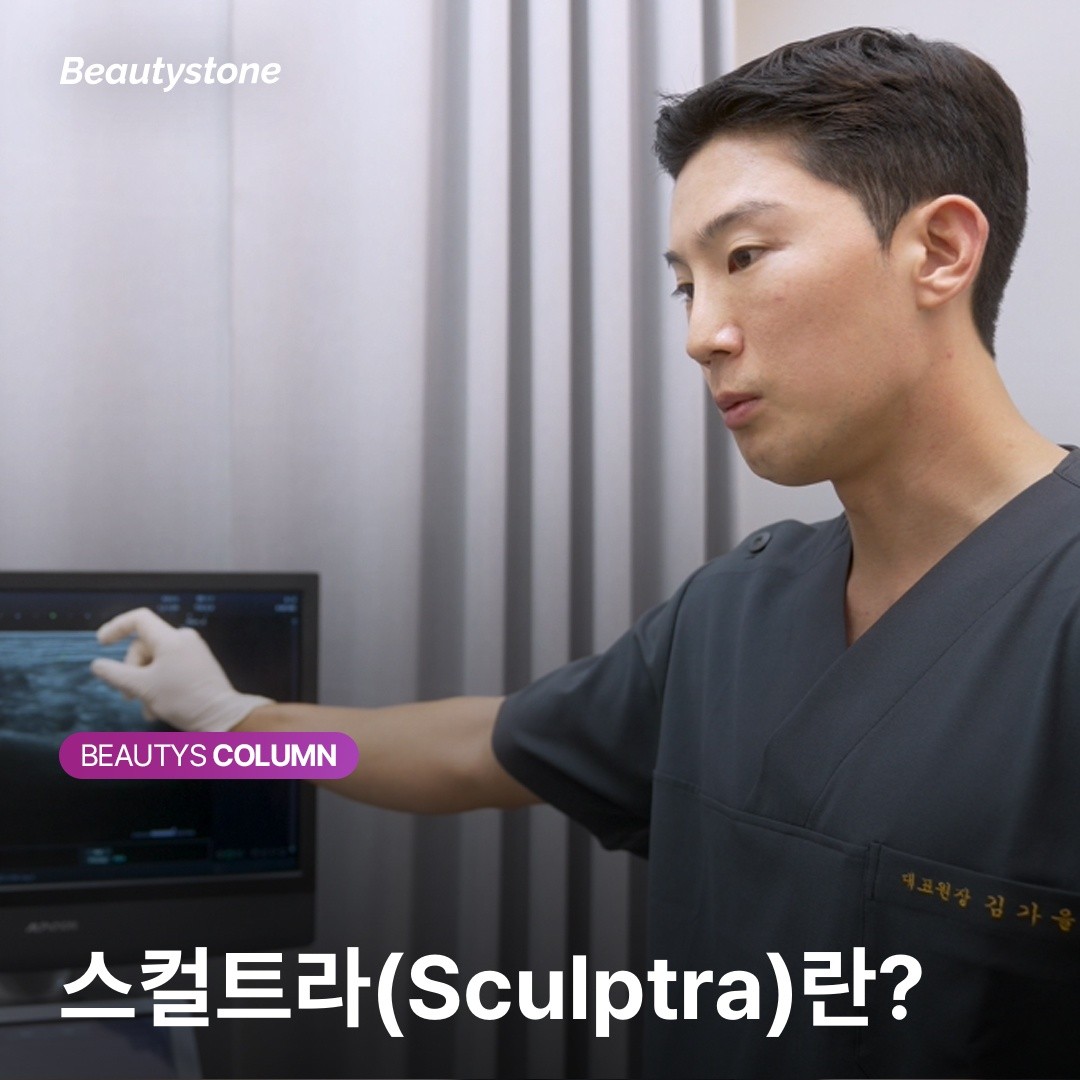
What is Sculptra?
Sculptra
(Sculptra, ingredient name PLLA — Poly-L-Lactic Acid) is
an injectable volumizing procedure that stimulates collagen production
within the skin.
Unlike hyaluronic acid fillers, it does not
create immediate volume,
but gradually builds volume as your own collagen is formed
over 4–6 weeks.
That is why many people initially feel,
'I got it, but I see no change.'
But this is normal.
Sculptra works on the premise of 'waiting'.

Why are the results different with the same 1 vial
— The secret of concentration
Here’s one important thing.
Sculptra comes in powder form,
and is diluted with saline before the procedure.
This 'dilution ratio' is usually called the concentration,
and even with the same 1 vial, whether it is diluted with 5cc
or 8cc
completely changes the density of the injected PLLA.
It’s the same as adding one spoonful of coffee beans to 100ml of water
to make it stronger, or to 300ml to make it weaker.
To be honest, if the concentration is low (highly diluted),
it’s easier to spread it over a wider area at once, so the procedure is easier,
but the volume may rise less than expected.
On the other hand, if the concentration is high,
the collagen-inducing effect becomes stronger,
but the injection technique must be precise,
and the risk of nodules increases.
Category | Low concentration (diluted 8cc or more) | Medium concentration (diluted 5–7cc) | High concentration (diluted under 5cc) |
Collagen-inducing effect | Dispersed — gradual | Balanced stimulation | Strong stimulation |
When volume is felt | After 6–8 weeks | 4–6 weeks | 3–5 weeks |
Nodule risk | Low | Moderate | Caution needed |
Suitable areas | Wide areas (forehead·cheeks) | Cheeks·temples·jawline | Areas with deep volume loss |
Director Wi Young-jin’s key summary
If you only ask in a Sculptra consultation, 'How many vials?'
that’s only half the information.
Dilution concentration (cc), injection layer (subcutaneous vs above the periosteum),
and interval between sessions (usually 4–6 weeks)
— these three factors determine the result.
Especially if you’re comparing several places in Hongdae·Hapjeong,
if you ask based on these criteria, you can immediately tell
whether they have a defined protocol.

Who Sculptra suits, and who it doesn’t
This is a point many people misunderstand, but Sculptra
isn’t the answer to every volume concern.
Good candidates
People in their 30s–40s who have lost cheek volume and developed shadows
People whose temples have hollowed, making the upper face look narrow
People who dislike the typical 'filled-in' feeling of fillers
People who want a treatment with a long-lasting duration
Who should be cautious:
Cases where volume is needed in a short time
Very thin skin (requires fine adjustment)
People with a keloid tendency

Session guidelines: how they are actually planned
Session 1
Set at medium concentration, with a conservative injection amount.
At this stage, the goal is to check skin response rather than volume.
Session 2 (after 4–6 weeks)
The concentration and injection amount are adjusted based on the results of session 1.
Most people start noticing changes at this point.
Session 3 (optional)
This is performed only for those with deeper volume loss.
Usually, about 60–70% of people are satisfied
with just two sessions.
Frequently asked questions
Q1. After Sculptra,
do I really need to massage it?
Yes, for 5 days after the procedure, massage gently 5 times a day for 5 minutes each time.
This is called the '555 rule' and is essential for preventing nodules.
Q2. How much should I expect to pay?
Usually, for 1 vial, prices vary by clinic in the 200,000–400,000 KRW range.
However, the exact price differs by clinic.
Since the number of vials needed changes depending on the concentration setup,
the exact cost is determined after consultation.
Q3. What side effects or precautions are there?
The biggest concern, nodules, can be reduced with massage and
proper layer placement
to lower the probability.
As a rule, it should not be used in thin areas such as under the eyes or the lips.
WhatsApp consultation is also available before you visit.
This was Wi Young-jin.
Also read
▶Jawline filler side effects, results, and duration, all summarized at once
▶Shoulder filler effects and side effects, three key principles for creating squared shoulders
▶If you try to make the back of the cheeks with Sculptra look puffy, the method is wrong
Sculptra:
Don’t believe the claim that more injections are better
This is Director Wi Young-jin of Beauty's Doctor.
Check this first before reading
Q. Isn’t Sculptra more effective
when you use more vials?
A. The result is determined more by the 'dilution concentration' and 'injection interval'
than by the number of vials.
Even with the same 1 vial, depending on how it is set up,
the resulting volume can be completely different.
Q. Then when getting a consultation in Hongdae·Hapjeong,
what should I compare it by?
A. Ask about the dilution ratio (cc), interval between sessions,
and the injection layer.
A place that clearly answers these three things
is one with a defined protocol.
Key points of this article
When getting a Sculptra consultation at a Hongdae·Hapjeong dermatology clinic
Concentration and session guidelines to check
What is Sculptra?
Sculptra
(Sculptra, ingredient name PLLA — Poly-L-Lactic Acid) is
an injectable volumizing procedure that stimulates collagen production
within the skin.
Unlike hyaluronic acid fillers, it does not
create immediate volume,
but gradually builds volume as your own collagen is formed
over 4–6 weeks.
That is why many people initially feel,
'I got it, but I see no change.'
But this is normal.
Sculptra works on the premise of 'waiting'.
Why are the results different with the same 1 vial
— The secret of concentration
Here’s one important thing.
Sculptra comes in powder form,
and is diluted with saline before the procedure.
This 'dilution ratio' is usually called the concentration,
and even with the same 1 vial, whether it is diluted with 5cc
or 8cc
completely changes the density of the injected PLLA.
It’s the same as adding one spoonful of coffee beans to 100ml of water
to make it stronger, or to 300ml to make it weaker.
To be honest, if the concentration is low (highly diluted),
it’s easier to spread it over a wider area at once, so the procedure is easier,
but the volume may rise less than expected.
On the other hand, if the concentration is high,
the collagen-inducing effect becomes stronger,
but the injection technique must be precise,
and the risk of nodules increases.
Category | Low concentration (diluted 8cc or more) | Medium concentration (diluted 5–7cc) | High concentration (diluted under 5cc) |
Collagen-inducing effect | Dispersed — gradual | Balanced stimulation | Strong stimulation |
When volume is felt | After 6–8 weeks | 4–6 weeks | 3–5 weeks |
Nodule risk | Low | Moderate | Caution needed |
Suitable areas | Wide areas (forehead·cheeks) | Cheeks·temples·jawline | Areas with deep volume loss |
Director Wi Young-jin’s key summary
If you only ask in a Sculptra consultation, 'How many vials?'
that’s only half the information.
Dilution concentration (cc), injection layer (subcutaneous vs above the periosteum),
and interval between sessions (usually 4–6 weeks)
— these three factors determine the result.
Especially if you’re comparing several places in Hongdae·Hapjeong,
if you ask based on these criteria, you can immediately tell
whether they have a defined protocol.
Who Sculptra suits, and who it doesn’t
This is a point many people misunderstand, but Sculptra
isn’t the answer to every volume concern.
Good candidates
People in their 30s–40s who have lost cheek volume and developed shadows
People whose temples have hollowed, making the upper face look narrow
People who dislike the typical 'filled-in' feeling of fillers
People who want a treatment with a long-lasting duration
Who should be cautious:
Cases where volume is needed in a short time
Very thin skin (requires fine adjustment)
People with a keloid tendency
Session guidelines: how they are actually planned
Session 1
Set at medium concentration, with a conservative injection amount.
At this stage, the goal is to check skin response rather than volume.
Session 2 (after 4–6 weeks)
The concentration and injection amount are adjusted based on the results of session 1.
Most people start noticing changes at this point.
Session 3 (optional)
This is performed only for those with deeper volume loss.
Usually, about 60–70% of people are satisfied
with just two sessions.
Frequently asked questions
Q1. After Sculptra,
do I really need to massage it?
Yes, for 5 days after the procedure, massage gently 5 times a day for 5 minutes each time.
This is called the '555 rule' and is essential for preventing nodules.
Q2. How much should I expect to pay?
Usually, for 1 vial, prices vary by clinic in the 200,000–400,000 KRW range.
However, the exact price differs by clinic.
Since the number of vials needed changes depending on the concentration setup,
the exact cost is determined after consultation.
Q3. What side effects or precautions are there?
The biggest concern, nodules, can be reduced with massage and
proper layer placement
to lower the probability.
As a rule, it should not be used in thin areas such as under the eyes or the lips.
WhatsApp consultation is also available before you visit.
This was Wi Young-jin.
Also read
▶Jawline filler side effects, results, and duration, all summarized at once
▶Shoulder filler effects and side effects, three key principles for creating squared shoulders
▶If you try to make the back of the cheeks with Sculptra look puffy, the method is wrong


Latest post
Latest post

Hair Removal
레이저 제모 1회에도 남는 몫이 있어요 — 밀도를 모자이크로 보는 법

Tattoo removal
Why Extremity Tattoos Are Slower to Remove

Tattoo removal
Tattoo Removal Cost: Why Quotes Vary by Area

Tattoo removal
Unused Tattoo Removal Sessions: What Happens?

Lifting
Forehead Thread Lifting: How Far Can It Go?

skin
Skin Booster Prices: What to Check in a Quote
1:1 Custom Approach
1:1 Consultation Whatsapp
🌸 Beautystone Clinic attends the Meditox Bangkok Cadaver Workshop 🌸
1:1 Custom Approach