Recovery Injections in Your 20s? I Was Unsure Too
Skin Recovery shots in your 20s: how to choose between Rejuran and Juvelook by clinical criteria.

Honestly, for people in their 20s, regenerative injections,
I was unsure about them at first too
Director Wi Young-jin, Beauty's Doctor
Check this first before reading
Q. I'm in my 20s,
isn't Rejuran always the answer?
A. No. Depending on the skin condition in your 20s
there are quite a few people for whom Juvelook is a better fit.
Q. Why do recommendations differ even among people in their 20s?
A. Whether dermal damage comes first,
or volume and elasticity loss comes first
the target layer differs.
These days, among clients in their 20s in the clinic,
this is one of the most common questions I get.
"Doctor, should I get Rejuran or Juvelook?"
To be honest, even 5 years ago, I didn't usually recommend
regenerative injections to people in their 20s.
I thought, "Isn't it still too early?"
But after doing several hundred cases,
my thinking changed a bit.
There are definitely times when people in their 20s need regenerative injections,
and if you get them at the right time,
the effects last much longer.
So what exactly is different here?
Rejuran is a regenerative injection
that injects PN (polynucleotide) ingredients
extracted from salmon DNA into the dermal layer.
Unlike Juvelook, Rejuran
focuses on repairing skin damage itself and restoring the dermis,
and
Juvelook uses PDLA (polylactic acid)
to induce collagen production and
is designed to boost volume and elasticity together.
This is where misunderstandings often arise
Director Wi Young-jin's
Key Insight
"In your 20s, Rejuran? Juvelook?
For 20-something clients in Hapjeong and Hongdae,
I’m sharing the criteria I actually use to recommend."
— Director Wi Young-jin (Beauty Stone Clinic, Hongdae)
Rejuran for your 20s, Juvelook for your 30s and up?
A lot of people think this,
but honestly, I don't use that formula.
I decide based on skin condition, not age.
A 28-year-old client who visited last month came in for acne scars,
had already received Rejuran four times elsewhere,
but said they didn't feel much effect.
When I examined the skin, the scars themselves were shallow,
but the cheek area had already lost elasticity,
and hollowing under the cheekbones had begun.
For someone like this, Rejuran alone isn't enough.
We combined it with Juvelook for two sessions,
and only then they said, "Ah, this is it."
Director Wi Young-jin's Key Summary
Being in your 20s doesn't automatically mean Rejuran is the answer.
If your main concerns are pores, scars, or oil-moisture imbalance, Rejuran is the choice,
but if you already see hollow cheeks and reduced elasticity,
Juvelook is the better fit.
If you have both, combining them is the right answer.

Customized Guide by Skin Type for Clients in Their 20s
Type | Main Concerns | Recommended Treatment |
Type A (early to mid-20s) | Pores, acne scars, skin texture | Rejuran 3~4 sessions |
Type B (late 20s) | Cheek hollowness, beginning loss of elasticity | Juvelook 2 sessions |
Type C (combined type) | Scars + loss of elasticity | Rejuran + Juvelook combined |
Regenerative injections are still injections, so
bruising, swelling, and temporary nodules can occur.
With Juvelook in particular, lumps
can sometimes be felt early on.
Most settle within 2~3 weeks,
so I don't recommend it right before an important event.
The Three Most Common Questions in the Clinic
Q1. Rejuran and Juvelook,
can they be done together?
Yes, for combined types,
I actually recommend combining them more.
However, spacing them 2 to 4 weeks apart
reduces the risk of swelling and nodules
and is easier for the skin to tolerate.
Q2. How much does it cost, and how many sessions are needed?
Rejuran is usually 3~4 sessions at 3~4 week intervals,
and for Juvelook, about 2 sessions are enough for many people.
Results typically last around 8 to 12 months.
Q3. Any precautions after the procedure?
Avoid makeup, saunas, and alcohol on the day,
and avoid strong irritation for at least a week.
If you got Juvelook, gently massage the injection area 2~3 times a day
to help prevent lumping.
I'll go into this in more depth in the next post.
This was Wi Young-jin.
Read more
▶Is there a dermatology clinic in Hongdae that really treats acne properly?
▶Depressed scars disappear with one CUREjet session? Why that claim is dangerous
▶"Will one CUREjet session fill in all depressed scars?" The reality, according to a doctor
▶Treating acne scars before a wedding, why 6 months before the wedding is the golden time
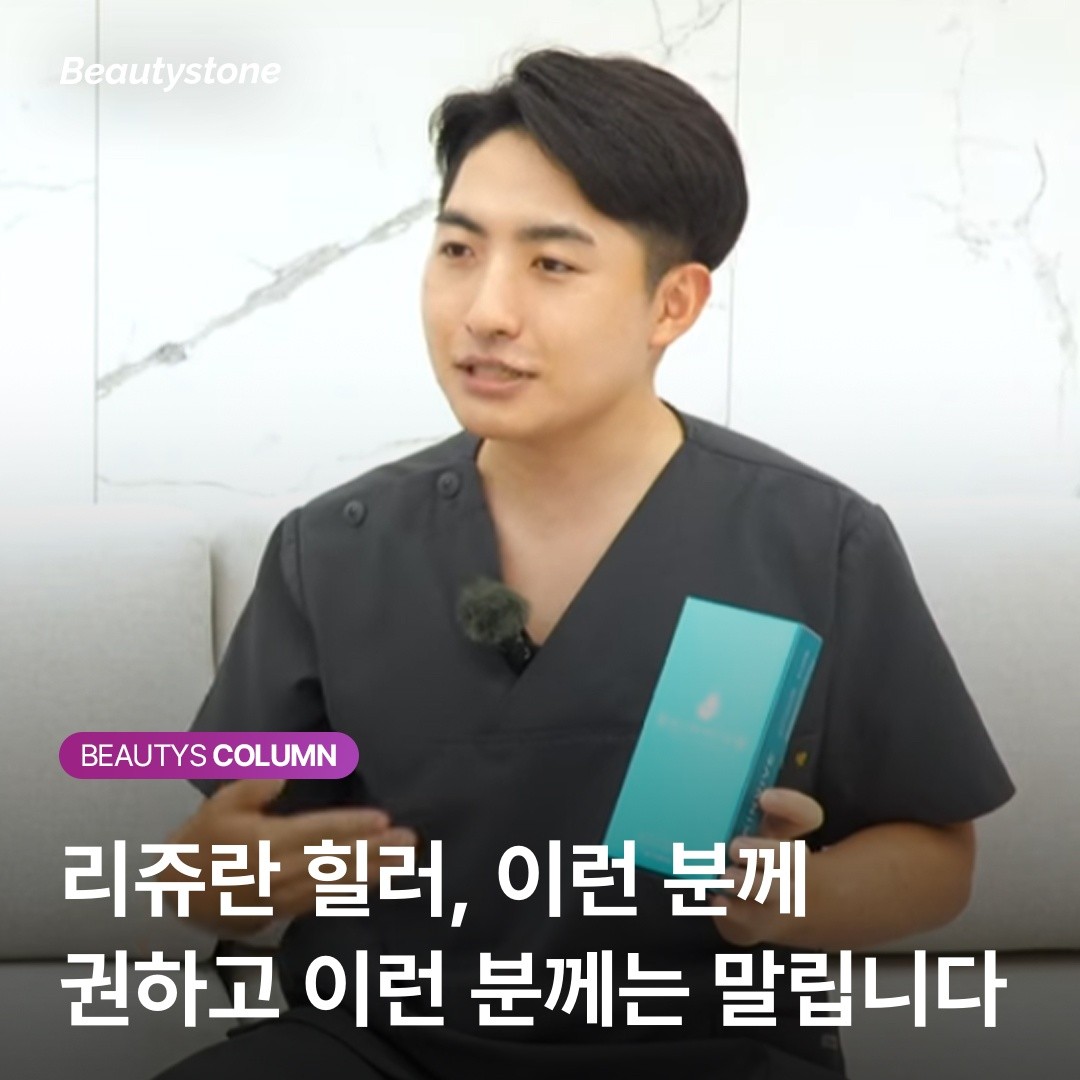
▶What is the real effect of Rejuran HB? A doctor compares it for you

Honestly, for people in their 20s, regenerative injections,
I was unsure about them at first too
Director Wi Young-jin, Beauty's Doctor
Check this first before reading
Q. I'm in my 20s,
isn't Rejuran always the answer?
A. No. Depending on the skin condition in your 20s
there are quite a few people for whom Juvelook is a better fit.
Q. Why do recommendations differ even among people in their 20s?
A. Whether dermal damage comes first,
or volume and elasticity loss comes first
the target layer differs.
These days, among clients in their 20s in the clinic,
this is one of the most common questions I get.
"Doctor, should I get Rejuran or Juvelook?"
To be honest, even 5 years ago, I didn't usually recommend
regenerative injections to people in their 20s.
I thought, "Isn't it still too early?"
But after doing several hundred cases,
my thinking changed a bit.
There are definitely times when people in their 20s need regenerative injections,
and if you get them at the right time,
the effects last much longer.

So what exactly is different here?
Rejuran is a regenerative injection
that injects PN (polynucleotide) ingredients
extracted from salmon DNA into the dermal layer.
Unlike Juvelook, Rejuran
focuses on repairing skin damage itself and restoring the dermis,
and
Juvelook uses PDLA (polylactic acid)
to induce collagen production and
is designed to boost volume and elasticity together.

This is where misunderstandings often arise
Director Wi Young-jin's
Key Insight
"In your 20s, Rejuran? Juvelook?
For 20-something clients in Hapjeong and Hongdae,
I’m sharing the criteria I actually use to recommend."
— Director Wi Young-jin (Beauty Stone Clinic, Hongdae)
Rejuran for your 20s, Juvelook for your 30s and up?
A lot of people think this,
but honestly, I don't use that formula.
I decide based on skin condition, not age.
A 28-year-old client who visited last month came in for acne scars,
had already received Rejuran four times elsewhere,
but said they didn't feel much effect.
When I examined the skin, the scars themselves were shallow,
but the cheek area had already lost elasticity,
and hollowing under the cheekbones had begun.
For someone like this, Rejuran alone isn't enough.
We combined it with Juvelook for two sessions,
and only then they said, "Ah, this is it."
Director Wi Young-jin's Key Summary
Being in your 20s doesn't automatically mean Rejuran is the answer.
If your main concerns are pores, scars, or oil-moisture imbalance, Rejuran is the choice,
but if you already see hollow cheeks and reduced elasticity,
Juvelook is the better fit.
If you have both, combining them is the right answer.

Customized Guide by Skin Type for Clients in Their 20s
Type | Main Concerns | Recommended Treatment |
Type A (early to mid-20s) | Pores, acne scars, skin texture | Rejuran 3~4 sessions |
Type B (late 20s) | Cheek hollowness, beginning loss of elasticity | Juvelook 2 sessions |
Type C (combined type) | Scars + loss of elasticity | Rejuran + Juvelook combined |
Regenerative injections are still injections, so
bruising, swelling, and temporary nodules can occur.
With Juvelook in particular, lumps
can sometimes be felt early on.
Most settle within 2~3 weeks,
so I don't recommend it right before an important event.
The Three Most Common Questions in the Clinic
Q1. Rejuran and Juvelook,
can they be done together?
Yes, for combined types,
I actually recommend combining them more.
However, spacing them 2 to 4 weeks apart
reduces the risk of swelling and nodules
and is easier for the skin to tolerate.
Q2. How much does it cost, and how many sessions are needed?
Rejuran is usually 3~4 sessions at 3~4 week intervals,
and for Juvelook, about 2 sessions are enough for many people.
Results typically last around 8 to 12 months.
Q3. Any precautions after the procedure?
Avoid makeup, saunas, and alcohol on the day,
and avoid strong irritation for at least a week.
If you got Juvelook, gently massage the injection area 2~3 times a day
to help prevent lumping.
I'll go into this in more depth in the next post.
This was Wi Young-jin.
Read more
▶Is there a dermatology clinic in Hongdae that really treats acne properly?
▶Depressed scars disappear with one CUREjet session? Why that claim is dangerous
▶"Will one CUREjet session fill in all depressed scars?" The reality, according to a doctor
▶Treating acne scars before a wedding, why 6 months before the wedding is the golden time
▶What is the real effect of Rejuran HB? A doctor compares it for you
Latest post
Latest post

Lifting
울쎄라와 울쎄라 프라임, 같은 초음파 리프팅인데 깊이와 통증은 어떻게 다를까요?
울쎄라 프라임은 울쎄라의 다음 모델 — 작동 원리는 같고 핸들링과 통증 체감이 달라진 차이를 짚어봐요.

skin
리쥬란과 리쥬란 HB, 같은 연어 성분인데 피부 보습과 탄력에서 무엇이 어떻게 다를까요?
리쥬란 HB는 일반 리쥬란에 히알루론산을 더한 버전 — 회복 성분은 같고 보습·차오름이 더해진 차이를 짚어봐요.

skin
포텐자와 시크릿RF, 같은 마이크로니들 고주파인데 흉터와 모공에서 무엇이 다를까요?
포텐자와 시크릿RF는 같은 고주파 니들 계열 — 원리는 같고 팁 선택 폭과 깊이 운용이 달라진 차이를 짚어봐요.

Lifting
소프웨이브와 슈링크, 같은 초음파 리프팅인데 통증과 다운타임은 실제로 어떻게 다를까요?
소프웨이브는 진피 중간층, 슈링크는 깊은 근막층 — 같은 초음파지만 깊이가 달라 통증과 다운타임이 갈리는 차이를 짚어봐요.

Lifting
인모드와 올리지오, 같은 고주파 리프팅인데 턱선 정리에서 통증과 효과는 어떻게 다를까요?
인모드는 두 전극 사이를 얕고 넓게, 올리지오는 진피 전체를 깊게 — 같은 고주파지만 방식이 달라 통증과 횟수가 갈리는 차이를 짚어봐요.

Lifting
소프웨이브와 온다, 초음파 리프팅과 마이크로파 리프팅은 효과와 회복이 어떻게 다를까요?
초음파 리프팅 소프웨이브와 마이크로파 리프팅 온다, 어느 쪽이 내 고민에 맞을지 깊이와 느낌으로 나눠봐요.
1:1 Custom Approach
1:1 Consultation Whatsapp
🌸 Beautystone Clinic attends the Meditox Bangkok Cadaver Workshop 🌸
1:1 Custom Approach