

When to use vitamin C, where it fits with toner and SPF, and pairing with retinol safely.
Published -
Updated -

Author
Wi Young-jin · Chief director
Seoul National University College of Medicine · Seoul National University Hospital Specialist
→
Many of you have probably stood in front of your vanity with a bottle of vitamin C serum, hesitating and wondering, "Should I apply this in the morning or at night?" Some articles tell you to apply it after toner, while others say to apply it before sunscreen. Once it's in your hands, the correct order can feel quite confusing.
To give you a quick answer: vitamin C serum fits best into your morning routine. Simply smooth a thin layer over clean, freshly washed skin after your toner and before your cream, then finish with sunscreen. While applying it at night isn't a problem, it works beautifully in the morning as an ingredient that helps mitigate the irritation your skin accumulates throughout the day. If you are using it for the first time, starting every other day rather than daily is a gentle way to see how your skin responds and gradually build up.
This content is a helpful summary of treatment information from Beautystone Hapjeong.
What You'll Learn in This Guide
Whether it is better to use vitamin C serum in the morning or at night
The correct application order among toner, serum, cream, and sunscreen
How to identify ingredients that pair well together versus combinations that can overwhelm the skin
How to adjust concentration and frequency to minimize irritation as a beginner
A Gentle Introduction to What Vitamin C Serum Does for Your Skin
Vitamin C serum is an antioxidant that works on the skin's surface to neutralize free radicals* caused by UV rays and environmental stressors. If sunscreen is the shield that blocks out light, vitamin C serum acts like a supportive partner that tidies up any irritation that manages to break through. This is why rather than competing, the two work hand-in-hand as a perfect team for your morning routine.
Free Radicals*: Unstable oxygen molecules produced in the body by UV rays, stress, and other factors. As they accumulate, they can contribute to skin aging, so helping to reduce them with antioxidants is highly beneficial.
A term you will see often is ascorbic acid*, which is the most basic and pure form of vitamin C. While its benefits are well-established, it is highly sensitive to air and light. If your serum has turned yellow, it is often a sign that oxidation has begun. Studies explaining that pure ascorbic acid works as an antioxidant to help delay photoaging by reducing UV-induced free radicals and sunburn cells, yet remains highly unstable when exposed to air, make it easy to understand why we are advised to use it quickly after opening and to store it in a cool, dark place.
Ascorbic Acid*: The purest form of vitamin C. While it absorbs status-efficiently, it oxidizes easily in the presence of air and light, requiring mindful storage.
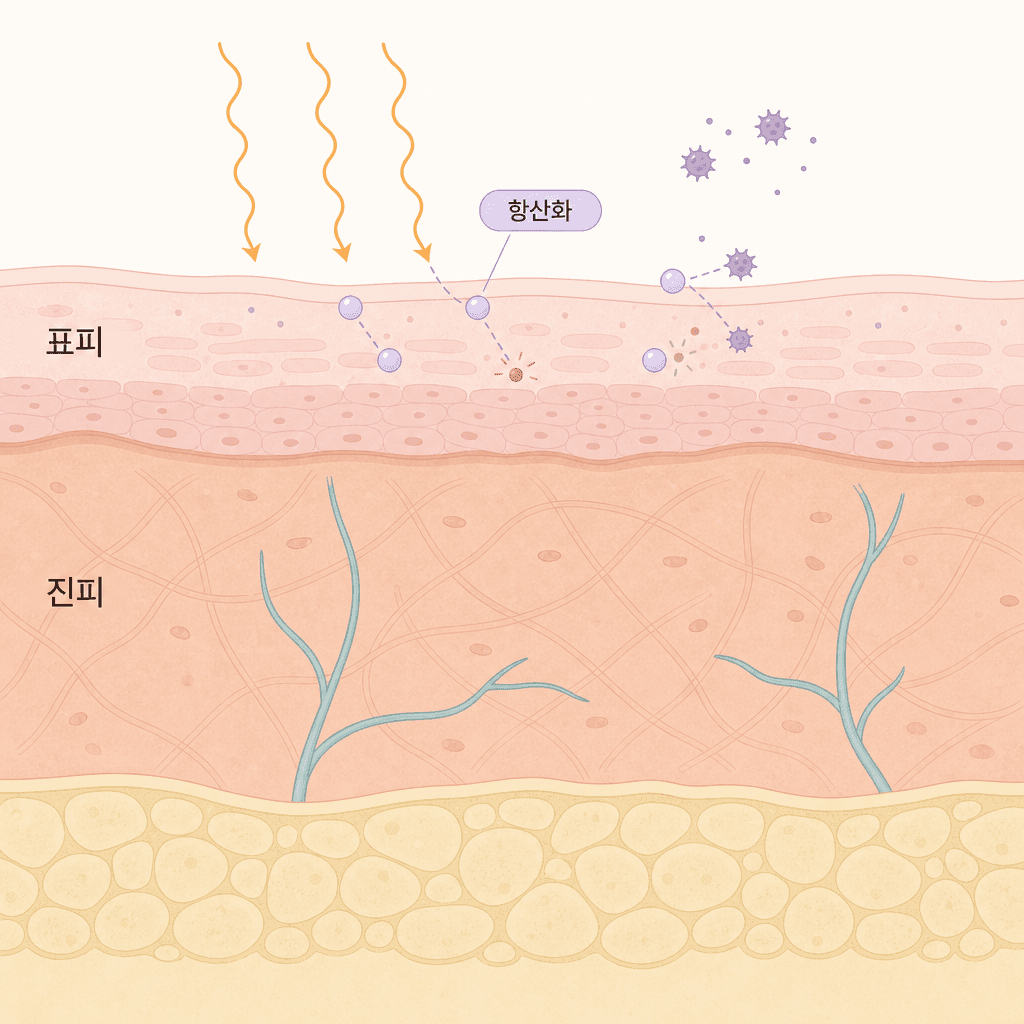

Morning vs. Night, and the Ideal Layering Order
One of the most common questions we hear is: "Should I use it in the morning or at night?" To put it simply, because its primary benefit is antioxidant protection, using it in the morning to defend against daytime irritation makes the most sense. However, if you prefer to separate it from night-use ingredients like retinol, or if your morning routine already feels too busy, using it at night is perfectly fine. Here is a quick summary comparing both routines:
Feature | Morning Use | Night Use |
|---|---|---|
Why it works | Preemptively reduces daytime irritation | Allows separation from retinol |
Good pairings | Works as a team with sunscreen | Focused on hydrating creams |
Things to note | Always layer with sunscreen | Avoid layering with other strong active ingredients |
Recommended for | Those with frequent outdoor activities | Those looking to simplify their morning skincare routine |
For the application order, just remember the general rule of thumb: apply from the thinnest to thickest texture. The flow goes: Cleanser → Toner → Vitamin C Serum → (Another serum, if needed) → Moisturizer → Sunscreen. Since vitamin C serum is usually lightweight and watery, patting a thin layer on after your toner and letting it absorb for about 30 seconds before applying cream will prevent any pilling. Always finish with sunscreen as the final step over your vitamin C serum in the morning. Using vitamin C serum alongside sunscreen in the morning allows the antioxidant and the UV blockers to complement each other, which is widely known to help delay photoaging* caused by UV light.
Photoaging*: Skin aging caused by long-term, cumulative exposure to UV rays. It refers to changes such as wrinkles, hyperpigmentation, and loss of elasticity that happen due to light exposure, independent of chronological age.

Pairing Guide: Ingredients to Mix and Those to Separate
Rather than using it alone, vitamin C serum is even more stable when you find its perfect match. Pairing it in the same routine with fellow antioxidants like vitamin E, or hydrating champions like hyaluronic acid works beautifully. On the other hand, there are combinations that can easily sensitize your skin when applied at the exact same time, so separating them by morning and evening is a much safer approach when starting out.
Vitamin E & Ferulic Acid — Often formulated together with vitamin C as they support and stabilize each other’s antioxidant power.
Hyaluronic Acid — Applying this after your vitamin C serum during your hydrating step helps lock in moisture and reduces dryness.
Retinol — Because both are highly active ingredients, layering them at the same time can cause irritation. It is best to use vitamin C in the morning and retinol in the evening.
AHA & BHA Exfoliants — Combining acidic ingredients can lead to stinging; avoid layering strong treatments on the same day.
Benzoyl Peroxide — Can oxidize and decrease the efficacy of vitamin C, so it is best to use them at different times of the day.
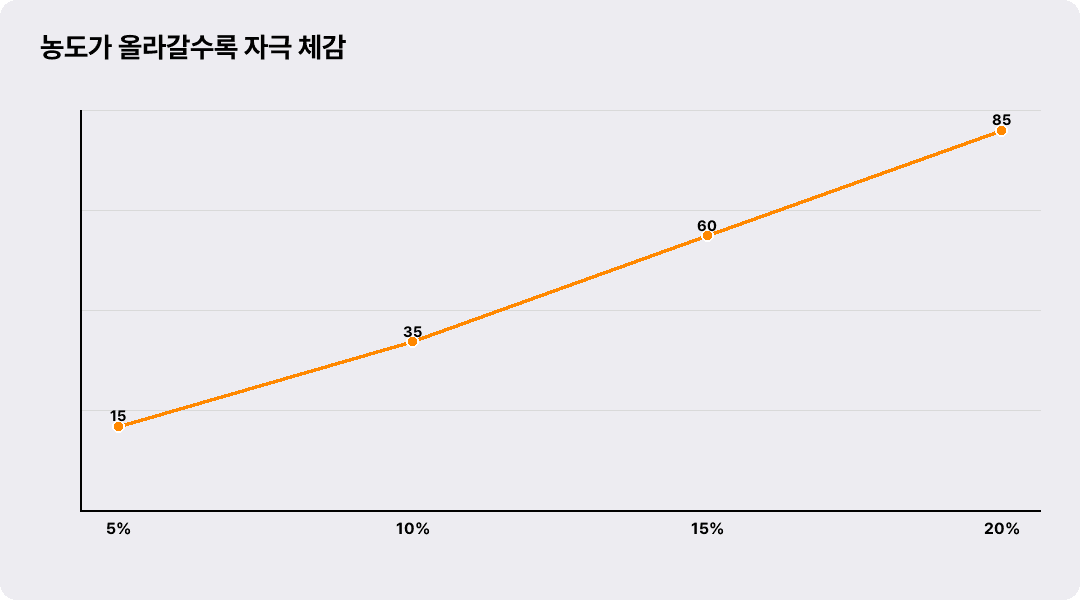
Many people also ask about the ideal concentration to avoid skin irritation. For skincare beginners, we generally recommend starting with a low concentration and gradually increasing it as your skin adapts. Often, the potential for irritation increases along with higher concentrations. As research suggests that skin cells accumulate vitamin C at millimolar levels—with the epidermis maintaining levels 2 to 5 times higher than the dermis—and that it absorbs optimally in the low-pH ascorbic acid form, a higher concentration isn't always the sole answer. Finding the precise baseline that your unique skin can comfortably tolerate is key.

Why Choose Beautystone Hapjeong?
At Beautystone Hapjeong, rather than simply recommending popular ingredients, we take the time to closely examine your current skin condition and daily habits. Even with the same vitamin C serum, the ideal concentration and application time can vary depending on how much UV exposure you receive daily and whether you are using other active ingredients. We love to guide you through a step-by-step adjustment as we monitor your skin's unique response. As a warm, welcoming clinic located just a short walk from Hapjeong Station, we are able to take a highly personalized approach, making sure we tailor each next step carefully to your skin's progress.

A Gentle, Step-by-Step Routine for Beginners
If you are introducing vitamin C serum to your skin for the first time, it is safest to give your skin time to adapt by gradually increasing the frequency, rather than applying it daily from day one. Following these steps can help minimize potential irritation:
Week 1: Every other day — Apply a thin layer once every two days after your morning cleanse.
Start small — A single pea-sized drop is more than enough for your entire face.
Avoid the delicate eye and lip areas — Keep it away from these thin, sensitive zones initially, and gently expand the area as your skin becomes accustomed.
Always follow with sunscreen — Be sure to apply sunscreen as your final morning step to protect the light-sensitive formula.
Increase frequency based on skin response — If you do not experience redness or stinging, you can move to daily use by week two; if your skin remains comfortable, you can slowly look into higher concentrations.
A mild tingling sensation immediately after application is quite common. However, if redness persists, or if you experience itching or burning, it is best to take a break for a few days and restart with a lower concentration. Because everyone’s skin chemistry is unique, those with breakout-prone or sensitive skin will find it much safer to introduce new products one at a time, rather than changing several steps at once. Since this guide contains general educational information, please consult with a medical professional to establish the safest concentration and ingredients for your specific skin type.

Frequently Asked Questions
Q. Does applying vitamin C serum make my skin more prone to sunburn?
A. Vitamin C serum itself does not make your skin more sensitive to the sun. In fact, it actually helps to soothe and mitigate the irritation caused by UV rays. However, it does not replace sunscreen, so please make sure to apply your UV defense over your morning vitamin C routine for the best antioxidant and protective results.
Q. My vitamin C serum has turned yellow. Can I still use it?
A. If your serum has turned a dark yellow or brown, it is a clear sign that oxidation has occurred. Because oxidized formulas lose their efficacy and can occasionally irritate the skin, it is best to replace the product. For your next bottle, keeping it in a cool, dark place and using it quickly after opening will help maintain its freshness.
Q. Can I use retinol and vitamin C serum together?
A. Since both are highly active ingredients, layering them together at the identical time can cause skin sensitivity. To minimize irritation, try splitting them up by using vitamin C in the morning and retinol at night. If you are new to both, it is safest to let your skin fully adapt to one ingredient first before introducing the other.
Q. Do I have to apply it every single day to see results?
A. While consistent daily use is helpful, you don't need to force yourself to use it daily from the start. Beginning with every other day and slowly increasing the frequency is the best way to prevent irritation. If your skin feels comfortable and experiences no stinging, moving to daily use is wonderful; if your skin is on the sensitive side, keeping an every-other-day routine is still highly effective.
Recommended Reading


Hair Removal
레이저 제모 1회에도 남는 몫이 있어요 — 밀도를 모자이크로 보는 법

Tattoo removal
Why Extremity Tattoos Are Slower to Remove

Tattoo removal
Tattoo Removal Cost: Why Quotes Vary by Area

Tattoo removal
Unused Tattoo Removal Sessions: What Happens?

Lifting
Forehead Thread Lifting: How Far Can It Go?

skin
Skin Booster Prices: What to Check in a Quote