

UVA comes through glass and cloud. Which situations need sunscreen, and which really do not.
Published
Updated

Author
Wi Young-jin · Chief director
Seoul National University College of Medicine · Seoul National University Hospital Specialist
→
You spent the whole day inside, and it was not even a windowless office. Somewhere around evening you think, I probably did not need sunscreen today. Overcast days do the same thing. The sun is nowhere to be seen, so the UV surely is not either, and reapplying something sticky feels like an errand you can skip.
Here is the short answer first: being indoors or under cloud does not make ultraviolet light go away. The UV that comes through window glass and the UV that comes down through cloud are simply harder to notice, and your skin registers them either way. The wavelengths that drive skin ageing pass through glass especially well, so there is a real gap between the feeling of "I did not go outside" and your actual exposure. None of which means slathering sunscreen over your whole body every day. It means knowing which situations are worth covering, which makes the whole thing much less fussy.
This is general information from Beautystone, a small skin clinic in Hapjeong, Seoul.
What you will learn
Which type of ultraviolet light passes through window glass
How much UV still reaches you on an overcast day
How much protection each situation really calls for
How everyday exposure adds up into photoaging, and how to slow it
The UV you cannot feel is the one to watch
Ultraviolet light splits into two broad camps: UVA* and UVB*. What we usually mean by "I got some sun" or "my face is burning" is mostly UVB. It is the shorter wavelength, it acts mainly on the outer layer of skin, and it produces redness or burning fast enough that you notice on the day. Stay out under a bright sky for a while and you know about it.
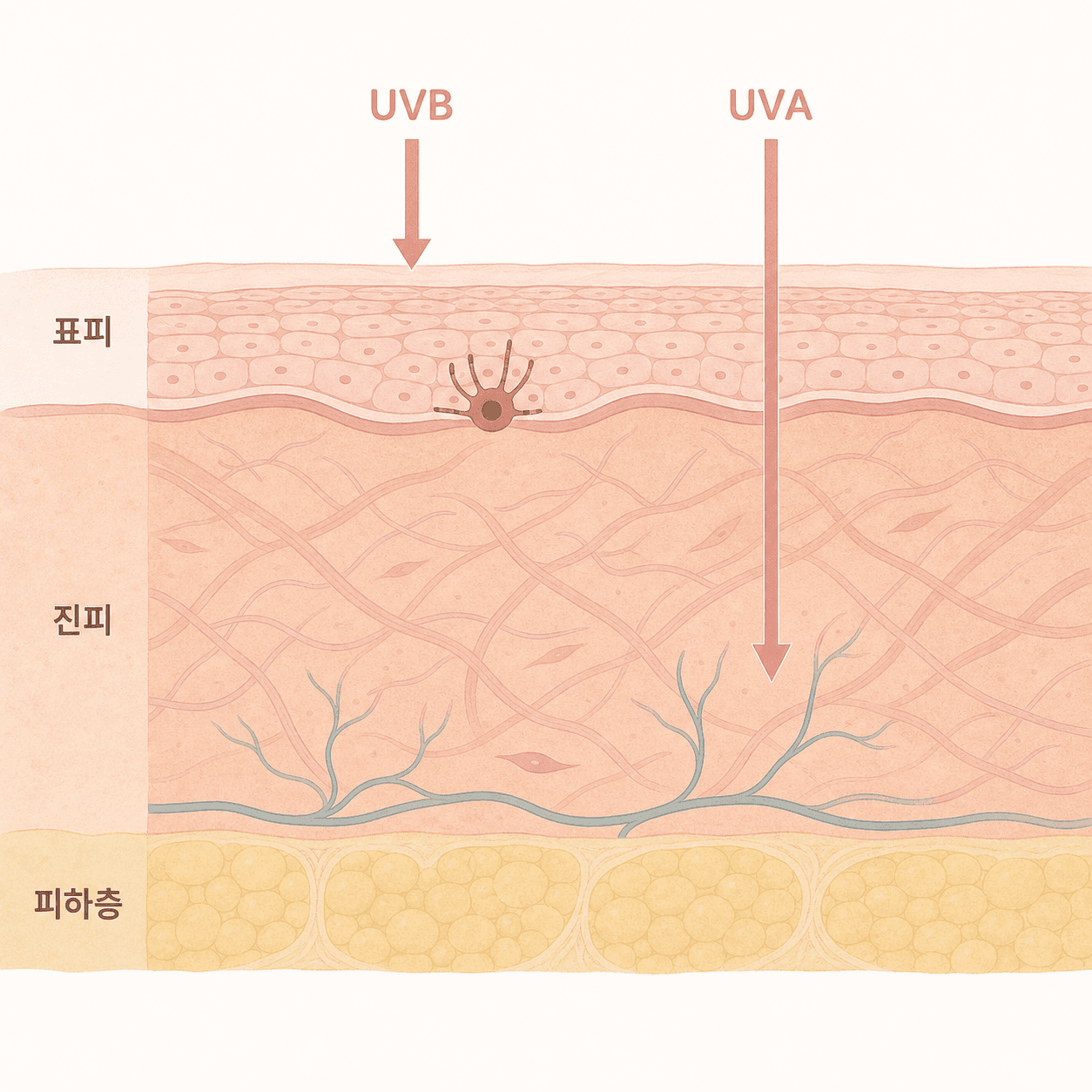
UVA*: the longer wavelength, which reaches down into the dermis. It does not redden skin on the spot, but it slowly drives changes such as wrinkling, pigmentation and loss of firmness.
UVB*: the shorter wavelength, which acts mainly on the epidermis. It causes the sunburn-type redness and burning you notice relatively quickly.
The trouble is UVA, precisely because you feel nothing. Being longer, it does not stop at the surface but reaches the dermis, as in the account of how UVA penetrates deep into the skin layers and generates reactive oxygen species that drive both acute and chronic change. The dermis is where the collagen and elastin that hold skin firm live, and when that layer takes repeated hits the result is not visible within days. It shows up years later as fine lines and slackness. Because nothing warns you at the time, this is the wavelength that rewards steady habits.
Window glass does a poor job of stopping UVA
Indoors is a different conversation once you are next to a window. Ordinary glass filters out a good deal of UVB, but the longer UVA wavelength passes through it. As the guidance noting that UVA comes through window glass and can accelerate skin ageing such as wrinkles and dark spots points out, a sunny window seat, or the driver's side of a car, exposes you more than it feels like. People who drive for a living are often described as showing more ageing on their window-side cheek than the other one.
So the useful question is not "am I indoors" but "where am I sitting, and for how long". Well back from any window, exposure is low. Spend most of the day in a sunlit window seat and it is worth applying sunscreen even though you never went out. Broken down by situation, it looks roughly like this.
Situation | UV exposure | How much protection |
|---|---|---|
Indoors, away from windows | Very low | Low |
Sunlit window seat | Moderate (UVA) | Moderate |
Driving or long journeys | Moderate to high (UVA) | High |
Outdoors on an overcast day | Moderate to high | High |
Outdoors under clear sky | High | Very high |
Cloud lets a lot of ultraviolet through
When the sun is hidden it feels like the UV has taken the day off, but cloud does not block it as thoroughly as you would expect. As above, visible brightness and actual ultraviolet levels move independently of each other. Even on a heavily overcast day, a substantial share of UV comes through the cloud layer and reaches the ground.
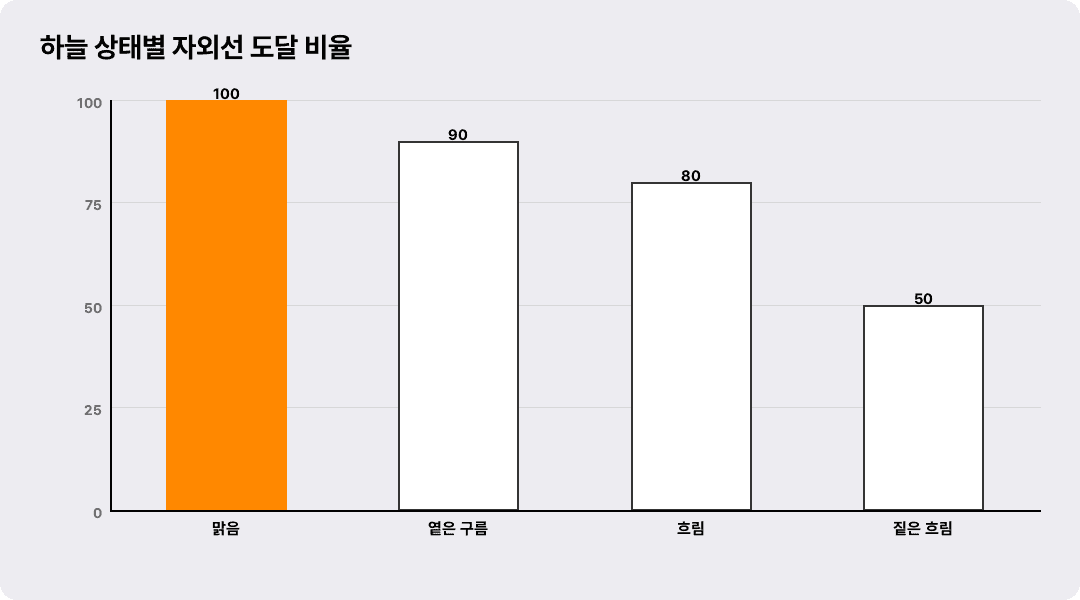
Thin cloud in particular scatters sunlight in all directions, so UV can arrive from several angles rather than one. And because the glare is gentler, you tend to stay out longer, which adds to the total. Rain and thick, dark cloud do cut the amount that gets through noticeably, but "it is cloudy, so I can skip it" is still a hard rule to defend. Popping out briefly is not worth worrying about; a long stretch outdoors on a grey day is worth covering.

Why it helps to have your skin looked at
Beautystone is a small skin clinic in Hapjeong, Seoul, and we tend to start with what your skin is doing right now rather than with a treatment. The same amount of sun lands differently depending on your skin tone, how readily you pigment and how your days are actually shaped, so we try to separate what home care handles perfectly well from the signs that are worth having examined. Being small and a short walk from Hapjeong Station means we can go through your skin and your everyday habits together and decide the next step from there.

Small daily doses are what add up to photoaging
A single day of UV looks like nothing. Stack those days up over years and you get photoaging, which is not the ageing that arrives on its own with time but the kind ultraviolet exposure brings forward. As the explanation that chronic sun exposure causes skin ageing such as wrinkling, roughness and pigmentation describes, deep lines and uneven tone are usually the sum of a long stretch of small exposures rather than the work of one afternoon.
Which is why protection works better as a background habit than as something reserved for big days out. Scaling the effort to the situation keeps it manageable.
Window seat or long drive — apply to your face even though you are technically indoors
Outdoors on a grey day — treat it much like a clear one
Nipping out briefly — genuinely not worth agonising over
Beyond sunscreen — curtains or blinds indoors, a hat or parasol outdoors, both help
Above all, chasing perfection until you give up entirely is worse than covering the high-exposure situations first and letting the rest go. Sunscreen slows photoaging considerably, but no product blocks every ray, so physical shade earns its place. If pigmentation or wrinkling has already reached the point where it bothers you, home care alone does not always reverse it, and having the skin looked at is the safer route. What suits you, and what any of it costs, depends on your skin and the season, so settle that with the clinician who examines you.
Frequently asked questions
Q. Do I need sunscreen on a day I never leave the house?
A. If you spend most of it well back from the windows, you do not have to apply it every time. But if you sit in a sunlit window seat for hours, or keep the curtains open all day, it is worth covering your face at least. Window glass does a poor job of stopping UVA.
Q. What about stepping out briefly on a cloudy day?
A. A quick trip is not worth much worry. But a substantial share of UV comes down through cloud, so if you expect to be outdoors for more than about 30 minutes it is reassuring to have applied some. Grey days are exactly when people relax about it, because there is less glare to remind them.
Q. Do I need protection while driving?
A. Yes. The driver's side of your skin is easily exposed to UVA coming through the glass. If you drive long distances, or commute for a long stretch every day, apply to your face and arms. UV-filtering window film or long sleeves help alongside it.
Q. Will sunscreen alone stop photoaging completely?
A. It helps considerably, but no sunscreen blocks every ray. Pair it with physical shade, such as a hat, a parasol or simply staying out of direct sun. Pigmentation and wrinkling that have already set in are not always reversible with home care alone, so if they bother you, it is worth having the skin looked at.





Contouring & Volume
Glabella Botox Side Effects: Droopy Eyelids

Contouring & Volume
Juvelook Volume Not Working After 3 Sessions?

Contouring & Volume
Hip Dip Filler Before and After: 4 Checks

Body
Potenza Treatment Interval: Why 4 Weeks?

Lifting
Ultherapy Before and After: Why Wait 90 Days?

Contouring & Volume
Belotero Revive Cost: 2cc Price vs. 3 Sessions