

When to wear sunscreen after lifting or laser, plus tips to prevent summer dark spots.
Published
Updated

Author
Wi Young-jin · Chief director
Seoul National University College of Medicine · Seoul National University Hospital Specialist
→
You just booked a lifting or laser treatment for that summer glow-up, and now you're staring at your sunscreen bottle wondering: can I even use this yet? If you've asked that question, you're not alone. It's one of the most common concerns we hear from patients heading into the sunniest months of the year.
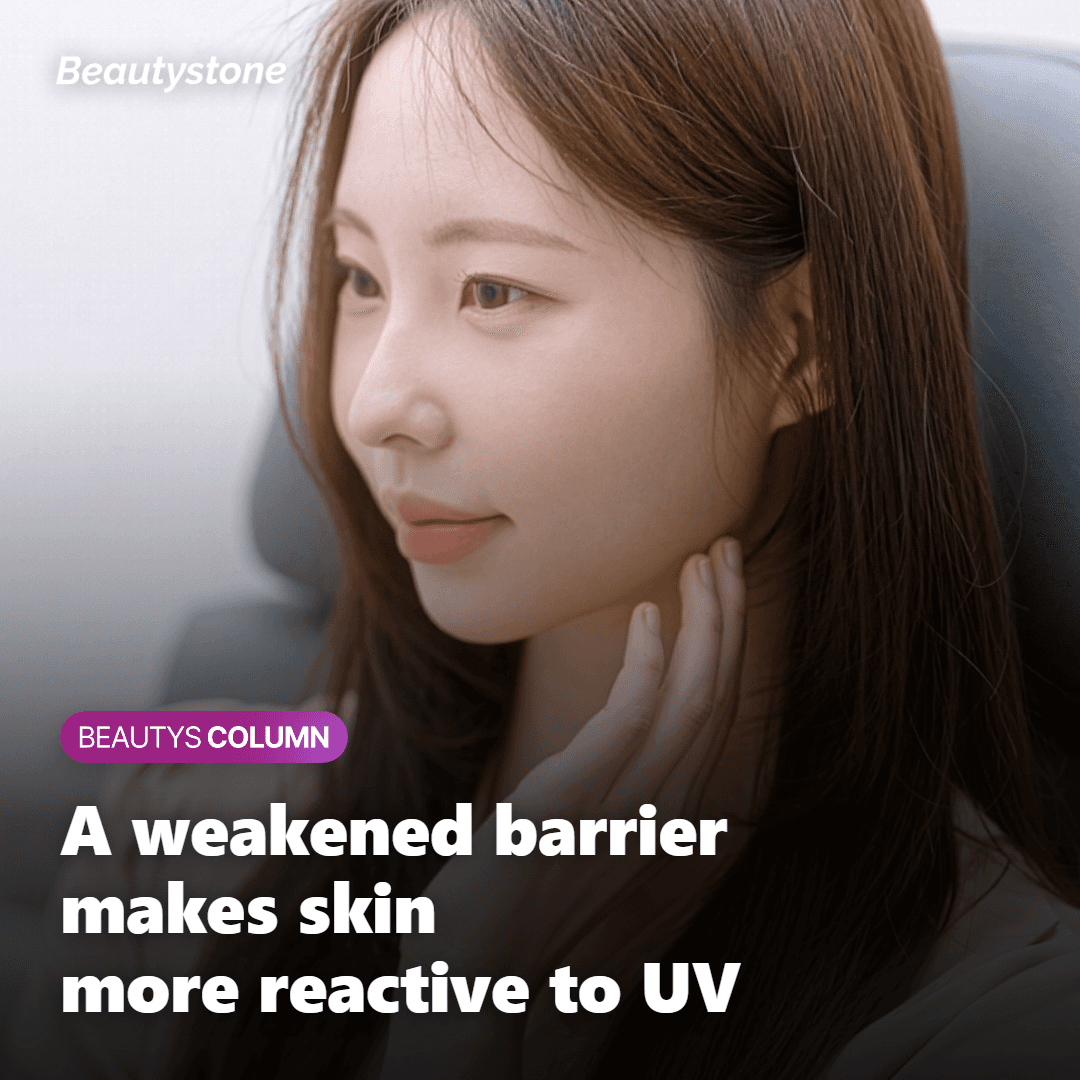
Here's the thing — after an energy-based treatment, your skin's protective barrier is temporarily weakened, which makes it more reactive to UV light. Slapping on any old sunscreen at the wrong moment can do more harm than good, and skipping protection altogether can undo the results you paid for. Timing and technique both matter.
In this article, we'll cover why post-treatment skin needs extra sun protection, when you can safely start applying sunscreen based on your procedure, how to choose the right formula, and the aftercare habits that help prevent dark spots all summer long.
Why Does Post-Treatment Skin Need Extra Sun Protection?
Lifting and laser treatments deliver energy — heat, radiofrequency, or ultrasound — into your skin to stimulate collagen or target pigment. That process temporarily disrupts the skin's surface barrier, leaving it more sensitive and more prone to inflammation than usual.
When freshly treated skin meets strong UV rays, that sunlight can ramp up melanin production. The result can be post-inflammatory hyperpigmentation (PIH) — those stubborn brown spots that show up after the skin has been irritated. UV damage also tends to accumulate over time and surface later, so a sunny afternoon today can mean uneven tone weeks down the road.
Summer makes all of this higher-stakes. The sun sits higher, UV index readings climb, and you're simply outside more. The American Academy of Dermatology recommends daily sunscreen regardless of season or weather, and that guidance matters even more when your barrier is still recovering. Protecting treated skin isn't just about comfort — it's how you safeguard your results and avoid unnecessary pigmentation (related research).
When Can I Start Wearing Sunscreen After Treatment?
The honest answer: it depends on your procedure and how your skin reacts. There's no single universal timeline, but the table below gives you a general sense of what to expect.
Treatment Type | Typical Sunscreen Restart | What to Watch |
|---|---|---|
HIFU / RF lifting | Same day to next day | If there's no surface wound, you can usually resume fairly quickly |
Gentle toning laser | Next day onward | Wait until redness calms, then apply gently |
Laser with scabbing | After scabs fall off | Avoid the treated spot; work around it carefully |
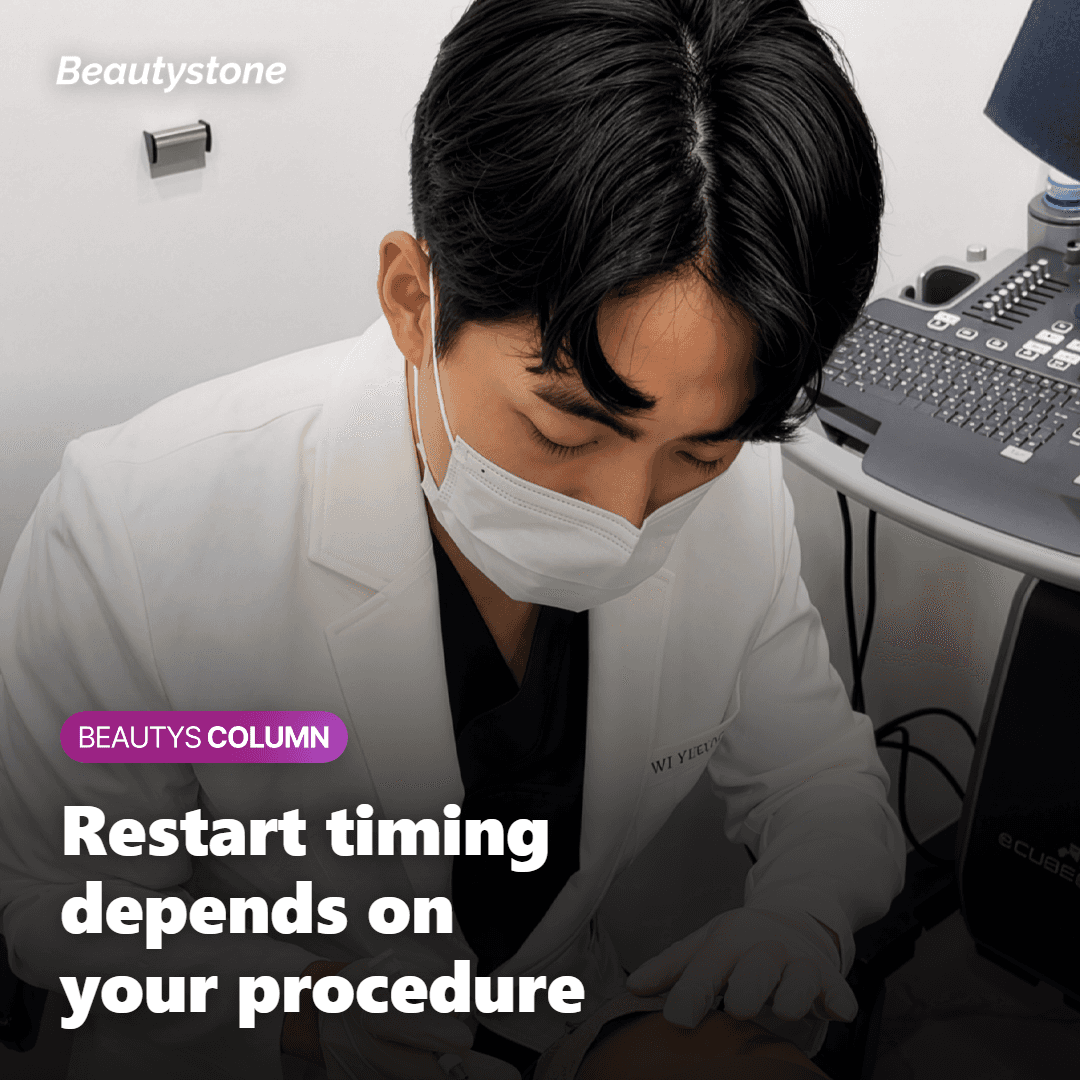
The rule of thumb: don't force sunscreen onto skin that's still stinging, scabbed, or broken. During that window, physical barriers do the heavy lifting — think wide-brimmed hats, umbrellas, and UV-blocking masks. These protect without touching a raw surface.
Because reactions vary so much from person to person, the safest move is to follow the specific timeline your clinic gives you. If they said wait 48 hours, wait 48 hours — even if your skin feels fine. Your provider knows exactly what your skin went through.
How to Choose the Right Sunscreen After a Treatment
Not all sunscreens suit freshly treated skin. When your barrier is compromised, you want a gentle, low-irritation formula. Here's how to narrow it down:
If irritation is a concern: reach for a mineral (physical) sunscreen with zinc oxide or titanium dioxide, which tend to be gentler on sensitive skin
If you sweat a lot in summer: a water-resistant formula holds up better through heat and humidity
For everyday wear: pick a broad-spectrum SPF 30 or higher that spreads easily so you're not tugging at the skin
Application matters as much as the product. Pat it on gently instead of rubbing, and don't skimp — most people under-apply, which cuts the actual protection you get. Aim for an even layer across the whole face. In summer heat, sweat and oil break sunscreen down faster, so reapply every couple of hours when you're outdoors.
And remember, sunscreen isn't a force field. Pair it with shade, smart timing, and physical cover-ups. Layering your defenses is what actually keeps pigment at bay.
Aftercare Habits That Help Prevent Dark Spots
Sun protection is the headline act, but your broader skincare routine plays a supporting role in preventing pigmentation. Right after a treatment, skin is drier and more fragile than usual, so consistent hydration helps the barrier bounce back faster. Choose a gentle moisturizer and skip harsh actives — alcohol-heavy toners and strong acids can wait until your skin has settled.
Think of this phase as keeping your skin calm. Hold off on scrubbing and exfoliating, and steer clear of heat that lingers — saunas, hot yoga, and long steamy showers can all flush the skin and raise your risk of lingering redness or dark marks. A slow, low-key routine paired with diligent sun protection gives your results the smoothest possible finish.
It also helps to be patient with your timeline. Collagen remodeling and skin recovery both take time, and results vary from person to person. Rushing back to your full routine — or your full sun exposure — is the fastest way to undo careful work.
Side Effects and Safety Considerations
Sun protection itself comes with a few things to watch. If you use a sunscreen that doesn't agree with your still-sensitive skin, you might notice redness, itching, or a mild stinging sensation. In most cases this settles within a few days. But if the reaction worsens, spreads, or comes with swelling, stop using the product and contact your provider right away — don't try to tough it out on your own.
There's a balance to strike here. Skipping sun protection raises your odds of dark spots, but wearing sunscreen isn't a license to bake in direct sun for hours either. No sunscreen offers total coverage, so when you're outside, back it up with a hat and shade. Watch for warning signs during recovery too: if you develop a fever, spreading redness, or increasing pain around a treated area, seek medical care right away rather than waiting to see if it passes.
Individual results vary, and so does how each person's skin recovers. Careful UV protection and hydration after a summer treatment are what let you enjoy both the results and the peace of mind.
The Bottom Line
Protecting recovering skin from UV is the single most important thing you can do to prevent dark spots after a summer lifting or laser treatment. Here's what to keep in mind:
Timing depends on the procedure: HIFU and RF often allow sunscreen within a day, while scabbing lasers require waiting until the skin heals
Cover up when you can't apply: hats and umbrellas protect raw skin without irritation
Go gentle and reapply: choose a mild, mineral formula and refresh it every couple of hours outdoors
Support your barrier: hydrate, avoid harsh actives, and skip lingering heat while skin recovers
Like any skin treatment, this one comes with trade-offs, and the right aftercare makes a real difference. Ultimately, the best plan depends on your skin, your procedure, and how carefully you protect it. If you're planning a summer treatment and want personalized guidance, a consultation is the best way to find out what fits you. Beautystone is a dermatology clinic in Seoul's Hapjeong area — see current offers at /en/promotion.
Frequently asked questions
Q. When can I start wearing sunscreen after a treatment?
A. It depends on the procedure and your skin. HIFU and RF lifting often allow sunscreen the same day or the next day if there's no surface wound, while lasers that cause scabbing require waiting until the skin heals. When you can't apply it yet, use hats and umbrellas instead, and always follow your clinic's specific timeline.
Q. What kind of sunscreen should I use after a treatment?
A. For freshly treated, sensitive skin, a mineral (physical) sunscreen with zinc oxide or titanium dioxide tends to be gentler. If you sweat a lot in summer, a water-resistant formula holds up better. Look for a broad-spectrum SPF 30 or higher that spreads easily so you're not tugging at the skin.
Q. Does sunscreen alone prevent all dark spots?
A. No — sunscreen alone doesn't block pigmentation completely. If you don't reapply consistently, its protection drops off. Pair it with shade, hats, and smart timing, and if you're prone to dark spots, talk to your provider about a fuller prevention plan.
Q. What should I do if sunscreen makes my skin red?
A. On sensitive post-treatment skin, a product that doesn't agree with you can cause redness or itching. This usually settles within a few days. If it worsens or doesn't improve, stop using the product and contact your provider. Seek medical care right away if you notice fever or spreading redness.


Contouring & Volume
Hip Dip Filler Before and After: 4 Checks

Body
Potenza Treatment Interval: Why 4 Weeks?

Lifting
Ultherapy Before and After: Why Wait 90 Days?

Contouring & Volume
Belotero Revive Cost: 2cc Price vs. 3 Sessions

skin
Lip Hyperpigmentation Laser: Does It Work?

Contouring & Volume
Men's Forehead Filler: Hollow or Just Lines?