

Juvelook Volume builds up slowly, so judge it 3 months after your last session. Still no change? Check the dose, then sagging. Here's what to expect.
Published
Updated

Author
Wi Young-jin · Chief director
Seoul National University College of Medicine · Seoul National University Hospital Specialist
→
If you've finished 3 sessions of Juvelook Volume and your cheeks still look the same, it's usually too early to call it. I judge Juvelook Volume 3 months after the last session, using photos taken before treatment as the baseline. If there's still no difference at that point, I look at two things in order: whether the amount injected was small for the size of the hollow, and whether the real cause was sagging rather than lost volume.
In this article, we'll cover why the change is slow, when to compare photos, how to check the dose, which reactions pass and which need care right away, and how to tell hollowing from sagging.
Quick summary
Judge Juvelook Volume with photos taken 3 months after your last session, not right after the series ends.
At that point: 23 of 24 people treated for hollow front cheeks were rated as improved.
If nothing has changed by then, check how many vials went into how many areas, and whether sagging is part of the picture.
Get care first: skin near the injection site turning white or blue, or any change in your vision.
Why Does My Face Look the Same After 3 Juvelook Volume Sessions?
Juvelook Volume isn't designed to fill a hollow on the day you're treated. It builds up gradually instead. Tiny PDLLA* particles settle under the skin, and the idea is that collagen forms around them over time, so volume rises little by little. When you check the mirror every day between sessions, those small changes are easy to miss, and it can feel like nothing's happening at all.
*PDLLA (poly-D,L-lactic acid): very small particles made from a lactic acid compound that the body breaks down slowly.
In a study of 24 people with hollow front cheeks, patients had 3 sessions spaced 3 weeks apart, and the results were assessed 3 months after the final session. Because the product doesn't add volume all at once, the day of your 3rd session, or the weeks right after it, isn't the time to judge.
A slow start isn't a sign the treatment failed. It simply means the verdict comes later than most people expect.
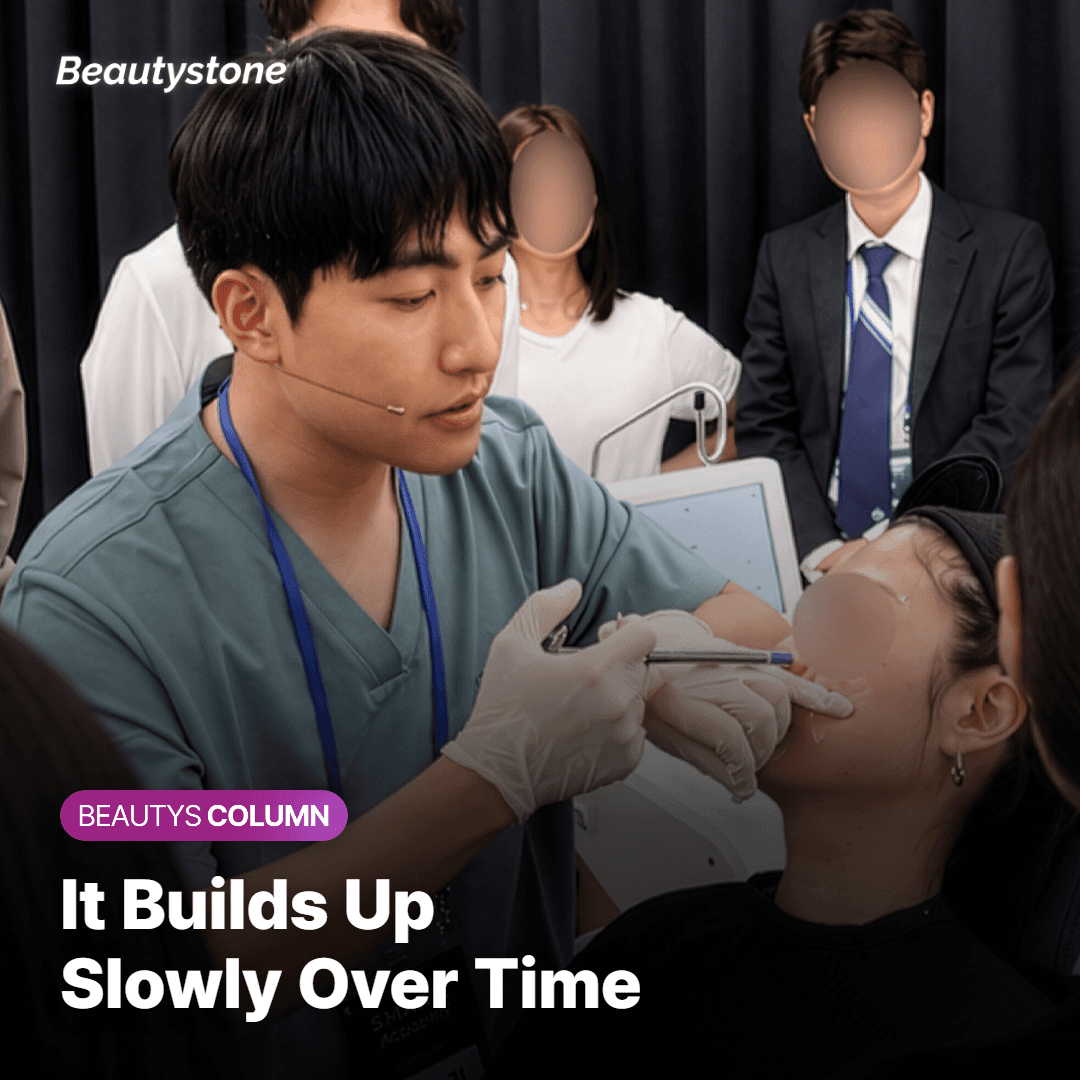
When Should You Compare Your Juvelook Volume Photos?
Compare photos 3 months after your last session against photos taken before treatment under the same conditions. Use the same lighting, the same angle and the same expression. Only then can you tell whether the shadow over the hollow has actually softened.
Here's how the 24 people with hollow front cheeks were rated 3 months after their last session:
Very much improved: 29.2%
Much improved: 45.8%
Improved: 20.8%
No change: 1 person (4.2%)
At the same point, 21 people (87.5%) said they were satisfied. There was no comparison group, so the numbers describe one set of patients rather than a result you can count on. Individual results vary.
Keep in mind that this isn't a treatment that changes your face overnight. In a split-face study on smile lines (nasolabial folds), photos were taken at 4, 8, 12 and 24 weeks, and each check showed improvement over the starting point. Because the change stacks up in small steps, saving photos from the midpoints makes it much easier to judge for yourself whether things have really stayed "the same."
No Change in Your Photos Either: Was the Dose Too Low?
Divide the number of vials used in a session by the number of areas treated, and you'll get a rough sense of it. In the front-cheek study, one vial of Juvelook Volume was mixed with 8 mL of saline and 4 mL went into each cheek, so a single session covered only the two front cheeks. If that same single vial were split among the front cheeks, temples and smile lines, each area would get that much less.
The larger the hollow area, the less a given amount tends to show. So when you feel it hasn't worked, the first step is checking your treatment records: how many vials per session, which areas, and how many mL went into each. Put those records next to your 3-month photos, and the spots that got too little usually stand out.
That said, more product isn't automatically the answer. If the real issue is sagging, adding volume won't fix it, which is the next thing to rule out.

Juvelook Volume Side Effects and Risks: What Passes and When to Get Help
Swelling and mild bruising are reactions that pass. Bruising showed up in 3 of the 24 front-cheek patients (12.5%), and all of it cleared within 10 days. Among 20 people who had Juvelook injected into their smile lines, there was only brief swelling and bruising, with no nodules or delayed reactions over 3 months.
Reactions that usually fade on their own:
Swelling around the injection points in the first days
Mild bruising that fades within about 10 days
If swelling or bruising worsens or spreads instead of fading, contact your provider right away.
Rarely, product can enter a blood vessel and cause vision problems or even blindness, which is why experts have published a separate consensus on preventing and managing this with Juvelook Volume. The signs below apply to dermal fillers in general*, and none of them is something to wait out:
Skin near the injection site turning white, gray or blue: get medical care right away
Unusual pain: get medical care right away
Blurred or changed vision: go to the nearest emergency room right away
Sudden difficulty speaking, numbness or weakness in the face, arms or legs, or trouble walking: go to the nearest emergency room right away
Face drooping, severe headache, dizziness or confusion: go to the nearest emergency room right away
*Based on US FDA guidance on dermal fillers, not on Juvelook Volume specifically.
In these cases, it's better to put treatment off (general filler guidance):
Inflammation or infection on the skin to be treated
A condition that makes it hard for bleeding to stop
A history of severe allergies or anaphylaxis
Pregnancy or breastfeeding

Hollowing or Sagging: What Should You Look at First?
If your face has sagged, I look at lifting before filling. Juvelook Volume is for filling hollows, so when cheek tissue has slid downward and the area beside your mouth looks heavier, adding more product rarely gives you the shape you want. I plan it in two parts: fill what's hollow, and lift what's dropped with something like a thread lift.
You can start sorting this out from photos. Shadowed dips under the cheekbones or at the temples point to volume loss. A jawline that looks like it's slipping, especially in profile more than from the front, points to sagging.
The two often show up together. I look at the balance of the whole face and the difference between the left and right sides before deciding which to address first. If the hollow is in the front cheek below the cheekbone, the question is whether to add a 4th session. If the jawline has dropped, a lifting treatment comes first.

Fitting Juvelook Volume Sessions Into a Trip to Korea
Unless you've had sedation that day, there's no reason to postpone your flight home after a Juvelook Volume session.
It also helps to know what a single visit can do. Juvelook Volume doesn't fill a hollow on the spot; it builds gradually, so one visit won't show you the final result and doesn't replace a full series. In the studies, sessions were spaced 3 to 4 weeks apart, and results were judged 3 months after the last one.
If bruising does appear, plan for it to take up to about 10 days to clear, which is worth knowing if you have photos or events later in your trip.
Once you're home, you can send your before photo and your 3-month photo through the consultation button on this page. If you notice any of the warning signs above, see a local doctor or emergency room first instead of waiting for a reply.
The Bottom Line: Give It 3 Months, Then Check Dose and Sagging
Before you decide on more sessions, ask how many vials would go into each area and how many mL per side. That one answer shows whether a plan actually matches the size of your hollow. From there, the real decision is simple to state: is your problem volume that's gone, or tissue that's dropped?
Beautystone is a clinic in Seoul's Hapjeong area, and you can reach us through the consultation button on this page. In your first message, include your before-treatment photo, a photo taken 3 months after your last session, and how many vials went into which areas at each session.
Sources


Contouring & Volume
Glabella Botox Side Effects: Droopy Eyelids

Contouring & Volume
Juvelook Volume Not Working After 3 Sessions?

Contouring & Volume
Hip Dip Filler Before and After: 4 Checks

Body
Potenza Treatment Interval: Why 4 Weeks?

Lifting
Ultherapy Before and After: Why Wait 90 Days?

Contouring & Volume
Belotero Revive Cost: 2cc Price vs. 3 Sessions