

Red bumps a few days later usually trace back to the first 48 hours — shaving too soon, heat, and hand contact do most of the damage.
Published -
Updated -

Author
Wi Young-jin · Chief director
Seoul National University College of Medicine · Seoul National University Hospital Specialist
→
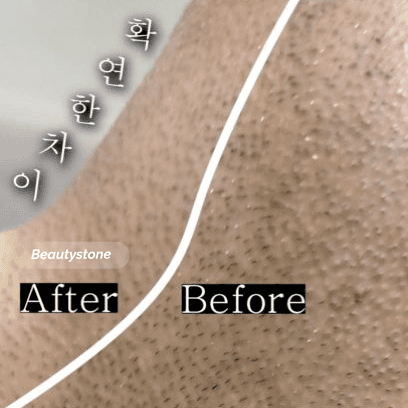
When folliculitis occurs after male beard hair removal, many worry, wondering, "Did the laser hair removal go wrong?" or "Is my skin infected?" Especially if yellow, pimple-like bumps appear a few days after laser beard hair removal, or if your skin feels stinging and turns red during shaving, you might naturally suspect folliculitis.
To get straight to the point, folliculitis after beard hair removal is rarely caused by the treatment itself. Instead, it is usually the result of a combination of factors, such as shaving irritation after the procedure, a weakened skin barrier, contact with bacteria, and sebum secretion. In particular, shaving against the grain or using a manual razor when your skin is highly sensitive immediately after the session can add irritation around the hair follicles.
Today, we will cover why folliculitis occurs after beard hair removal, when it is safe to start shaving, and what kind of post-care is necessary after GentleMax Pro Plus beard hair removal.
Why Does Folliculitis Occur After Beard Hair Removal?
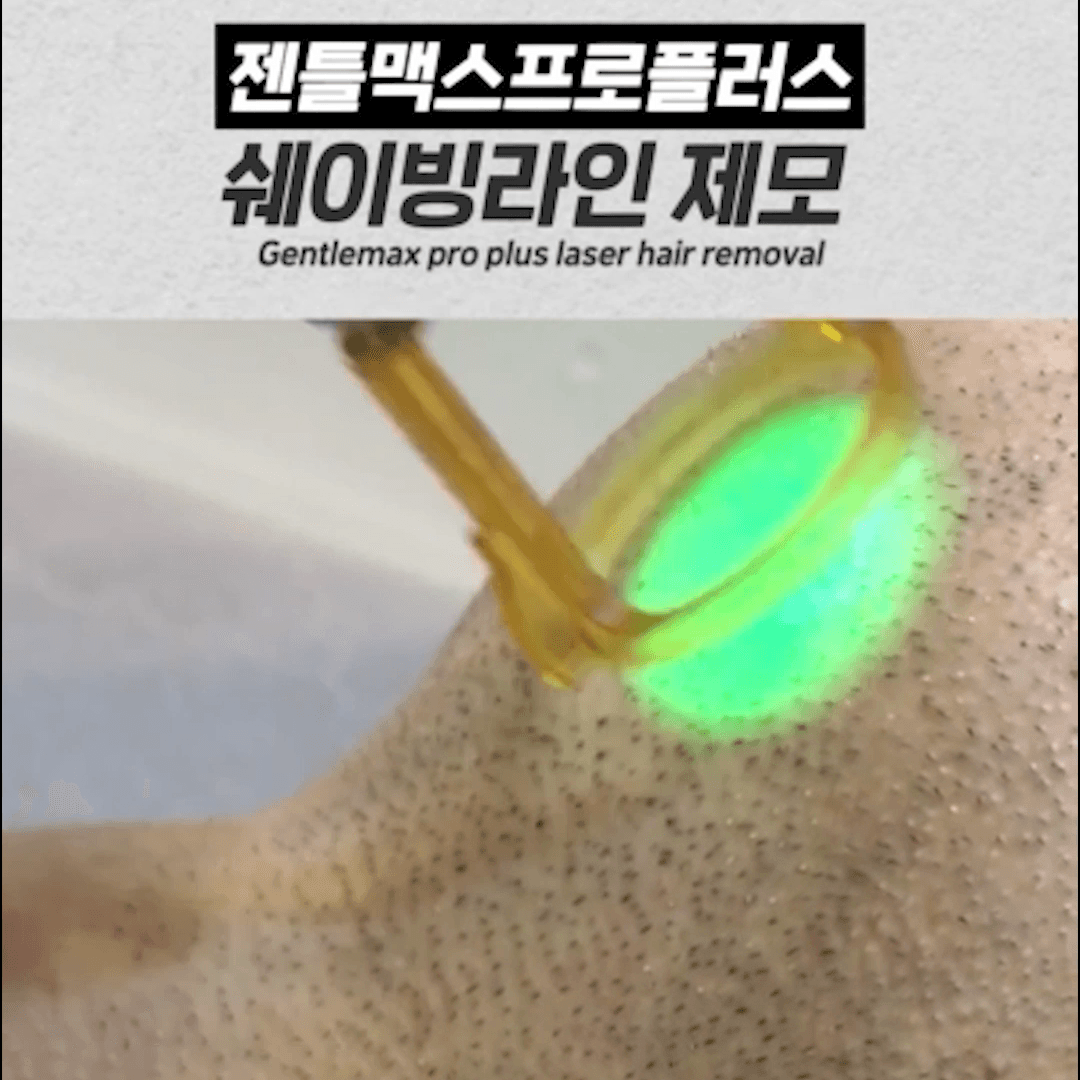
Laser beard hair removal is designed to let laser energy react to the melanin inside the hair follicles. During this process, a temporary heat stimulus is generated around the hair follicles, making the skin barrier more sensitive than usual.
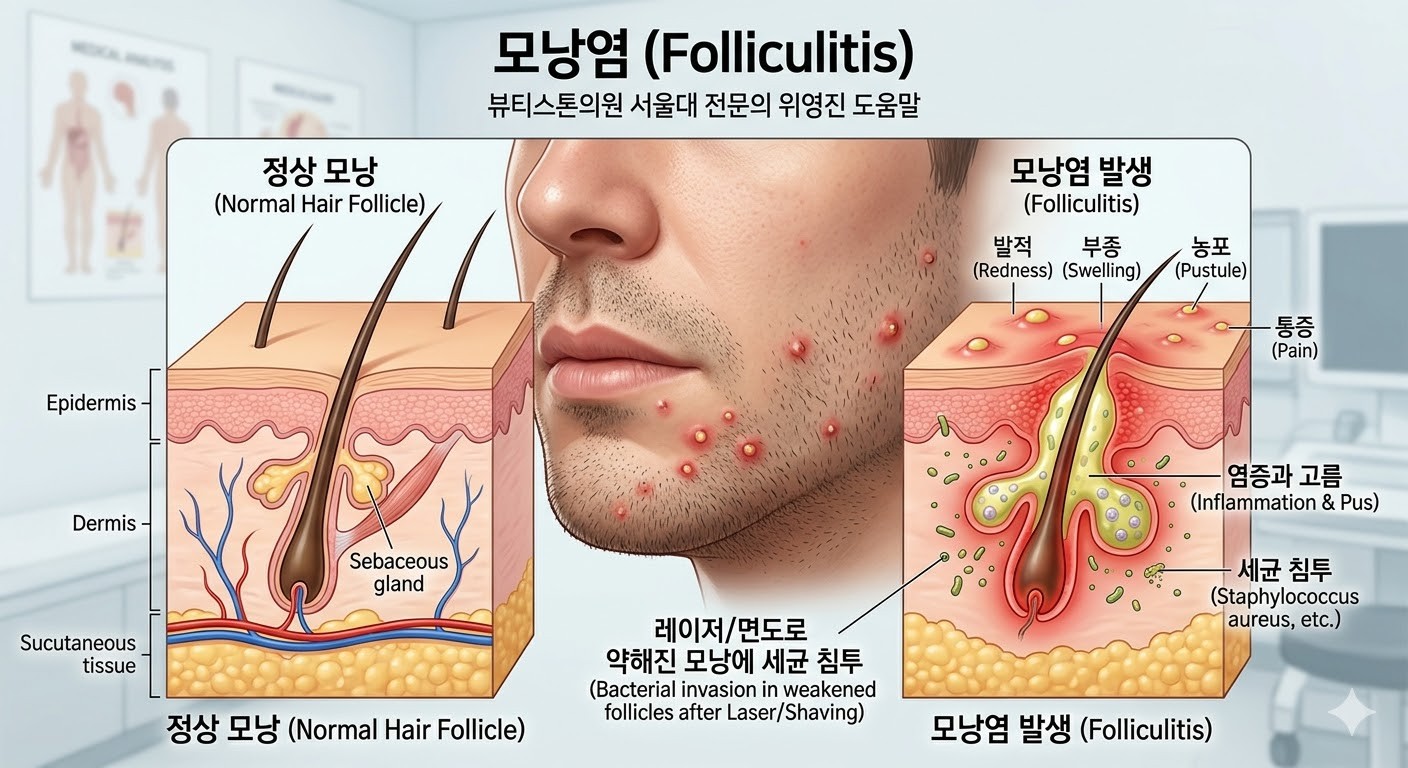
At this stage, touching the area with your hands, sweating excessively, or shaving too soon can add irritation to the hair follicles. As the bacteria naturally present on our skin affect the weakened hair follicles, symptoms of folliculitis, such as red bumps, yellow pustules, and stinging sensations, can occur.
In particular, the beard area has thick, dense hair and highly developed sebaceous glands.
For this reason, some people experience more sensitive reactions such as folliculitis, redness, and stinging after beard hair removal compared to hair removal on the arms or legs.
Shaving After Beard Hair Removal Can Affect Folliculitis
When looking into inquiries about folliculitis after beard hair removal, we often find that patients shaved immediately after the procedure or shaved against the grain as they normally would. While shaving against the grain cuts the hair shorter, it can cause micro-tears on the skin's surface.
After laser hair removal, the skin is already irritated by the heat. Repeated contact with razor blades under these conditions further weakens the skin barrier, creating an environment where inflammatory reactions can easily occur around the hair follicles.
Therefore, it is very important to adjust your shaving schedule after beard hair removal. If you absolutely must shave, using an electric shaver instead of a manual razor can help minimize irritation to your skin.
Who is More Prone to Folliculitis After Beard Hair Removal?
Not everyone gets folliculitis after beard hair removal. However, some individuals are more prone to it depending on their skin type, shaving habits, and lifestyle environment.
Risk Factors | Cause and Reason |
Oily and Acne-Prone Skin | Active sebum production makes it easy for follicles to become clogged. |
Shaving Immediately After the Procedure | Gives bacteria an opportunity to penetrate the damaged skin barrier. |
Sweaty Summer Season | Hot and humid conditions optimize bacterial growth. |
History of Folliculitis | The recurrence rate is relatively high due to individual skin characteristics. |
Weakened Immune System | The body's natural resistance to bacterial invasion is temporarily lowered. |
Falling into any of these categories does not mean you cannot receive beard hair removal. However, it means that post-treatment care—such as when you shave, how you wash your face, moisturizing, and managing activities like exercise or saunas—becomes much more critical.
If you are considering beard hair removal for the first time, or if you have experienced folliculitis after a previous treatment, please let us know about your last session, your current skin condition, and your usual shaving method.
We will guide you through what to check before your consultation and what we can discuss during your visit.
▶ Inquire details via WhatsApp
Why the First 48 Hours After Beard Hair Removal Are Crucial
The first 48 hours after beard hair removal is the period when your skin can react most sensitively. During this time, the skin barrier is weaker than usual, making it essential to avoid bacterial contact, heat simulation, and friction.
In particular, on the day of the procedure and the following day, it is best to avoid touching the area, washing with hot water, visiting saunas or steam rooms, intense exercise, drinking alcohol, and using manual razors. If your skin feels red or stings, applying a gentle moisturizer or soothing cream can help calm the skin.
Sometimes, small pimple-like reactions after beard hair removal will subside naturally over time. However, if the red area expands, the pain worsens, or pus repeatedly appears, we highly recommend contacting our clinic to get it checked.
Please keep in mind that neglecting post-treatment care makes it difficult to avoid folliculitis.
How to Prevent Folliculitis After Beard Hair Removal
1. Avoid Touching the Treated Area with Your Hands
If the beard area feels stinging or itchy after the procedure, you might unconsciously touch it. However, since hands carry a lot of bacteria, repeatedly touching the treated area can greatly increase the risk of folliculitis.
2. Avoid Heat Stimulation for 48 Hours
Washing your face with hot water, visiting saunas or steam rooms, and intense exercise can raise your skin temperature and prolong redness. For 1–2 days after beard hair removal, we recommend washing with lukewarm water and keeping your activities light.
3. Shave Only After the Skin Has Calmed Down
Shaving immediately after beard hair removal can add severe irritation to the hair follicles. If possible, avoid shaving for 3 to 5 days. When shaving is absolutely necessary, using an electric shaver is much safer than a manual razor.
4. Focus on Moisturizing and Soothing Care
After a laser treatment, your skin may feel dry and sensitive. Be sure to use non-irritating moisturizers or soothing creams to help heal and restore your skin barrier.
5. Do Not Pop the Bumps
Even if you see yellow pimples, popping them with your hands can push the inflammation deeper or leave hyperpigmentation. If you suspect folliculitis, leave it alone and monitor it. If symptoms are severe or persist, it is safest to contact the clinic.
What if You Already Have Folliculitis After Beard Hair Removal?
If pimples that look like folliculitis have already appeared after your beard hair removal, the most important rule is not to pop them. For minor, light bumps, minimizing irritation while moisturizing and soothing the skin can often resolve them naturally.
However, if you experience red swelling, visible pus, pain, or if there is no improvement after 3 days, it is highly recommended to contact the clinic. Depending on the condition, we may recommend soothing treatments, topical ointments, or prescribed medications.
In particular, if you experience recurrent folliculitis in the same area, we should look beyond just the number of sessions and carefully examine your shaving habits, sebum activity, skin barrier health, and post-treatment care routines.
GentleMax Pro Plus Beard Hair Removal: What Matters More Than the Device
At Beautystone Clinic Hapjeong, we proudly use the GentleMax Pro Plus for laser beard hair removal. The GentleMax Pro Plus is an advanced device that utilizes two wavelengths (755nm and 1064nm), allowing us to customize the treatment plan based on your skin type, hair thickness, and the target area.
However, even the best device cannot guarantee that folliculitis will never occur. High satisfaction in beard hair removal is achieved only when the equipment, energy output, irradiation method, skin condition, shaving habits, and post-care all work in perfect harmony.
Because male facial hair is thick and dense, the laser reaction can feel quite strong. This is why we place great importance on evaluating your skin condition, beard density, everyday shaving habits, and any history of folliculitis before starting the procedure.
Key Criteria for Choosing a Beard Hair Removal Clinic
1. Availability of the GentleMax Pro Plus Device
When facial hair is thick and dense, the hair removal device's wavelength, output control, and cooling system are critical. It is highly beneficial to check if the clinic utilizes an advanced device like the GentleMax Pro Plus, which can leverage dual wavelengths.
2. Treatment Records and Aftercare Guidance
Beard hair removal is a step-by-step process that must be adjusted based on your reaction to each session. It is best to choose a clinic that records your previous laser intensity, skin reactions, redness, and any signs of folliculitis, and applies these insights to your next session.
3. Location and Convenience for Repeated Visits
Since beard hair removal typically requires multiple sessions, accessibility is key. If you are looking for hair removal near Hapjeong, Hongdae, Sinchon, or Ewha Womans University, you should consider if the clinic's location is convenient for regular visits.
4. Private Treatment Environment
Since beard hair removal involves the face, many male clients prefer a private and comfortable setting. Checking if the clinic offers dedicated single-patient treatment rooms and a seamless consultation-to-treatment layout is highly recommended.
Frequently Asked Questions
Q1. Why does folliculitis occur after beard hair removal?
Folliculitis after beard hair removal occurs when the skin is sensitized by the laser's heat, and is then exposed to factors like shaving, hand contact, sweat, sebum, and bacterial contamination. Shaving against the grain or using manual razors immediately after the session can further irritate the follicles.
Q2. When can I start shaving after beard hair removal?
Although it varies depending on your skin condition, it is generally recommended to avoid shaving for 3 to 5 days after the treatment. If you must shave, using an electric shaver rather than a close-contact manual razor will help minimize the burden on your skin.
Q3. How many sessions of beard hair removal are usually needed?
Because facial hair is thick and dense, multiple sessions are usually required. In many cases, 6 to 10 sessions or more are recommended, but the exact number varies depending on your hair thickness, density, skin type, and your desired level of reduction.
Q4. What is the difference between the GentleMax Pro Plus and other laser hair removal machines?
The GentleMax Pro Plus is an premium device that can utilize both 755nm and 1064nm wavelengths. It allows us to customize the wavelength and settings according to your skin type, hair thickness, and the unique characteristics of the treatment area. However, the device alone does not determine the result; the practitioner's expertise and proper aftercare are equally important.
Q5. how do beard hair removal prices vary?
The cost of beard hair removal varies depending on the treatment area, number of sessions, equipment used, and the treatment package. Because the price changes depending on whether the mustache, chin, jawline, cheeks, and neck are included, it is best to discuss your target areas and current shaving concerns during your consultation.
Folliculitis After Beard Hair Removal: Post-Treatment Care is Key
Folliculitis is a relatively common concern after beard hair removal. However, once you understand the causes and know how to care for your skin, you can significantly reduce cosmetic distress and flare-ups.
The core rule is to minimize hand contact, heat stimulation, and shaving irritation for the first 48 hours after your session. In particular, shaving too soon or pressing a razor hard against the grain can severely irritate the hair follicles, so caution is advised.
Successful beard hair removal is not accomplished by clinical treatments alone. While the clinic provides personalized treatments and expert aftercare guidance, patients must also follow proper shaving and lifestyle habits to achieve the most stable and satisfying results.
At Beautystone Clinic Hapjeong, we perform laser beard hair removal using the GentleMax Pro Plus, while carefully evaluating your skin condition, hair density, and shaving habits. If you are considering beard hair removal near Hapjeong, Hongdae, Sinchon, or Ewha Womans University, please schedule a consultation based on your target area and concerns.
Laser Beard Hair Removal: Sessions and Permanence by Area at a Glance
Area | Average Sessions | Features & Permanence | Role of Post-Care |
|---|---|---|---|
Chin & Under Chin (Dense Area) | 8–10 sessions | High hair density requires more sessions; permanent reduction achieved upon completion | Highest risk of folliculitis; 48-hour care is essential |
Mustache & Around Mouth | 6–8 sessions | Thin skin makes this area highly sensitive to stimulation | Shave only after skin calms down; prioritize soothing and moisturizing |
Cheeks & Sideburns | 6–8 sessions | Moderate hair density; often aimed at neat line shaping | Creates clean lines for a well-groomed look |
Neck (Lower Line) | 8–10 sessions | Curved surface makes uniform laser scanning challenging | Prone to folding; be cautious of bacterial contact and sweat |
※ Please note that the goal is "permanent hair reduction" rather than complete clearance. Our objective with the GentleMax Pro Plus is to reduce thick, dark hair to ease your daily shaving burden and lower the risk of folliculitis.
Content





skin
Why Does Fractional CO2 Take Longer to Heal?

Contouring & Volume
How Many cc Does Forehead Filler Need?

skin
Why Is My Skin Oily but Tight in the Fall?

Hair Removal
Underarm Laser Hair Removal Cost: Do the Math

Tattoo removal
Laser Before a Cover-Up: How Many Sessions?

skin
큐어젯 다운타임, 다음 날 출근과 화장은 언제부터 될까요?