

Tolerance or natural wear-off? How to tell why your Botox faded—and what to check.
Published
Updated

Author
Wi Young-jin · Chief director
Seoul National University College of Medicine · Seoul National University Hospital Specialist
→
Those who have had Botox a few times often ask, "I feel like the effects are wearing off faster than before. Have I developed a tolerance?" When you feel that the effects have shortened, the word 'tolerance' (resistance) is the first to come to mind, but cases where true tolerance has actually developed are much fewer than you might think.
This article is a curated guide brought to you by Beautystone in Hapjeong.
To give you a quick answer, Botox wearing off after 3 to 4 months is usually not tolerance, but simply how the treatment itself works. True medical tolerance is a different story, and there are a few things to check first when you feel the effects are wearing off quickly.
By reading this article, you will learn:
The principles behind why Botox wears off after a few months
Exactly what true 'tolerance' is
What to check first when you feel it is wearing off quickly
The nerve recovery mechanisms through which the effects return
It is perfectly normal for Botox to wear off
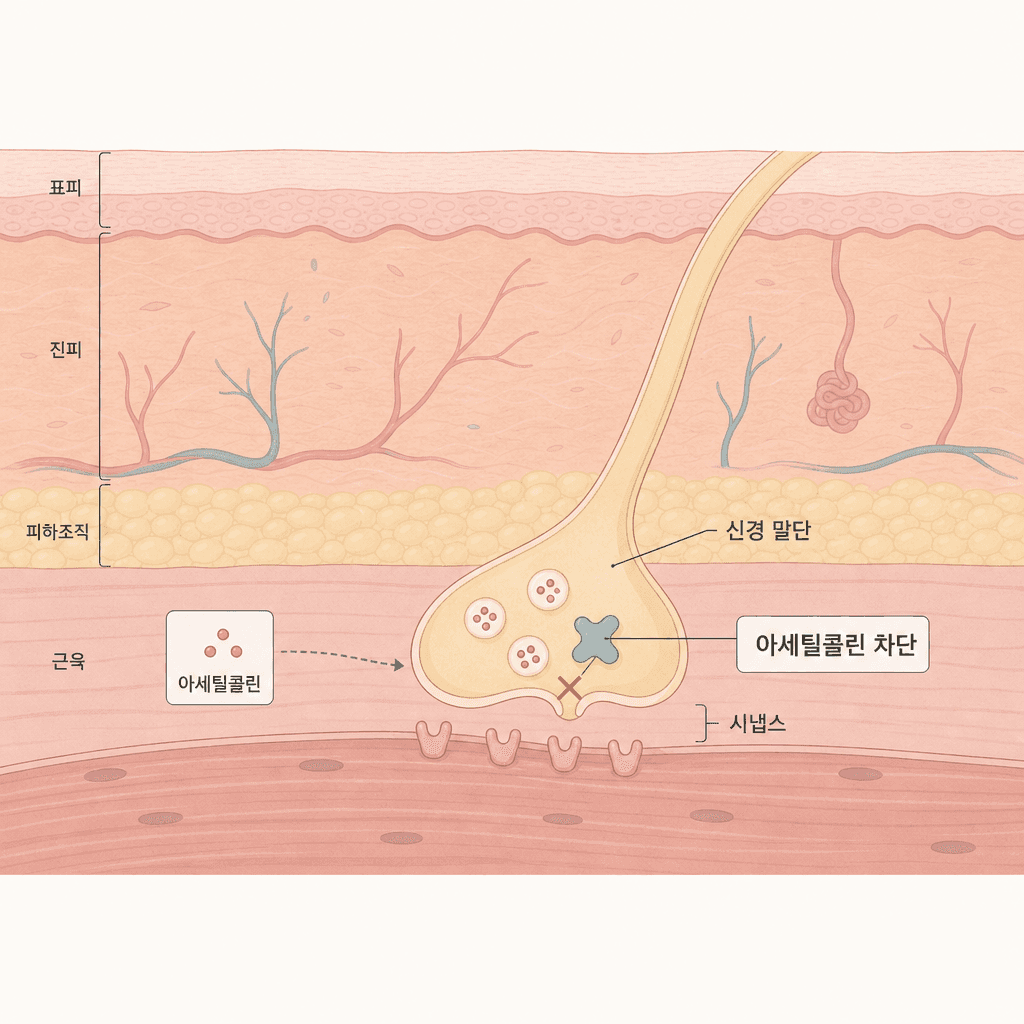
Botox works by acting on the muscles that create facial expressions to reduce wrinkles. The key point is that this effect is designed to be temporary from the start. The release of a substance (acetylcholine*) that transmits muscle contraction signals from nerve endings is temporarily blocked, and over time, that block naturally wears off.
Acetylcholine*: A substance used by nerves to transmit the "move" signal to muscles. Botulinum toxin temporarily blocks the release of this substance.
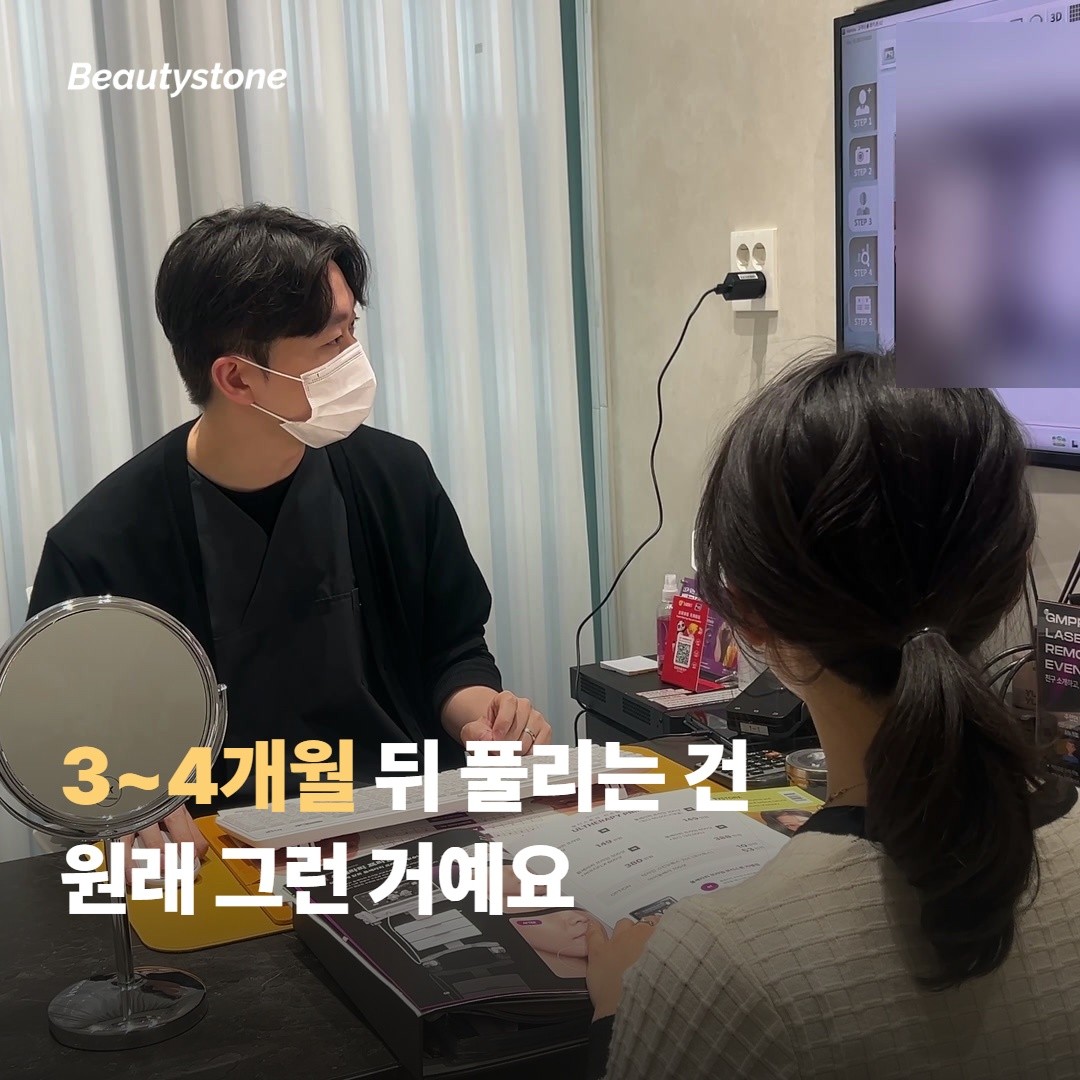
The American Academy of Dermatology (AAD) guidelines on Botulinum toxin state that the effects typically last for about 3 to 4 months and begin to appear within 3 to 7 days after the procedure. In other words, a decrease in effect after 3 to 4 months is not a failure, but the expected course.
So, if you feel "the effect has diminished after 3 months," it is highly likely that this is just the way Botox naturally works, rather than a tolerance issue.
What exactly does 'tolerance' mean?
Medically, tolerance refers to a state where our body produces neutralizing antibodies* against the botulinum toxin component, so the treatment has little to no effect even when the same dose is administered. This is also called 'secondary non-response.'
Neutralizing antibodies*: Substances created by the immune system to block foreign proteins. They can form when botulinum toxin is recognized as a foreign protein.
A clinical study on botulinum toxin antibody formation (PMC) suggests that the risk of antibody formation tends to increase when procedures are repeated at intervals that are too short or when large doses are administered at once. Maintaining an interval of at least 3 months is mentioned as a way to reduce antibody risk. However, this is quite rare at the typical doses used for cosmetic purposes.
In short, 'the feeling of wearing off quickly' and 'true tolerance' are two very different things.
As nerves reconnect, the muscle movement returns
When botulinum toxin blocks signal transmission at nerve endings, our body naturally tries to reconnect with the muscle by sprouting new branches through a process called nerve sprouting*.
Nerve sprouting*: When existing nerve endings lose function, neighboring nerves sprout new branches to reconnect to the muscle.
An animal study on neuromuscular recovery (PMC) showed that function was restored over approximately 10 to 14 weeks after a single injection. However, since this study is based on animal models, it is difficult to apply the exact timeframe directly to humans, so it is best used as a general reference.
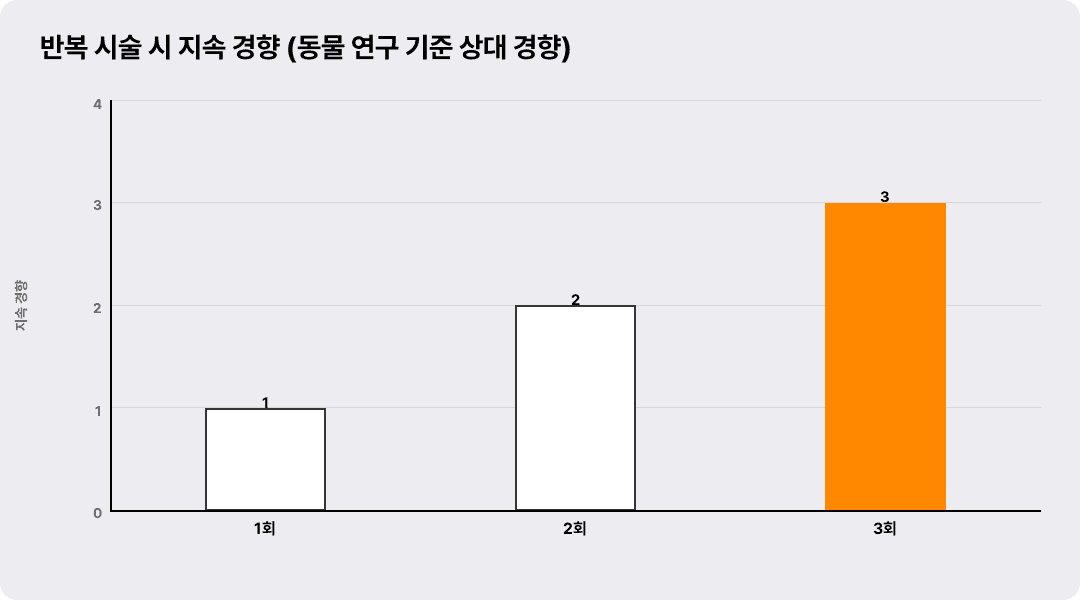
Interestingly, some reports suggest that when procedures are repeated at appropriate intervals, the time it takes to recover may actually increase. In other words, when done correctly, repeated sessions tend to prolong the benefits rather than wearing off faster—which is the opposite of the 'worn off quickly due to tolerance' misconception.

Why Beautystone in Hapjeong?
At Beautystone Hapjeong, when you share concerns about Botox "wearing off quickly," we don't simply rush to increase the dose. Instead, we carefully review your treatment intervals, dosage, and the specific muscles and depths targeted. Our medical philosophy prioritizes the long-term health of your skin over short-term results.
Conveniently located within walking distance of Hapjeong Station, we make it easy to review your previous treatment history and progress to design your next plan. Taking the time to check your interval history before jumping to conclusions like 'Is it tolerance?' is what makes our approach special.

What to check first when you feel it is wearing off quickly
Before suspecting tolerance right away when the effects feel brief, it is helpful to check the following points first:
If your last treatment was 3 to 4 months ago, it is simply time for it to naturally wear off.
Areas with active facial expressions (such as around the eyes or between the brows) may feel like they wear off faster than the forehead.
If your initial expectations were very high, the natural reduction in effect may feel more significant.
If your treatment interval was shorter than 3 months, it is worth consulting about potential antibody risks.
This article provides general information. For your safety, please consult with a qualified medical professional to determine the interval and dosage that best suit your individual condition.

Frequently Asked Questions
Q. Can you really develop a tolerance to Botox?
A. Yes, it can occur in the form of secondary non-response caused by antibodies. However, it is uncommon with typical cosmetic doses, though the risk increases with excessively short intervals or overly large doses. Most instances of "wearing off quickly" are not true medical tolerance.
Q. If the effects fade in just 3 months, is it tolerance?
A. It is highly unlikely. Botox is designed to maintain its effects for about 3 to 4 months, so a decrease around that time is a perfectly natural process. True tolerance is typically suspected when there is almost no effect starting from the very first or second session.
Q. If I get treatments frequently, won't it last longer?
A. Shortening the interval too much can actually increase the risk of antibody formation. It is generally recommended to wait at least 3 months between sessions. Maintaining a proper interval is the best way to keep the duration of the effects stable.
Q. If it wears off quickly, should I just increase the dose?
A. Rather than blindly increasing the dose, please evaluate your treatment intervals, target areas, and expectations first. Excessively high doses can increase the risk of antibody formation, so it is safest to adjust after a thorough consultation with a medical professional.





Contouring & Volume
Hip Dip Filler Before and After: 4 Checks

Body
Potenza Treatment Interval: Why 4 Weeks?

Lifting
Ultherapy Before and After: Why Wait 90 Days?

Contouring & Volume
Belotero Revive Cost: 2cc Price vs. 3 Sessions

skin
Lip Hyperpigmentation Laser: Does It Work?

Contouring & Volume
Men's Forehead Filler: Hollow or Just Lines?