

That dull, muffled feeling in your cheeks or jaw after Ultherapy PRIME is common. Here is why it happens, how long it lasts, and when to call.
Published
Updated

Author
Wi Young-jin · Chief director
Seoul National University College of Medicine · Seoul National University Hospital Specialist
→
If your cheeks, jawline, or forehead have felt strangely muffled since your Ultherapy PRIME session, you’re not alone. It’s one of the most common questions people bring back to the clinic in the first week: the swelling is settling, the skin looks fine, and yet touching your own face feels a little like touching someone else’s.
The short answer? A dull, heavy, or slightly numb patch after microfocused ultrasound is usually a question about the recovery timeline rather than a question about injury. That doesn’t mean you should ignore it, because a small number of sensory changes really do earn a prompt phone call. In this article, we’ll cover why energy delivered deep in the tissue can leave sensation feeling turned down, what ordinary post-treatment numbness actually feels like, how long it typically lasts, the red flags that change the plan, and what you can reasonably do while feeling comes back.
Why Does Ultherapy PRIME Make Your Face Feel Numb?
Because the energy is aimed at a layer that has sensory nerve branches running through and around it.
Ultherapy PRIME is a microfocused ultrasound platform. Instead of warming the whole surface evenly, it focuses sound energy down to a set depth and creates small, discrete points of thermal coagulation — think of a grid of tiny dots rather than a broad wash of heat. Those points sit at fixed depths in the dermis and, at the deepest setting, at the level of the SMAS (the superficial musculoaponeurotic system, the fibrous sheet that ties skin to the muscle underneath). Tightening that layer is the entire point of the treatment. Published work on microfocused ultrasound describes exactly this pattern of delivery: energy concentrated at precise depths, with untreated tissue left in between.
The catch is that sensory nerve branches travel through the same neighborhood. Heat plus localized swelling around those branches can temporarily change how well they carry signals. The nerve isn’t being cut or taken out; it’s being irritated and crowded, and an irritated nerve sends a muffled version of the message. That’s why the feeling usually reads as thick, padded, or like dental numbing on its way out, rather than as pain.
It also explains the map of it. The dull zones tend to land where bone sits close beneath thin tissue and where the shot count was highest: the cheekbone, the jaw edge, the temples, and the outer forehead. Individual results vary, and so does individual sensation — two people treated with identical settings can report very different weeks.
What Does Normal Post-Treatment Numbness Feel Like?
Most people don’t describe it as numb in the “I can’t feel anything at all” sense. They describe it as muffled, and the details are fairly consistent.
Dull or padded: Touch still registers, but at a lower volume, as though a thin layer sat between your fingers and your skin.
Heavy or tight: A weighted feeling across the cheek or jawline, often most obvious first thing in the morning.
Tingly or fizzy: Pins and needles that come and go, and which often pick up as sensation starts returning.
Tender underneath: Deep soreness when you press on the cheekbone or along the jaw, which usually fades before the numbness does.
Patchy rather than uniform: A palm-sized area that feels off while the skin right beside it feels completely ordinary.
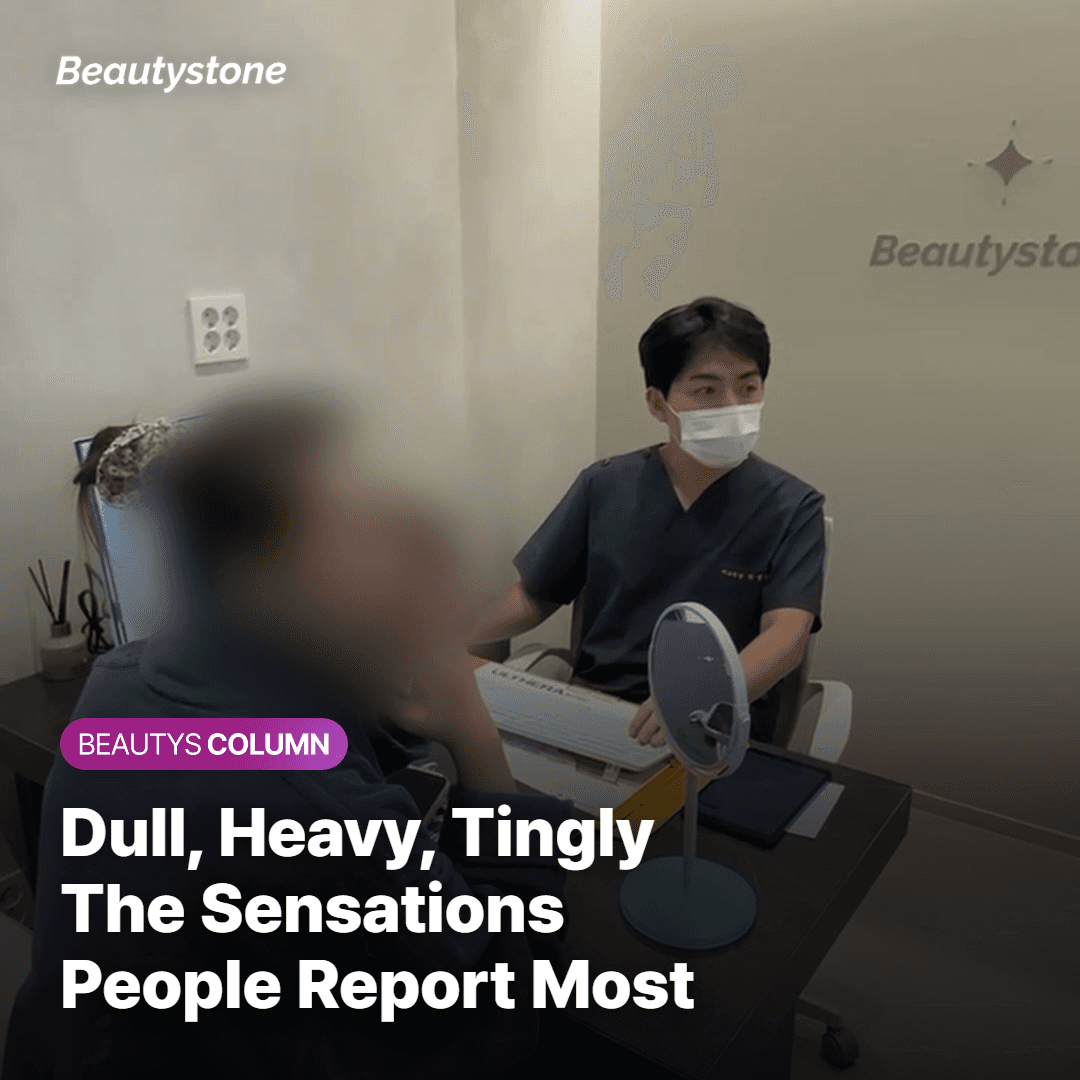
Timing matters as much as texture. Onset is typically the same day or the day after, arriving alongside the swelling rather than out of nowhere. Reviews of energy-based lifting devices list temporary sensory changes — numbness, tingling, tenderness — among the effects most commonly reported after treatment, and they are generally described as self-limiting.
What is not typical: numbness that starts fresh a week later, an area that keeps growing, or any change in how your face moves. We’ll come back to those.
How Long Does the Dull Feeling Usually Last?
For most people, days to a few weeks — not months. It helps to know roughly what each stretch looks like.
Timeframe | What is usually happening |
|---|---|
First 48 hours | Swelling peaks. Numbness is at its most obvious and blends with tenderness. |
Days 3 to 7 | Swelling settles and the dull zone usually shrinks into smaller patches. Tingling may increase, which is a normal part of the return. |
Weeks 2 to 4 | Most people say sensation is close to baseline. Occasional zings, itching, or brief tightness can linger. |
Beyond 6 weeks | A patch that has not clearly improved is worth a check-in, even if it feels mild. |
Two things stretch that timeline. Higher shot counts across a bony area simply give the tissue more to recover from, and stacked sessions in a short window can keep mild swelling in play for longer. Individual results vary here too: someone with thin skin over prominent cheekbones can feel a session for longer than someone with more soft-tissue padding, at exactly the same settings.
It is also worth separating numbness from the inner tightness people notice for weeks after a lifting session. Tightness is the treated tissue responding. Numbness is the signal from that tissue being temporarily quieter. They run on different schedules, and one can outlast the other without meaning anything went wrong.
Side Effects and Risks: When Numbness Is a Red Flag
Most sensory changes settle on their own. A few do not, and those deserve to be named plainly rather than buried.
Alongside numbness, the common and expected effects of microfocused ultrasound include redness, swelling, tenderness, small bruises, and sometimes a temporary welt-like line along a treated path. These typically fade within days. Clinical safety reporting on facial energy devices also describes less common outcomes, including lingering paresthesia (altered sensation) and, rarely, temporary weakness in a facial muscle when energy lands near a motor nerve branch. Rare doesn’t mean impossible, which is why the escalation rules below matter more than reassurance does.
Contact your provider promptly if you notice any of these:
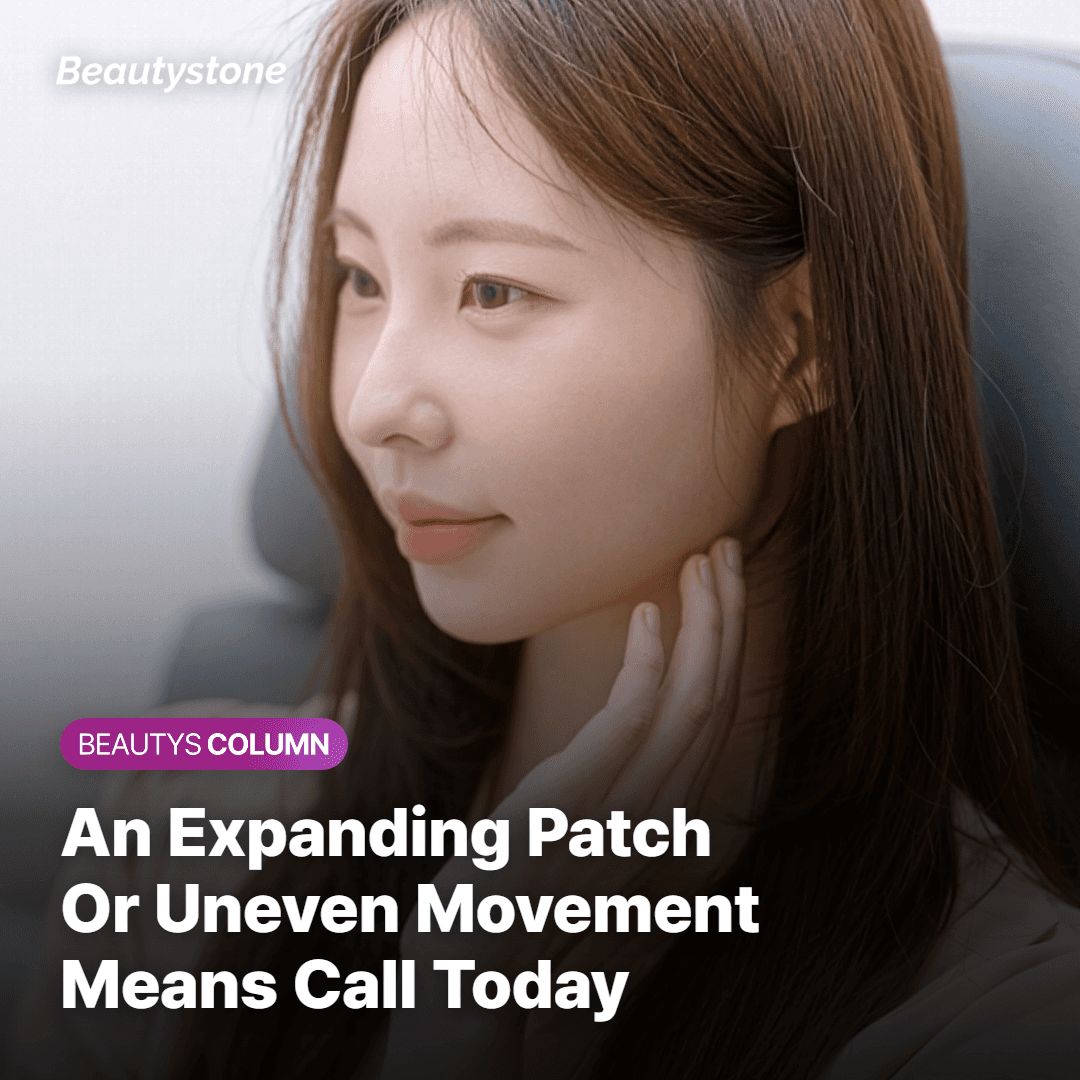
Movement changes: An eyebrow, eyelid, lip corner, or smile that moves unevenly compared with the other side.
An expanding area: A dull zone that is clearly bigger this week than it was last week.
Late onset: A brand-new numb patch that shows up days after everything else had already calmed down.
Pain that climbs: Soreness that is worse on day five than on day one, particularly if it turns sharp or burning.
Seek medical care right away if you develop a fever, spreading redness or warmth, drainage from the skin, or rapidly worsening pain. Those point toward infection rather than a nerve settling down, and they should not wait for a scheduled follow-up.
One more note, gently: try not to diagnose yourself with nerve damage from a search bar at midnight. The same muffled feeling can come from ordinary swelling pressing on tissue, and telling those apart is a clinical exam, not a mirror check.
What Helps While Sensation Comes Back
There is no shortcut that hurries a nerve along, and anything sold as one deserves side-eye. What you can influence is the swelling around it.
Cool it, but don’t overdo the cold: Short cold compresses through a cloth in the first couple of days can ease swelling. Skip long icing sessions, since numb skin reports temperature poorly and you may not feel it getting too cold.
Sleep slightly elevated: An extra pillow for the first few nights helps fluid drain away from the face overnight.
Go easy on heat: Saunas, hot yoga, and long steam showers can pump swelling straight back up during the first week.
Be gentle with the dull area: Vigorous massage doesn’t wake a nerve up faster, and since you can’t gauge pressure normally there, it is easy to overdo.
Sunscreen is non-negotiable: Treated skin is still skin, and daily protection matters no matter how it feels to the touch.
Keep a simple record: Photograph the area weekly and note where the edge sits. A shrinking outline is the reassurance you actually want; an unchanged one is the data your provider wants.
Alcohol and hard workouts in the first 24 to 48 hours tend to amplify swelling, so most providers suggest holding off. After that, ordinary skincare can resume once tenderness has gone, and your provider will tell you when actives such as retinol fit back into the routine.
Who Tends to Feel It Most, and What Does It Cost?
Anyone can feel it, but a few patterns come up again and again in follow-up visits.
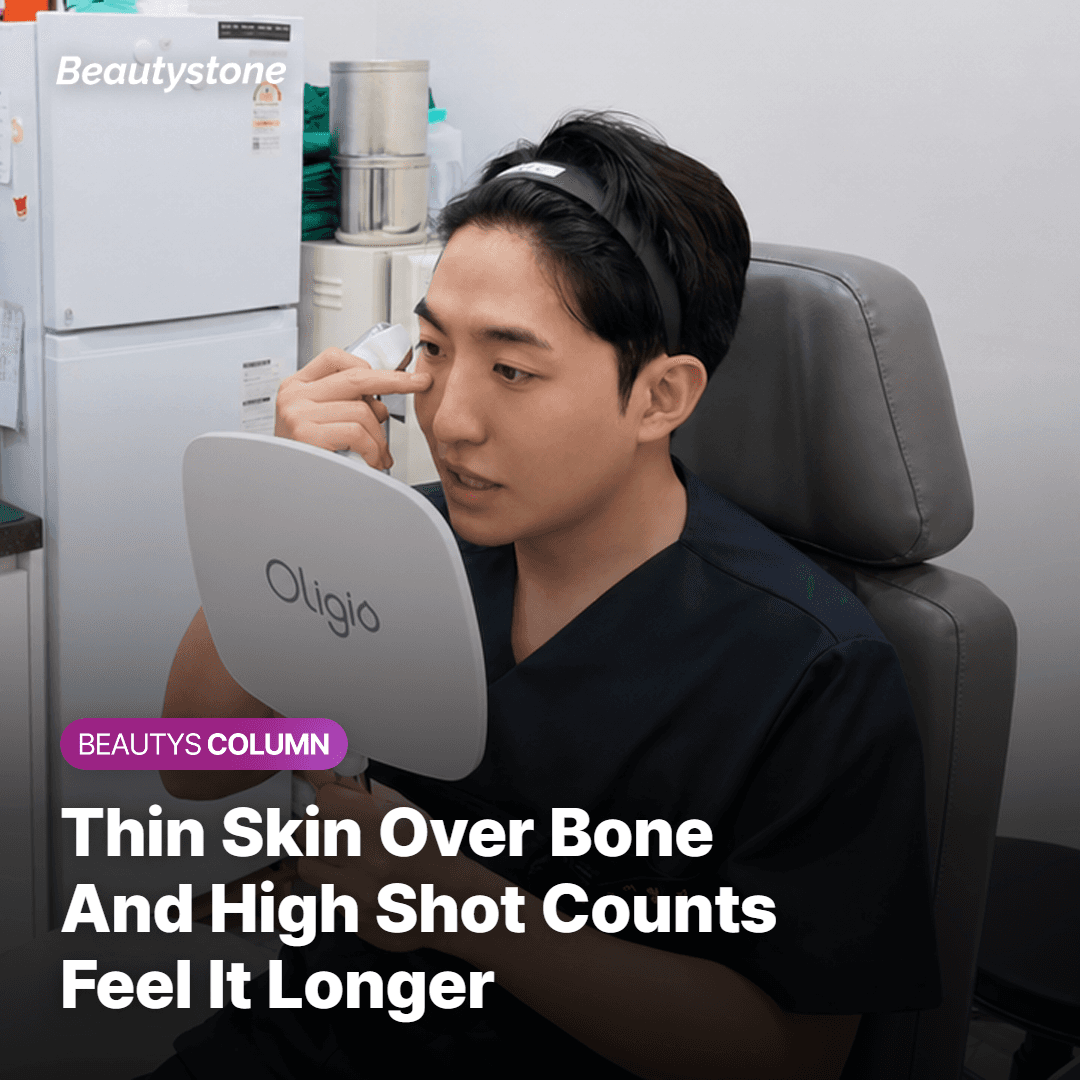
Thin skin over bone: Cheekbones, temples, and the jaw edge carry less padding between the handpiece and the nerve branches beneath.
Higher shot counts: More treatment points concentrated in one region means more tissue recovering at the same time.
Slimmer faces: With less subcutaneous fat, the same depth setting sits closer to structures you can feel.
Combination visits: Pairing lifting with injectables on one day can blur which treatment produced which sensation.
None of those make a treatment a bad idea; they just change what a realistic first week looks like, and they are worth raising before the session rather than after it.
Cost is the other question that surfaces here, usually phrased as whether you are paying to feel like this. Pricing for microfocused ultrasound depends on the areas treated and the plan you and your provider agree on, so it is not something to quote from a blog post. Beautystone is a dermatology clinic in Seoul’s Hapjeong area, and current offers and consultation details live on our promotion page. The more useful thing to ask at that consultation isn’t only the number — it’s how the plan is shaped around your face and how much recovery you want to plan around.
The Bottom Line
A muffled cheek is one of the least talked about and most googled parts of a lifting week. Here’s the recap:
It is usually a timeline, not an outcome: Dull sensation after Ultherapy PRIME typically reflects irritated nerve branches near a treated layer, and it tends to settle within days to a few weeks.
Texture and map are the clues: Patchy, dull, tingly, and shrinking is the reassuring pattern.
Movement is the dividing line: An uneven brow, eyelid, or smile — or a patch that grows or starts late — earns a prompt call.
Support it, don’t force it: Manage swelling, protect the skin, track the edges, and let the nerve keep its own schedule.
Like any procedure, microfocused ultrasound comes with trade-offs, and individual results vary from person to person. Ultimately, the choice depends on your skin, your goals, and how much recovery you want to build into your calendar. If you’re considering Ultherapy PRIME, or you’re in that muffled first week and unsure what you’re feeling, a consultation is the best way to get an answer based on an exam rather than a search bar. Beautystone is a dermatology clinic in Seoul’s Hapjeong area, and you can see what is currently running on the promotion page.
Frequently Asked Questions
Q. Is numbness after Ultherapy PRIME normal?
A. A dull or muffled patch in the first days after treatment is one of the more commonly reported sensations, and it usually reflects temporary irritation of sensory nerve branches near the treated depth rather than an injury. Individual results vary, so what matters most is the direction of travel: an area that is slowly shrinking is behaving as expected.
Q. How long does numbness after Ultherapy PRIME last?
A. Most people describe days to a few weeks, with the dull zone getting smaller as swelling settles. Tingling often increases as sensation returns, which is normal. If a patch has not clearly improved after about six weeks, book a check-in even if it feels mild.
Q. Does numbness mean the treatment worked?
A. Not really. Sensation is not a scoreboard, and plenty of people feel very little while still building collagen over the following months. Lifting results tend to develop gradually over roughly two to three months, so how your cheek feels in week one says little about where you land in month three.
Q. When should I call my provider about numbness after a lifting treatment?
A. Call promptly if your brow, eyelid, lip corner, or smile moves unevenly, if the numb area is expanding, if it appears days after everything else settled, or if pain is climbing rather than fading. Fever, spreading redness, drainage, or rapidly worsening pain means you should seek medical care right away.





Contouring & Volume
Hip Dip Filler Before and After: 4 Checks

Body
Potenza Treatment Interval: Why 4 Weeks?

Lifting
Ultherapy Before and After: Why Wait 90 Days?

Contouring & Volume
Belotero Revive Cost: 2cc Price vs. 3 Sessions

skin
Lip Hyperpigmentation Laser: Does It Work?

Contouring & Volume
Men's Forehead Filler: Hollow or Just Lines?