

How long hip filler lasts depends on volume and lifestyle. See when volume fades and when to top up.
Published -
Updated -

Author
Wi Young-jin · Chief director
Seoul National University College of Medicine · Seoul National University Hospital Specialist
→
After hip filler, it's only natural to wonder, "How long will this volume actually last?" Since a fair amount goes in at once, knowing the longevity and the right time for a touch-up upfront makes planning so much easier.
The short answer: hip filler gradually breaks down over time, so the volume softens slowly rather than dropping all at once. That means how long it lasts varies from person to person and depends on how much went in. So instead of pinning it to "exactly X months," it makes more sense to watch how the volume fades and time your top-up from there.
This article is informational content prepared by Hapjeong Beautystone about our procedures.
What you'll learn
Why hip filler volume fades over time
How long it typically lasts, and how to gauge it
When it makes sense to think about a top-up
What to check before your touch-up
Why hip filler volume fades over time
The hyaluronic acid* commonly used in hip filler is something your body slowly breaks down and absorbs over time. So the volume you start with isn't there permanently. Instead, it softens gradually over several months or longer. Research on how hyaluronic acid fillers add volume while also breaking down over time and influencing the collagen environment helps explain why the results don't last forever.
Hyaluronic acid*: a substance your body naturally contains. It draws in moisture to add volume, then breaks down and is absorbed over time.
How quickly it fades varies from person to person. The more volume that goes in, and the less pressure the area takes from sitting or movement, the longer it tends to last. On the flip side, if you're very active or have a fast metabolism, it can fade a little quicker. That's why it helps to factor in your own lifestyle.
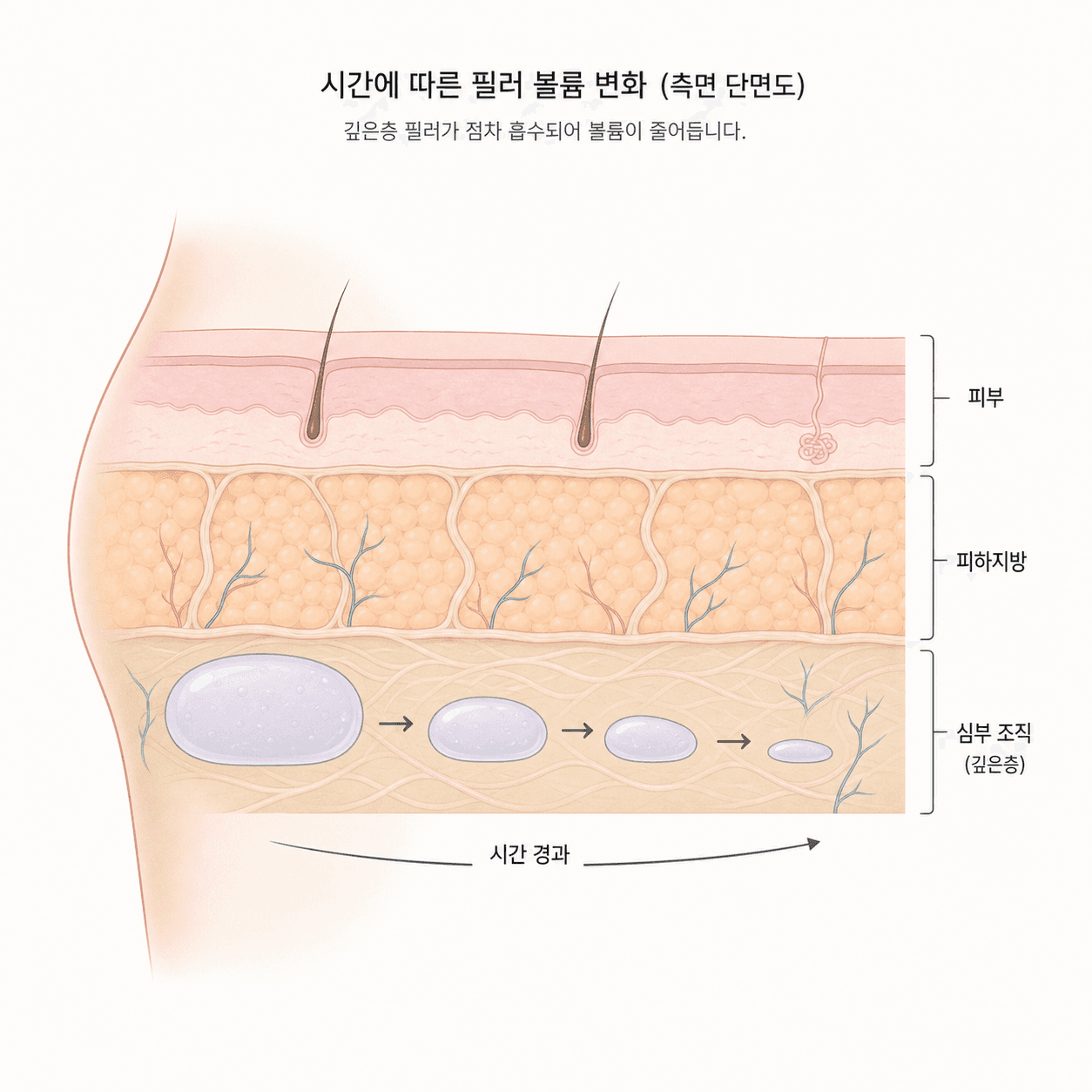

How long does it usually last?
There's no single number for how long hip filler lasts, but the factors that tip the balance are fairly clear. The amount placed, the pressure the treated area takes, and your own metabolism all play a big role. In general, since a fair amount goes in at once, it often lasts longer than facial filler, but ultimately it comes down to the individual.
Factor | Tends to last longer | Tends to fade sooner |
|---|---|---|
Amount placed | Filled generously | Small touch-up |
Pressure / posture | Rarely sits for long stretches | Sits for long hours, high pressure |
Activity level | Moderate | Very high exercise volume |
Metabolism | On the slower side | On the faster side |
As the table shows, longevity comes down to both the amount and your lifestyle together. So even with the same procedure, the right time for a top-up naturally differs from person to person, and reading your own pattern is the most accurate approach.

When should you think about a top-up?
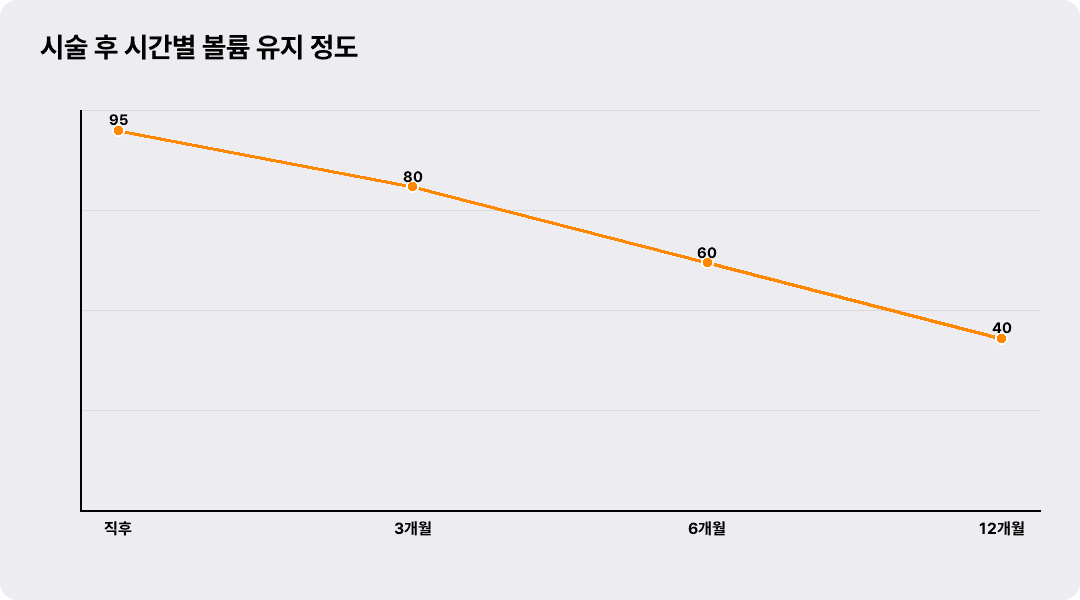
Many people think about a top-up not after the volume has fully disappeared, but when it feels like it's faded to about 60–70% of the original. Wait too long and you lose the continuity of your initial results; go too soon and you can unnecessarily build up volume. So it's best to watch how it fades and time it from there.
A good signal is usually when you compare against early photos or the mirror and feel the line has lost a bit of its shape. That said, it can be hard to spot on your own, so reviewing your progress together with the clinic where you had it done makes timing the next session much more accurate. A top-up often means refining the line with less filler than the first time.

Why Hapjeong Beautystone?
Rather than giving a one-size-fits-all guide like "come back every X months," Hapjeong Beautystone prefers to set your top-up timing together, based on how quickly your own volume fades. Even with the same hip filler, longevity shifts with the amount and your lifestyle, so instead of overfilling from the start, we recommend refining as we watch your progress. As a small clinic within walking distance of Hapjeong Station, we can follow each person's line changes and decide the next timing together.

What to check before your touch-up
A top-up has a slightly different feel from the first procedure, so there are a few things worth sorting out ahead of time.
Photos compared to the start — they give you a benchmark for how much the line has faded
A record of how much was placed — tracking the cumulative amount helps set the right level
Changes in your lifestyle — if you've become more active, it's worth factoring into the longevity call
Anything that bothered you — jot down what fell short the first time, ahead of your visit
Discussing the next timing — decide the top-up amount and timing with your provider, based on your progress
This article pulls together general information, so it's safest to decide your own longevity, top-up timing, and the right amount in consultation with the provider who treated you.

Frequently asked questions
Q. Does hip filler last forever once you get it?
A. The substance used in hip filler slowly breaks down and is absorbed over time, so it isn't permanent. Longevity varies with the amount placed and your lifestyle, and many people simply watch how it fades and schedule a top-up from there.
Q. Do I have to wait until the volume is completely gone to top up?
A. Many people consider a top-up when it feels like it's faded to about 60–70% of the original, rather than waiting until it's fully gone. That timing keeps the results continuous without letting volume build up too much, so it's best to watch your own pattern and decide together with your provider.
Q. Does sitting for long periods make it fade faster?
A. Some people do feel it fades a bit faster when the area takes a lot of pressure from sitting for long hours. That said, it varies widely from person to person, so factoring in your own lifestyle gives a more accurate read on longevity.
Q. Does a top-up use the same amount as the first time?
A. It usually means refining the faded line with less filler than the first time. Still, it depends on how much has faded and the volume you're after, so it's best to decide the right amount with your provider based on your progress.
Content


skin
Why Does Fractional CO2 Take Longer to Heal?

Contouring & Volume
How Many cc Does Forehead Filler Need?

skin
Why Is My Skin Oily but Tight in the Fall?

Hair Removal
Underarm Laser Hair Removal Cost: Do the Math

Tattoo removal
Laser Before a Cover-Up: How Many Sessions?

skin
큐어젯 다운타임, 다음 날 출근과 화장은 언제부터 될까요?