

Still feel heat or tingling days after InMode FX? What is normal, what to watch, when to call.
Published -
Updated -

Author
Wi Young-jin · Chief director
Seoul National University College of Medicine · Seoul National University Hospital Specialist
→
You get home after InMode FX, look in the mirror, and the treated area still feels warm or a little prickly—and it throws you off. In the room you mostly heard "it might look a bit red," so when the heat hangs on for days, the worry creeps in: did something go wrong with my skin?
Here is the short answer first: with radiofrequency treatments like InMode FX, which deliver heat deep into the skin, it is completely common to feel warmth, tingling, and a soft flush for hours to a few days afterward. It is your skin cooling back down after its inner temperature was raised on purpose, and for most people it settles on its own within a few days.
What helps is knowing two things ahead of time: how many days of this is still normal, and which sensations mean you should get checked. We will map out exactly where that line falls, step by step—plainly, and without overpromising.
This article shares general treatment information from Beautystone, a skin clinic in Seoul, Korea. It is educational and is not a substitute for advice from the provider who treated you.
Last updated June 2026.
What you will take away
How many days of heat and tingling after InMode FX is a common reaction
How to tell what is within the normal range at each point in time
Simple aftercare that makes recovery more comfortable
The red-flag signals to watch—and exactly when to call your provider
Lingering heat after InMode FX—how far is still normal?
InMode FX delivers radiofrequency* energy into the dermis to create heat, and that heat both tightens existing collagen and prompts your skin to build new collagen over the following weeks. Warming the deeper layers is the whole point of the treatment—so it is only natural that some warmth lingers as that heat cools down after your session.
radiofrequency*: electrical energy (RF) that builds heat beneath the skin to stimulate collagen. Without burning the surface, it raises the temperature of the dermis to firm and lift.
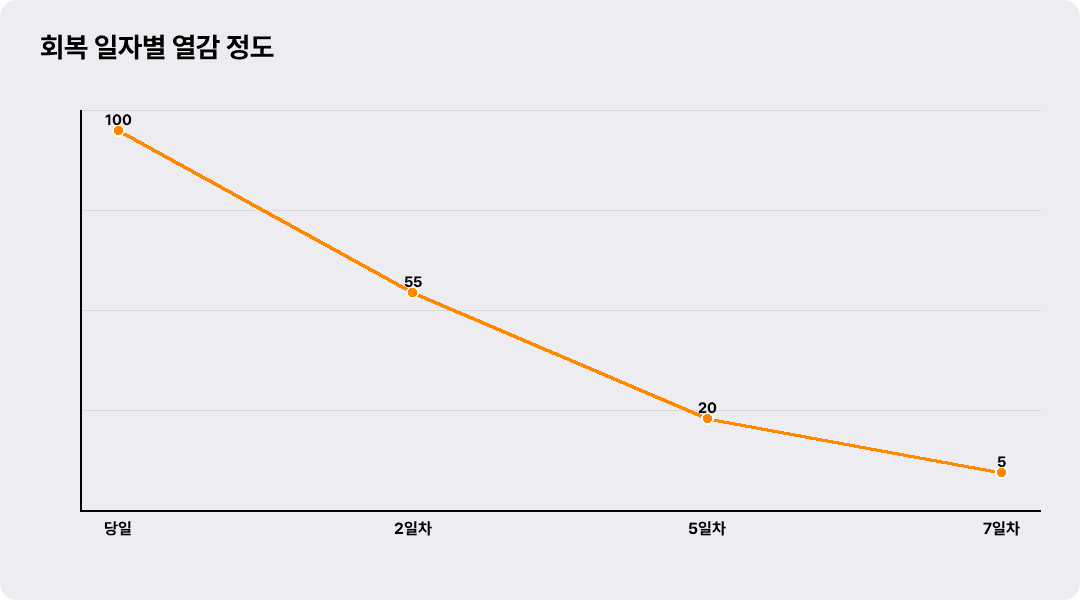
In the US, the radiofrequency devices used for treatments like this are FDA-cleared—"cleared" is the correct term for a device, whereas a drug such as Botox is "FDA-approved." Dermatology references note that redness and swelling after radiofrequency treatments typically last anywhere from a few hours to a few days, which is why heat right after treatment is such a common, expected signal. Usually the day of the procedure is the warmest, and over a day or two it eases into nothing more than a faint warmth.
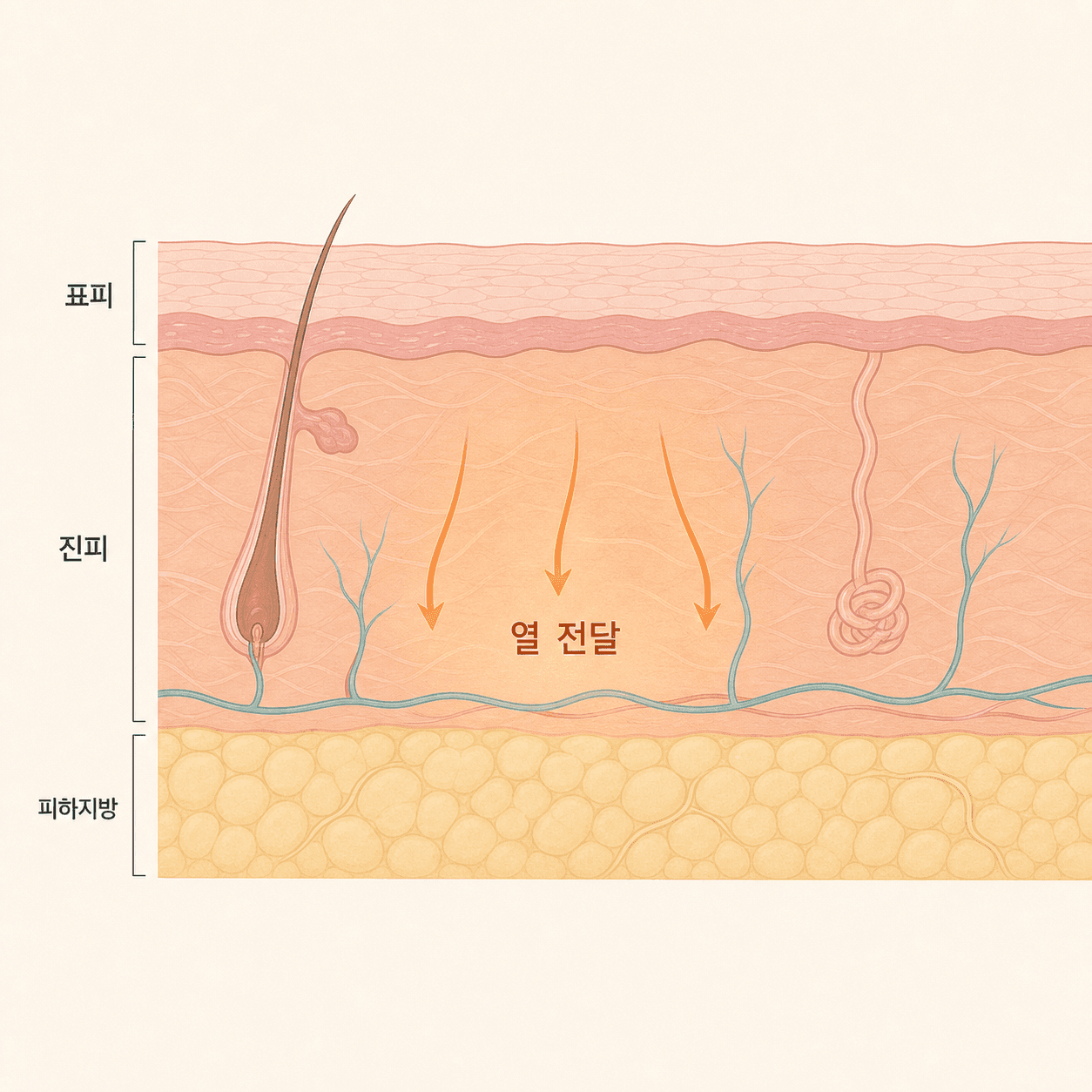
How wide that normal range runs varies from person to person. Thin or sensitive skin may hold the heat longer at the same setting, and if you flush easily, redness can stick around a bit more. Individual results and recovery vary—skin thickness, sensitivity, and the settings used all play a role—so your own timeline may differ a little from the ranges below. Roughly speaking, if yours looks like this, you are within the common range.
Timing | Heat | Tingling | Redness |
|---|---|---|---|
Day of treatment | Fairly warm | Felt often | Clearly visible |
Days 1–2 | Faint warmth | Occasional prickle | Fading |
Days 3–5 | Nearly gone | Rare | Mostly settled |
Day 7 | Not felt | None | Normal tone |

What to check when heat and tingling drag on
If the heat is not easing after a few days—or it is getting worse—a few common culprits are worth ruling out first. Most come down to extra stress you have added on top of treated skin.
Hot stimulation — saunas, hot showers, and long warm baths reheat the area and bring the warmth right back
Intense exercise — a quick spike in blood flow can flare the flushing again
Alcohol — it dilates blood vessels, which tends to amplify redness and heat
UV exposure — sun on skin that is still sensitive after treatment slows recovery
Strong skincare — pause retinol and acidic exfoliants for a few days
If you have eased off all of these and the heat still runs past a week, or one spot feels almost like pain, that is your cue to contact the clinic that treated you. It usually resolves on its own—but when a signal lingers, it is simpler to get it checked once and move on.
Aftercare that makes the first few days more comfortable
Rather than overdoing it to cool the heat faster, easing off irritation is what actually helps recovery. A few gentle points worth keeping for the first several days:
Lukewarm cleansing — use lukewarm water instead of hot, keep it short, and pat gently rather than rubbing
Plenty of moisture — a gentle, low-irritation moisturizer eases the tingling
Sun protection — apply carefully starting the next day, and reapply every 2–3 hours
A cool environment — staying somewhere cool rather than hot keeps the heat from flaring
Stay hydrated — drinking water often helps your skin recover its condition
When you want to cool things down, a light cold compress held gently against the skin can help. Just avoid pressing ice directly on for long stretches or bearing down hard. Even sheet masks—often praised for soothing—are safest if you pick a mild, fragrance- and alcohol-free one for the first day or two.
Why where you have it done still matters
Even with the same InMode FX, how much heat lingers depends on your own skin thickness and sensitivity—so the provider is read on your skin matters as much as the device. Look for someone who assesses your skin and adjusts the settings before treating, and who walks you through which sensations are normal and which are worth checking. That is how we work at Beautystone: we read your skin beforehand to set the parameters, then talk through your recovery case by case so you are never left guessing.
Costs vary widely by country, clinic, and the area treated; in the US, single radiofrequency sessions commonly run roughly $300–$700 and are often sold in packages, so treat any figure as a ballpark and confirm with your own provider. If anything about your recovery feels off, book a quick follow-up with the clinic that treated you rather than waiting it out.
Is it worth it? For most people the lingering heat is a minor, short-lived trade-off for the gradual firming radiofrequency can build over the following weeks. Just go in with clear expectations: the results are subtle and slow-building, not a surgical lift, and you may need a series of sessions. Weighing that honestly against the cost is the best way to decide if it fits you.
Red flags: signals to watch and when to call your provider
Most heat and tingling settles within a few days. But if you notice any of the signals below, do not wait it out—contact the provider who treated you, and seek urgent medical care for anything that looks like infection.
Strong heat that does not ease past a week — if it continues even after you have cut outside stress, get it checked
Blisters, oozing, or yellowish crusting — these can mean recovery has veered off its normal path
Pain that keeps building in one spot — do not wait out worsening pain; reach out
Fever, severe or spreading redness, or warmth that expands — these can signal infection; contact your provider right away or seek urgent care
Redness or swelling that will not settle past two weeks
Erythema* itself is a common after-treatment reaction, but if—like the signals above—it does not improve over time or keeps trending worse, it is safer to talk it over with the provider who treated you than to judge it on your own. This article is general information, so decide how to handle your own recovery together with the clinic that actually treated you.
erythema*: a reaction where the skin turns red (erythema). When a treatment temporarily dilates blood vessels, it appears and usually settles within a few days.

Frequently asked questions
Q. How long does heat and tingling last after InMode FX?
A. The day of treatment is usually the warmest, easing to a faint warmth over a day or two, and barely noticeable for most people within 3–5 days. Thin or sensitive skin can feel it a little longer—so if it stays strong past a week, get it checked once. Individual recovery varies.
Q. Is the lingering heat dangerous, and can I ice it?
A. On its own, warmth and a soft flush for a few days is an expected reaction, not a danger sign. A light cold compress held gently for short stretches is fine—just do not press ice directly on the skin for long or bear down hard. What is not routine: blisters, oozing, spreading redness, fever, or worsening pain—those warrant a call to your provider.
Q. When can I exercise, sweat, or use a sauna after InMode FX?
A. Skip intense exercise, saunas, and hot showers for 2–3 days. A spike in heat and blood flow can flare the fading warmth back up. A light walk is fine; just hold off on anything that makes you sweat heavily for a few days.
Q. When can I wear makeup again after InMode FX?
A. If there is no oozing or open skin, light makeup is usually fine from the next day. If tingling is still there, give it a day or two before color products and keep it simple—gentle moisturizer and sunscreen.
Q. How long until I actually see firming results from InMode FX?
A. The heat and tingling are short-term, but the firming itself is gradual. Most people notice changes over several weeks to a few months as new collagen builds, and the effect is subtle rather than dramatic. Individual results vary.
Q. Is InMode FX worth it?
A. It depends on your goal. For gradual, low-downtime firming it can be a reasonable option, but it will not match a surgical lift and may take a series of sessions. Weigh the cost and the modest, slow-building results against what you are hoping for, and ask your provider what is realistic for your skin.
Worth a read together


skin
Ellanse Cost: Duration Beats Price Per Visit

Lifting
Alltite RF: Two Effects, Two Timelines

Contouring & Volume
Why Juvelook Volume Quotes Vary by Clinic

men's
Nose Pore Treatment: Aftercare Timing Guide

skin
How Many Sessions Does Eyeliner Removal Take?

Hair Removal
Laser Hair Removal While Pregnant or Nursing