

That lumpy feeling under your jaw after InMode FX is usually part of recovery — but a few signs say it's time to call your clinic. Here's what to watch for.
Published
Updated

Author
Wi Young-jin · Chief director
Seoul National University College of Medicine · Seoul National University Hospital Specialist
→
If you've run your fingers along your jawline a week or two after InMode FX and felt something unexpectedly lumpy, you're not alone. It's one of the most common concerns that comes up in the days following jawline contouring with radiofrequency fat reduction — and the initial reaction is almost always the same: Did something go wrong?
The short answer? Usually no. But the longer answer is worth understanding, because the same area that's supposed to smooth out can temporarily feel more uneven before it settles. In this article, we'll cover what InMode FX actually does to your jaw tissue, why bumpy texture is a predictable recovery phase for most people, and which specific signs cross the line from normal to "call your clinic." Read on.
What InMode FX Does Under the Jaw
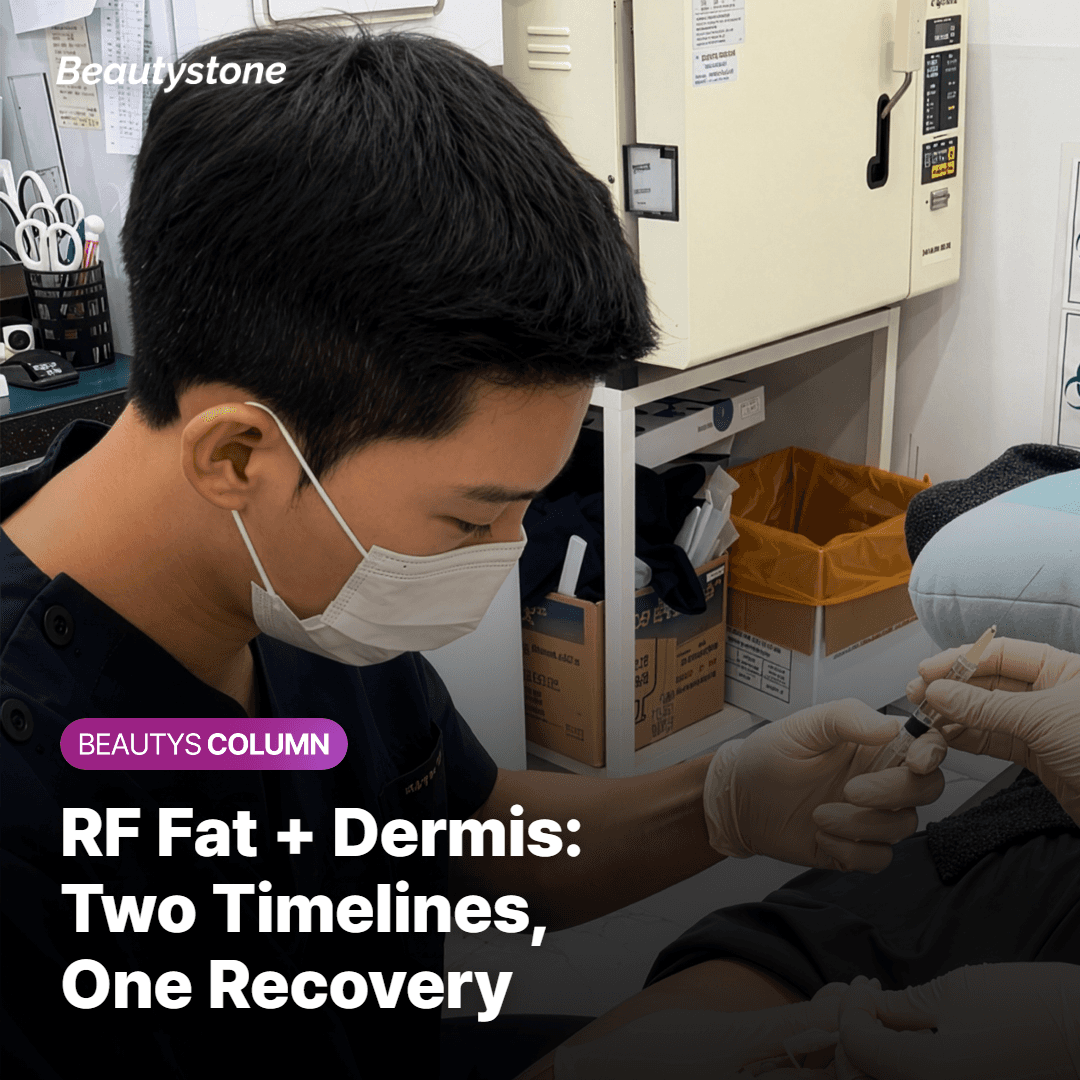
InMode FX is a radiofrequency (RF) device cleared for subdermal tissue coagulation and body contouring. The FX handpiece — designed specifically for areas like the submental region under the chin and along the jawline — delivers bipolar RF energy directly into the fat layer through small micro-needles inserted just beneath the skin surface.
What's happening in that tissue layer is more nuanced than simple "fat melting." The RF heat causes thermal coagulation of fat cells, which then gradually break down and are cleared by the body over weeks to months. Simultaneously, the heat reaches the deeper dermis and the fibrous connective tissue (the fibromuscular network called the superficial muscular aponeurotic system, or SMAS), stimulating collagen remodeling and tissue contraction.
Here's the key detail: fat and connective tissue don't shrink on the same timeline. Fat cells that have been thermally disrupted can create transient swelling and localized fluid accumulation as they break down, while the collagen contraction response unfolds over a much longer arc — typically peaking around three to six months. The interplay of these two simultaneous processes is exactly what creates the temporary texture changes many patients feel.
Research on RF-based tissue remodeling confirms that subdermal RF energy induces controlled thermal injury in the fat and reticular dermis, triggering both immediate tissue changes and a slower fibroblast-driven remodeling response (PMC12243918). The two-phase timeline isn't a complication — it's how the mechanism works.

Why Bumpy Texture Is a Normal Recovery Phase
So why does it actually feel lumpy rather than just swollen? A few things are happening simultaneously in the first one to four weeks after treatment.
Uneven fluid redistribution. After RF energy disrupts fat cells, the body launches an inflammatory repair response. Lymphatic drainage carries away the breakdown products, but this doesn't happen uniformly across the entire treated zone. Areas with denser fat, more superficial treatment depth, or slightly higher energy delivery may retain fluid longer, creating localized firmness that feels like distinct bumps when you press on the skin.
Asymmetric tissue contraction. The fibrous septae (connective tissue bands running through the fat layer) respond to heat by contracting. Because these bands aren't uniform in density or orientation, their contraction rate varies — which is why the jaw can feel smooth in one spot and raised in another. Studies on RF-based subdermal contouring describe this differential contraction as a predictable feature of the recovery course, not a sign of irregular energy delivery (PMC11965962). Individual results vary.
Edema pooling at the needle entry sites. The micro-perforation technique leaves small entry channels that can accumulate localized swelling. When this sits directly against firmer surrounding tissue, it can feel distinctly nodular to the touch — even if the actual volume difference is small.
The net result is that the area you're feeling often looks smoother than it feels. Most people find that the texture they can palpate is much less visible than they expect when they look in a mirror. The tactile unevenness typically resolves progressively as the edema clears and the tissue reorganizes — usually within four to eight weeks for the majority of the change, with continued refinement through month three to four.
Week-by-Week Recovery Timeline
Knowing what's typical at each stage makes it easier to gauge whether your experience is tracking normally.
Days 1–3: Swelling is most pronounced. The treated area can feel firm, slightly raised, and tender to the touch. Some bruising around the micro-needle entry points is common. The jaw may feel stiff when you move it. This is acute inflammatory response — expected.
Days 4–10: Swelling starts to reduce from the outside in. Deeper zones — especially under the chin and along the jaw angle — may still feel firm or uneven while surface swelling subsides. This is often when the "lumpy" sensation becomes most noticeable, because the overlying puffiness has decreased enough to let you feel the underlying tissue irregularities more distinctly.
Weeks 2–4: Most of the acute inflammation resolves. Remaining texture changes reflect the ongoing fat breakdown and early collagen remodeling. The area may still feel firmer than pre-treatment but should feel progressively more uniform week to week. Gentle massage (if your provider cleared it) can support lymphatic drainage in this phase.
Month 1–3: Fat volume continues to reduce as the body processes and clears the disrupted cells. The contour typically becomes visibly smoother during this window. Any residual firmness or texture irregularities present beyond week six to eight are worth mentioning at a follow-up appointment.
Month 3–6: Collagen remodeling peaks and the skin tightening effect becomes more apparent. This is when most patients see the final shape of their results. It's also the point where stubborn areas — if any remain — are more clearly separated from residual healing versus areas that may benefit from a second session.
Side Effects, Risks, and Red Flags
Like any procedure, InMode FX comes with trade-offs. Most of what you'll experience in the first few weeks falls into the expected category — but a handful of signs indicate that something needs a provider's eye sooner rather than later.
Expected and common reactions:
Swelling and firmness: Peaks in the first 72 hours and gradually resolves. Firmness that changes week to week is normal; firmness that doesn't change at all after four weeks is worth checking.
Bruising: Small areas of bruising at the needle entry sites are common and typically resolve within one to two weeks.
Numbness or reduced sensation: A temporary sensation change in the treated area is common as nerves adjust to the thermal effect. Usually resolves within a few weeks.
Uneven texture (the focus of this article): As described above — expected in weeks one through four, progressively improving through months two to three.
Less common but real risks:
Burns or blistering: If the device settings weren't calibrated correctly for your tissue depth, thermal injury can reach the dermis. Signs include persistent redness, blistering, or skin darkening at the treatment sites. This is uncommon with experienced operators but not zero-risk.
Prolonged induration (hardened tissue): Firm nodules that persist beyond six to eight weeks without any change may represent fibrotic tissue — a scar-like response in the fat layer. These can sometimes be managed with massage, ultrasound therapy, or other interventions at your provider's discretion.
Asymmetry: Because energy delivery and tissue response aren't perfectly uniform, some degree of asymmetry is possible. Minor differences often self-correct as healing progresses; significant asymmetry past the three-month mark may warrant a touch-up assessment.
Red flags — contact your clinic promptly if you notice: spreading redness beyond the treated zone, warmth that increases rather than decreases after day three, fever, a bump that's growing rather than staying stable or shrinking, skin that looks discolored (dusky or pale), or pain that worsens after the first week rather than improving. If you experience spreading redness, fever, or worsening pain after the first week, seek medical care right away rather than waiting.

How Much Does InMode FX Cost in Seoul?
Pricing for InMode FX in Seoul varies depending on the treatment area and scope — a focused jawline-only session is priced differently from a full submental plus lower face protocol. Because pricing is set per treatment area and adjusted based on consultation findings, the range can vary meaningfully between patients.
As a reference, InMode FX jawline treatments at Seoul clinics typically start in a range that reflects the number of handpiece passes and the zone covered. A consultation is necessary to determine the right scope for your anatomy before any pricing is confirmed — we don't recommend making decisions based on a number without a clinical assessment of your tissue.
For current pricing and any promotions on contouring treatments, see /en/promotion. Seoul clinic pricing is subject to change.
Who Is More Likely to Feel Texture Changes?
Not everyone comes out of InMode FX with the same recovery profile. Patients who had more fat volume treated in a single session, or who have denser fibrous septae in the submental area, tend to notice more pronounced short-term texture irregularity — which doesn't predict a worse final result, but it does mean a longer settling window. Individual results vary, and your tissue type is one of the most useful things to discuss at a pre-treatment consultation.
The Bottom Line
Feeling bumpy texture under the jaw after InMode FX is a predictable part of recovery for most patients — not a sign that something went wrong. Here's the recap:
RF energy disrupts fat and connective tissue on different timelines, which means the area can temporarily feel more uneven before it settles into the final shape.
The tactile irregularity usually peaks around days four to ten and progressively improves through weeks two to four, with continued refinement through months two to three.
A few red flags cross the line from normal recovery: spreading redness, fever, a bump that grows, or pain that worsens after day seven — those warrant a prompt check rather than waiting it out.
Individual results vary, and your specific tissue type, fat volume, and connective tissue density all affect how your recovery timeline looks.
Ultimately, the right next step depends on where you are in your recovery and what you're actually feeling. If you're inside the expected window and the texture is slowly improving, patience (and gentle massage if your provider cleared it) is usually the answer. If you're outside that window or something doesn't feel right, a follow-up consultation gives you the clearest picture. Beautystone is a dermatology clinic in Seoul's Hapjeong area — if you're considering InMode FX or want to review your recovery, you can see current offers at /en/promotion.
Frequently Asked Questions
Q. How long does the bumpy feeling last after InMode FX on the jaw?
A. For most people, the most noticeable texture irregularity peaks around days four to ten, when acute swelling has reduced enough to let you feel the underlying tissue unevenness more distinctly. Progressive improvement typically happens through weeks two to four, with continued smoothing through month two to three as the fat breakdown and collagen remodeling process completes. Individual results vary — some people feel smooth much earlier, others take closer to month three to fully settle.
Q. Is the lumpy feeling after InMode FX visible, or just something you can feel?
A. In most cases, the texture irregularity is more pronounced to the touch than it is to the eye. The tactile unevenness from fluid redistribution and asymmetric connective tissue contraction often looks smoother than it feels when you check in the mirror. That said, if you're seeing visible raised bumps (not just swelling) that persist beyond four weeks without any change, it's worth having a provider check that nothing needs attention.
Q. Can I massage the lumpy areas after InMode FX?
A. Gentle lymphatic-style massage can help support fluid drainage in the recovery phase — but only after your provider has specifically cleared it for your case, typically after the first several days. Avoid deep pressure or firm kneading in the early weeks, as the disrupted tissue is still reorganizing. If you're unsure whether massage is appropriate at your current recovery stage, ask at your follow-up rather than assuming.
Q. When should I be concerned about texture changes after InMode FX?
A. Most texture changes in the first four weeks are part of normal recovery. Signs that warrant a prompt clinic visit include: spreading redness beyond the treatment zone, fever, a distinct bump that's getting larger rather than staying stable or slowly shrinking, skin that looks discolored or unusually pale at the treatment sites, or pain that worsens after the first week. These may indicate a complication that needs professional attention rather than continued waiting.


Lifting
Ultherapy Before and After: Why Wait 90 Days?

Contouring & Volume
Belotero Revive Cost: 2cc Price vs. 3 Sessions

skin
Lip Hyperpigmentation Laser: Does It Work?

Contouring & Volume
Men's Forehead Filler: Hollow or Just Lines?

Contouring & Volume
Calf Botox Timeline: When to Book Session 2?

Contouring & Volume
Thread Lift Cost: Smile Lines vs. Full Face?