

Juvelook Volume shows on day one because of its hyaluronic acid. Sculptra has none, so it waits.
Published -
Updated -

Author
Wi Young-jin · Chief director
Seoul National University College of Medicine · Seoul National University Hospital Specialist
→
If you have been researching collagen boosters, Juvelook Volume* and Sculptra probably ended up side by side on your shortlist. Both get described as treatments that build collagen. Then you read the reviews and one group says the volume was there the moment they left the clinic, while another says nothing showed for weeks. It is a confusing pair of accounts.
That gap is not down to different patients or different clinics. It is structural, and it comes from the materials themselves. Knowing the onset curve in advance spares you the two most common anxieties, why is nothing happening yet and did this session fail. Here is what each material is made of and how each one produces its result.
This article is general information from Beautystone, a skin clinic in Hapjeong, Seoul.
What you will learn
The material reason Juvelook Volume and Sculptra differ in onset speed
How their immediate effect and collagen timing compare side by side
How to work out which timeline suits your situation
How to set your session plan and expectations before you start
Immediate volume or none: the material decides
The reason these two produce results at different speeds is that they are not made of the same thing. Juvelook Volume combines PDLLA, or poly-D,L-lactic acid, microparticles with hyaluronic acid*. Hyaluronic acid draws in water and creates bulk the instant it goes in, which is exactly why some volume is visible on treatment day. Regulatory status first, since it matters for American readers: Sculptra is FDA-approved in the United States, while Juvelook is not FDA-approved there and is available in Korea under MFDS authorisation.
PDLLA, or poly-D,L-lactic acid*: a biodegradable polymer that stimulates collagen production. As it slowly breaks down it prompts fibroblasts in the dermis to lay down new collagen.
Hyaluronic acid*: a substance the skin already contains. It pulls in water to create immediate bulk and hydration, and is absorbed by the body over time.
Sculptra, by contrast, is PLLA, or poly-L-lactic acid, on its own. The slight puffiness right after injection comes from the carrier solution it is mixed in, and once that is absorbed the immediate volume all but disappears. Published work notes that the immediate filling effect of PLLA fades within roughly a week as the carrier is absorbed, after which fibroblast proliferation peaks at around six months while collagen fills in gradually. So the real result from Sculptra arrives over the weeks to months it takes collagen to accumulate.
PLLA, or poly-L-lactic acid*: a biodegradable polymer that stimulates collagen. With no hyaluronic acid in the mix there is almost no immediate volume, and the result appears slowly as collagen builds.
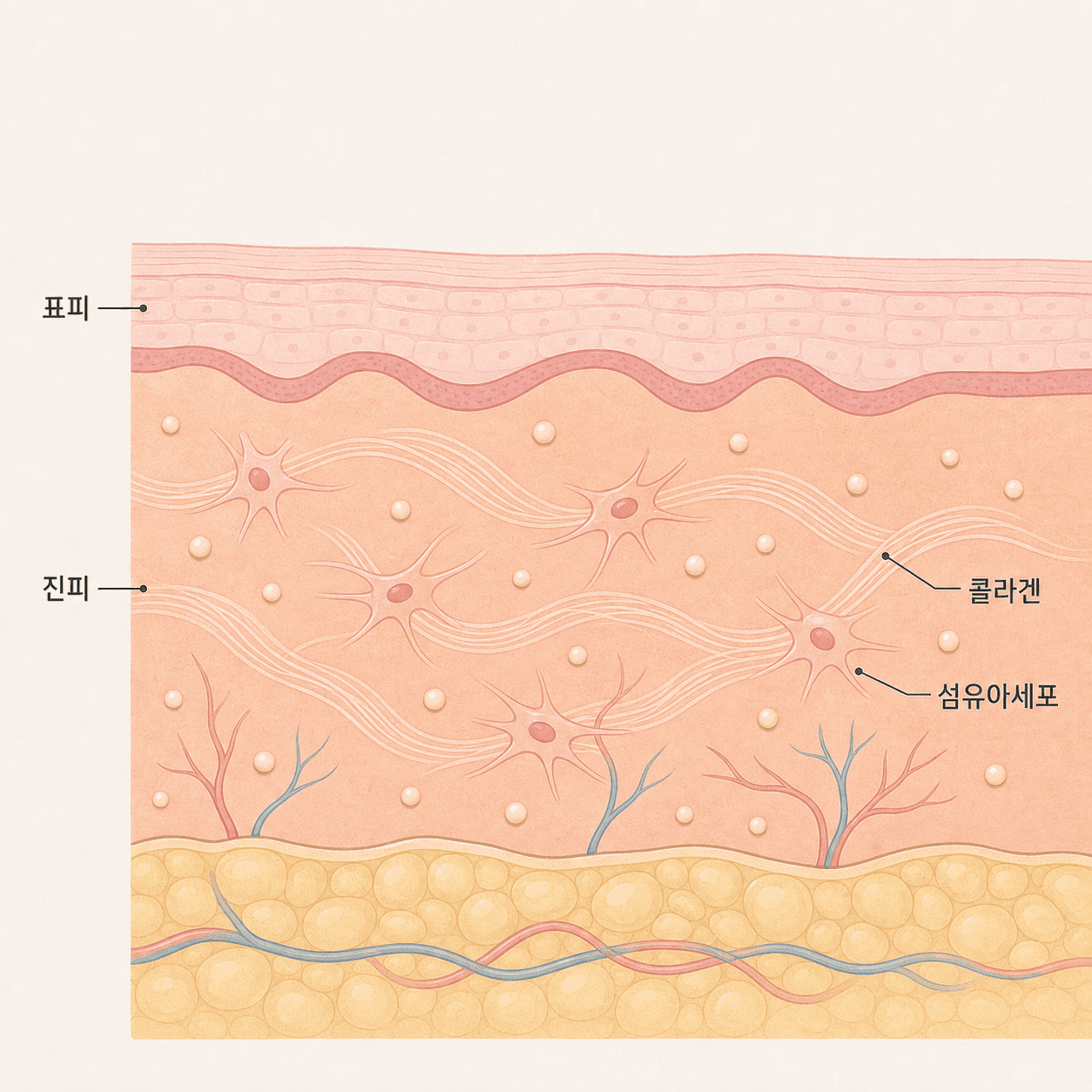

Immediate effect and collagen timing, side by side
Both sit under the collagen booster heading, but plot them against time and the two curves look nothing alike. The main points laid out together.
Item | Juvelook Volume | Sculptra |
|---|---|---|
Main ingredients | PDLLA plus hyaluronic acid | PLLA alone |
Volume on treatment day | Yes, from the hyaluronic acid | Almost none |
How long the immediate effect holds | Weeks, until the hyaluronic acid absorbs | Days, until the carrier absorbs |
When collagen shows | Gradually, from a few weeks on | Weeks to months, peaking around six months |
When the result settles | Collagen takes over as the hyaluronic acid absorbs | Once collagen has accumulated |
Typical sessions | Usually several | Usually 3 to 4, spaced out |
The detail worth noticing is that Juvelook Volume gets its day-one volume and its collagen volume from two different ingredients. Hyaluronic acid carries the bulk at first, and around the time it absorbs and starts to shrink, the collagen built by the PDLLA takes over. Which means there can be a stretch in the middle where it feels as though volume is slipping away.
Sculptra skips that immediate stage entirely, so very little visible change early on is the expected behaviour rather than a warning sign. Dermatology references separate PLLA, a biodegradable material that stimulates collagen, from hyaluronic acid fillers, which are temporary and absorbed by the body over time, and that distinction explains why the early experience of the two treatments feels so different.

Which timeline actually fits your situation
A different onset speed is closer to a different purpose than to a ranking. Rather than one being better, the right pick shifts with when you need to see something and what you are hoping the result looks like.
You have something in the calendar and need visible change by then — Juvelook Volume, with day-one volume, reads faster
You would rather it fill in slowly and quietly — the gradual collagen build of Sculptra may suit better
You can sit through an early stretch with nothing to see — that makes the months-long Sculptra curve easy to live with
Volume loss is marked and you need early fill — Juvelook Volume, carrying both immediate volume and collagen, tends to have the advantage
Seeing when and how much collagen actually accumulates makes expectations easier to set. The rough shape of how PLLA-type products build collagen volume over time looks like this.
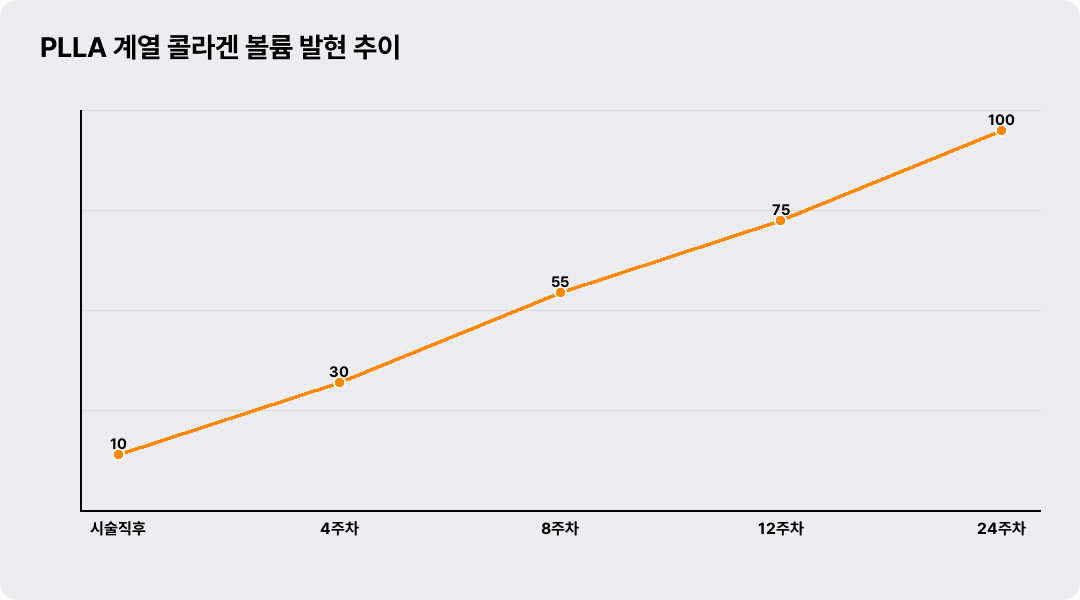
The slope of that curve is personal, of course. Age, skin condition and number of sessions all shift how fast collagen accumulates, and individual results vary, so the version that applies to you is something to map out with a clinician who has seen your skin.

Why the provider you choose still matters
The habit worth looking for is a clinic that asks when you need the change before it names a product. With treatments whose onset speeds differ this much, the same area can call for either one depending on your timeline and how much volume you have lost, so agreeing on when to expect what is worth doing up front. At Beautystone, a small clinic a short walk from Hapjeong Station in Seoul, the session count and spacing get planned around your skin and your calendar together. If you are travelling for treatment, remember these results unfold over months, and any follow-up after you fly home will need a provider where you live.

Set the session plan and expectations in advance
Neither treatment is a one-and-done. Both build their result across several sessions. And because collagen takes time to appear, agreeing on the interval and the checkpoints beforehand makes the whole process far less nerve-racking.
Early change after the first session — visible on the day with Juvelook Volume, and barely visible with Sculptra, which is normal
Interval to the next session — usually a few weeks to a month or more, judged by the collagen response
When to judge the final result — the collagen outcome needs several months after the last session to settle
Maintenance — collagen declines gradually over time too, so it helps to agree a review point with your clinician
Published work describes PLLA products such as Sculptra as biostimulators that induce collagen production through a controlled inflammatory response, while hyaluronic acid supplies immediate hydration and volume. The two materials were never on the same schedule to begin with. So the accurate framing is not that one is slow, but that they deliver at different points. This is general educational information rather than medical advice, and which treatment and session plan suit you is a decision to make with the clinician who has examined you.

Frequently asked questions
Q. It has been weeks since my Sculptra session and nothing has changed. Did something go wrong?
A. Sculptra contains nothing that creates immediate volume, so seeing little early on is the expected behaviour. Collagen takes weeks to months to accumulate, and the result generally becomes clearest at around six months. That said, if you have severe pain or a reaction you were not told to expect, contact the clinician who treated you.
Q. Juvelook Volume gave me volume on day one. Does that stay?
A. The volume visible on treatment day is the immediate effect of hyaluronic acid, so it is absorbed over time and can shrink somewhat. What follows is the collagen stimulated by the PDLLA gradually taking over that space. So a stretch where volume seems to be slipping can still be followed by the collagen filling back in.
Q. Can I have both, or alternate between them?
A. They are sometimes combined depending on the goal, but whether that suits you depends on the area and how much volume has been lost. How to divide the work between immediate volume and collagen has to be judged by a clinician who has seen your skin, so be specific in consultation about the area and the timing you have in mind.
Q. How long do collagen booster results last?
A. A result built from collagen tends to hold longer than an immediate filler, but collagen also declines gradually over time. Duration varies between people, so the sensible approach is to let the result settle for several months after the last session and then agree a maintenance point with your clinician.
Content



![[Wi Young-jin] Sculptra 3-Session Package: Why Not at Once?](https://framerusercontent.com/images/05xhMvbOUj2YiU4scHROwwLx1s.jpg?width=1080&height=1080)


skin
Why Does Fractional CO2 Take Longer to Heal?

Contouring & Volume
How Many cc Does Forehead Filler Need?

skin
Why Is My Skin Oily but Tight in the Fall?

Hair Removal
Underarm Laser Hair Removal Cost: Do the Math

Tattoo removal
Laser Before a Cover-Up: How Many Sessions?

skin
큐어젯 다운타임, 다음 날 출근과 화장은 언제부터 될까요?