

Juvelook vs Juvelook Volume: Injection Depth
Juvelook vs Juvelook Volume: Injection Depth
Juvelook vs Juvelook Volume: Injection Depth
Same PDLLA, different layers: Juvelook hits the Dermis, Volume the fat; CureJet differs again.
Published -
Updated -

Author
Wi Young-jin · Chief director
Seoul National University College of Medicine · Seoul National University Hospital Specialist
→
JubeLuk vs. JubeLuk Volume: the real difference lies in the 'layer' it goes into
Let me start with the conclusion.
JubeLuk and JubeLuk Volume are
not different because of the 'ingredient concentration'
they are treatments that are injected into different skin layers.
I'll explain why in this article.
They all look like PDLLA, right? But actually...
JubeLuk is a collagen-inducing skin booster
made with PDLLA (poly-DL-lactic acid).
JubeLuk Volume is also in the same PDLLA family,
but because the particle size and viscosity are different,
it is designed to be injected into the fat layer,
not the dermis, to create 'volume'.
Why does the same PDLLA produce such different results?
The key point of this article
JubeLuk SB goes into the outer layer,
JubeLuk Volume is, in principle, injected into the fat layer — however,
if you use a jet-spraying device like CureJet, even Volume can be placed superficially in the outer layer, making the same product a completely different treatment.
“If you get JubeLuk often
your face gets bigger,” have you heard that?
In fact, it's the opposite.
To be precise — it depends on which JubeLuk
was injected where,
not on the product itself.
Here, the key is how PDLLA works.
After injection, PDLLA gradually hydrolyzes
over 6 to 8 weeks
stimulating the surrounding fibroblasts
to produce new collagen.
Because the absorption curve is long and gradual,
one treatment brings results up slowly
over about 3 to 6 months.
But here's something important.
Even with the same PDLLA, if it is placed in the dermis (outer layer),
the shallow collagen network becomes denser,
and the result shows up as skin texture, fine lines, and elasticity.
On the other hand, if it goes into the subcutaneous fat layer,
collagen pillars form between the fat,
and the result is 'volume'.
The depth difference is only 1–3 mm,
but the result the patient sees is completely different.
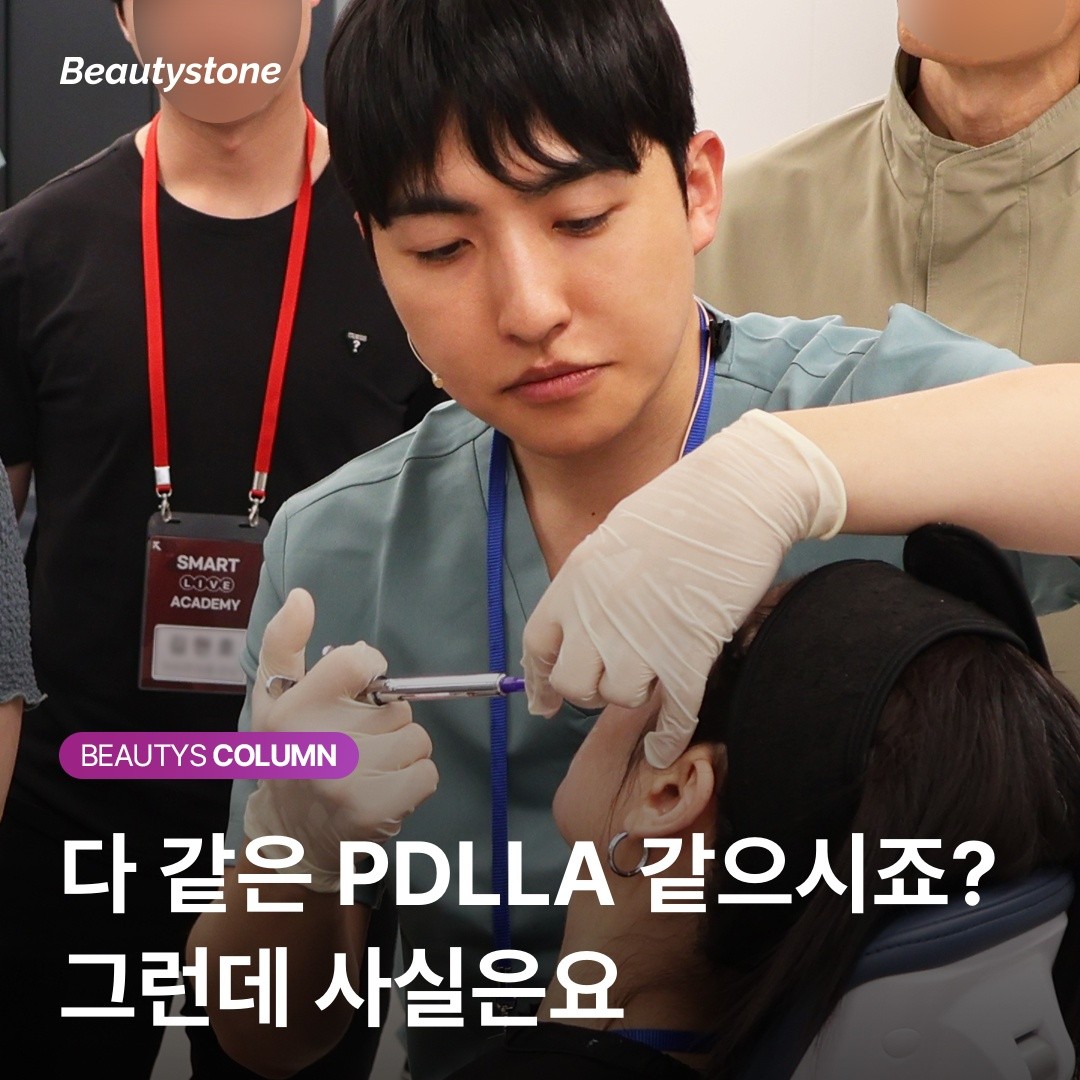
And one more thing,
there's something many people don't know.
JubeLuk Volume is originally
meant to be placed into the fat layer with a cannula,
but if you use a jet-spraying device like CureJet,
you can spray the Volume product
micro-finely into the superficial dermis.
Then, even though it's the same 'JubeLuk Volume',
it acts in a shallow layer like SB,
while its particle properties give it a stronger collagen-inducing effect,
making it a completely different treatment.
So even if you come in hearing the same product name,
the result changes depending on
which clinic injected it and how deep it was placed.
Also, let me talk about 'nodules'.
If you search for the JubeLuk series,
you'll often see nodules mentioned.
A nodule is when particles clump together in one spot
and form a small palpable lump,
and it mainly happens in two situations.
One is when the injection depth is too shallow,
causing particles to aggregate in the superficial layer,
and the other is when a large amount is injected
at a single point.
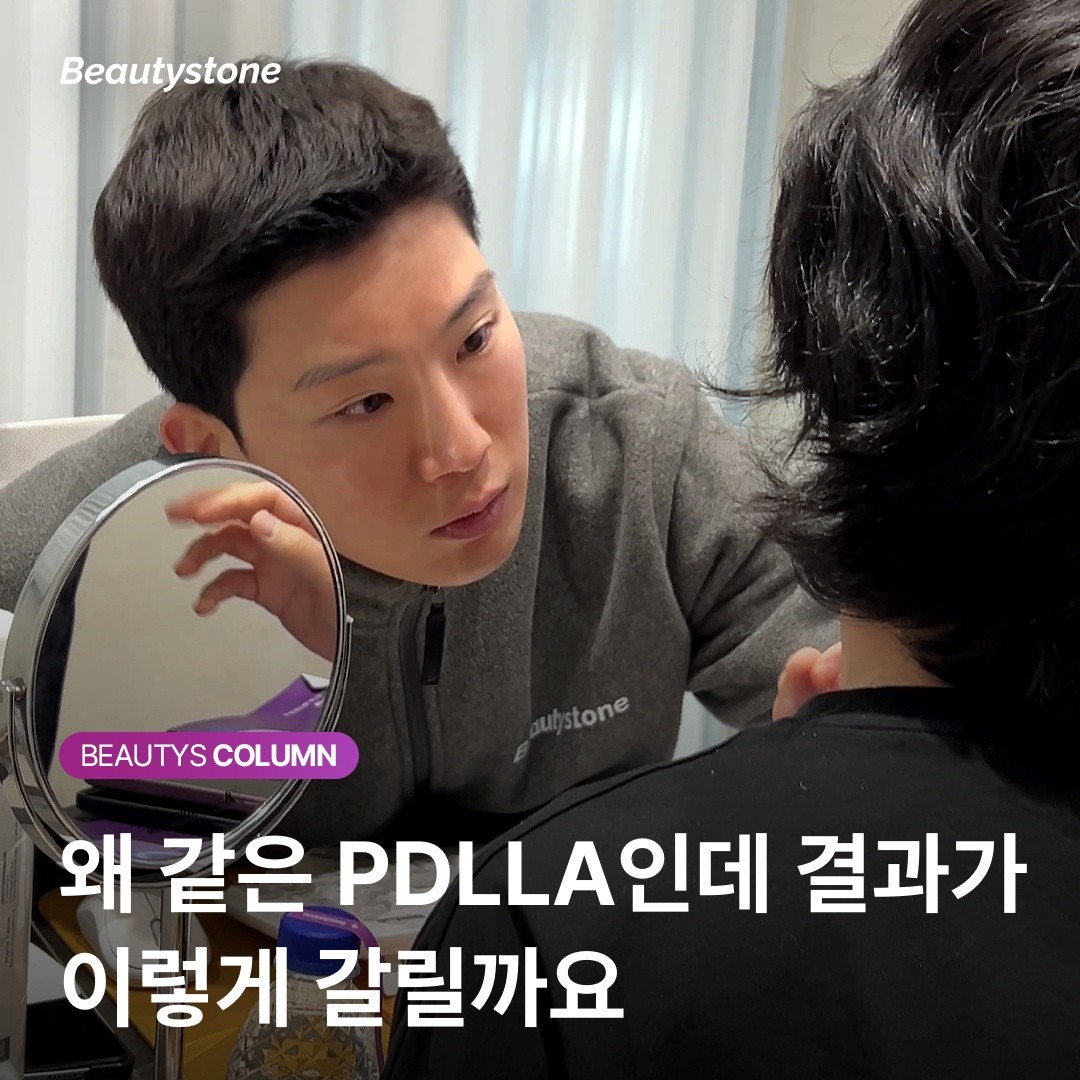
So JubeLuk Volume, in particular,
should be widely dispersed with a cannula,
and when injecting into the dermis with CureJet,
the spray pressure and amount must be precisely controlled
to reduce the risk of nodules.
Director Wi Young-jin's key summary
JubeLuk SB is for the dermis, JubeLuk Volume is for the fat layer — that is the basic rule.
However, if you use a device like CureJet, Volume can also be placed superficially in the outer layer,
so the same product becomes a completely different treatment.
That's why you should not compare them by product name alone.
So which JubeLuk is right for you?
There are so many cases like this, so I'll note them separately.
Last month, a 35-year-old patient came in for a repeat treatment.
She had received JubeLuk SB
in the dermis four times last fall,
“My skin texture improved,
but the sunken cheek feeling is still there,” she said.
That was an expected result.
SB is a treatment for improving the surface,
not for creating volume.
This time, we injected JubeLuk Volume
into the front and side cheek fat layers with a cannula.
At the follow-up one month later,
she said, “It feels a bit fuller now.”
Another case was a 27-year-old patient,
who only cared about rough texture and pores,
so I recommended SB only from the start.
They weren't at an age where volume was needed,
and their facial bone structure was already sufficient,
so adding a volume product unnecessarily
could actually make things feel heavy.
When you look at it this way, the difference should be clear.
Category | JubeLuk (SB) | JubeLuk Volume |
|---|---|---|
Injection layer | Dermis (1–2 mm) | Subcutaneous fat layer (3–5 mm) |
Injection tool | Needle or CureJet | Cannula (CureJet also possible) |
Main result | Skin texture · fine lines · elasticity | Volume · correction of hollowing |
Recommended sessions | Every 3–4 weeks, 3–4 sessions | Observe after 1–2 sessions |
Recommended for | People in their 20s–30s with texture/elasticity concerns | Late 30s+, concerns about hollowness |
For people in their 30s too, if the bone structure is good
and only the surface is rough, SB is the right choice,
but for someone in their 20s whose cheeks have already hollowed early,
Volume may be a better fit.
This is exactly why we decide after seeing the patient in person.
If you've read this far, you may be wondering this
Q1. Can I get JubeLuk and JubeLuk Volume together?
A. This question really comes up a lot.
It is possible, but same-day combined treatment is generally not recommended because of swelling management.
Usually, we place Volume into the fat layer first, then use SB to refine the surface 2–3 weeks later.
That tends to give more stable results.
But once I explain that, the next question usually follows.
Q2. How much JubeLuk Volume is injected at once, and how long does it last?
A. You need to look at it by vial
The amount of JubeLuk particles is important.
If the face lacks volume, about one vial is appropriate for a single treatment
The maintenance period is usually 12–18 months. However, PDLLA keeps producing collagen even as it is absorbed,
so even after the product disappears, some of your own collagen remains.
Before wrapping up, this part is really important.
Q3. What should I do if a nodule forms?
A. To be honest, small nodules mostly resolve naturally within 2–3 months.
But if a large nodule is palpable, that's a problem.
You should get medical care.
It can be treated with a tiny steroid injection,
and in rare cases surgical treatment may be needed, so we do not recommend leaving it alone.
If you take just one thing away from today — even with the same JubeLuk, the layer and the tool used determine the result.
In the next article, I'll explain 'how JubeLuk Volume sprayed into the dermis with CureJet differs from regular SB in results.' I'll show you a case comparing the two methods in the same patient. This was Wi Young-jin.
Read together
Frequently asked questions
Q. Q1. Can I get Juvelook and Juvelook Volume together?
A. In fact, this question comes up really often. It’s possible, but we usually don’t recommend having both procedures done on the same day because of swelling management.
Q. Q2. How much Juvelook Volume is injected at one time, and how long does it last?
A. This should be considered in terms of bottles. The amount of Juvelook particles is important. If your face lacks volume, about one bottle is appropriate for a single treatment.
Q. Q3. What should I do if a lump appears?
A. To be honest, small nodules usually go away naturally within 2–3 months. But if a large nodule can be felt, that’s a problem.
Q. My skin texture is just rough, but I don't really have any sunken cheeks. In my case, would Juvelook SB or Juvelook Volume be the right choice?
A. If your main concerns are skin texture and elasticity without any sunken cheeks, Juvelook SB, which targets the dermal layer, is the right choice for you. Volume boosters are designed to be injected into the fat layer to replenish volume loss, so applying them when not needed might lead to an unnatural, overfilled look.
JubeLuk vs. JubeLuk Volume: the real difference lies in the 'layer' it goes into
Let me start with the conclusion.
JubeLuk and JubeLuk Volume are
not different because of the 'ingredient concentration'
they are treatments that are injected into different skin layers.
I'll explain why in this article.
They all look like PDLLA, right? But actually...
JubeLuk is a collagen-inducing skin booster
made with PDLLA (poly-DL-lactic acid).
JubeLuk Volume is also in the same PDLLA family,
but because the particle size and viscosity are different,
it is designed to be injected into the fat layer,
not the dermis, to create 'volume'.
Why does the same PDLLA produce such different results?
The key point of this article
JubeLuk SB goes into the outer layer,
JubeLuk Volume is, in principle, injected into the fat layer — however,
if you use a jet-spraying device like CureJet, even Volume can be placed superficially in the outer layer, making the same product a completely different treatment.
“If you get JubeLuk often
your face gets bigger,” have you heard that?
In fact, it's the opposite.
To be precise — it depends on which JubeLuk
was injected where,
not on the product itself.
Here, the key is how PDLLA works.
After injection, PDLLA gradually hydrolyzes
over 6 to 8 weeks
stimulating the surrounding fibroblasts
to produce new collagen.
Because the absorption curve is long and gradual,
one treatment brings results up slowly
over about 3 to 6 months.
But here's something important.
Even with the same PDLLA, if it is placed in the dermis (outer layer),
the shallow collagen network becomes denser,
and the result shows up as skin texture, fine lines, and elasticity.
On the other hand, if it goes into the subcutaneous fat layer,
collagen pillars form between the fat,
and the result is 'volume'.
The depth difference is only 1–3 mm,
but the result the patient sees is completely different.
And one more thing,
there's something many people don't know.
JubeLuk Volume is originally
meant to be placed into the fat layer with a cannula,
but if you use a jet-spraying device like CureJet,
you can spray the Volume product
micro-finely into the superficial dermis.
Then, even though it's the same 'JubeLuk Volume',
it acts in a shallow layer like SB,
while its particle properties give it a stronger collagen-inducing effect,
making it a completely different treatment.
So even if you come in hearing the same product name,
the result changes depending on
which clinic injected it and how deep it was placed.
Also, let me talk about 'nodules'.
If you search for the JubeLuk series,
you'll often see nodules mentioned.
A nodule is when particles clump together in one spot
and form a small palpable lump,
and it mainly happens in two situations.
One is when the injection depth is too shallow,
causing particles to aggregate in the superficial layer,
and the other is when a large amount is injected
at a single point.
So JubeLuk Volume, in particular,
should be widely dispersed with a cannula,
and when injecting into the dermis with CureJet,
the spray pressure and amount must be precisely controlled
to reduce the risk of nodules.
Director Wi Young-jin's key summary
JubeLuk SB is for the dermis, JubeLuk Volume is for the fat layer — that is the basic rule.
However, if you use a device like CureJet, Volume can also be placed superficially in the outer layer,
so the same product becomes a completely different treatment.
That's why you should not compare them by product name alone.
So which JubeLuk is right for you?
There are so many cases like this, so I'll note them separately.
Last month, a 35-year-old patient came in for a repeat treatment.
She had received JubeLuk SB
in the dermis four times last fall,
“My skin texture improved,
but the sunken cheek feeling is still there,” she said.
That was an expected result.
SB is a treatment for improving the surface,
not for creating volume.
This time, we injected JubeLuk Volume
into the front and side cheek fat layers with a cannula.
At the follow-up one month later,
she said, “It feels a bit fuller now.”
Another case was a 27-year-old patient,
who only cared about rough texture and pores,
so I recommended SB only from the start.
They weren't at an age where volume was needed,
and their facial bone structure was already sufficient,
so adding a volume product unnecessarily
could actually make things feel heavy.
When you look at it this way, the difference should be clear.
Category | JubeLuk (SB) | JubeLuk Volume |
|---|---|---|
Injection layer | Dermis (1–2 mm) | Subcutaneous fat layer (3–5 mm) |
Injection tool | Needle or CureJet | Cannula (CureJet also possible) |
Main result | Skin texture · fine lines · elasticity | Volume · correction of hollowing |
Recommended sessions | Every 3–4 weeks, 3–4 sessions | Observe after 1–2 sessions |
Recommended for | People in their 20s–30s with texture/elasticity concerns | Late 30s+, concerns about hollowness |
For people in their 30s too, if the bone structure is good
and only the surface is rough, SB is the right choice,
but for someone in their 20s whose cheeks have already hollowed early,
Volume may be a better fit.
This is exactly why we decide after seeing the patient in person.
If you've read this far, you may be wondering this
Q1. Can I get JubeLuk and JubeLuk Volume together?
A. This question really comes up a lot.
It is possible, but same-day combined treatment is generally not recommended because of swelling management.
Usually, we place Volume into the fat layer first, then use SB to refine the surface 2–3 weeks later.
That tends to give more stable results.
But once I explain that, the next question usually follows.
Q2. How much JubeLuk Volume is injected at once, and how long does it last?
A. You need to look at it by vial
The amount of JubeLuk particles is important.
If the face lacks volume, about one vial is appropriate for a single treatment
The maintenance period is usually 12–18 months. However, PDLLA keeps producing collagen even as it is absorbed,
so even after the product disappears, some of your own collagen remains.
Before wrapping up, this part is really important.
Q3. What should I do if a nodule forms?
A. To be honest, small nodules mostly resolve naturally within 2–3 months.
But if a large nodule is palpable, that's a problem.
You should get medical care.
It can be treated with a tiny steroid injection,
and in rare cases surgical treatment may be needed, so we do not recommend leaving it alone.
If you take just one thing away from today — even with the same JubeLuk, the layer and the tool used determine the result.
In the next article, I'll explain 'how JubeLuk Volume sprayed into the dermis with CureJet differs from regular SB in results.' I'll show you a case comparing the two methods in the same patient. This was Wi Young-jin.
Read together
Frequently asked questions
Q. Q1. Can I get Juvelook and Juvelook Volume together?
A. In fact, this question comes up really often. It’s possible, but we usually don’t recommend having both procedures done on the same day because of swelling management.
Q. Q2. How much Juvelook Volume is injected at one time, and how long does it last?
A. This should be considered in terms of bottles. The amount of Juvelook particles is important. If your face lacks volume, about one bottle is appropriate for a single treatment.
Q. Q3. What should I do if a lump appears?
A. To be honest, small nodules usually go away naturally within 2–3 months. But if a large nodule can be felt, that’s a problem.
Q. My skin texture is just rough, but I don't really have any sunken cheeks. In my case, would Juvelook SB or Juvelook Volume be the right choice?
A. If your main concerns are skin texture and elasticity without any sunken cheeks, Juvelook SB, which targets the dermal layer, is the right choice for you. Volume boosters are designed to be injected into the fat layer to replenish volume loss, so applying them when not needed might lead to an unnatural, overfilled look.


Latest post
Latest post

Hair Removal
레이저 제모 1회에도 남는 몫이 있어요 — 밀도를 모자이크로 보는 법

Tattoo removal
Why Extremity Tattoos Are Slower to Remove

Tattoo removal
Tattoo Removal Cost: Why Quotes Vary by Area

Tattoo removal
Unused Tattoo Removal Sessions: What Happens?

Lifting
Forehead Thread Lifting: How Far Can It Go?

skin
Skin Booster Prices: What to Check in a Quote
1:1 Custom Approach
1:1 Consultation Whatsapp
🌸 Beautystone Clinic attends the Meditox Bangkok Cadaver Workshop 🌸
1:1 Custom Approach