

Two clinics quote different prices for the same skin booster because they're pricing different things. Here's what to confirm before you commit.
Published
Updated

Author
Wi Young-jin · Chief director
Seoul National University College of Medicine · Seoul National University Hospital Specialist
→
If you've ever gotten two wildly different quotes for a skin booster treatment, you're not alone — and the difference usually isn't about one clinic being more expensive than the other. It's about what's actually inside the estimate.
A quote that says "Rejuran — ₩180,000" and another that says "Rejuran — ₩390,000" might both be accurate. They're just quoting different things: different volumes, different session counts, different delivery methods. The product name is the same. The treatment isn't. In this article, we'll cover why pricing varies so significantly across clinics, and the five checklist items that make a real difference when you're comparing skin booster estimates. Read on.
What Is a Skin Booster, Exactly?
Skin boosters are injectable hydration and collagen-stimulating treatments designed to improve skin quality from within — think moisture levels, elasticity, and fine texture — rather than add volume or lift like a filler would.
The most common types you'll encounter:
Rejuran (PN-based): Polynucleotide formula known for skin repair, pore refinement, and improving elasticity over time. Rejuran Healer is the classic 2cc protocol; Rejuran HB adds hyaluronic acid for a hydration boost.
Juvelook (PDLLA-based): A biostimulator — it works by triggering your skin's own collagen production over weeks. Juvelook Volume adds HA to the mix for more immediate plumpness alongside the longer-term collagen effect.
Sculptra (PLLA-based): Poly-L-lactic acid that stimulates collagen gradually. Typically used in multiple sessions spaced weeks apart. Results build slowly and tend to last longer than HA-based boosters.
HA-based boosters (various brands): Hyaluronic acid microinjections delivered via needle or automated injector to hydrate and temporarily plump the skin. The most entry-level category in terms of initial cost.
Each category behaves differently and is priced differently — which is reason number one why quotes from different clinics can look completely incomparable even when they use the same brand name.

Why Does the Same Treatment Cost More at Some Clinics?
The short answer? A skin booster estimate is made up of several separate variables. Most quoted prices bundle a few of them and leave the rest unspecified.
Here's what's actually driving the number:
Product: Rejuran Healer vs. Rejuran HB vs. a generic PN formula can have very different material costs, even within the same brand family.
Volume (cc): A 1cc session and a 2cc session are not equivalent. Standard Rejuran Healer protocol is 2cc per session, but clinics sometimes quote 1cc entry-level pricing without flagging the reduction.
Number of sessions: A quoted price might be per session, or it might be a package price for three or four sessions. Packages often represent better value per session but require upfront commitment.
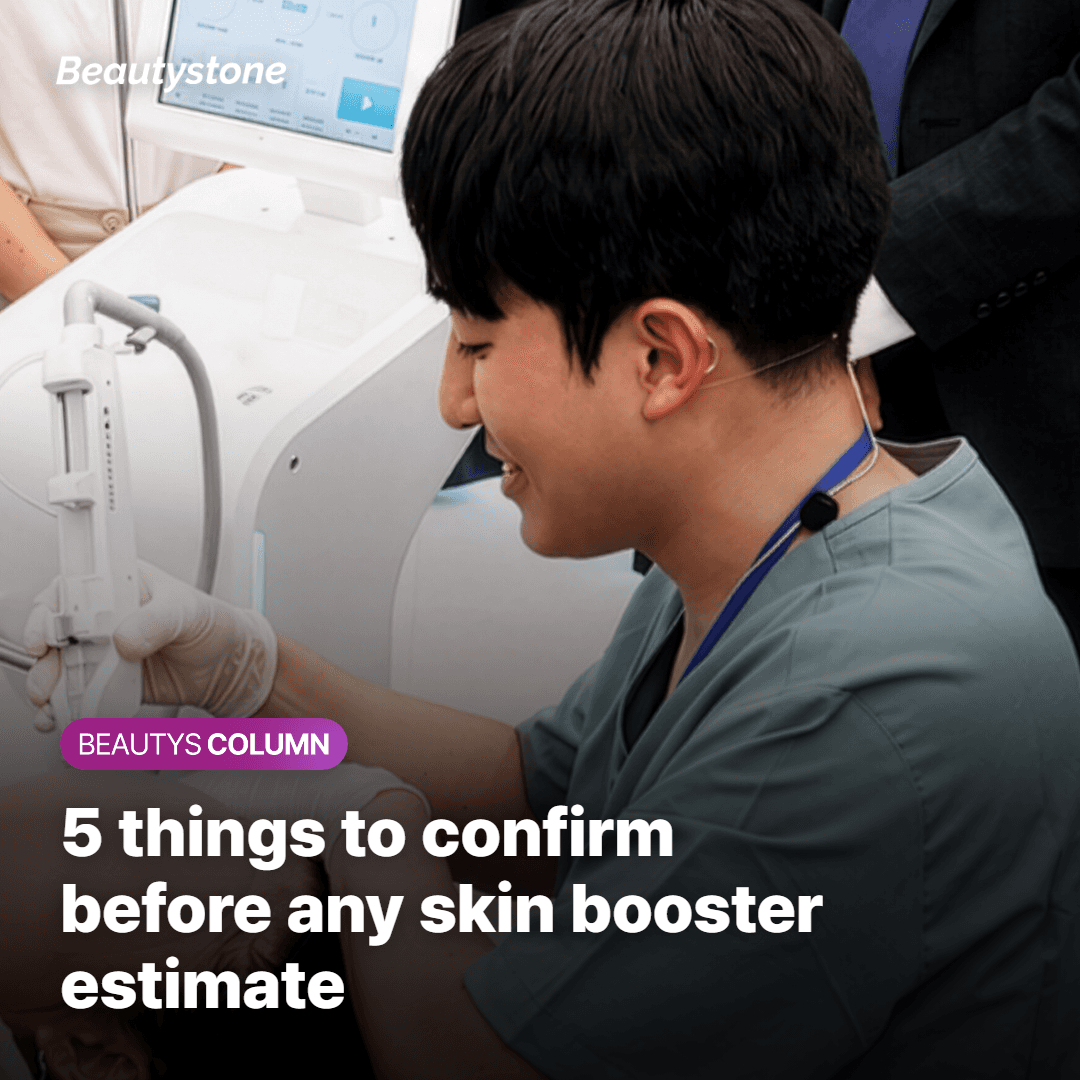
Delivery method: Manual injection by a physician versus a pneumatic injector gun versus a needleless pressurized system — the technique differs in depth, distribution, and the degree of micro-trauma that triggers collagen response. More precise delivery typically costs more.
Provider skill level: Physician-administered vs. nurse-administered, and the experience level of whoever's doing it, affects outcome — and is often reflected in price.
Research published in PMC on skin booster outcomes notes that clinical results are dose-dependent — volume per session is a real variable, not just a billing detail. This is exactly what makes skin booster quotes hard to compare at face value. The product name is just one variable. The rest are usually buried in the fine print — or not mentioned at all.
The 5-Item Checklist for Any Skin Booster Estimate
Before you commit to a skin booster treatment plan, here's what to confirm in writing or at consultation. Every one of these has a real effect on what you're getting.
1. Product name and specific formula. Don't settle for just the brand. Ask whether it's Rejuran Healer, Rejuran HB, Juvelook, Juvelook Volume, Sculptra, or a specific HA product. The difference in mechanism and duration can be significant.
2. Volume per session (in cc). Ask explicitly how many cc per session are included in the quoted price. A single session at 1cc vs. 2cc is roughly half the active ingredient — and should be roughly half the effective dose.
3. Session count and spacing. Is the quoted price per session, or a package? If it's a package, how are the sessions spaced? Standard Rejuran Healer is typically three to four sessions spaced two to four weeks apart. Biostimulators like Juvelook are usually two to three sessions. Ask what's included and what a follow-up maintenance session costs.
4. Delivery method. Ask whether the injection is manual (physician-administered) or via an automated injector. Both have their place, but the technique affects depth, distribution, and consistency. Knowing which you're getting helps you compare accurately across clinics.
5. What's not included. Ask about add-on costs: numbing cream, post-procedure care, any follow-up assessment. Some clinics quote the injection price only; others quote an all-in price. A lower headline number that doesn't include anesthesia or care products can end up higher in practice.
If a clinic is hesitant to answer any of these questions clearly, that's worth noting. Transparent clinics will give you a breakdown without prompting.
Side Effects and Risks to Know Beforehand
Skin boosters are generally well-tolerated, but they're still injectable procedures. Here's what's typical and what warrants attention:
Redness and swelling at injection sites: Common immediately after the procedure. Typically resolves within 24 to 48 hours for HA-based boosters; may last a few days with PN or biostimulator formulas.
Bruising: Possible, particularly with manual injection. Usually fades within a week. More likely if you've taken blood-thinning medications or supplements before treatment.
Small papules or bumps: Temporary micro-papules at injection sites are normal and usually flatten within a few days. If they persist beyond two weeks, let your provider know.
Infection: Rare but possible. Follow the aftercare instructions — don't touch the injection sites with unwashed hands and avoid heavy sweat or water immersion for the first 24 hours.
Delayed swelling (with biostimulators): Juvelook and Sculptra can cause mild swelling at two to four weeks as collagen synthesis ramps up. This is expected — it's not a reaction.
Redness and tenderness are common and usually settle within a few days. If you notice spreading redness, fever, or worsening pain beyond the expected recovery window, seek medical care right away. Research in PMC comparing skin booster protocols confirms these are the most commonly reported effects, and that they typically resolve without intervention when aftercare guidelines are followed. Individual results vary.
How Much Does Skin Booster Treatment Cost in Seoul?
Pricing in Seoul varies considerably depending on the product, volume, and session structure. Here's a rough calibration by category — not a guarantee of what you'll be quoted, but a frame of reference.
HA-based entry-level boosters typically start at ₩100,000–200,000 per session. Rejuran Healer (the standard 2cc PN protocol) is commonly priced in the ₩200,000–400,000 range per session before package discounts. Biostimulators like Juvelook and Sculptra, which require multiple sessions and carry higher material costs, are generally quoted as full package prices rather than per-session — expect the multi-session commitment to run meaningfully higher.
At Beautystone, skin booster pricing is based on the specific product and session plan worked out at consultation. Current pricing and ongoing offers are at /en/price. For promotions and package rates, see /en/promotion. Seoul clinic pricing is subject to change.
One more thing worth saying: a lower-priced single session and a higher-priced package aren't necessarily different value. Often the package is the better deal on a per-session basis — but you're committing to the full course upfront. Ask your provider whether there's a meaningful clinical difference in outcome between a single session and a full series for your specific concern.

Who Is a Good Candidate for Skin Boosters?
Most people with skin quality concerns — dullness, dehydration, fine texture, mild laxity — are reasonable candidates. Research published in PMC reviewing injectable skin quality treatments notes that patient selection and skin condition assessment are significant predictors of outcome. Individual results vary.
Skin boosters tend to work best when addressing the early-to-moderate range of concern, rather than severe changes that might require more structural intervention. If you're dealing with deep structural volume loss, significant laxity, or hyperpigmentation, a skin booster may help as part of a combined approach — but it won't be the primary fix.
Certain patients should discuss with their provider before booking: anyone who is pregnant or breastfeeding, anyone with active skin infections in the treatment area, and anyone on immunosuppressants. A thorough intake evaluation is the appropriate first step. A consultation where someone actually assesses your skin, rather than just quoting a menu price, is the only way to know whether you're looking at the right product and protocol.
The Bottom Line
Comparing skin booster quotes is harder than it looks — because two clinics can use the same product name and be quoting you completely different treatments. Here's the recap:
Pricing varies because volume, session count, formula type, and delivery method are all separate variables that affect both cost and outcome.
The same brand name (Rejuran, Juvelook, etc.) can mean different things at different clinics. Ask for the specific formula and cc per session before comparing prices.
A package quoted at a higher headline price may represent better per-session value than a low entry-price single session.
Aftercare, numbing, and follow-up costs may or may not be included in the quote — always ask.
Like any injectable procedure, skin boosters come with trade-offs — temporary redness, a multi-session commitment for some products, and results that aren't permanent. Individual results vary.
Ultimately, the choice depends on your skin, your specific concern, and what kind of commitment you're ready to make. If you're considering skin booster treatment, a consultation is the best way to find out which product and plan actually fits you. Beautystone is a dermatology clinic in Seoul's Hapjeong area. See current offers at /en/promotion, or visit /en/price for current pricing.
Frequently Asked Questions
Q. How many sessions of skin booster treatment do I need?
A. It depends on the product. HA-based boosters can show results from a single session, though two to three sessions are common for sustained hydration. Rejuran Healer is typically recommended in three to four sessions spaced two to four weeks apart. Biostimulators like Juvelook and Sculptra usually require two to three sessions as a foundation, with maintenance annually or semi-annually. Your provider will recommend a session plan based on your skin condition and the product chosen.
Q. Does skin booster treatment hurt?
A. Most people describe the sensation as mild pinching or pressure, not sharp pain. A topical numbing cream is applied before the procedure, and some clinics also use a local anesthetic. Automated injectors tend to feel more uniform than manual injection. Post-procedure tenderness at injection sites is common for a day or two but is usually manageable.
Q. How long do skin booster results last?
A. It varies by product type. HA-based boosters typically last two to four months before the hyaluronic acid is metabolized. PN-based treatments like Rejuran work partly through collagen stimulation, so results can last longer — often six to twelve months — with a full course. Biostimulators like Juvelook and Sculptra produce collagen over time, and the effect can persist one to two years. Individual results vary based on skin condition, lifestyle, and how many sessions you complete.
Q. What's the difference between a skin booster and a filler?
A. A skin booster is designed to improve overall skin quality — hydration, texture, elasticity, radiance — through microinjections distributed across an area. A filler is designed to add volume to a specific location (lips, cheeks, nasolabial folds) or smooth a defined line. Boosters work at a broad texture level; fillers work at a structural level. The two can be used together but serve different purposes, and your provider will assess which concern you're actually trying to address.



Hair Removal
Laser Hair Removal Pain: Easier by Session 3?

Tattoo removal
문신제거 흉터, 레이저로 지우면 자국이 남을까요?

Contouring & Volume
Glabella Botox Side Effects: Droopy Eyelids

Contouring & Volume
Juvelook Volume Not Working After 3 Sessions?

Contouring & Volume
Hip Dip Filler Before and After: 4 Checks

Body
Potenza Treatment Interval: Why 4 Weeks?