

Juvelook (PDLLA) builds collagen, Rejuran (PN) signals repair, RE2O (hADM) reinforces structure.
Published
Updated

Author
Wi Young-jin · Chief director
Seoul National University College of Medicine · Seoul National University Hospital Specialist
→
When exploring skin booster treatments, you'll often see RE2O, Rejuran, and Juvelook featured together as a set. It's only natural to want to compare their longevity by asking, "Which of these three lasts the longest?" However, because the active ingredients in each are completely different, the way they work and the results they deliver also belong to different categories.
This article is a curated guide based on treatment information from Hapjeong Beautystone.
To give you a quick answer: Juvelook relies on PDLLA* to guide your skin into slowly producing its own collagen, while Rejuran uses PN* to signal and support the skin's natural healing process. RE2O is a relatively new approach based on hADM*, meaning there is not as much clinical data available on it yet. For all three, progress builds up with each session rather than showing dramatic changes all at once. Because of this, "How to space your sessions" is actually a much more important question than "How long will one session last?"
PDLLA*: A lactic acid-based ingredient that slowly encourages collagen production. It is commonly used in collagen booster treatments like Juvelook.
PN (Polynucleotide)*: A DNA fragment derived from salmon. It is known to play a key role in skin regeneration signals.
hADM (Human Acellular Dermal Matrix)*: A matrix component used to structurally reinforce the dermal layer.
In this post, you'll learn:
How the ingredients of these three skin boosters differ
Why their duration and longevity appear to be different
Which treatment matches your unique skin concerns
How to ideally space your treatment sessions
Three distinct ingredients for three different pathways
Even though they are grouped under the category of "skin boosters," they function very differently beneath the surface. It is best not to assume they will deliver the same effects just because they share a category.
The core of the Juvelook lineup is PDLLA. As these micro-particles of lactic acid slowly break down inside the skin, they stimulate your body to produce its own new collagen. According to resources from the U.S. National Library of Medicine, lactic acid-based particles encourage new collagen synthesis as they biodegrade. Instead of filling your skin instantly, the results build up beautifully over time.
The key to Rejuran is PN. PN and related compounds are DNA-derived substances. Review papers suggest that PN plays a significant role in fibroblast activity, tissue repair, and anti-inflammatory signaling. Rather than adding immediate volume, Rejuran focuses on restoring and elevating your skin’s overall health and vitality.
RE2O uses hADM to structurally support and reinforce the dermis. However, compared to the other two ingredients, there is less publicly available clinical data. This means individual results can vary more widely, which is an important point to keep in mind.
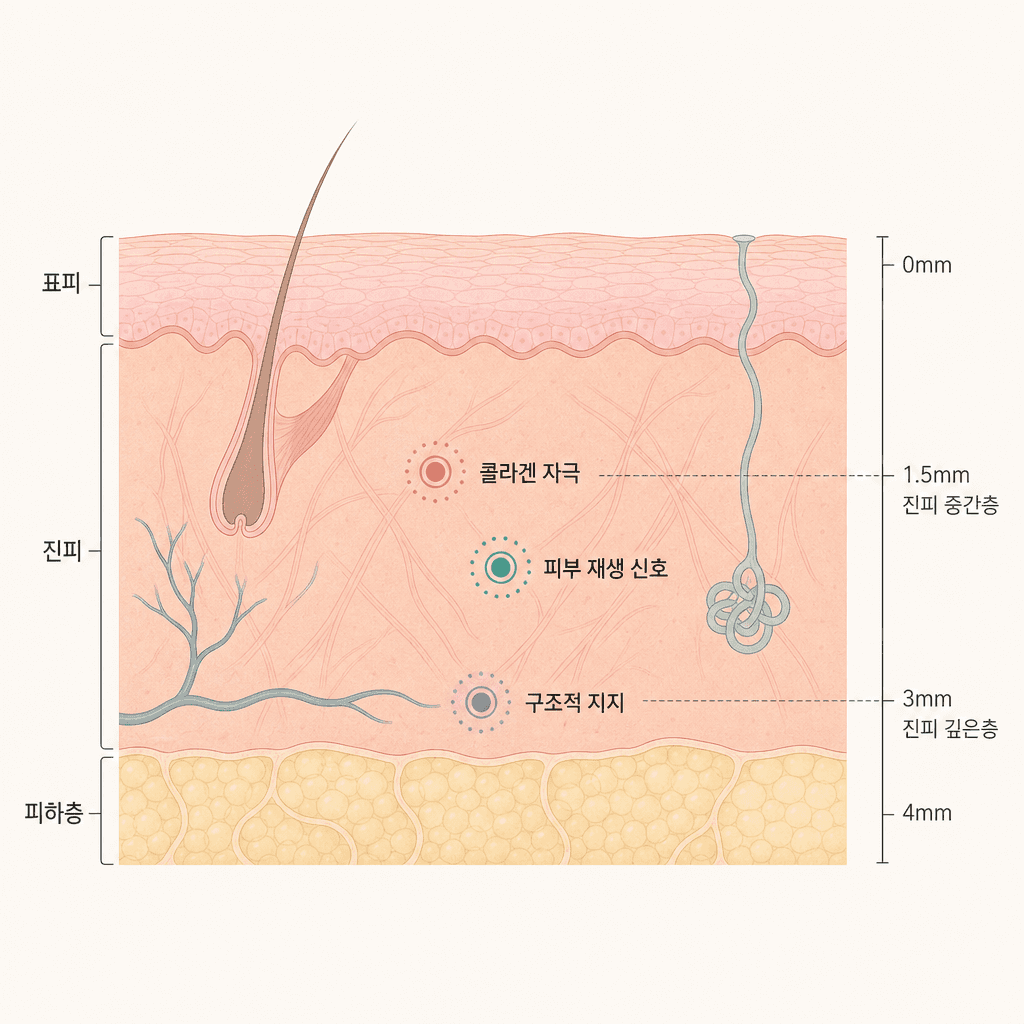

Why the duration of results seems to differ
It is difficult to compare the longevity of these treatments in a single timeline because their mechanisms of action are inherently different from the start. A treatment that volumes, a treatment that heals, and a treatment that reinforces structure cannot operate on the same timetable.
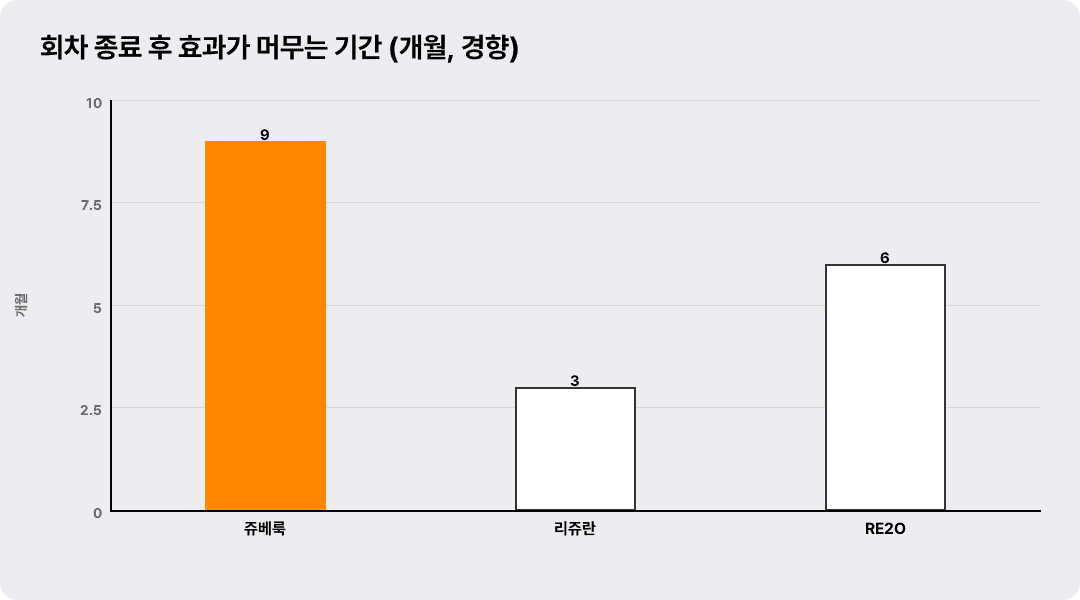
Because Juvelook works by slowly regenerating collagen as PDLLA degrades, the results emerge gradually and tend to last relatively longer. Rejuran, on the other hand, operates on a shorter, active cellular healing cycle. While you might notice pleasant changes quickly between sessions, regular maintenance visits are recommended to sustain the cumulative benefits. Since RE2O is designed to gradually reinforce the skin's structure and has less documented data, it is safest to approach it with flexible expectations.
That collagen-stimulating treatments gradually reveal results over a 3-to-6-month period, with the necessary number of sessions varying per individual, is also highlighted in resources by the American Society for Dermatologic Surgery. Even with the same treatment, your skin’s natural collagen production rate and lifestyle habits (such as sun exposure, sleep, and diet) will influence how long your results last. Therefore, the comparison below represents average trends, and your personal timeline may vary.
Choosing the right treatment for your skin’s needs
If you focus on the most noticeable change your skin currently needs, making a choice becomes much simpler. Even for individuals in their late 30s, the ideal starting point will differ depending on whether their concern is rough skin texture or loss of volume.
Skin Concern | Recommendation |
|---|---|
Rough, uneven texture and slow skin recovery | Rejuran is likely the best fit. Since PN works on healing signals, improvements in skin texture and tone tend to appear relatively quickly. |
Loss of both volume and elasticity | The Juvelook lineup is a great match. PDLLA slowly restores volume while gently stimulating natural collagen production. |
Noticeable weakening of the skin's structural layer | RE2O is worth considering. This approach prioritizes reinforcing weak structures using hADM. |
Sensitive skin or a tendency to swell easily | We recommend starting with a consultation for treatments that minimize discomfort or focus primarily on gentle recovery signals. |
It is also helpful to note that the longevity of injectable and filler-type treatments can vary from 6 months to 2 years depending on the product type and injection technique. There is no single "best" option for everyone; finding the treatment that aligns with what your skin is asking for is the most important first step.

At Hapjeong Beautystone, we customize session intervals to your skin's healing speed
Even with the same skin booster, Hapjeong Beautystone carefully evaluates your skin’s natural healing pace before determining the intervals between your sessions. For those who recover quickly, we schedule standard intervals. For those with slower recovery or a history of frequent treatments, we schedule sessions further apart to allow the dermis ample time to rest and renew. Conveniently located just a short walk from Hapjeong Station, it’s easy to pop in briefly between sessions so we can check your progress and gently adjust your upcoming schedule.

How to properly space your treatment sessions
The ideal time between sessions depends on your unique skin recovery speed and the type of treatment chosen. Average guidelines serve as a helpful starting point, but adjusting intervals while observing your skin's healing tone is the safest path.
If sessions are spaced too closely, a new treatment might overlap before the previous session's effects have fully settled, potentially leading to prolonged swelling or sensitivity. Conversely, spacing them too far apart may reduce the cumulative benefits of the treatment. As mentioned, collagen stimulation takes time, so adjusting sessions within a 4-to-6-week window is generally the most effective approach. However, if you are pregnant, nursing, have an active skin infection in the target area, or have a history of keloids, it is safest to postpone the treatment and consult with a medical professional first.

Skin Booster treatment details
This month: Filler & Collagen Booster
Frequently Asked Questions
Q. Can I receive all three treatments at the same time?
A. We do not recommend combining these treatments in the same session. Because they work in different ways, doing so could compound swelling or sensitivity, and it will be difficult to tell which treatment delivered the successful results. It is best to prioritize your primary skin concern and address them one by one.
Q. Which treatment shows results the fastest?
A. Improvements in skin texture and luminosity are often noticed relatively quickly with Rejuran, while volume and elasticity improvements from Juvelook appear more gradually over time. Because RE2O shows a wider variation in results from person to person, it is difficult to predict a set timeline.
Q. What is the downtime after these treatments?
A. For all three, mild redness or minor swelling at the injection sites may persist for a few days, though this varies depending on your individual healing speed. We advise avoiding saunas and intense exercise for at least 24 hours after your treatment.
Q. Can I receive these treatments while pregnant?
A. We do not recommend skin booster treatments during pregnancy or nursing. Hormonal changes make results harder to predict, and there is insufficient safety data, so it is safest to wait. Please note that this article is for general informational purposes only, and the ideal treatment and timing for your skin should always be decided in consultation with a qualified medical professional.

![[Beautystone] Double the Effect if You Mix Rejuran and Juvelook? A Doctor's Honest Answer](https://framerusercontent.com/images/3ob41zNJOSyz8DJEySzhYShU3c.jpg?width=1080&height=1080)


Lifting
Ultherapy Before and After: Why Wait 90 Days?

Contouring & Volume
Belotero Revive Cost: 2cc Price vs. 3 Sessions

skin
Lip Hyperpigmentation Laser: Does It Work?

Contouring & Volume
Men's Forehead Filler: Hollow or Just Lines?

Contouring & Volume
Calf Botox Timeline: When to Book Session 2?

Contouring & Volume
Thread Lift Cost: Smile Lines vs. Full Face?