

Small bumps along your forehead-hairline border are usually caused by your wash order, not your face wash. Here’s what’s happening and how to fix it.
Published
Updated

Author
Wi Young-jin · Chief director
Seoul National University College of Medicine · Seoul National University Hospital Specialist
→
If you’ve noticed a cluster of small, stubborn bumps right at the border of your forehead and hairline — the ones that keep coming back no matter how many cleansers you try — you’re not alone. This is one of the more common and frustrating patterns we hear about, and the cause is often surprisingly simple. In this guide, we’ll walk you through what’s actually happening at that skin-meets-scalp border, why your wash routine is most likely the real culprit, and what you can change today to start seeing a difference.
What Is “Hairline Acne” — and Why Does It Keep Returning?
The bumps that form along the forehead-hairline junction are most often a type of comedonal acne — small, clogged pores that don’t become inflamed red pimples right away but tend to linger for weeks. Dermatologists sometimes refer to breakouts triggered specifically by hair care products as acne cosmetica or pomade acne: a category of non-inflammatory comedones caused by heavy or occlusive ingredients settling onto the skin.
What makes hairline acne frustrating is how targeted it is. It doesn’t spread broadly across the cheeks or chin — it stays right along the edge of the scalp, sometimes extending a centimeter or two onto the forehead. That geographic specificity is itself a clue. The skin at the hairline is repeatedly exposed to something that the rest of the face isn’t — and that “something” almost always traces back to the shower.
Research on acne cosmetica, including work cited in dermatological literature from the American Academy of Dermatology and resources like DermNet, notes that comedogenic substances from hair products are a well-documented cause of forehead and temple breakouts. Individual results vary depending on skin type, product ingredients, and how thoroughly hair products are rinsed away.
The Real Culprit: Your Wash Order
Here’s what’s actually happening. Most people wash their face before rinsing out their conditioner — or at least before the final rinse sweeps shampoo and conditioner residue away from the scalp. When you do this, the rinsing water carries those product residues over the forehead and along the hairline boundary, where they settle onto skin you’ve just cleansed. That residue then dries in place as you towel off.
The key sentence here is simple but often overlooked: if you wash your face first, the residue from your hair products lands on clean skin and stays there. Your face wash can’t help you if the problem arrives after you’ve already used it.
Shampoos contain surfactants and thickeners. Conditioners often contain silicones, emollients, and heavy moisturizing agents — many of which are occlusive by design, meaning they’re formulated to coat and seal the hair shaft. On scalp skin, they rinse away. On facial skin along the hairline, they don’t always get fully removed.
A study available through PubMed Central found that comedogenicity of topical formulations varies significantly by ingredient concentration and application site — products that are safe for hair may behave differently on facial skin, particularly in the follicle-dense zone where the scalp transitions to the forehead. See: PMC5418751.
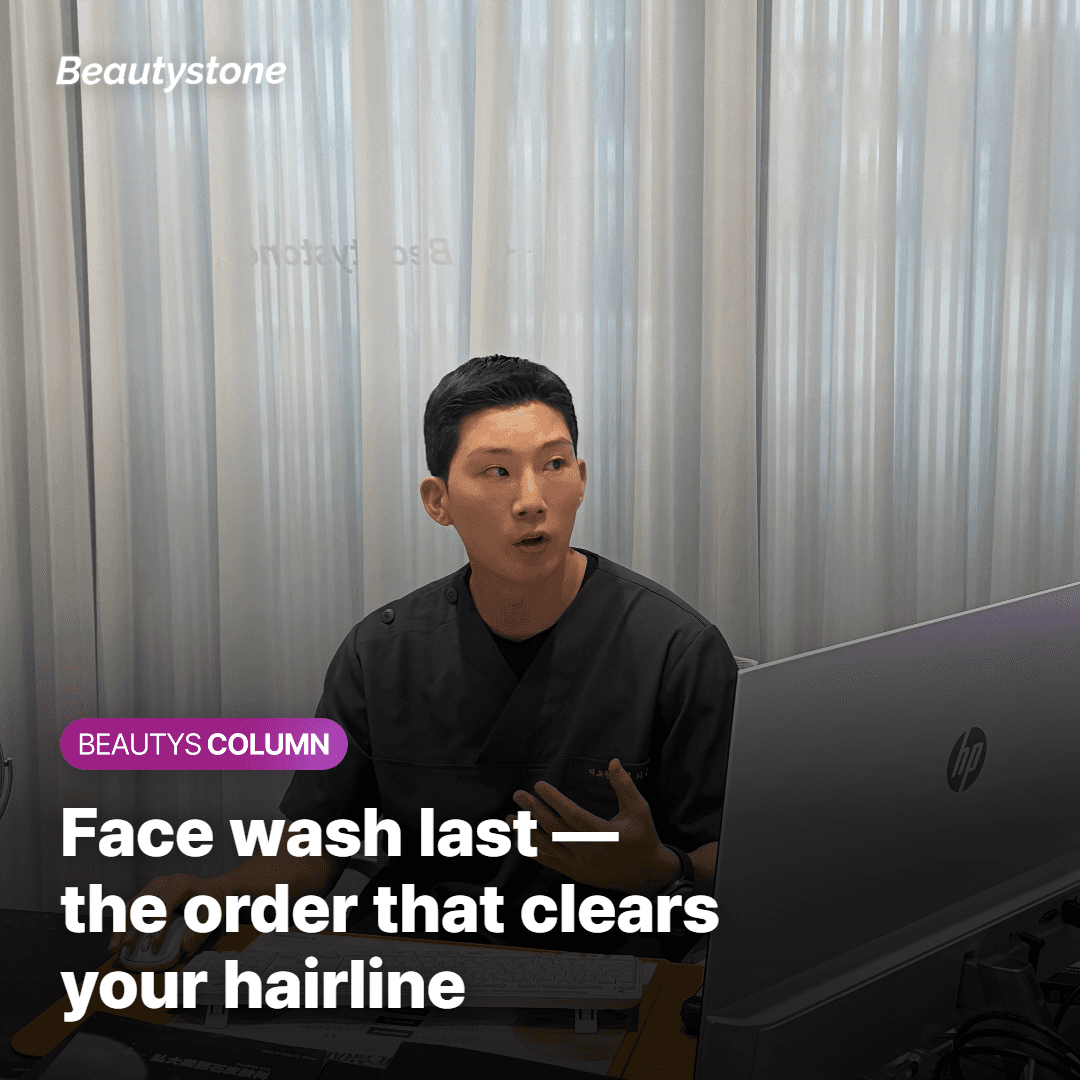
How Shampoo and Conditioner Residue Causes Breakouts
It’s worth understanding exactly why these residues cause problems. The follicles along the hairline are particularly susceptible to clogging for two reasons.
First, this zone has a high density of hair follicles and sebaceous glands — it’s the transition point between scalp-type skin and facial skin. Second, it’s an area that doesn’t always get thorough attention in both face washing and hair rinsing. The result is a zone where product buildup can accumulate over many showers before breakouts become visible.
Common offenders include:
Silicones (dimethicone, cyclomethicone) — widely used in conditioners for smoothness; can be occlusive on facial skin
Heavy oils (coconut oil, argan oil, castor oil) — popular in natural conditioners and hair masks; comedogenic potential varies by skin type
Emulsifiers and thickeners (cetearyl alcohol, stearyl alcohol) — can accumulate along the scalp border
Fragrances — a secondary irritant that may worsen existing comedones
Not everyone reacts to these ingredients — individual skin sensitivity plays a real role. But if you’re noticing a consistent pattern of bumps only at the hairline, and nowhere else on your face, product residue is a logical first suspect.
Side Effects and Risks: When to Take It More Seriously
Most hairline bumps caused by product residue are non-inflammatory comedones — small, closed, flesh-colored or slightly white. They’re annoying but not medically urgent. That said, there are situations where you should pay closer attention.
Signs that this may be more than routine hairline acne:
Deep, painful nodules or cysts along the hairline — these aren’t typical of product-related comedones and may warrant a dermatology visit
Spreading redness or warmth around bumps — this could indicate a secondary bacterial infection
Fever alongside skin changes — if you notice spreading redness, fever, or worsening pain, seek medical care right away
Folliculitis pattern — clusters of red, pus-filled bumps around hair follicles may require a different treatment approach than comedonal acne
No improvement after 4–6 weeks of correcting your wash routine — if routine changes don’t help, a board-certified dermatologist can evaluate for other causes including hormonal acne, scalp conditions, or contact dermatitis
It’s also worth knowing that some people develop persistent hairline breakouts due to ingredients in their hat liners, helmet straps, or even the edge of their pillowcase — friction acne (acne mechanica) can look similar. If your bump pattern is only on one side or appears where something rubs your forehead, consider those factors too.
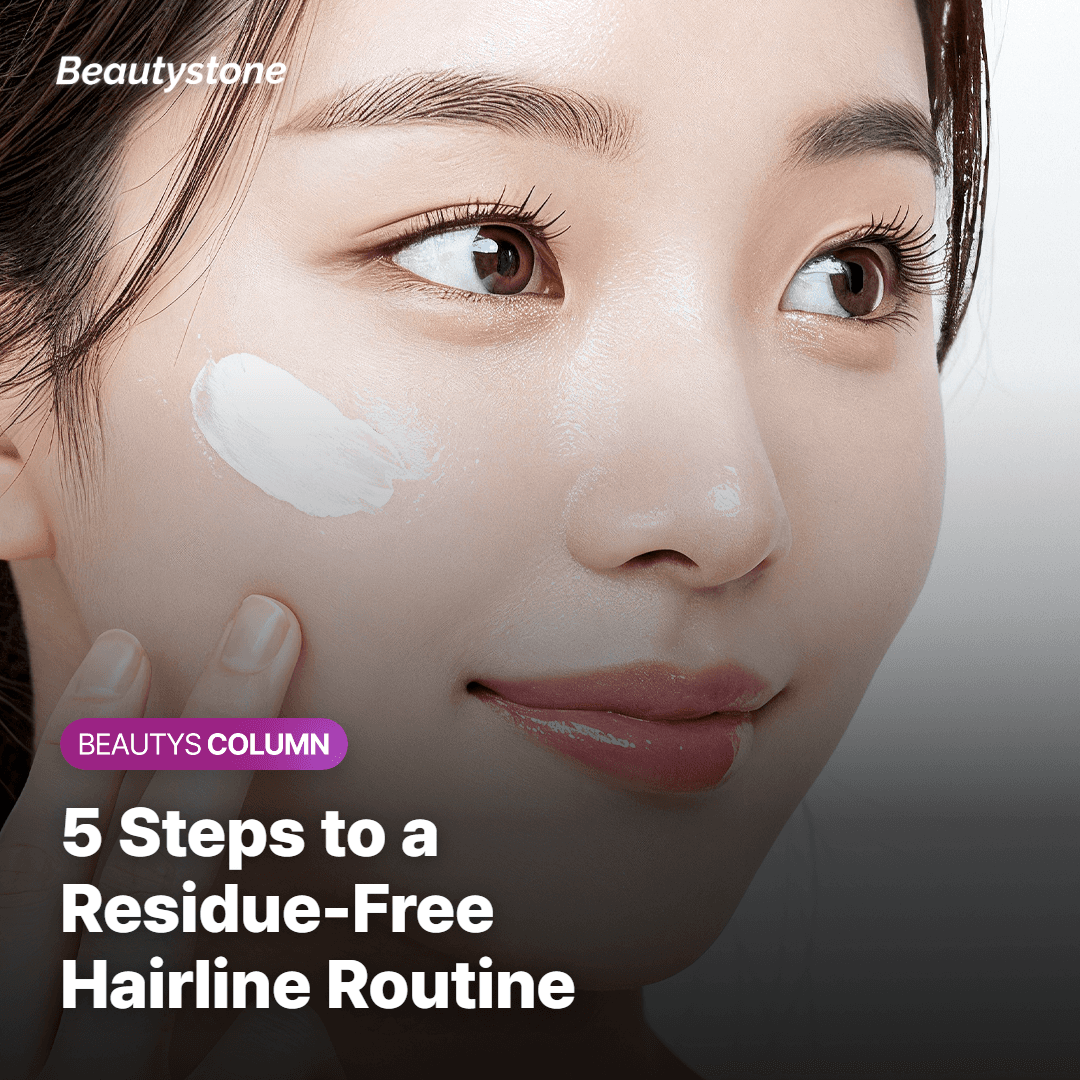
The Right Routine: How to Wash to Clear Your Hairline
The fix is mostly about sequence and thoroughness. Here’s a routine that addresses the residue problem directly:
Step 1 — Shampoo and rinse completely. Rinse shampoo out fully before you move on. Don’t let it sit while you do other things.
Step 2 — Apply conditioner, then let it sit mid-length to ends. Keep conditioner away from the scalp and hairline as much as possible — most hair types don’t benefit from conditioner on the roots anyway.
Step 3 — Rinse out the conditioner fully, paying deliberate attention to the hairline. Tilt your head back and use your fingers to ensure the boundary between scalp and forehead gets a thorough rinse.
Step 4 — Only now, wash your face. This is the critical shift. Washing your face last means any residue that water carries down your forehead gets removed by your cleanser, rather than being deposited on freshly cleansed skin.
Step 5 — Final rinse of the whole face and hairline together. A thorough final splash ensures that cleansing residue doesn’t linger either.
This sequencing change is something you can try immediately, at no cost, with no new products. In most cases, if product residue is the root cause, you’ll start noticing fewer new bumps within two to three weeks — though existing comedones may take longer to fully clear.
What Actually Works — and What Doesn’t
Once you’ve corrected your wash order, a few additional strategies may help accelerate clearing. That said, not every trending skincare approach is useful here.
What tends to help:
Salicylic acid cleanser used on the hairline area — a BHA that can penetrate follicles and help dissolve excess sebum and debris
Switching to a lighter conditioner — look for “non-comedogenic” or “silicone-free” formulas if you’re highly prone to hairline bumps
Washing your face with a gentle, fragrance-free cleanser — avoiding additional potential irritants gives your skin a cleaner baseline
Keeping hair off the forehead overnight — product transfer from hair to skin doesn’t stop in the shower; dry styling products can cause the same issue while you sleep
What probably won’t fix the root cause:
Switching face washes repeatedly without changing your shower order
Applying spot treatments to existing bumps without preventing new ones from forming
Using more face wash, or washing your face more times per day — this can disrupt the skin barrier without addressing residue from hair products
If you’ve been diligent about routine changes for six weeks or more and still aren’t seeing improvement, a consultation with a dermatologist is the next logical step. At a clinic, providers can assess whether there’s an underlying factor — such as a scalp condition, hormonal fluctuation, or a specific product ingredient — that routine adjustments can’t fully address. Individual results vary based on skin type, hormonal factors, and overall skin health.
The Bottom Line
Small bumps at the forehead-hairline border are a common complaint, and they’re often misattributed to the wrong cause. Here’s the short version:
Hairline bumps are frequently caused by shampoo and conditioner residue settling on facial skin during rinsing — not by your face wash
Washing your face before rinsing out hair products means that residue lands on clean skin and stays there; reversing this order removes the trigger
The fix is mostly free: wash face last in the shower, rinse the hairline border thoroughly, and keep conditioning products away from the roots
If bumps don’t improve after four to six weeks of consistent routine changes, or if you notice spreading redness, pain, or fever, see a dermatologist
Like any skin concern, the right approach depends on what’s actually causing it for you — and that can take a bit of observation to figure out. Ultimately, the choice to add products, adjust your routine, or seek a professional opinion depends on your skin, your history, and your goals.
If you’re in Seoul and want a clearer picture of what’s driving your breakouts, Beautystone is a dermatology clinic in the Hapjeong area. Current offers are available at /en/promotion.
Frequently Asked Questions
Q. Can shampoo and conditioner really cause acne on the forehead?
A. Yes — and it’s more common than most people expect. Hair care products contain emollients, silicones, and thickeners that are formulated to coat the hair shaft. When these rinse down over the forehead and hairline during showering, they can clog follicles on facial skin — especially if you’ve already washed your face and the residue settles on clean, unprotected skin afterward. This pattern of acne has a name: acne cosmetica or pomade acne.
Q. How quickly will my hairline clear up if I change my wash order?
A. Most people who switch to washing their face last in the shower — and thoroughly rinsing the hairline — notice fewer new bumps forming within two to four weeks. Existing comedones may take longer to fully clear, sometimes six to eight weeks, since they’ve already formed. Individual results vary, and if there’s no noticeable improvement after six weeks, it’s worth consulting a dermatologist to rule out other causes.
Q. Do I need to switch my shampoo or conditioner to fix this?
A. Not necessarily. Correcting the order and thoroughness of rinsing often resolves the issue without any product changes. That said, if you’re highly prone to comedones, trying a lighter or silicone-free conditioner may help. The bigger factor is usually keeping conditioner away from the scalp and hairline, and rinsing the hairline border very carefully before washing your face.
Q. Are hairline bumps the same as regular forehead acne?
A. Not always. Hairline-specific bumps that appear consistently right at the scalp border — and not broadly across the forehead — tend to have a product residue or friction component. Broader forehead acne is more often linked to oil production, hormonal factors, or overall skincare routine. The geographic specificity (bumps right where hair meets skin) is usually the key indicator that hair products are involved.
![[Wi Young-jin] Duoderm heals acne 2× faster than bandages](https://framerusercontent.com/images/K9F2JPCz3PJkpHFmSCDrbIcg6Wc.jpg?width=1080&height=1080)
![[Wi Young-jin] Acne meds: starting dose shapes results](https://framerusercontent.com/images/t86WllwkIC5zix3juL71nvjqBPI.jpg?width=1080&height=1080)
![[Wi Young-jin Column] Why barrier care beats lasers for acne](https://framerusercontent.com/images/gTHpRDvM70ZkZiafeHPrMi7U.jpg?width=1080&height=1080)


Hair Removal
Laser Hair Removal Pain: Easier by Session 3?

Tattoo removal
문신제거 흉터, 레이저로 지우면 자국이 남을까요?

Contouring & Volume
Glabella Botox Side Effects: Droopy Eyelids

Contouring & Volume
Juvelook Volume Not Working After 3 Sessions?

Contouring & Volume
Hip Dip Filler Before and After: 4 Checks

Body
Potenza Treatment Interval: Why 4 Weeks?