

Finger, wrist, and ankle tattoos often need more sessions than expected. Poor circulation — not tattoo size — drives the longer timeline. Here's how to plan.
Published -
Updated -

Author
Wi Young-jin · Chief director
Seoul National University College of Medicine · Seoul National University Hospital Specialist
→
If you've ever assumed that a tiny tattoo on your finger or ankle would be the easiest thing to remove, you're not alone. It's one of the most reliable misconceptions we see in consultations: small tattoo, fast removal. In this article, we'll cover why extremity tattoos — fingers, wrists, ankles, and feet — tend to clear more slowly than tattoos on the trunk or upper arm, what the biology is behind that pattern, and how to build a realistic plan when the ink you want gone is somewhere below the knee or beyond the elbow.
Does Small Mean Fewer Sessions?
Not reliably — and in the case of extremity tattoos, often the opposite is true.
Session count is determined by how fast your body clears shattered ink, not by how much ink the laser encounters. Every picosecond laser pulse fractures pigment into microscopic fragments, and then your immune system has to carry those fragments through the lymphatic system and out of your skin. That biological transport step takes weeks, and it is much slower in areas where circulation is naturally reduced.
A study published in the Journal of the European Academy of Dermatology and Venereology identified extremity location as a statistically significant predictor of incomplete clearance — the kind of finding that shows up consistently in clinical practice. Small or not, a tattoo on a finger or ankle is fighting circulation the whole way through, and a tattoo on the shoulder with twice the ink can clear faster simply because the removal highways are better maintained.
The good news is that understanding the biology means you can plan for it rather than be surprised by it. Individual results vary, but the pattern is consistent enough to factor into your planning from the start.

Why Removal Slows at the Extremities
The closer you get to your fingertips or toes, the harder it is for your body to flush out pigment. There are a few reasons for this, and they compound each other.
Circulation: Blood supply tapers toward the periphery. Fingers and ankles sit at the end of long vascular paths, and lymphatic drainage in those areas is less robust than near the lymph node clusters in the groin, armpits, or neck. When ink is shattered at the wrist, the fragments have a long route to travel before they reach a node that can process them efficiently.
Skin movement and friction: Hands and feet are in near-constant motion. Some evidence suggests that mechanical pressure from bending and gripping can keep pigment particles from migrating consistently, and the constant friction of footwear over an ankle tattoo adds an additional variable that doesn't exist on the upper back or thigh.
Skin structure at these sites: Finger skin, particularly on the lateral edges and knuckles, tends to be thinner and more fragile than trunk skin. That means the laser often needs to be used more conservatively to avoid adverse effects, which can require more passes over a longer total timeline. Foot skin, by contrast, can be quite thick on the sole and dorsum, requiring more energy to reach the ink — yet the surrounding tissue still heals slowly.
Ink migration and touch-ups: Finger tattoos are notoriously prone to fading and patchy retention in the first place. What you're removing may be a tattoo that has already been touched up two or three times, with ink sitting at multiple depths from repeated applications.
Put those factors together and you've got a recipe for a longer timeline even when the tattoo looks modest from the outside.
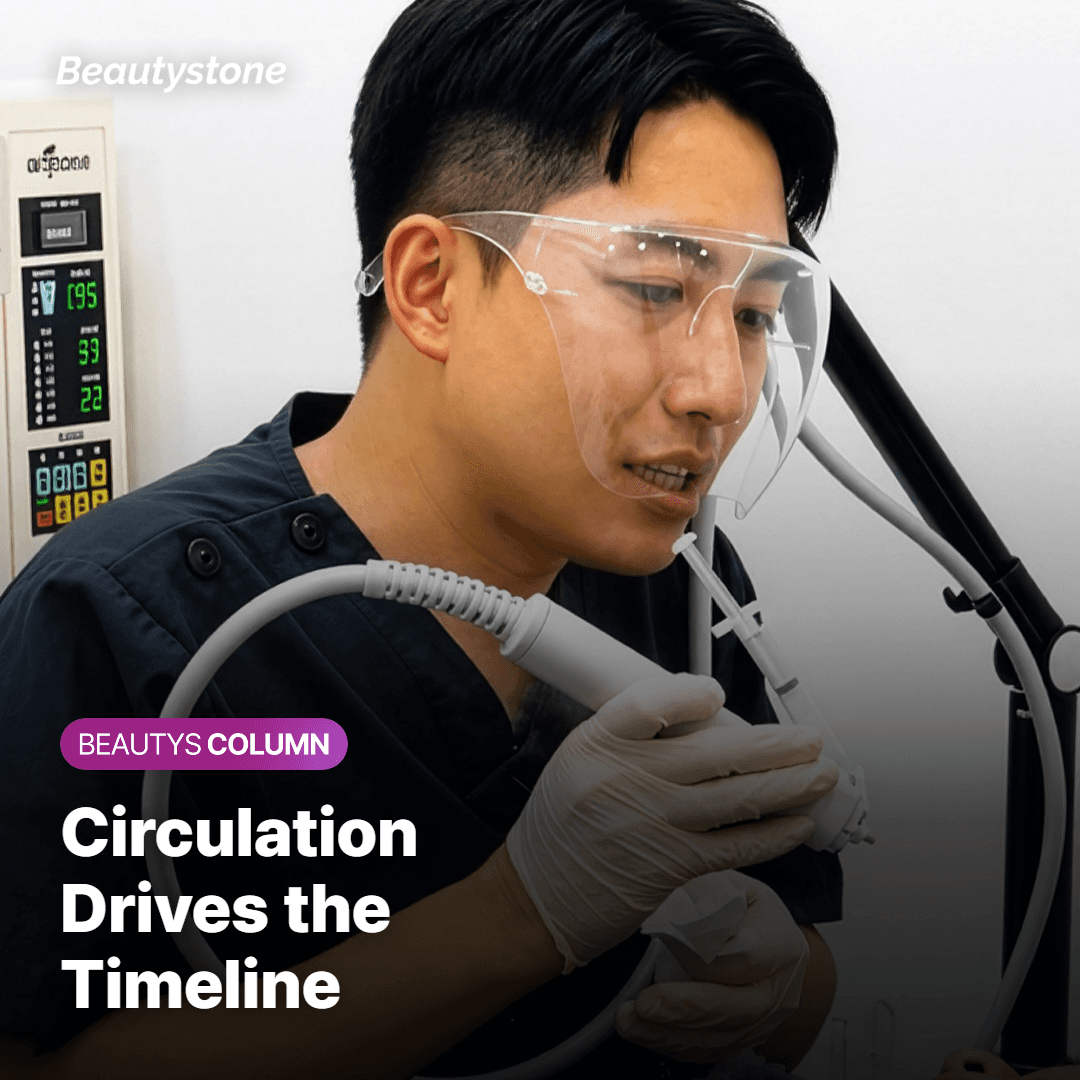
Side Effects and Risks at Extremity Sites
The risks of tattoo removal are similar regardless of location, but a few deserve extra attention on hands and feet.
Blistering and wound care: Blistering after laser treatment is more common at extremity sites. If blisters form, leave them intact if possible and protect the area from friction. Never pick at scabs. Hands and feet are difficult to keep clean and still, which slows healing and raises infection risk slightly more than trunk sites.
Post-inflammatory hyperpigmentation (PIH): Darker skin tones are at higher risk for PIH anywhere on the body, but the hands and feet see more sun exposure than many people account for. Sunscreen on the treated area is non-negotiable between sessions — and on the hands, that means reapplying after every wash.
Scarring: Picking scabs, returning too soon for the next session, or treating aggressively at high-risk sites raises scarring risk. Thin skin on the knuckles and lateral fingers is particularly sensitive. Your provider should adjust settings conservatively at these sites, even if it means more sessions overall.
Red flags to act on: The usual post-treatment picture is redness, swelling, and some tenderness settling within a few days. If you notice spreading redness, warmth extending beyond the treatment zone, fever, or worsening pain rather than improving pain, seek medical care right away rather than waiting for your next appointment. Infections on the hands and feet can move quickly.
Choosing a provider who treats extremity sites regularly and knows how to calibrate settings for thinner or more reactive skin matters more here than it does for larger trunk tattoos.

The Same Person, Different Timelines
One of the clearest illustrations of location-dependent clearance is what happens when someone is removing tattoos in more than one place at the same time. The shoulder piece fades quickly. The ankle piece from the same session looks like it hasn't moved.
That isn't a problem with the ankle sessions. It's the circulatory difference playing out in real time. The fragments are being shattered in both places, but the upper arm is draining efficiently while the ankle is working against a longer lymphatic path with less supportive blood flow.
The same is true within a single limb. Research suggests a rough gradient: upper arm responds more quickly than forearm, forearm more quickly than wrist, wrist more quickly than finger. The gradient isn't perfectly predictable — individual circulation, skin type, ink age, and ink density all modulate it — but the direction is consistent.
This matters for expectation-setting. If you're comparing your ankle removal progress with a friend who's removing a chest piece, the comparison isn't meaningful. They're working with a different biological environment, and their numbers shouldn't be your benchmark.
How to Set a Realistic Timeline
The most common planning mistake with extremity tattoos is counting sessions instead of counting time.
Here's the practical way to think about it: for a straightforward professional black tattoo on the shoulder, a realistic estimate might be six to ten sessions spaced six to eight weeks apart, so roughly eight to twenty months. For the same ink density on an ankle, add at least a few sessions and expect the intervals to need to be at least eight weeks to allow adequate clearance time. That's potentially two to three years for something that fits in a square inch.
A few things that help you set a realistic plan:
Ask for a session estimate range, not a single number: Any clinician giving you an exact session count without caveats is overstating their certainty. A range — and an explanation of what's on the optimistic end versus the conservative end — is more honest and more useful.
Build the timeline in months, not sessions: If you have a target date (a wedding, a job interview), work backwards from the clearance you need, factoring in the location. Starting late is the most common reason the process isn't done in time.
Track with standardized photos: Same lighting, same distance, same time of day. Extremity tattoos clear unevenly — patches of ink can hold on while surrounding areas clear — and a consistent photo record is the only way to assess what's actually happening.
Don't judge at session three: For extremity tattoos, the dramatic visible change that some people see early in a shoulder or chest removal may not show up until session five or six at the wrist or ankle. That's not failure; it's the location's timeline playing out.
Individual results vary, and everything here is a framework rather than a formula. Your provider should be able to refine these estimates once they've seen how your skin responds after the first or second session.
Is It Worth Starting at All?
Yes — but with realistic expectations locked in from the start.
The slower pace of extremity tattoo removal doesn't mean you'll be stuck with the tattoo forever. It means the timeline is longer, the pricing will reflect more sessions, and the process requires a commitment to sun protection and wound care that's genuinely difficult on hands and feet. Most people who go into it knowing that end up managing it fine. The ones who struggle are usually the ones who expected it to behave like a chest piece.
A few things worth confirming before you start:
Is the tattoo new? Fresh tattoos (under a year old) may fade with fewer sessions because the immune system is still in a clearing-out phase. This is a case where waiting can actually help.
Is it a cover-up? If the finger tattoo was applied over a previous one, you've got layered ink at multiple depths, and the timeline extends further. This is worth flagging at consultation.
Do you smoke? Smoking impairs lymphatic circulation and has been associated with longer removal timelines in some research. If you're already considering quitting, the removal process is a decent reason to factor that in.
Studies suggest that overall, picosecond laser tattoo removal is effective across extremity sites — just slower. The technology has improved significantly, and the range of what can be cleared is genuinely broad. The jury's still out on exactly how much slower is the right expectation for every person and every site, which is why a consultation where your provider assesses the actual tattoo remains the best starting point.
The Bottom Line
Small doesn't mean fast when it comes to tattoo removal — especially on fingers, wrists, ankles, and feet. Here's the short version:
Session count is driven by how efficiently your body clears shattered ink, and extremity circulation is slower than trunk circulation by design.
Fingers and ankles sit at the end of long lymphatic paths, which means fragments take longer to clear between sessions.
Skin structure, constant movement, sun exposure, and ink touch-up history all add additional complexity at these sites.
Set your timeline in months, not sessions — and expect at least a few more sessions than a comparable tattoo on the upper arm would need.
Red flags like spreading redness, fever, or worsening pain should prompt immediate medical attention, not a wait-and-see approach.
Like any laser procedure, tattoo removal on extremity sites involves trade-offs — more sessions, a longer commitment to aftercare, and more conservative settings to protect delicate skin. Ultimately, whether the timeline works for you depends on your goals, your skin, and how the tattoo sits. If you're planning a removal on your hands or feet, a consultation with a provider who regularly treats extremity sites is the most useful first step. Beautystone is a dermatology clinic in Seoul's Hapjeong area — you can see current offers at /en/promotion.
Frequently Asked Questions
Q. How many sessions does it take to remove a finger tattoo?
A. There's no universal number, but finger tattoos typically require more sessions than equivalent tattoos on the trunk or upper arm — often eight to fifteen or more for a professional piece. The exact count depends on ink density, color, how many times the tattoo has been touched up, and how your skin responds. Your provider can give a better estimate after seeing the actual tattoo and observing how you clear after the first session or two.
Q. Why does my ankle tattoo seem to fade slower than my shoulder piece?
A. Location is the main reason. The ankle sits at the far end of your lymphatic drainage system, so the fragments that the laser shatters take longer to be cleared by your immune system. Your shoulder tattoo is much closer to the lymph node clusters that process that debris efficiently. The same sessions that produce visible change at the shoulder can look like they've done nothing at the ankle, even though the process is working — just more slowly.
Q. Does tattoo removal hurt more on the hands and feet?
A. Many people find it more uncomfortable at extremity sites, yes. Fingers in particular have a high concentration of nerve endings and relatively thin skin, so even conservative settings can feel more intense than the same settings on a less sensitive area. Topical numbing cream helps, and most providers use it routinely. The discomfort is usually sharp and brief rather than prolonged — but it's worth knowing in advance rather than being surprised.
Q. Can I speed up my finger or ankle tattoo removal?
A. The main lever you control is the interval between sessions. Waiting at least eight weeks — and often longer for ankle tattoos — gives your immune system time to clear the previous round of fragments properly before you shatter more. Pushing sessions closer together doesn't make the process faster; it often makes it less efficient. Staying well-hydrated, protecting the area from sun exposure, and not smoking are also commonly cited as supportive, though the evidence for these individually is less definitive than the evidence for adequate session spacing.


Hair Removal
레이저 제모 1회에도 남는 몫이 있어요 — 밀도를 모자이크로 보는 법

Tattoo removal
Why Extremity Tattoos Are Slower to Remove

Tattoo removal
Tattoo Removal Cost: Why Quotes Vary by Area

Tattoo removal
Unused Tattoo Removal Sessions: What Happens?

Lifting
Forehead Thread Lifting: How Far Can It Go?

skin
Skin Booster Prices: What to Check in a Quote