

The honest answer on how long Sculptra lasts, why it builds collagen gradually, and when to repeat.
Published -
Updated -

Author
Wi Young-jin · Chief director
Seoul National University College of Medicine · Seoul National University Hospital Specialist
→
Here's the short answer first: Sculptra isn't a filler that plumps a spot the moment it's injected. Instead, it gradually prompts your own collagen to build over a few months, then slowly fades. Results usually settle in after about two to three months and can last close to two years. You'll sometimes hear it called "semi-permanent" or "one and done," but those claims are overstated. Individual results may vary, and most people do best with a short series spaced out over time.
In the US, Sculptra is an injectable poly-L-lactic acid (PLLA) biostimulator and is FDA-approved—"approved" is the correct term for an injectable drug, whereas a device like Ultherapy or Thermage is "FDA-cleared." Understanding how the volume actually builds and fades makes it much easier to plan your cost, your number of sessions, and when to come back.
This article shares general education from Beautystone, a skin clinic in Seoul. It isn't medical advice—always confirm what's right for you with a qualified, board-certified provider who examines you in person.
What you'll learn here
How Sculptra creates volume differently from a standard filler
How long the results typically last—and why it's not permanent
How the effect fades and how to gauge when to come back
Why the number of sessions and spacing vary from person to person
A ballpark on US cost and whether it's worth it
How Sculptra builds volume—it doesn't fill the spot directly
Unlike the fillers most people picture, Sculptra doesn't plump a spot the moment it's injected. As its main ingredient (PLLA) gradually breaks down in your body, it stimulates your skin to make its own collagen in that area—it's a collagen stimulator. That's why volume builds in slowly over several months rather than appearing right after treatment.
Collagen stimulator*: instead of filling the spot directly, it prompts your body to make its own collagen. As the material breaks down, it triggers that response, and volume gradually builds in as a result.
In fact, poly-L-lactic acid is a biostimulator that induces collagen, and it's typically maintained on roughly a yearly cycle to keep results going—which is exactly why Sculptra builds in gradually rather than working instantly. Any slight puffiness right after treatment comes from the injected solution; once that swelling settles, you may see little change at first, then the real volume comes in as collagen forms. Individual results may vary.
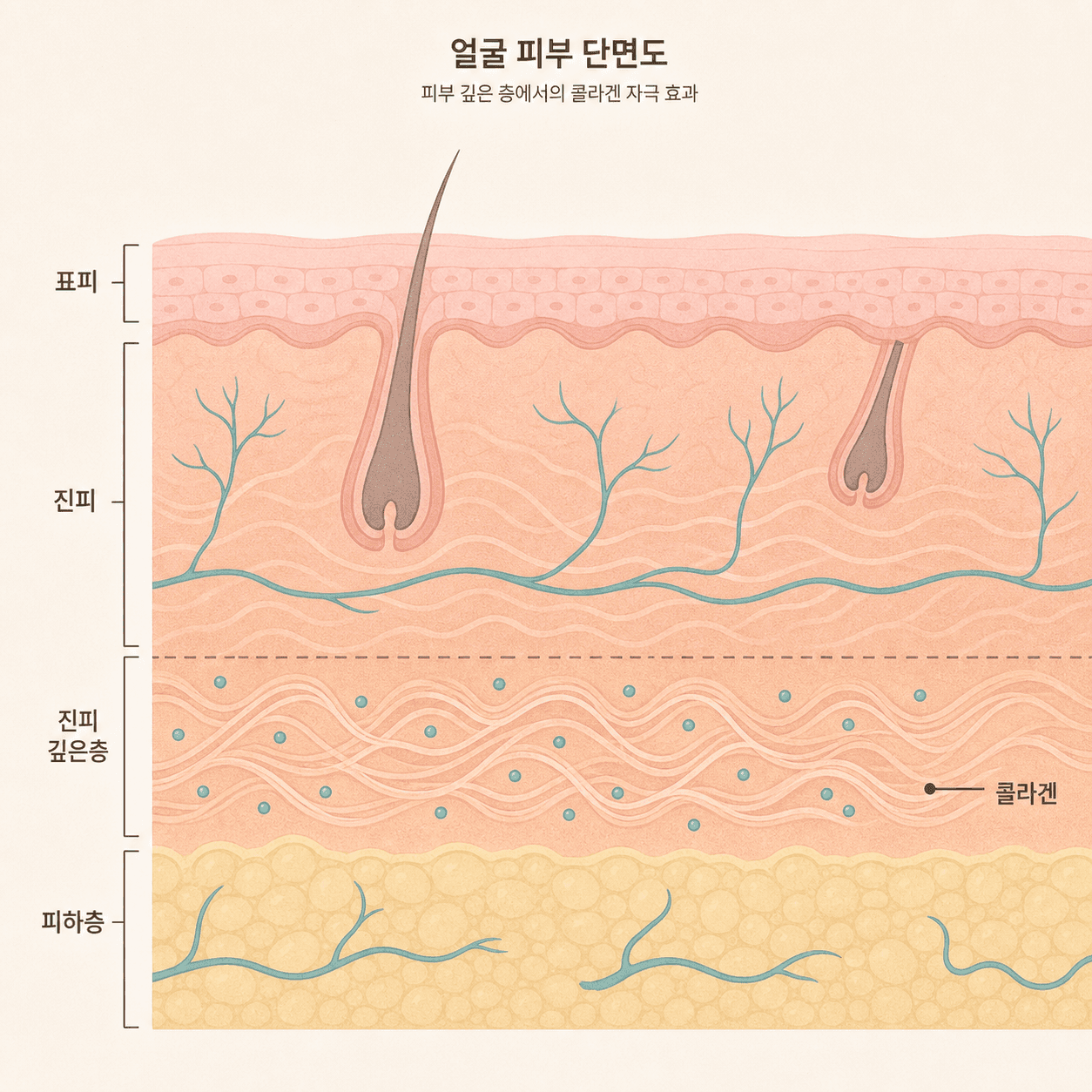
Because of how it works, Sculptra makes the most sense as a treatment you build up in stages over a few sessions—not something that delivers full results in a single visit.

How long does it last compared with other fillers?
How long a volume treatment lasts—and how it works—depends on the ingredient. Here's how the main options compare side by side.
Type | How it works | When results show | How long it lasts |
|---|---|---|---|
Sculptra | Stimulates collagen | After 2–3 months | Up to nearly 2 years |
Hyaluronic acid filler | Fills the spot directly | Immediately | 6 months–1 year |
Collagen booster | Supports collagen stimulation | After 1–2 months | Around 1 year |
Fat grafting | Injects your own fat | Immediately–few weeks | Long-term for surviving fat |
These are general guidelines—actual longevity depends on the treatment area and your own ability to produce collagen, so individual results may vary. Sculptra is known for lasting longer than most fillers because it's your own collagen settling in, not an injected material holding things up. If you want an immediate change, a hyaluronic acid filler may suit you better; if you want a gradual, natural build-up over time, Sculptra may be the better fit.
What does Sculptra cost in the US? Pricing varies widely by provider, region, and how many vials you need. As a rough ballpark, a single vial commonly runs around $800–$1,000+, and because results build gradually, most people need multiple vials across two to three sessions—so the full course often lands higher than a one-time filler. Treat any figure as an estimate and confirm with your own provider; some practices offer financing such as Cherry or 0% APR plans.

How the effect fades and when to come back
Sculptra isn't permanent, so the collagen you've built up slowly diminishes over time. If you map out how the volume builds and fades, the curve looks roughly like this.
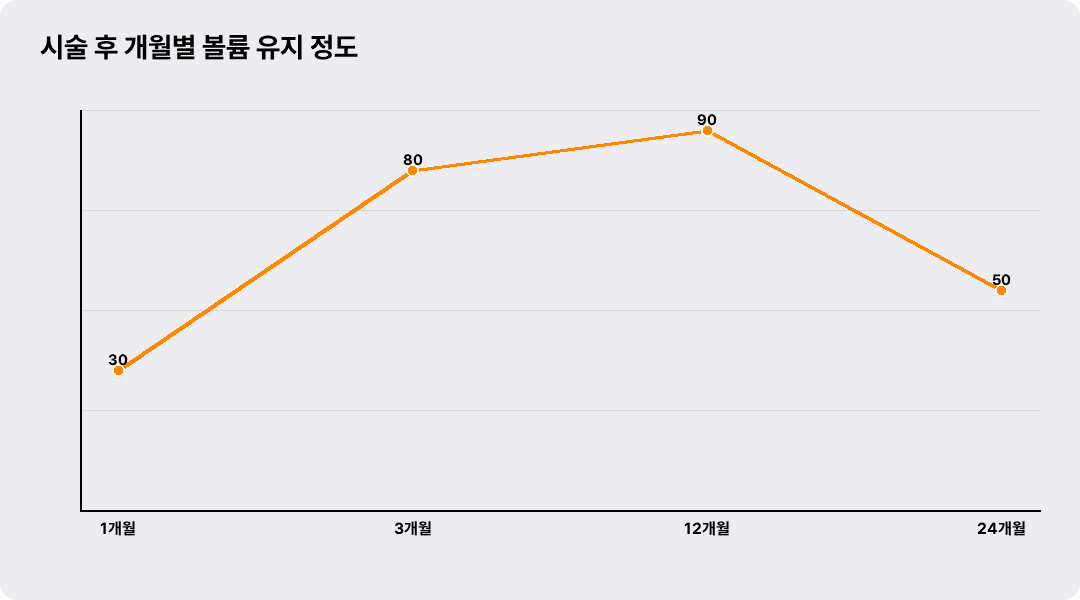
The first few months are the build-up phase as collagen forms, and results hold most steadily around the one-year mark. After that, they gradually taper off toward the two-year point. Topping up before the volume disappears completely makes it easier to maintain a steady look. Rather than waiting until the effect is fully gone, it's worth planning your next session with your provider around the time you start to notice it fading—that's what keeps the look natural. If the longevity feels very different from what you were told to expect, check in with the provider who treated you before drawing your own conclusions.
Quick timeline of what to expect:
Day 0: mild puffiness from the injected solution—this is swelling, not the final result.
First few weeks: swelling settles; you may see little change at first.
2–3 months: collagen builds in and the real volume becomes noticeable.
Around 1 year: results hold most steadily; this is often when people plan a top-up.
Up to ~2 years: volume gradually tapers off. Individual results may vary.

Is Sculptra worth it, and how to choose a provider
Honestly, whether Sculptra is "worth it" depends on what you want. The trade-off: results come on slowly—over months, not overnight—and you'll usually need a short series, so the upfront cost and patience are real. In return, the build is gradual and natural-looking, tends to last longer than a standard filler, and uses your own collagen. If you want an instant change for a one-time event, it's probably not the right pick. If you're after a subtle, longer-lasting result and don't mind waiting, many people find the trade worthwhile. It is not permanent, and nothing here is guaranteed.
Because Sculptra is technique-sensitive, where you have it done matters. Look for a board-certified provider who assesses the balance of your whole face, explains how much to place and where, and plans the spacing of your sessions with you—rather than applying a fixed number to everyone. Since results build slowly, the best plans decide on the next round and any top-ups by watching how quickly things change. Wherever you go, find a qualified provider and book a follow-up so they can track your volume changes and tailor the next step.
For transparency: this is general information from Beautystone, a skin clinic in Seoul. We treat Sculptra as a longer arc of collagen building and holding rather than a one-off procedure—but the right plan for you should come from a provider who examines you in person.

Why the number of sessions and spacing vary from person to person
Sculptra doesn't come with a set number of sessions—how many you need and how far apart they fall depend on your own situation. Here are the main factors that drive the count.
How much volume has been lost — deeper loss is usually filled in stages over several sessions.
Your age and collagen-producing ability — if your collagen production is weaker, you may need more sessions or a larger amount.
How much volume you want — the plan differs for a subtle refinement versus a more defined change.
Spacing between sessions — usually at least a month apart, deciding on the next round once the collagen has settled in.
Rather than applying the same number of sessions to everyone, Sculptra looks most natural when it's planned case by case around where volume has been lost and your collagen condition. This article covers general information, so the safest move is to confirm whether the treatment suits you—and your exact number of sessions and spacing—with a provider who examines you in person.

Frequently asked questions
How long does Sculptra last?
Most people see results settle in around two to three months and hold close to two years before gradually tapering off. It lasts longer than a typical hyaluronic acid filler because it's your own collagen, not an injected gel. It's not permanent, though, and individual results may vary—plan a top-up as you notice the volume fading.
Is Sculptra worth it compared with regular filler?
It depends on your goal. Sculptra is slower and usually needs a series, but the result is gradual, natural-looking, and longer-lasting. Regular hyaluronic acid filler is faster and immediate but fades sooner. If you want a subtle, durable change and don't need an instant fix, many people feel the trade-off is worth it.
Does Sculptra hurt, and is there downtime?
Most people describe it as a series of injections with mild, brief discomfort; numbing is typical. Expect some swelling, tenderness, or small bumps for a few days. If you have spreading redness, severe pain, warmth that expands, or signs of infection, contact your provider right away or seek urgent care.
How soon will I see results, and can I get just one session?
The early puffiness is swelling, not the final look. Real volume builds in over two to three months as collagen forms. One session is sometimes enough, but results usually settle in more reliably when collagen is built up in stages, so most people do best with a short series planned around how much volume they've lost.
Last updated June 2026. General education only; confirm details with a board-certified provider.
Further reading
How soon does Sculptra build volume after treatment, and how long do results last?
Sculptra collagen timeline by session — the signs you'll see at rounds 1, 2, and 3
How long does Sculptra take to build collagen, and how many sessions does it usually take?
When does Sculptra start building volume? A walk through the full timeline


Hair Removal
레이저 제모 1회에도 남는 몫이 있어요 — 밀도를 모자이크로 보는 법

Tattoo removal
Why Extremity Tattoos Are Slower to Remove

Tattoo removal
Tattoo Removal Cost: Why Quotes Vary by Area

Tattoo removal
Unused Tattoo Removal Sessions: What Happens?

Lifting
Forehead Thread Lifting: How Far Can It Go?

skin
Skin Booster Prices: What to Check in a Quote