

Onset, volume, nodule risk, budget: your priorities pick the line. Plus 3 common myths debunked.
Published
Updated

Author
Wi Young-jin · Chief director
Seoul National University College of Medicine · Seoul National University Hospital Specialist
→
🔗 Read Other Posts
What is a Collagen Booster? — 1.1 How Collagen Boosters Work
The 3-Product Lineup — 2.1 Radiesse (CaHA) · 2.2 Sculptra (PLLA) · 2.3 Juvelook Volume (PDLLA+HA)
Comparison and Choice — 3.1 Comparing Effects After 1 Month and 1 Year
To cut to the chase, there is no single "best" option among the three collagen boosters. Your choice will depend on four key factors: your personal goals, timeline, tolerance for nodules, and budget. As the final post in this series, we have compiled the most common questions patients ask during consultations into a clear, step-by-step matching guide.
To cut to the chase, there is no single "best" option among the three collagen boosters. Your choice will depend on four key factors: your personal goals, timeline, tolerance for nodules, and budget. As the final post in this series, we have compiled the most common questions patients ask during consultations into a clear, step-by-step matching guide.
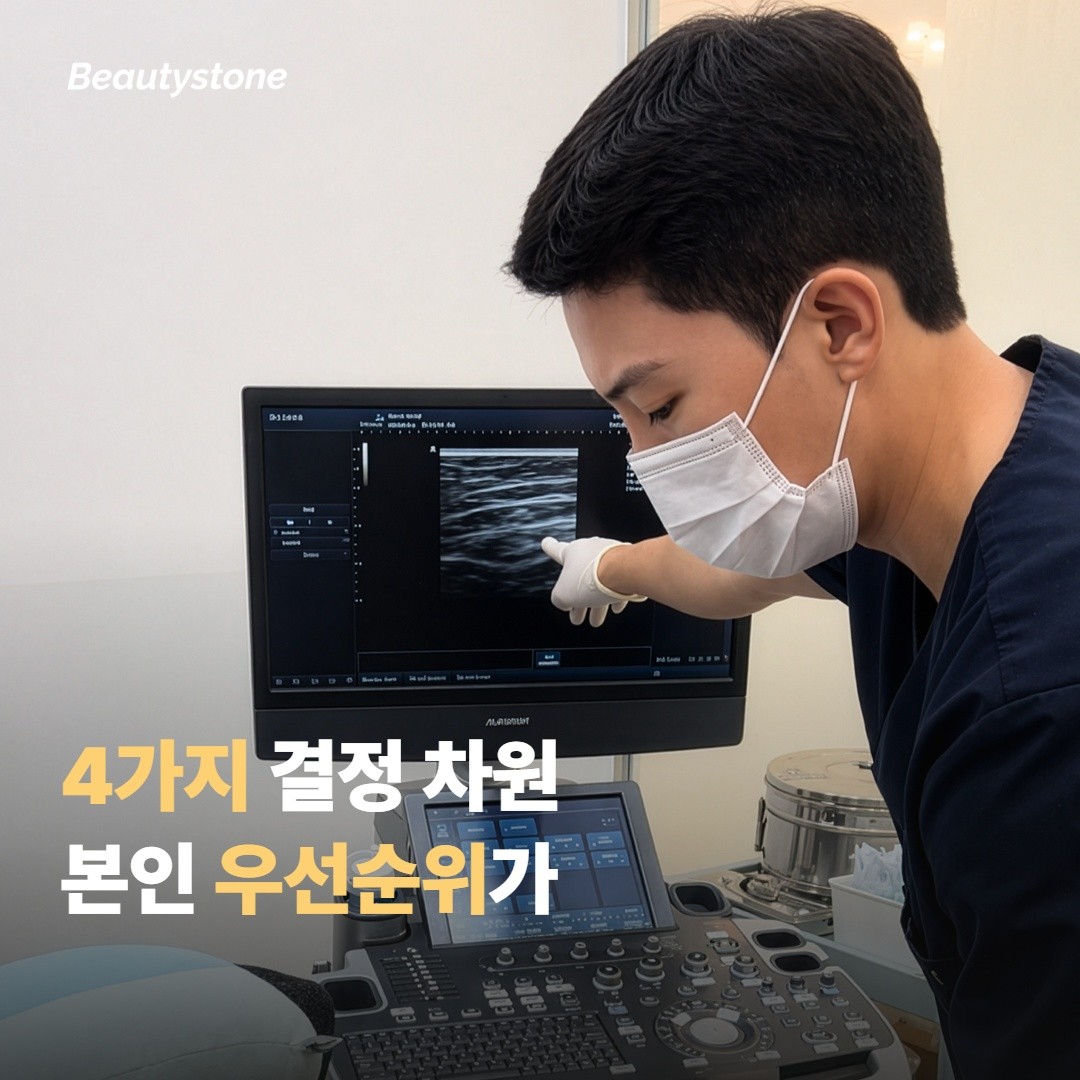
4 Decision Factors: Your Priorities Guide the Way
These are the four questions we always ask patients first during consultations. Your answers will almost automatically guide you to the right choice.
Factor 1: How Fast You Want to See Results
If quick visible improvement is your top priority (1 week to 1 month) → Radiesse
If you prefer gradual, natural results (3 to 6 months) → Sculptra / Juvelook Volume
Factor 2: Your Volume Goals
Significant volume restoration (such as deep gauntness under the cheekbones or overall volume loss due to aging) → Sculptra
Natural, subtle volume augmentation (without looking noticeable) → Juvelook Volume
Immediate contouring and shaping (jawline and lower face) → Radiesse
Factor 3: Tolerance for Nodule Risk
If minimizing nodule risk is your absolute top priority → Juvelook Volume (designed with the safest microparticle shape)
Moderate concern → Radiesse / Sculptra
If you are confident in your injector's expertise → Any of the three will work
Factor 4: Budget and Session Frequency
If you want results in a single session → Radiesse (with touch-ups after 6–12 months if needed)
If you are comfortable committing to a 3-session cycle → Sculptra / Juvelook Volume
If budget-friendliness is your priority → Juvelook Volume (highly cost-effective domestic brand)
Once you combine your answers to these four questions, the right treatment path becomes beautifully clear.
Recommended Matches by Patient Type
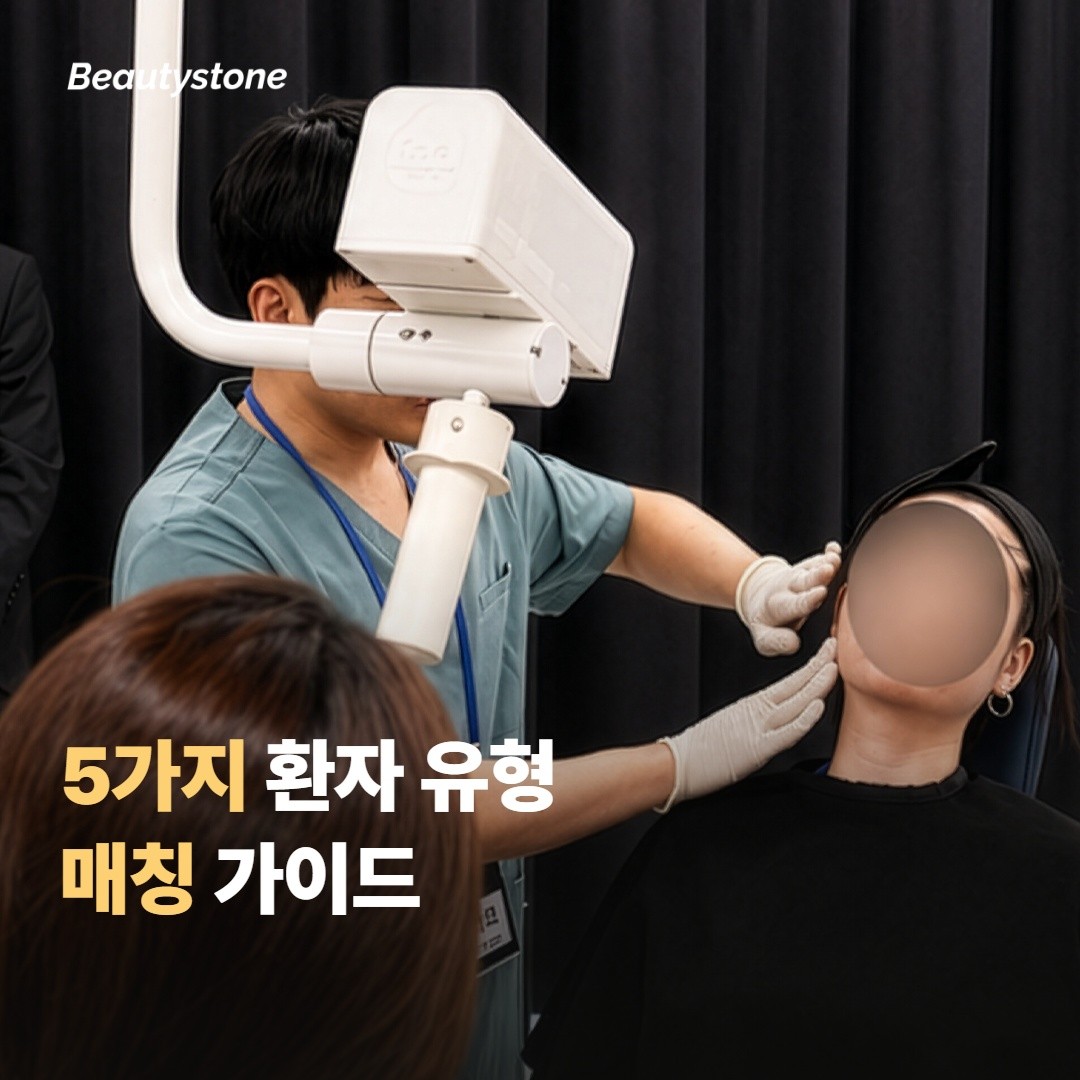
Here are five archetypes of patients we frequently see in our clinical practice:
Late 30s, beginning to lose volume under cheekbones + natural results are top priority → Start with a 3-session cycle of Juvelook Volume. With its excellent safety profile against nodules and gradual progress, the changes will look so natural that even family members won’t suspect you had a procedure.
Late 40s to 50s, experiencing overall facial volume loss due to aging → A 3-session cycle of Sculptra, followed by an evaluation at the 6-month mark. This is best for patients needing significant volume restoration.
30s to 40s, with a wedding or major event coming up in 1–2 months → 1 session of Radiesse (micro-apportioned to targeted areas if necessary). Offers swift results that stabilize nicely by week 4.
40s, history of nodule formation + seeking natural results and long-lasting effects → Juvelook Volume on its own, or combined with Radiesse (highly diluted) in select areas.
Late 20s, looking for structured contouring (jawline/lower face) → Precision targeting with Radiesse. Its firm particle structure makes it outstanding for lifting and defining contours.
The PDLLA Consensus Guidelines also recommend a multi-product approach, distributing treatments according to a patient's goals, budget, and time frame.
Area-Specific Combinations: Combining Two or Three Products for One Patient
Rather than choosing just one treatment option, it is very common in clinical practice to apply different products to different areas of the face. This is called the multi-product approach*.
multi-product approach*: A customized treatment method where different collagen boosters are selected for different areas of a single patient's face. Numerous clinical reports show that tailoring choices to each area's distinct needs leads to far higher-quality results and patient satisfaction than using a single product for the entire face.
Here are some common combination examples:
Under the cheekbones (deeper gauntness) → Sculptra series
Jawline & lower face (contouring & support) → Radiesse (diluted minimally)
Front cheeks & side cheeks (moderate volume loss) → Juvelook Volume
Skin texture, fine lines, pores (shallow dermis) → Juvelook (Original) or hyper-diluted Radiesse
Some cases call for all three treatments within a single treatment plan, which often yields the most refined and effective outcome. If you are concerned about upfront costs, you can absolutely pace the treatments out over separate visits. For example:
Session 1: Sculptra (1st session) under the cheekbones + Radiesse along the jawline
Session 2 (4 weeks later): Sculptra (2nd session) under the cheekbones + Juvelook Volume (1st session) on the front cheeks
Session 3 (4 weeks later): Sculptra (3rd session) under the cheekbones + Juvelook Volume (2nd session) on the front cheeks
This approach helps distribute the cost and allows us to monitor and adjust your results step-by-step as they unfold.

Clearing Up Common Misconceptions
Here are three common points of confusion we often clarify during patient consultations.
Misconception 1: "The most expensive product must be the best." Cost does not equal effectiveness. The best treatment is always the one that aligns with your specific goals. If natural subtlety is your priority, getting Sculptra might leave you feeling that the volume is more dramatic than you wanted.
Misconception 2: "Imported brands are safer than domestic options." Juvelook Volume is KFDA and CE approved, and exported to over 80 countries worldwide (under the name Lenisna). Its uniquely safe PDLLA microparticle structure actually represents one of the lowest risks for nodule formation. The idea that domestic products are less safe is simply not true.
Misconception 3: "A single session lasts forever." No collagen booster can stop the natural aging process indefinitely. The typical duration of results is 12 to 24 months, and because aging continues, maintenance sessions every 1 to 2 years are common. However, the newly formed neocollagen degrades far more slowly than if you had never had the treatment—meaning there is a clear, cumulative long-term benefit.

Series Wrap-up: A One-Line Summary
Over this 6-part series, we have explored collagen boosters in depth, but it can be summed up in a single sentence: There is no single correct answer for collagen boosters; they are meant to be customized and matched to your unique goals and facial areas. The key parameter in this process is finding an experienced injector—a medical team with extensive clinical expertise across all three products. In the clinic that I run as Dr. Wi Young-jin alongside Dr. Kaeul Kim, this precise matching process is what drives the highest patient satisfaction.
A Comprehensive Review of PDLLA Aesthetic Treatments also consistently shows that a multi-product approach yields more favorable, harmonious outcomes than a single-product approach. Coming to your consultation with a clear idea of your goals and focus areas will make your matching process much smoother and more precise.
Frequently Asked Questions
Q. If all three options exceed my budget, how should I prioritize?
Your first priority should be the zone that concerns you the most. When you look in the mirror, start with the area that stands out first and choose the single ideal product for that concern. Once you see improvement in that key area, it becomes much easier and clearer to decide how to prioritize the rest.
Q. My doctor is only recommending one specific product—is it okay to ask about other options?
Absolutely. Every injector has products they are most accustomed to using. However, if your unique goals do not align with the strengths of that particular product, seeking a second opinion is highly recommended. Reading through the 6 posts in this series before your consultation will help you communicate your goals much more clearly with your doctor.
Q. Which post in this series should I re-read first?
If you already have a product in mind, we suggest reading the dedicated post for that specific product, followed by Post 5 (the 1-month and 1-year comparison). If you prefer starting from the beginning, read from Post 1 (The Principles of Collagen Boosters). You can easily navigate between posts using the table of contents at the top of each page.





Contouring & Volume
Hip Dip Filler Before and After: 4 Checks

Body
Potenza Treatment Interval: Why 4 Weeks?

Lifting
Ultherapy Before and After: Why Wait 90 Days?

Contouring & Volume
Belotero Revive Cost: 2cc Price vs. 3 Sessions

skin
Lip Hyperpigmentation Laser: Does It Work?

Contouring & Volume
Men's Forehead Filler: Hollow or Just Lines?