

A keloid grows past the wound edge. A hypertrophic scar stays inside it, and usually settles.
Published -
Updated -

Author
Wi Young-jin · Chief director
Seoul National University College of Medicine · Seoul National University Hospital Specialist
→
When a wound heals and the spot does not settle flat but turns red and raised, the worry starts quickly. But raised scars are not all one thing. A keloid and a hypertrophic scar grow differently and behave differently afterward, and the single feature that separates them is easy to check.
This article covers how each one forms, what differs in border, growth, and recurrence, and why management parts ways between them. Individual healing varies a great deal, so read this as background for a conversation rather than a diagnosis.
This is general information from Beautystone, a skin clinic in Hapjeong, Seoul.
What you will learn
What actually separates a keloid from a hypertrophic scar
Why a hypertrophic scar stays inside the wound border
Why a keloid grows past it
Why management of the two parts ways
What actually separates the two
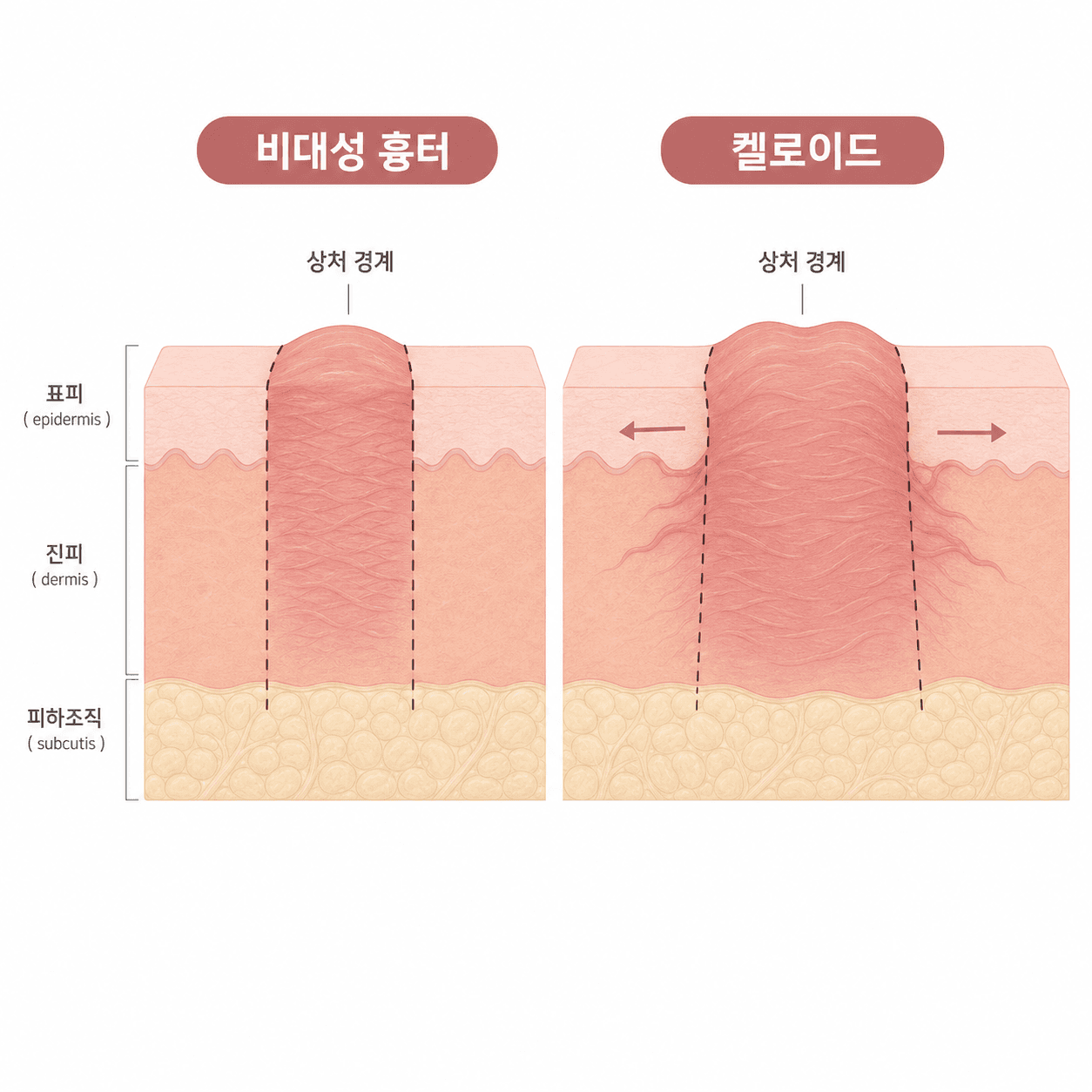
Raised scars fall broadly into two groups. One thickens only within the area where the wound was, the hypertrophic scar. The other spreads past the original wound into the healthy skin around it, the keloid. On the surface both look red and firm and raised, but they grow differently, and that changes the approach. A review setting out the core distinguishing features, that a hypertrophic scar stays within the original wound border and generally stabilizes with time while a keloid grows beyond the wound border, rarely resolves, and frequently recurs after treatment makes clear that whether it crosses the border is the sharpest dividing line between them.
So two scars in the same location can be different things depending on whether the thickening stayed inside the wound or spread outside it. Because that decides both the likely course and the approach, sorting out which type you are looking at comes first.

A hypertrophic scar stays inside the wound border
A hypertrophic scar is one where more scar tissue is laid down than the repair needed, so the healed area thickens and sits proud of the surface. The defining point is that it does not extend past the original wound. It follows injuries that damaged the dermis, such as burns, surgery, or a deep cut, and builds up as that area heals.
The usual course is that it appears within a few weeks of the wound healing, thickens over the following months, then stops progressing and slowly settles. The redness often fades and the scar can flatten somewhat with time. Somewhere that moves or gets pulled frequently, like over a joint, is the exception: a scar there can contract and cause discomfort, so the course varies by location.
A keloid grows past it
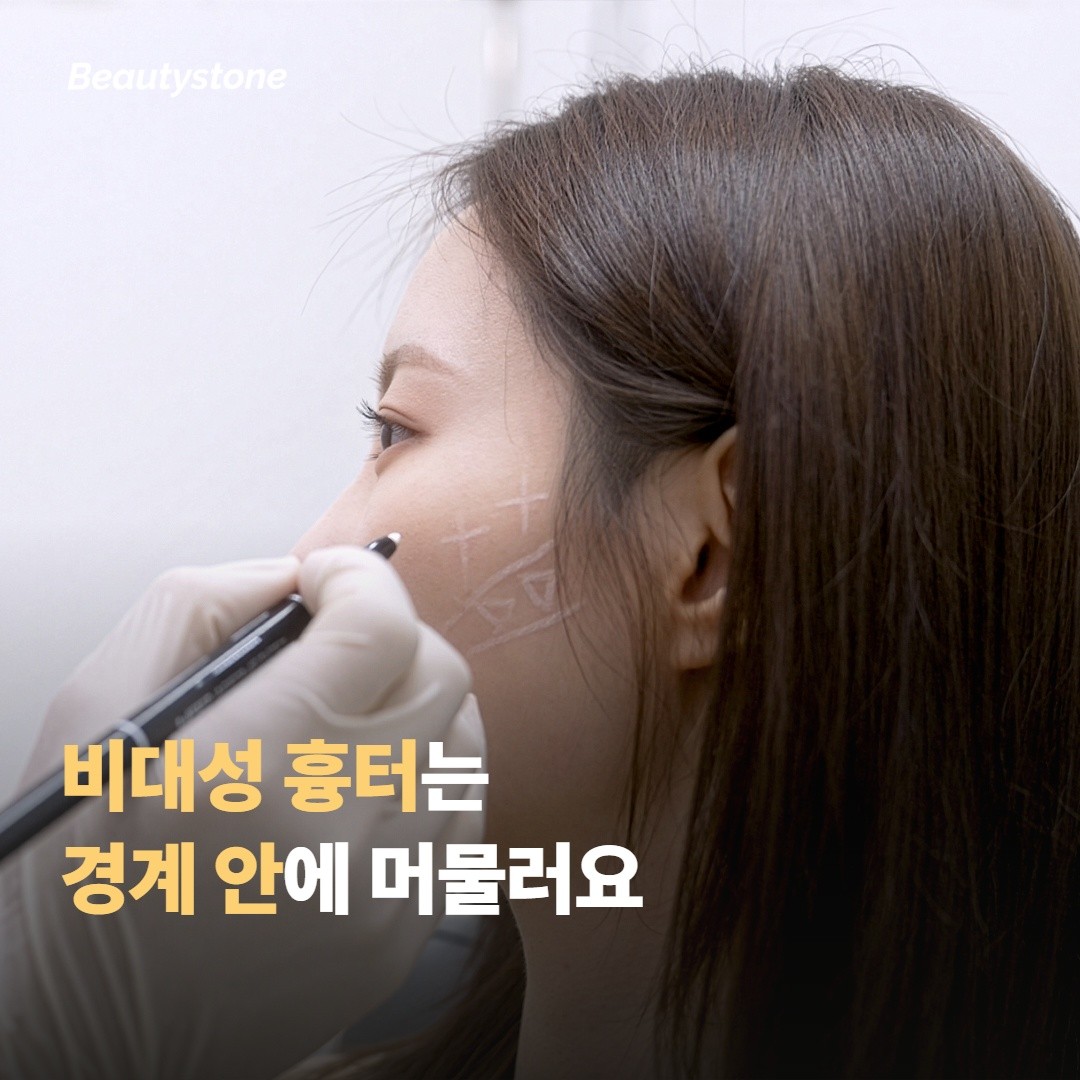
A keloid, unlike a hypertrophic scar, extends beyond the original wound and encroaches on the healthy skin nearby. It also does not subside on its own, and can keep growing over months to years. That habit of crossing the border is the core of what makes a keloid a keloid.
Why the difference? The reaction that makes a scar rise is tied to inflammation in the reticular dermis*, the deep layer of the skin. A study viewing both keloids and hypertrophic scars as arising from chronic inflammation of the reticular dermis, with the difference between them reflecting differences in the intensity, frequency, and duration of that inflammation places keloids at the end where that inflammation runs stronger and lasts longer, and hypertrophic scars at the milder end.
Reticular dermis*: the deep portion of the dermis, dense with thick collagen bundles. The reaction that makes a scar rise mostly begins here.
That is why keloids rarely resolve and often return after treatment, which makes them harder to work with than hypertrophic scars. Some sites are more prone than others, including the front of the chest, the shoulders, and the earlobes, and some people are simply more prone in general.
Why management parts ways
Because they grow differently and behave differently over time, the direction of management splits as well. Here is a side-by-side of how the two compare.
Feature | Hypertrophic scar | Keloid |
|---|---|---|
How far it grows | Stays within the wound border | Extends past the border |
Over time | Generally stabilizes and improves | Can keep growing |
Recurrence | Relatively uncommon | Frequent |
Direction of approach | Follow the course as it settles | Plan with recurrence in mind |
The chart below compares how strongly each feature tends to show in each type. These are relative tendencies for orientation, not measured values.
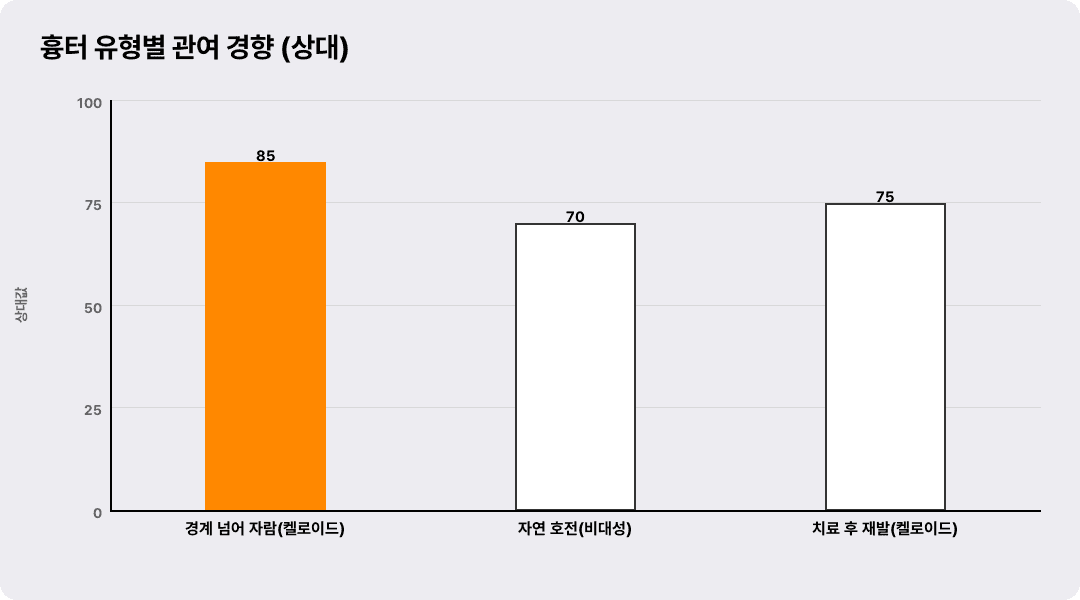
In short, a hypertrophic scar is usually followed while it settles, and a keloid is managed steadily with the possibility of recurrence built into the plan from the start. Early on the two can be genuinely hard to distinguish, so having it looked at is what settles the direction. Individual results vary, and no approach removes a scar entirely.
Why where you have it assessed still matters
At Beautystone, a small clinic a short walk from Hapjeong Station in Seoul, a consult about a raised scar starts by checking whether it has stayed inside the wound border or spread outside it. The same site can mean a very different course depending on which it is, so the character of the scar comes first and the direction second. Being small is what makes it practical to follow one scar over time rather than treat and discharge. Wherever you go, ask your clinician which of the two they think it is, and what would change their mind.

Common misconceptions, and when to get it checked
A few assumptions about raised scars come up again and again.
That anything raised is a keloid — hypertrophic scars, which stay inside the wound border, are the more common of the two
That time clears everything — keloids do not subside on their own and can keep growing
That one round of treatment settles it — keloids recur often enough that they need following
In the following situations it is worth having it looked at rather than judging it yourself.
A scar spreading past the boundary of the original wound
A sense that it keeps enlarging long after the wound healed
Persistent itching or stinging along with the color deepening
Because the course differs so sharply by type, sorting out which one you are dealing with is the starting point. If a scar becomes acutely painful, warm, or starts draining, treat that as a separate problem and seek urgent care rather than waiting. This article is general information, so the direction that suits your own scar is for the clinician who examined you to decide with you.
Frequently asked questions
Q. Is every raised scar a keloid?
A. No. A scar that has thickened only within the original wound is closer to a hypertrophic scar, while one that has spread past the original wound into the skin around it is a keloid. Hypertrophic scars that stay inside the border are the more common of the two, so raised does not automatically mean keloid.
Q. Do hypertrophic scars improve with time?
A. Typically they thicken over the months after the wound heals, then stop progressing and slowly settle. The redness often fades and the scar can flatten somewhat. Somewhere that moves a lot can behave differently, though, so watching how it develops is worthwhile.
Q. Why do keloids keep coming back?
A. Keloids are associated with inflammation deep in the skin that runs stronger and lasts longer, so they do not settle on their own and often return after treatment. That is why the approach is less about finishing in one go and more about steady management that assumes recurrence is possible.
Q. How do I tell which one I have?
A. The quick version is whether the scar has stayed inside the original wound or spread past it. Inside the border points toward hypertrophic; past the border points toward keloid. The two can be hard to tell apart early on, so an accurate read comes from having it looked at directly.
Content






skin
Why Does Fractional CO2 Take Longer to Heal?

Contouring & Volume
How Many cc Does Forehead Filler Need?

skin
Why Is My Skin Oily but Tight in the Fall?

Hair Removal
Underarm Laser Hair Removal Cost: Do the Math

Tattoo removal
Laser Before a Cover-Up: How Many Sessions?

skin
큐어젯 다운타임, 다음 날 출근과 화장은 언제부터 될까요?