

Why pigmentation and scars should not be treated at the same time, and the proper treatment order.
Published
Updated

Author
Wi Young-jin · Chief director
Seoul National University College of Medicine · Seoul National University Hospital Specialist
→
To give you the bottom line: if your marks are brown, you should address hyperpigmentation first. If they are sunken or raised, you should treat them as scars first. Since these two issues have different root causes, reversing the treatment order can actually create new marks.
Many patients come to the clinic saying, "I'm here to treat my scars" after suffering from acne or post-procedure marks. However, in the consultation room, we find that nearly half of these cases are actually hyperpigmentation*, not scars. Because both types of marks can appear in the same spot at the same time, it is difficult to tell them apart at a glance. That is why the very first step of treatment is not choosing a procedure, but classifying the marks.
Hyperpigmentation (PIH)*: Darkened marks caused by melanin cells becoming stimulated following inflammation or trauma. They are commonly brown or grayish-brown, and usually do not involve changes in skin structure.
Looking at brown marks and sunken scars together won't give you the answer
Hyperpigmentation is a darkening of the skin's surface color, whereas scars involve actual changes in the skin tissue itself. If the color is a tone darker but the skin feels flat to the touch, it is highly likely to be hyperpigmentation. If a shadow is cast when light hits the skin at an angle, it is more likely a scar (especially a sunken scar).
Self-diagnosis is difficult because the two often overlap. You might have both pigmentation and depth changes in a single mark, while the area right next to it might only have pigmentation. This is why even when you receive the exact same treatment at the same intensity, the response can look different for each mark.

Hyperpigmentation first, scars second
If scar treatments (such as laser resurfacing, MTS, or subcision) are performed first over hyperpigmented areas, the new inflammation can trigger more pigmentation. Therefore, if you have dark brown marks, the standard sequence is to first focus on calming your skin tone for 4 to 8 weeks using toning treatments, topical whitening creams, and thorough sun protection, before moving on to scar treatments.
This sequence is especially important if you have a darker skin tone or during seasons with heavy sun exposure. Since even minor inflammation from scar treatments can lead to hyperpigmentation, starting scar treatments on areas where "the tone has already been cleared" ensures a much more even and beautifully balanced skin tone after recovery.
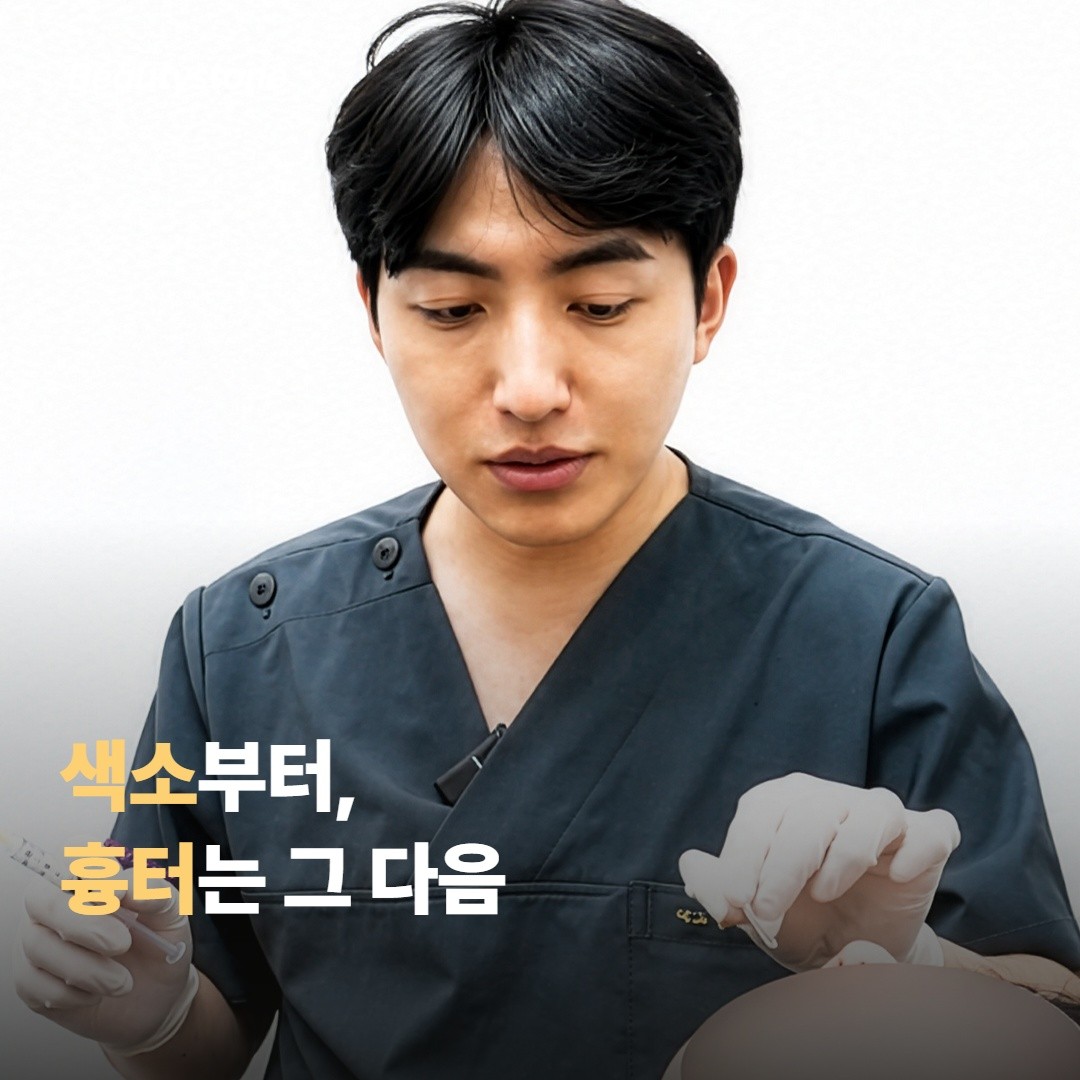
Sunken scars and raised scars are also different
Scars themselves have different categories. The most common acne scars are sunken scars like icepick, boxcar, and rolling scars. Depending on the shape of the depression, we combine treatments such as subcision*, fractional lasers, and RF miconeedling. Even for the same individual, different treatments are applied to different areas.
Subcision*: A procedure that gently releases the fibrous bands binding the sunken scar down. It acts on the underlying structure rather than the skin's surface.
Raised scars, like keloids, should never be treated with the same tools. Because stimulation can cause them to rise even further, treatments with a different approach are prioritized, such as topical steroids, silicone sheets, or local injections.
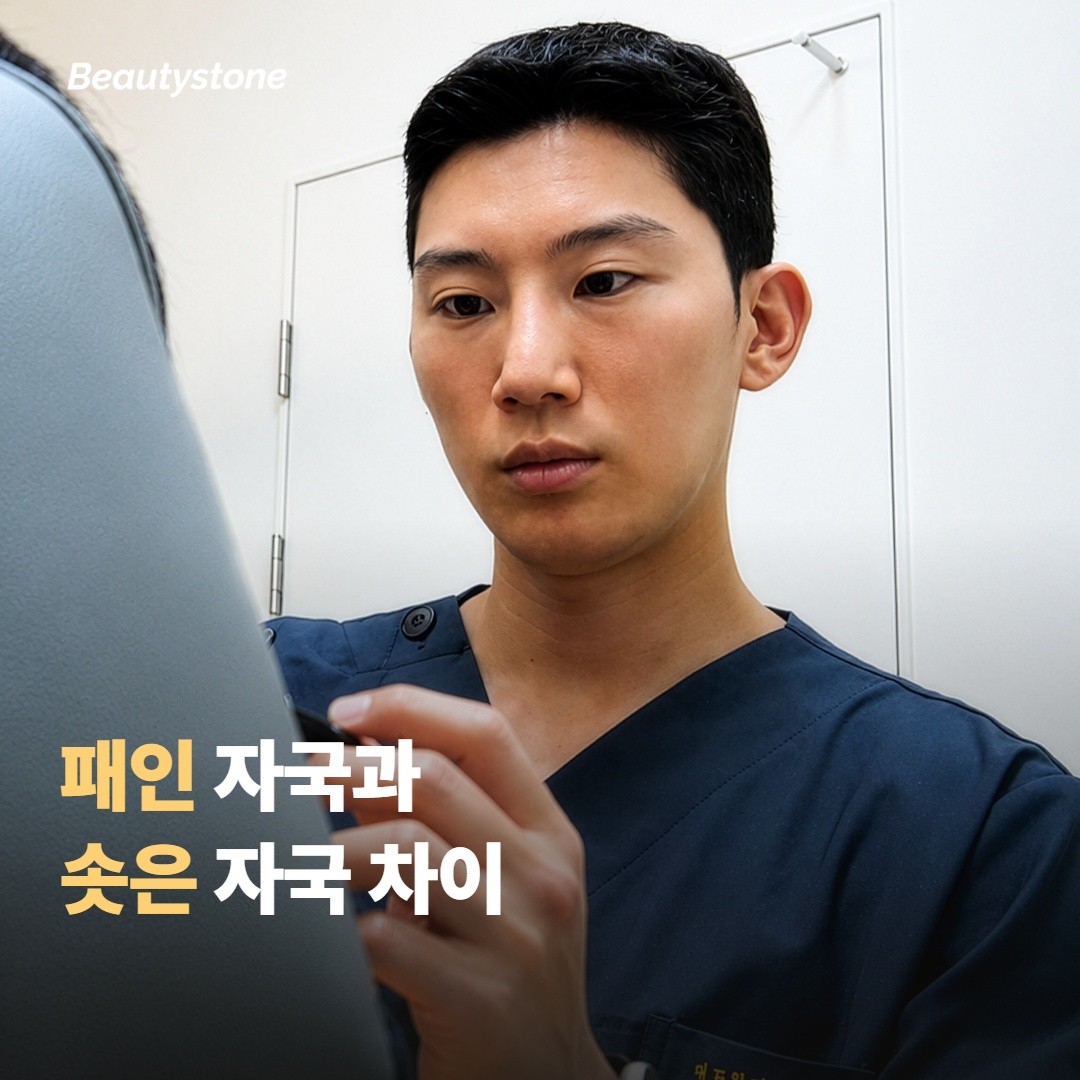
Sometimes, waiting for the marks to settle is the best medicine
Newly formed marks will naturally fade or take shape over a period of 6 to 12 weeks. During this time, simply practicing diligent sun protection, applying mild moisturizers, and avoiding irritating self-treatments can be of immense help.
Starting treatments too early and too aggressively can add new irritation to settling marks, causing them to last even longer. The cleanest approach is to have your skin re-evaluated 6 to 12 weeks after the marks appear, classify the pigmentation and structure, and then begin your tailored treatment steps.

Frequently asked questions
Q. If a mark looks red, is it hyperpigmentation or a scar?
A. Red marks are usually post-inflammatory erythema (PIE). They often fade over time, and if they do not fade, vascular laser treatment can be considered.
Q. Will pigmentation fade quickly if I just do a good job of sun protection?
A. A significant portion of early pigmentation can fade with strong UV protection and avoiding irritation alone. However, deeper pigmentation or long-standing pigmentation usually requires additional treatments to improve.
Q. If there are mixed types of marks or scars, can they all be treated at the same time?
A. Rather than combining multiple procedures in the same session, it is usually cleaner to proceed step by step in the order of pigmentation → structural scars → fine tone refinement.
Q. My acne is still breaking out; is it okay to start treatment for acne scars?
A. If you still have active acne, calming the breakouts is our first priority. Since new inflammation can lead to further hyperpigmentation, we should let the skin stabilize for 6 to 12 weeks before classifying the scars and proceeding with a step-by-step treatment.



Contouring & Volume
Hip Dip Filler Before and After: 4 Checks

Body
Potenza Treatment Interval: Why 4 Weeks?

Lifting
Ultherapy Before and After: Why Wait 90 Days?

Contouring & Volume
Belotero Revive Cost: 2cc Price vs. 3 Sessions

skin
Lip Hyperpigmentation Laser: Does It Work?

Contouring & Volume
Men's Forehead Filler: Hollow or Just Lines?