

Thinking about Sofwave for thin under-eye skin? Run these 5 quick checks on cause, fit, the Shurink choice, and recovery before you book at Beautystone.
Published
Updated

Author
Wi Young-jin · Chief director
Seoul National University College of Medicine · Seoul National University Hospital Specialist
→
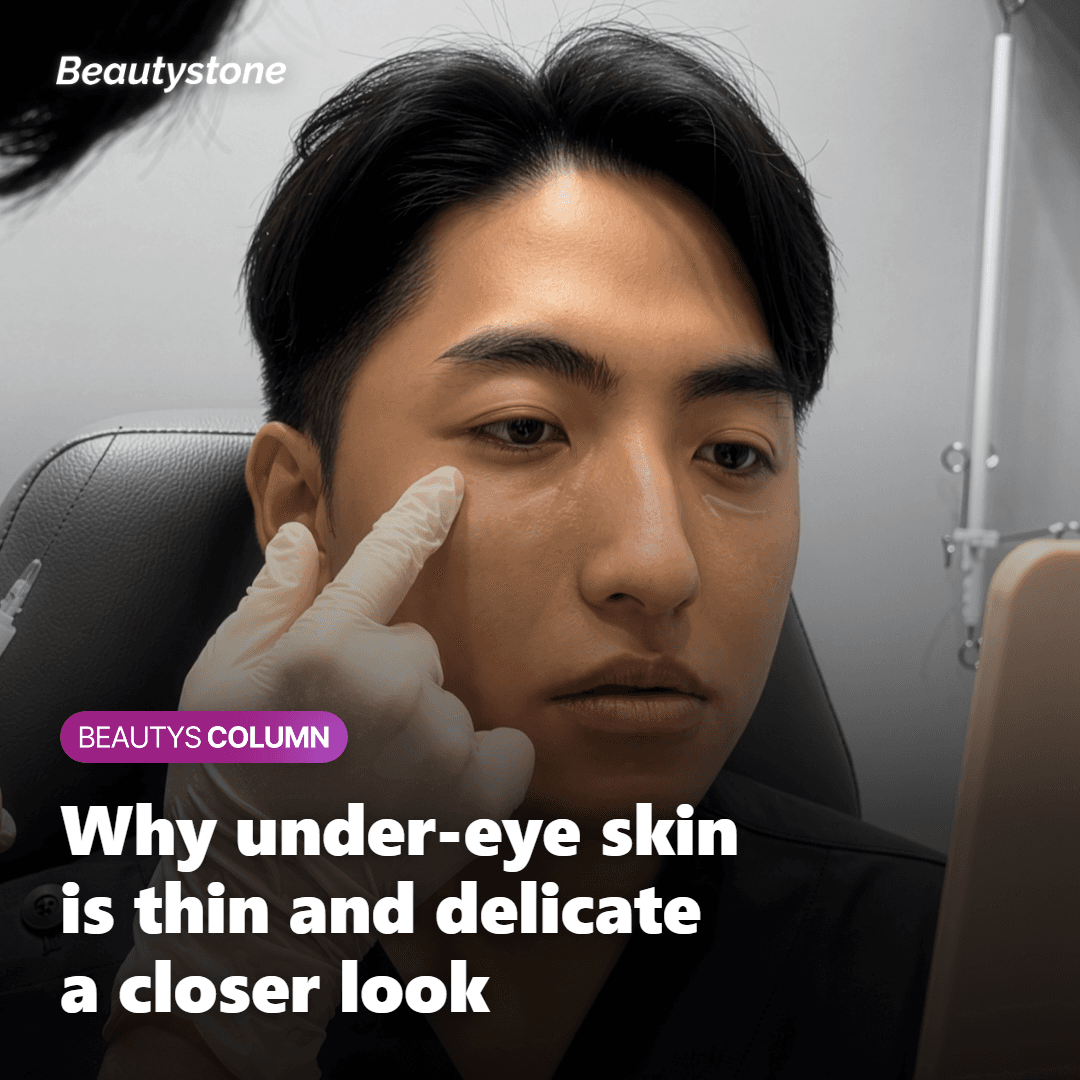
You have probably read what Sofwave can do for the fragile area beneath the eyes. Harder to find is a simple way to decide whether it is right for you, right now. So this guide flips the usual explainer around: instead of describing the device, it hands you five quick checks to run before you sit in the treatment chair.
Think of it as a pre-booking screen. Some checks may point to Sofwave; one or two may tell you to pause and look at the cause first. Either answer is worth having. Everything below is general treatment information from Beautystone in Hapjeong, Seoul, and none of it replaces a face-to-face assessment.
Check 1: Is Loose Skin Really the Culprit?
Before anything else, name the problem. Ultrasound firming only earns its place when the change you dislike is driven mainly by a slackening of the skin and the support layer under it. When that is what is happening, a tool like Sofwave has something to hold onto.
There is a reason this zone ages early: the skin here is among the most paper-thin on the face, carries few oil glands so it dries and reacts easily, and folds constantly as you blink. So fading firmness tends to announce itself around the eyes before anywhere else.
The catch is that the eye area rarely reads cleanly. A tired hollow can come from where the fat pads sit, a puffy lower lid can be about fluid rather than sag, and a heavy outer corner can trace back to the small muscle that raises the lid. Those are different problems, and firming energy fixes none of them.
A quick self-test in good light: with a clean fingertip, gently glide the outer edge of the skin flat. If that noticeably softens what bothers you, slack skin is probably part of the story. If the shadow or puffiness barely shifts, the cause likely lives deeper than the skin — flag exactly that at your consultation.
Check 2: Does Your Case Match What Sofwave Does Best?
Sofwave sends ultrasound into the middle layer of the skin, where it aims to coax fresh collagen and, over weeks, tighten a support layer that has gone slack. Because nothing is cut, recovery is usually brief — a big part of its appeal. Published work on focused ultrasound for firmness and laxity has examined this approach.
Whether your case fits is really a matter of degree. It tends to line up well when:
You caught the slackening early and it is still mild — the kind that answers to a gentle, gradual nudge.
Your calendar cannot give up much recovery, since a no-cutting method generally keeps downtime short.
Your expectations are grounded: a quiet firming that shows up little by little, not an overnight change.
It fits less neatly when the laxity is pronounced or long-standing. There, one modality alone may not feel like enough, and how much you notice varies from person to person. That is not a failure of the device so much as a sign the plan needs to widen — a conversation for your doctor, not a booking form.
Check 3: If You're Torn Between Sofwave and Shurink, Which Way Do You Lean?
Plenty of people circle between these two before deciding. Both rely on ultrasound, but they part ways in how the energy travels and how deep it is built to reach. Comparisons of ultrasound lifting devices have mapped out the uses each tends to suit.
As a rough guide, Shurink is described as reaching the deeper support, while Sofwave concentrates on the middle layer. Neither wins in the abstract. The tie-breaker is where your own change sits, the condition of your skin, and the finish you want. Use the questions below to see which way you lean, then bring your answers to a consultation.
Question to weigh | Leans Sofwave | Leans Shurink |
|---|---|---|
Where does the change sit? | Mostly a mid-layer slackening | Deeper support that needs more reach |
What finish are you after? | A gradual, gentle firming | A firmer result from deeper down |
How much can you trade in comfort and time? | A lighter, shorter session | More traded to reach depth |
Honestly, a doctor comparing the two on your actual under-eye skin out-reads any chart, because tolerance for discomfort and downtime pulls the decision as much as depth does. Treat the table as a starting point, not the answer.
Check 4: Are You Ready for What the First Few Days Look Like?
Knowing the recovery ahead of time keeps normal, passing effects from surprising you. After an ultrasound firming session you might see a little redness, feel some warmth, and notice spots of tightness or tenderness. For most people the bulk of that settles somewhere between a few hours and a few days.
Here is roughly how it tends to unfold:
That day: a touch of redness and warmth, occasionally a fleeting tight feeling as things calm.
The next few days: most of it eases; because the eye area is so delicate, it may look briefly puffy or feel a bit off.
The weeks after: any firming arrives slowly, not in one jump, and a single session does not overhaul the area.
Two things are worth holding onto. Results and recovery genuinely differ from person to person, so borrow no one else's timeline as a promise. And if anything lingers or unsettles you, call back the clinic that treated you rather than waiting it out — and always consult before any treatment.

Booking a Consultation at Beautystone in Hapjeong
Run the five checks and a pattern usually emerges. If slack skin is driving the change, you caught it early, your schedule wants a short recovery, and you are at peace with gradual results, Sofwave is a reasonable option to raise. If the cause points deeper than the skin, the right care simply looks different — useful to learn before you spend anything.
The real first step is not booking a device; it is naming the cause and matching it to a plan with a doctor. On skin this thin, the energy level and the exact zone treated have to be dialed in with care, which is why deciding alongside an experienced doctor beats deciding on your own.
At Beautystone in Hapjeong, Seoul, a consultation can walk through your under-eye area, sort laxity from other possible causes, and talk plainly about whether Sofwave, Shurink, or a wider plan fits your condition. If a loss of firmness around your eyes has started to catch your attention, feel free to reach out — bring the change that bothers you, and we take it from there together.
Frequently asked questions
Will one Sofwave session be enough for my under-eyes?
Usually not in a dramatic sense. Sofwave firms little by little, so change builds over weeks rather than after one visit, and how much you notice varies from person to person. Plan around gradual progress.
My under-eye issue might not be loose skin — does that rule Sofwave out?
It might, or it might mean Sofwave is only part of the answer. Firming energy targets a slackening of the skin and its support layer; if fluid, fat position, or muscle drives the look, the right care differs. An assessment sorts that out first.
How much discomfort should I expect on skin this thin?
Most people report mild redness, some warmth, and patches of tightness or tenderness that settle within a few hours to a few days. Because the eye area is especially delicate, the energy and treated zone are adjusted carefully — a reason to do this with an experienced doctor.
How do I get the most out of my consultation?
Come with the exact change that bothers you and, if you can, a sense of whether gliding the skin flat softens it. That one observation helps your doctor separate slack skin from other causes and match you to a sensible plan.




Lifting
Eye Thermage Results: Is 1 Session Enough?

skin
Rejuran vs. Juvelook Cost: What 1 Session Buys

Lifting
XERF for a Thin Face: Depth vs. Hollowing?

Lifting
Thread Lift Swelling: What's Normal in 5 Days?

Lifting
Thermage Cost: 4 Lines to Check on a Quote

Contouring & Volume
Xeomin Cost: Why Do 50-Unit Quotes Differ?