

Ultherapy for Eyes: What It Can and Can't Lift
Ultherapy isn't used on the eyelid. A Seoul doctor explains what it can lift around the eyes, who it suits, risks to watch, and how it fits a trip.
Published
Updated

Author
Wi Young-jinChief Director, Myeongdong
Seoul National University College of Medicine · Seoul National University Hospital Specialist
→
Ultherapy isn't placed on the eyelid itself, but it can lift the area around the eyes by treating the brow, forehead, temple, and the skin below the eye from a safe distance. If your eyes look heavier because your brows have dropped a little or the skin around them is mildly loose, it's a reasonable treatment to fit into a Seoul trip. If your under-eyes are mainly hollow, or the extra skin sits in the upper lid itself, it isn't the right tool on its own.
A message I often get from visitors planning a trip to Seoul goes like this: my upper lids look heavier than they used to, I've read about "eye Ultherapy," and I'd like to fit it in, but is ultrasound that close to my eyes really safe? The short answer is that the eye itself is never the target, and where the energy goes matters more than the name of the treatment. Below, I'll cover what eye-area Ultherapy actually treats, loose versus hollow under-eyes, why most of the lift comes from above the eye, the side effects to watch for, and how to plan it around flights and sightseeing.
Can Ultherapy Be Done on the Eyelids?
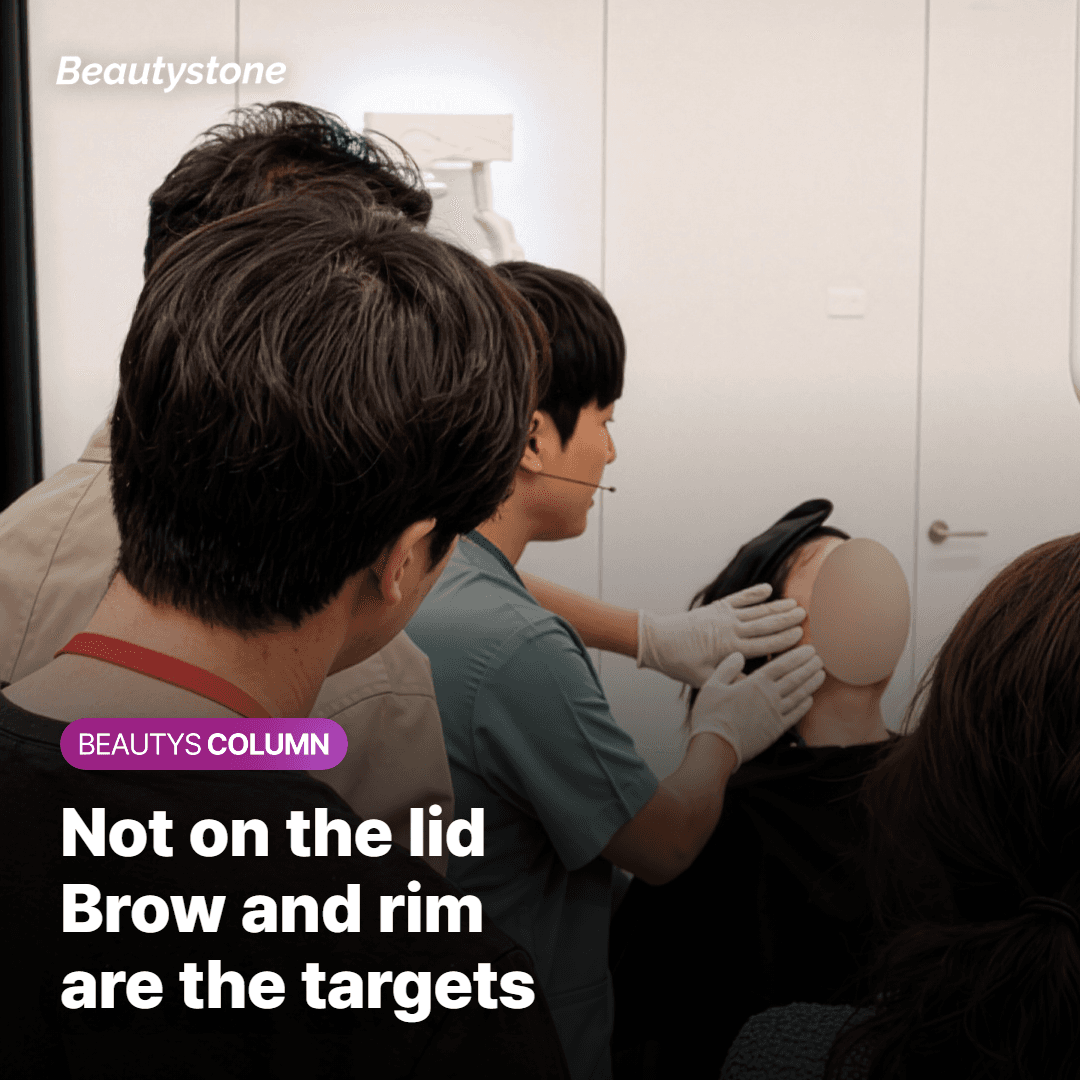
No. Ultherapy isn't applied on the upper or lower eyelid, and I don't treat inside the bony rim around the eye. That boundary is the first thing I mark, before any other part of the plan.
There's a good reason for it. A case report on eye injury after a HIFU (high-intensity focused ultrasound) treatment on an upper eyelid notes that the eyelid is the thinnest skin on the body, and that direct application on the regular position of the superior eyelid is not recommended.
So what does "eye Ultherapy" mean in practice? It's Ultherapy aimed at the tissue around the eye: the forehead and brow above it, the temple and outer corner beside it, and the skin below the lower rim. In a published safety consensus, the listed indication for Ultherapy is to lift the eyebrow, lift lax submental (beneath the chin) and neck tissue, and improve lines and wrinkles of the décolletée.
The eyelid isn't on that list, and neither is the under-eye area. That's why I treat below the eye conservatively: I check the treatment depth on the ultrasound image first and put energy only where the skin is actually loose, rather than covering every bit of skin around the eye.
Ultherapy Under the Eyes: Loose Skin or Hollows?
Ultherapy under the eyes can help when the problem is mildly loose, crepey skin, but it can't fill a hollow. The two can look alike in the mirror, and they need different plans.
For loose skin, the evidence is still early. A case series of five female patients with mild-to-moderate skin laxity reported visible improvements in periorbital skin tightening and reduction of malar mounds after MFU-V, and its authors say larger studies are needed to confirm efficacy.
Hollows are a different story, because energy that reaches the fat layer can make an area look smaller rather than fuller. In a four-woman case report on face slimming with MFU-V, the treatment areas were chosen aiming to create a reduction in the volume and a pattern of contraction. When the under-eye is already hollow, I leave that zone out of the energy plan and talk about volume instead.
Here's how I split it at consultation:
Mildly loose or crepey skin, no real hollow: eye-area Ultherapy, mapped around the rim, is a reasonable first choice.
Mainly hollow or shadowed: a volume treatment usually makes more sense than energy, because lifting doesn't add volume.
Both at once: the two can be planned together, with energy kept away from the hollow zone.
Combining approaches around the eye isn't unusual. A Korean study performed MFU-V across the supra-brow area, lateral canthus, and the infraorbital area, then added filler and botulinum toxin on the same day.

How Does Ultherapy Lift the Eye Area From Above?
Much of the visible "eye lift" comes from the brow sitting a little higher, which takes some weight off the upper lid. That's why so much of an eye-area plan happens on the forehead and temple, not around the lid.
Ultherapy places tiny points of heat at set depths under the skin, and the handpiece pressed against the skin (the transducer) decides how deep they land. A tissue study of Ultherapy describes its targeted depths as superficial dermis at 1.5 mm, deep dermis at 3.0 mm, and the deeper support layer (SMAS/platysma) at 4.5 mm. Near the eye, where skin is thin, that depth choice is the main design and safety decision.
In a study of a different micro-focused ultrasound device, a single focused ultrasound treatment on the forehead and temple areas resulted in an average brow elevation of 2.1 mm. It wasn't an Ultherapy trial, but it points to where the lift comes from: the forehead and temple.
The variable people rarely hear about is where your brow sits at rest. If your brow has drifted down toward the bony rim, treating above it can open the lid a little. If your brow is already in a good position and the extra skin is in the lid itself, a brow-focused lift has much less to work with.
So if your lids feel heavier mainly because the brow has dropped a little, eye-area Ultherapy on this trip makes sense. If the extra skin is in the lid itself and it's more than mild, an energy device has limited room to help, and I'll tell you that at consultation rather than stretch the plan.

Eye Ultherapy Side Effects and Risks: What's Normal?
Most reactions after eye-area Ultherapy are short-lived: some redness, mild swelling, and tenderness that settle on their own. A published safety consensus notes that when MFU-V is used properly, most adverse effects can be avoided and those that do occur are typically mild, transient, and resolve without sequelae.
Anything involving the eye itself is a separate category. In the upper-eyelid case report, the patient had pain, hyperemia and photophobia in the right eye after the treatment.
If you notice eye pain, redness of the eye itself, blurred vision, or sensitivity to light after any ultrasound treatment near the eyes, don't wait it out. Seek medical care right away, ideally with an eye doctor.
Before treatment, tell me if you've had eyelid surgery, fillers around the eyes, or any eye condition, so the map accounts for it.

Within Your Travel Itinerary: Flights, Photos, and Going Home
If you searched for Ultherapy in Hongdae or Myeongdong, here's the location fact: Beautystone Clinic is in Hapjeong, Mapo-gu, next to the Hongdae area. Hapjeong Station and Hongik University Station are one stop apart on subway Line 2. From a Myeongdong hotel you'll be crossing central Seoul, so check the route on a map app when you pick your day.
Flights: Unless you had sedation that day, there's no reason to push back your flight because of the treatment.
Photos and sightseeing: For Ultherapy in general, my guidance is that up to around 300 shots, swelling often isn't very noticeable from the outside. If you have photos booked, mention the dates at the consultation.
What one visit gets you: One session is worthwhile, but it works gradually, moving you a little closer to how you used to look rather than changing your face overnight. Most of the change shows up after you're home.
After you fly home: If something looks off, you can send photos through WhatsApp. If it's a strong warning sign, such as eye pain or a change in vision, see a local doctor first.
In the brow study above, data were collected at 90 days and 180 days after treatment. So plan to judge your result at home, not on the flight back.

The Bottom Line
Ultherapy isn't used on the eyelid; eye-area treatment works around it.
Loose under-eye skin and hollow under-eyes need different plans.
Much of the visible lift comes from the brow and temple, so brow position at rest decides how much there is to gain.
Eye pain or vision changes after treatment need prompt medical care.
Like any procedure near the eyes, it comes with trade-offs, and the boundary around the eye isn't negotiable. Ultimately, the choice depends on your skin, your goals, and your budget.
Before you message, try one check in the mirror. Look straight ahead with your face relaxed, then gently lift your brows with your fingertips. If the lid opens up the way you'd like, your brow position is doing most of the work, and that's the pattern a brow-focused plan addresses. If the extra skin stays on the lid, take that photo too, because it changes the plan.
If you're considering Ultherapy for your eyes on a trip to Seoul, send your travel dates and those two front photos to Beautystone Clinic on WhatsApp, for example: "Hi, I'll be in Seoul from [date] to [date] and I'm interested in Ultherapy around the eyes. Attached are two front photos, one relaxed and one with my brows lifted." A message isn't a confirmed booking; the plan is set after your face is assessed in person.





Contouring & Volume
Fat Dissolving Injection Cost: cc and Sessions

Contouring & Volume
Juvederm vs. Restylane: Lips, Eyes, or Nose?

skin
Rejuran 2cc Cost: Enough for the Full Face?

Lifting
Titanium Lift Cost: 40KJ Jawline or Full Face?

skin
Rejuran vs. Belotero Revive: Which Hurts Less?

Contouring & Volume
Jaw Botox Side Effects: Hard to Chew or Smile?